
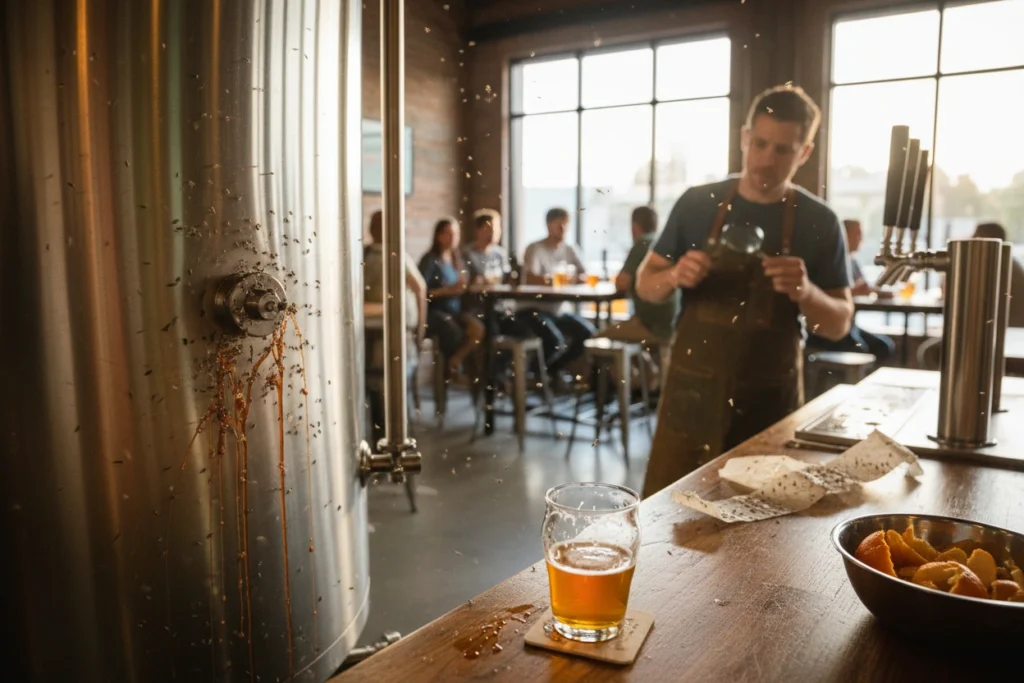
Fruit flies aren’t just a nuisance in your brewery — they’re an active contamination risk. They breed in fermented residue, floor drains, and spilled wort, completing a full reproductive cycle in as little as eight days. That speed turns a minor sanitation lapse into a full infestation fast. They compromise beer quality, trigger regulatory violations, and damage your brand’s reputation. The full scope of the threat — and how to stop it — goes deeper than most brewers expect.
Key Takeaways
-
Fruit flies reproduce every eight days, meaning a minor sanitation lapse can quickly escalate into a full-scale infestation.
-
Fermenting sugars, spilled wort, and organic acids create ideal breeding conditions throughout breweries and taprooms.
-
Infestations risk regulatory violations, costly compliance actions, and lasting brand reputation damage.
-
DIY traps only target adult flies, leaving hidden larval breeding sites in drains and gaskets unaddressed.
-
Professional pest control identifies root causes, applies species-specific treatments, and establishes structured long-term prevention plans.
Why Fruit Flies Thrive in Breweries and Taprooms
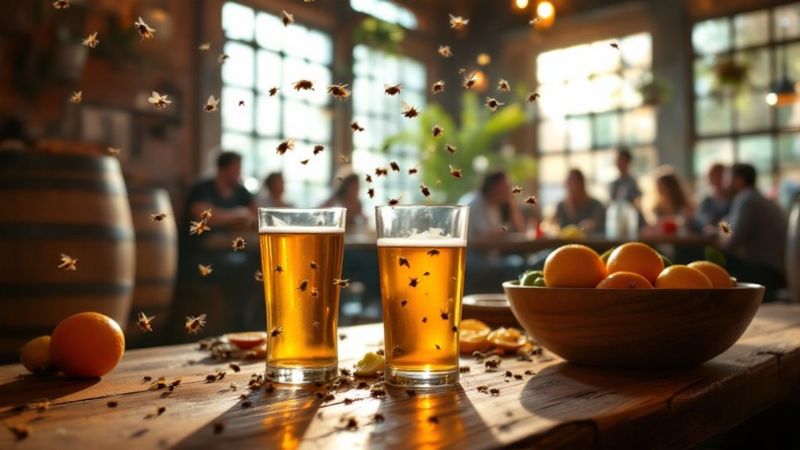
Breweries and taprooms create near-perfect conditions for fruit fly infestations. Fermenting sugars, residual yeast, and organic acids in spilled wort, beer, or fruit adjuncts serve as primary attractants and breeding sites.
Even minor sanitation lapses—unwashed drains, damp mop heads, or residue buildup around tap lines—can sustain entire colonies. Fruit flies reproduce rapidly, completing their lifecycle in as little as eight days under warm conditions.
Your brewing practices directly influence infestation risk. Open fermentation vessels, fruit additions, and high-gravity adjuncts elevate volatile organic compounds that attract Drosophila species from considerable distances. Flies transfer pathogens rapidly to food surfaces, posing significant health risks.
Maintaining rigorous sanitation standards in floor drains, fermentation areas, and tap lines is critical. Without consistent intervention, a small fruit fly presence escalates quickly into a contamination risk that threatens product integrity and regulatory compliance.
The Real Damage Fruit Flies Do to Your Beer and Brand
The consequences scale quickly.
A single contaminated keg reaching your taproom damages customer experience and erodes the brand reputation you’ve spent years building.
Negative reviews citing off-flavors or visible flies spread fast.
Regulatory inspectors treat infestations seriously, and documented violations can trigger costly compliance actions.
Don’t let a preventable pest problem define your brewery. Regular inspections can help identify vulnerabilities before they escalate into serious issues.
Where Fruit Flies Hide in a Brewery (And Why They’re Hard to Spot)
Fruit flies don’t congregate in obvious locations—they thrive in the hidden, moisture-rich microenvironments your brewery generates daily.
Your floor drains accumulate organic slurry that supports thriving larval colonies, while fermentation tanks offer residual sugars and CO₂ that draw adults in concentrated numbers.
Damp mops and cleaning rags left on the floor act as mobile breeding sites, dispersing eggs across your facility every time you move them. Additionally, maintaining cleanliness in the kitchen can significantly reduce the presence of these pests.
Drains Harbor Hidden Colonies
Drains are one of the most overlooked fruit fly harborage points in a brewery. Organic residue—yeast, sugars, and spent grain—accumulates inside drain pipes, creating ideal breeding conditions. Without consistent drain maintenance, colonies establish quickly and remain invisible until populations explode.
What’s actually building up inside your floor drains:
-
Gelatinous biofilm coating pipe walls, where larvae feed and pupate undisturbed
-
Fermenting organic slurry pooling in low-flow or partially blocked drain traps
-
Moisture-saturated debris lodged beneath drain covers, shielded from routine cleaning
These hidden pests don’t surface until conditions force them out. Standard visual inspections won’t catch subsurface infestations. You need to probe drains physically, test for biofilm buildup, and implement enzymatic treatments to break down the organic matter sustaining each colony.
Fermentation Tanks Attract Flies
Fermentation tanks create a near-perfect fruit fly environment: constant CO₂ off-gassing, residual sugars coating exterior surfaces, and pooled liquid around base fittings and gaskets.
During active fermentation processes, these conditions intensify. Sugars accumulate in hard-to-reach seams, pressure relief valves release aromatic compounds that attract flies from considerable distances, and temperature-controlled tank rooms maintain the warm, humid conditions fruit flies need to reproduce.
You’ll often miss early infestations because flies congregate near upper tank fittings and ceiling-level CO₂ vents—areas outside routine visual inspection paths.
Without consistent hygiene practices targeting tank exteriors, valve assemblies, and surrounding floor drains, populations establish quickly. A single overlooked gasket with residual wort can sustain dozens of breeding adults within days.
Damp Mops Breed Pests
Damp mops and cleaning rags left on brewery floors create overlooked breeding sites that rival floor drains in pest productivity.
Fruit flies complete their larval cycle in moist organic material within 24–48 hours, making your cleaning tools an active incubator if you’re not managing damp mop hygiene rigorously.
Watch for these conditions that accelerate infestation:
-
Mop heads stored wet in corners where yeast-laden water pools and ferments overnight
-
Rags draped over buckets, trapping humidity and residual sugars against porous fibers
-
Infrequent cleaning frequency that allows biofilm to establish between sanitization cycles
Hanging mops head-up after each use and laundering rags daily eliminates these harborage points.
Without that discipline, you’re fundamentally maintaining a fruit fly nursery alongside your production floor.
DIY Fruit Fly Control vs. Professional Pest Treatment
When fruit flies infiltrate your brewery, you might reach for apple cider vinegar traps or store-bought sprays, but these methods treat symptoms rather than sources and won’t interrupt an active breeding cycle embedded in drains, fermenters, or residue-laden equipment.
Professional pest control brings systematic inspection, species-specific treatment protocols, and targeted sanitation recommendations that eliminate infestations at their origin. Additionally, maintaining a consistent sanitization routine is crucial to prevent future infestations from establishing in your environment.
Once the immediate problem is resolved, a structured prevention plan—built around routine monitoring, drain maintenance schedules, and scheduled professional inspections—keeps your production environment compliant and your product protected long-term.
DIY Methods Fall Short
Many brewery operators turn to DIY fruit fly traps—apple cider vinegar bowls, sticky tape, or commercial bait stations—but these methods target adult flies without addressing the larval breeding sites embedded in drains, fermentation residue, or damaged seals.
DIY traps and vinegar solutions disrupt surface-level pest behavior while leaving breeding cycles intact. Essential oils and basic sanitation practices reduce attracting factors temporarily but fail to eliminate infestation sources.
Without systematic monitoring methods, you’re reacting to symptoms, not causes:
-
Drain biofilm harbors larvae invisible to standard inspection
-
Residual fermentation sugars behind equipment continuously regenerate breeding populations
-
Compromised gaskets and seals create microhabitats standard traps never reach
DIY approaches won’t protect your product, your reputation, or your compliance standing with health inspectors.
When Professionals Step In
Professional pest control changes the intervention model entirely—from reactive suppression to systematic elimination.
When you bring in a licensed technician, they apply structured pest identification techniques to pinpoint breeding sites you’d typically miss—floor drains, fermentation residue in gaskets, and condensation zones beneath tanks.
From there, they deploy treatment protocols calibrated to brewery environments, accounting for food-contact surfaces, active fermentation, and regulatory compliance.
That precision matters. A misapplied treatment can contaminate a batch or violate health codes.
Professionals also establish monitoring baselines, so infestations get caught before they escalate.
You’re not just paying for a one-time fix—you’re investing in documented, repeatable procedures that hold up under inspection.
That’s a fundamentally different outcome than anything a drain cleaner and a fly strip can deliver.
Long-Term Prevention Strategies
Sustaining a pest-free brewery requires more than periodic interventions—it demands a layered prevention framework that addresses structural vulnerabilities, sanitation discipline, and monitoring continuity.
Effective long-term solutions combine facility audits with actionable preventative measures that evolve alongside your operation’s growth.
Integrate these core strategies into your prevention protocol:
-
Seal fermentation area drains weekly using enzymatic cleaners to eliminate organic buildup that sustains fruit fly breeding cycles.
-
Install UV insect monitors near tap lines and fruit addition stations to detect early-stage infestations before populations establish.
-
Schedule quarterly structural inspections targeting gaps around utility penetrations, window seals, and loading dock thresholds.
You’re not just reacting to outbreaks—you’re engineering conditions where pests can’t establish footholds.
Consistent execution of these measures determines whether your brewery remains compliant, sanitary, and operationally sound.
How a Pest Control Pro Eliminates Fruit Flies in Food-Service Spaces
Fruit flies (Drosophila spp.) thrive in food-service environments because fermentation byproducts, moist organic debris, and standing liquid create near-ideal breeding conditions. Understanding fruit fly behavior is foundational to effective treatment.
A licensed technician begins with a systematic inspection, targeting floor drains, tap lines, keg seals, and mop buckets—primary harborage zones most operators overlook.
From there, pest control techniques shift from reactive to corrective. Professionals apply enzyme-based drain treatments to eliminate organic biofilm where larvae develop. They deploy pheromone-baited monitoring traps to quantify pressure and confirm source elimination.
Residual applications are used selectively to avoid product contamination. Finally, your technician documents findings and provides facility-specific corrective action recommendations, ensuring structural and sanitation deficiencies driving reinfestation are addressed before they compound. Additionally, multiple infestation points can signal a more extensive pest problem that requires comprehensive management strategies.
Keeping Fruit Flies Out of Your Taproom for Good
Eliminating an active fruit fly infestation is only half the battle—keeping them out requires consistent environmental controls that deny the conditions they depend on to reproduce.
Pair professional-grade fruit fly traps with rigorous sanitation practices to close off reinfestation pathways:
-
Drain lines cleaned weekly with enzymatic treatments to break down biofilm where larvae develop.
-
Fermentation vessels and tap lines inspected daily for residual sugars, spills, or condensation pooling around fittings.
-
Waste bins sealed and emptied nightly, including spent grain and fruit-based adjunct material.
You’re not just managing adult flies—you’re eliminating breeding substrate.
Without addressing moisture, organic residue, and harborage points simultaneously, fruit fly populations will rebound regardless of how effective your initial treatment was.
Frequently Asked Questions
Are Fruit Flies in Breweries a Health Code Violation?
Yes, fruit flies can trigger health code violations in your brewery. Failing fruit fly prevention measures violates health regulations by risking contamination of consumable products, potentially resulting in failed inspections, fines, or temporary closure of your operations.
How Quickly Can a Fruit Fly Infestation Spread in a Taproom?
Fruit fly infestation speed is alarming—you can go from a few flies to thousands within 8–10 days. Ideal brewing breeding conditions, like warm temps and fermentation residue, accelerate reproduction cycles dramatically, compounding your taproom’s risk exponentially.
Do Fruit Flies Affect Canned or Bottled Beer Differently Than Draft Beer?
Fruit fly behavior poses greater contamination risks to draft beer since they’re drawn to open tap lines and exposed surfaces. Sealed cans and bottles limit direct access, but you’ll still face spoilage risks near packaging seams and storage areas.
Can Fruit Flies Contaminate Beer That’s Already Been Sealed?
Sealed containers block fruit fly access, so you’re protected from direct beer contamination risks. However, understanding the fruit fly lifecycle matters—larvae can infiltrate packaging defects or compromised seals before final closure occurs.
Is Pest Control Treatment Safe to Perform During Brewery Operating Hours?
Most pest control methods aren’t safe during operating hours. You should schedule treatments during downtime to protect brewery sanitation, prevent chemical contamination of open fermentation vessels, and guarantee staff and customer safety throughout your facility.
Conclusion
Fruit flies aren’t just a nuisance — they’re a verifiable contamination risk that threatens your product integrity, your health inspection scores, and your brand reputation. Every day you delay treatment, breeding populations compound and infestation spreads deeper into your infrastructure. Partner with a licensed pest control professional who understands food-service environments, implement documented sanitation protocols, and schedule routine monitoring. Your brewery’s quality standards demand nothing less than a zero-tolerance approach to pest pressure.