
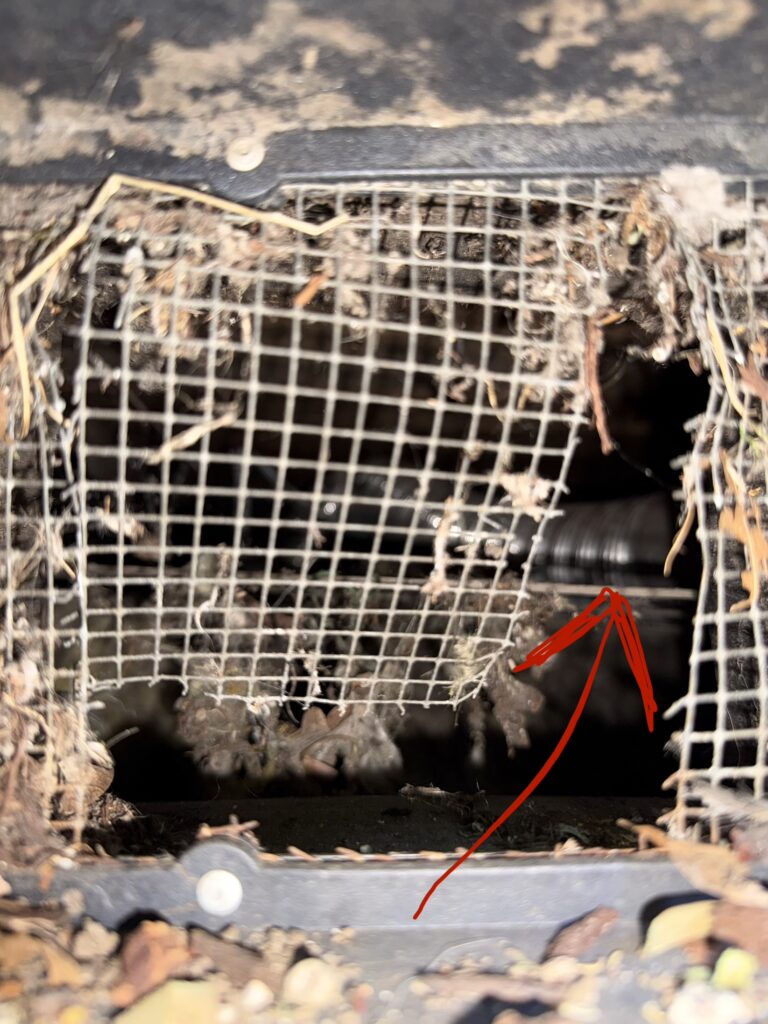
If you’re hearing rodents in the attic, walls, or in your ceiling, that is an indication that your perimeter defenses of your home have been compromised in one way or another. I will provide you with 5 common ways that rats, mice, and squirrels enter your attic space. By the way, this is written by a human (not ai). I am a local expert in rodent exclusion and restoration.
1). Soffit & Roof Vents
Vents are a vital aspect of the health of an attic space. Proper airflow allows moisture to be removed from the attic and helps remove heat from the space on hot days. With that said, vents can be a major source of rodents gaining entry into attic spaces (also birds). The two main kinds of vents are soffit vents (i.e. vents below your roofline around the eaves), and roof vents (i.e. vents on your roofline). Both of these can become vulnerable to rodent intrusion. One common issue I find in attics, which absolutely kills me every time I see it, is that roof vents are often constructed using plastic instead of metal. So if a roof rat or a squirrel wants to gain entry into an attic space, all they have to do is chew through the plastic vent on the top of the roof (usually there are a bunch of them) and they have free access into the attic moving forward.
The second issue I see with soffit vents is that they are often constructed using plastic or vinyl screen instead of metal screen, so bird, squirrels, or rodents can simply chew their way through the mesh and straight into the attic. Ensuring the attic vents are properly excluded can greatly help in your battle against rodents in your attic.
2). Gaps behind gutter line
Gutters can be tricky because they carry so much moisture away from the house. Over time gutters can begin to fail in many different ways, but usually they begin sagging or pulling away from the home/facia boards that they are attached to. This can be due to constant heavy debris sitting in them for long periods of time, or it could be due to the gutters/facia board simply getting old and nearing replacement.
Once gutters begin sagging they often leave gaps behind them where roof rats, mice, or squirrels (most common in Portland) can gain entry into the attic space above the home. Gutters are fairly difficult for rodents to chew through, although I’ve seen it. But facia board, especially if it’s rotten, is easy for them to chew through. Once the gutters begin to sag or pull away from the home, the home become much more vulnerable to rodent intrusion.
3). Roof transition points
Probably the biggest culprit for attic entry on roofs comes from the transition points between two different roof lines (imagine window dormers poking out from the main roofline containing a “transition” point on both sides of the dormer, etc). Roof transitions become common entry points simply because they are very readily accessible to rodents, squirrels, and birds for shelter, nesting, and hiding places. Ensuring roof transition points are inspected and sealed if necessary is a very important aspect of rodent control in attic spaces.
4). Exterior walls
Sometimes rodent infestations inside of attics are caused by rodents climbing up the interior of a wall void from below and going up into the attic space. If you’ve sealed up all of the obvious attic entry points and you’re still hearing activity this might be something to check out. Rodents are excellent climbers and if they can gain entry into the lower portion of a wall void (i.e. underneath the bottom of the siding), they can easily climb up the wall – especially if there aren’t wood pieces blocking the inside of the wall voids.
5). Drain Faults
Believe it or not, sometimes rats can get into attics via sewer drains. Usually what this looks like is ongoing activity around a bathroom in the walls (due to rodents chewing through plumbing) – with the rodents eventually gaining access into the attic space of the home via bathroom vent piping. It is not uncommon to find bathroom plumbing vent lines that terminate directly inside of the attic space instead of going up through the roof. When this happens – if there is rodent activity in the sewer line, they are able to simply climb right out of the vent pipe and into the attic.
If you are having ongoing rodent issues in your attic or crawlspace space and you’re at your wits end – give us a call at 503-985-6523 for a free rodent inspection and our team would be happy to help you get your problem solved.
We can help with all of the cleanup and sanitation too. Call us today – you’ll be glad you did!