
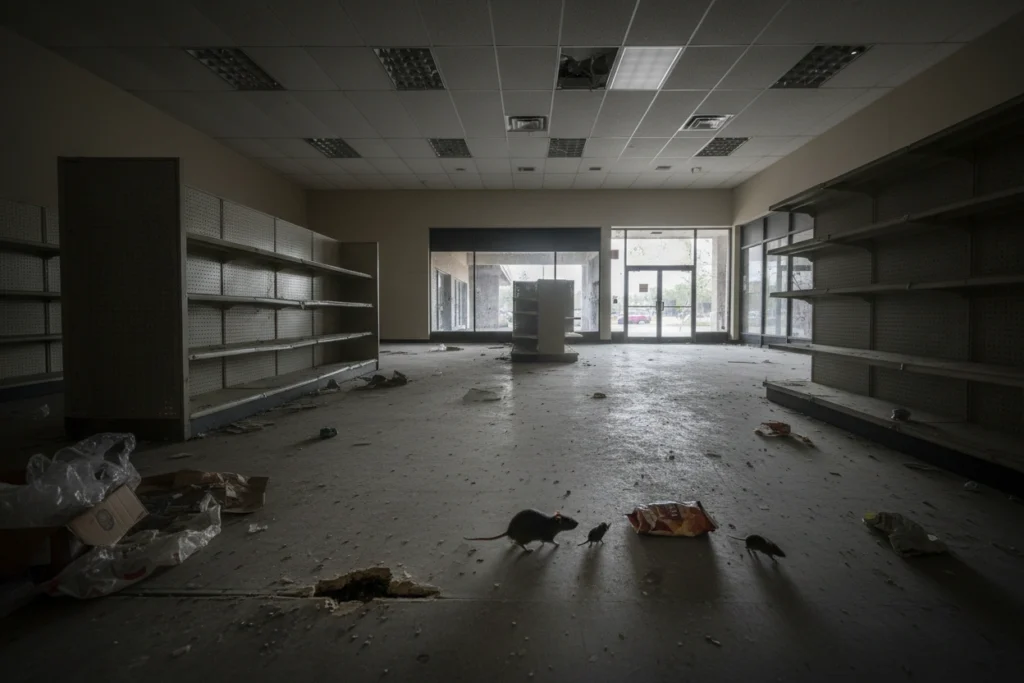
When a retail unit goes vacant, you lose the human foot traffic that naturally deters rodents. Empty spaces offer everything rodents need — shelter, stable temperatures, leftover food debris, and nesting materials — without the disturbance of daily activity. Structural gaps around utilities, worn door sweeps, and foundation cracks give them easy entry. Within thirty days, scouts identify the space as viable territory. The longer it sits empty, the worse your problem gets — and there’s a lot more you should know.
Key Takeaways
-
Vacant retail spaces lack human foot traffic, removing a natural deterrent that typically discourages rodents from entering and settling.
-
Rodents seek shelter, warmth, and food, making empty units with stable temperatures and leftover debris ideal survival environments.
-
Routine cleaning stops between tenants, leaving food residue and packaging that provides essential resources supporting rodent survival.
-
Structural gaps around utilities, deteriorating door sweeps, and foundation cracks give rodents easy, unaddressed access points during vacancies.
-
Within ninety days of vacancy, nesting and reproduction likely occur, making infestations significantly harder and costlier to eliminate.
Why Vacant Retail Units Attract Rodents So Fast

When a retail space goes vacant, rodents move in fast — and it’s not random. Rodent behavior is driven by three primary needs: shelter, warmth, and food access.
Vacant units eliminate human foot traffic, which previously acted as a natural deterrent. Without that disruption, rats and mice quickly identify the space as low-risk territory.
Urban ecology plays a direct role here. Strip malls exist within dense urban environments where rodent populations already operate in established networks through sewers, utility corridors, and landscaping.
A vacant unit becomes an accessible node within that network.
You’re also dealing with structural vulnerabilities — gaps under doors, damaged weather stripping, and utility penetrations that no active tenant has flagged.
Rodents exploit these entry points within days of vacancy. Moreover, the presence of calorie-dense food sources within these units can further accelerate infestations.
What Rodents Are Actually Looking for in Empty Spaces
When rodents move into a vacant retail space, they’re evaluating it against three core survival criteria: shelter, food, and nesting material.
Empty units offer stable interior temperatures, protection from predators, and relief from rain and wind — conditions that make them far more attractive than outdoor environments.
Leftover packaging, insulation, cardboard displays, and forgotten food debris give rodents everything they need to establish a colony quickly and quietly. Additionally, regular inspections can help identify potential issues before they escalate into infestations.
Shelter From The Elements
Rodents don’t wander into empty retail spaces by accident—they’re driven by specific environmental needs, and vacant buildings check nearly every box. Shelter from the elements ranks among the strongest environmental factors pulling rodents indoors.
Rats and mice are highly sensitive to temperature fluctuations, precipitation, and predator exposure. An unoccupied retail unit offers stable interior temperatures, dry conditions, and minimal disturbance—conditions that directly support survival and reproduction.
Once human activity stops, pest behavior shifts. Rodents begin actively probing perimeter walls, utility penetrations, and gaps beneath doors for entry points.
They’re not exploring—they’re executing a systematic search for insulated, weatherproof harborage. Understanding this behavioral pattern helps you recognize why vacancy itself functions as an environmental trigger, transforming an empty storefront into a structurally ideal rodent shelter.
Accessible Food Sources
Empty retail spaces rarely feel “empty” to a rodent. What you’re dealing with is a food accessibility problem that persists long after a tenant leaves.
Rodents aren’t waiting for a fully stocked store — they’re scavenging grease residue behind baseboards, food particles embedded in flooring grout, forgotten stock in back storage rooms, and organic debris collecting near loading docks.
Between tenants, routine cleaning stops. Dumpsters near the unit still attract foraging activity, pulling rodents directly toward your vacant space.
Once they locate even marginal food sources, they establish pathways and return consistently.
Effective pest prevention requires treating the space as actively vulnerable — not dormant.
Inspect for residual food contamination immediately after a tenant vacates and before the next one moves in.
Safe Nesting Materials
Beyond food, nesting material availability is the second major draw pulling rodents into vacant retail spaces. When you leave a space unoccupied, you’re fundamentally stocking a rodent nursery. They actively harvest materials to build thermally stable, concealed nests.
Common nesting materials rodents target include:
-
Insulation types like fiberglass batts and spray foam fragments torn from walls or crawlspaces
-
Cardboard boxes and packing paper left behind by previous tenants
-
Fabric remnants, upholstery padding, or textile scraps
-
Ceiling tile material, which shreds easily into soft nesting fiber
-
Electrical wiring insulation, which rodents gnaw and strip for dense, fibrous nesting materials
Each harvested material signals established activity. You’re not just facing a temporary intrusion — you’re dealing with a population actively preparing to reproduce and expand.
How Long Vacancies Last: and Why That Window Is Dangerous
Commercial vacancies in the U.S. average six to twelve months, and that window is more than enough time for a rodent population to establish, breed, and entrench itself. Within the first thirty days, scouts identify your empty space as viable; by ninety days, you’re likely dealing with nesting and active reproduction. The longer a space sits unoccupied, the harder and costlier remediation becomes. Additionally, rodent droppings can accumulate quickly, indicating a serious infestation risk even before visible signs appear.
Average Vacancy Timeline
Retail vacancies in the Portland metro area don’t resolve quickly. Tenant turnover cycles typically run six to eighteen months, and average vacancy impacts compound the longer a space sits unused.
That window gives rodents ample time to establish colonies, build nests, and spread into neighboring units.
Key vacancy-related risk factors include:
-
Average vacancy duration: 6–18 months in the Portland metro market
-
Seasonal pressure points: Fall and winter drive rodents indoors faster
-
Structural access: Gaps under doors, utility penetrations, and aging seals accelerate entry
-
Reduced foot traffic: Less human activity removes a natural rodent deterrent
-
Neighboring tenant exposure: Active businesses adjacent to vacant units face elevated infestation risk
Every month a space sits empty, your rodent risk grows measurably.
Risks Grow Over Time
When a retail space sits vacant for months, the rodent risk doesn’t stay flat—it compounds. Each week without activity allows rodents to establish deeper harborage, expand pathways, and begin nesting undisturbed.
You’re not dealing with a static threat—you’re watching a population grow.
Tenant turnover disrupts the natural deterrents that active occupancy provides: foot traffic, regular cleaning, noise, and routine inspections.
Once those deterrents disappear, rodents move quickly to exploit the void.
Pest prevention becomes exponentially harder the longer a space sits empty. A two-week vacancy carries minimal risk. A four-month vacancy? You’re likely facing an entrenched infestation.
Property managers who treat vacancy periods as low-priority windows consistently underestimate the structural and sanitary damage that accumulates before the next tenant ever signs a lease.
When Infestations Take Hold
The average commercial vacancy in the U.S. lasts between three and six months—long enough for a rodent population to move from opportunistic entry to full colony establishment.
Without infestation prevention measures in place, that window becomes a compounding liability.
Key escalation milestones during vacancy periods:
-
30 days: Scouts establish consistent entry and feeding routes
-
60 days: Nesting begins in wall voids, insulation, and HVAC systems
-
90 days: Breeding cycles produce secondary generations
-
120 days: Colony infrastructure becomes deeply embedded in the structure
-
180+ days: Remediation costs increase markedly; tenant education becomes critical before re-occupancy
The Structural Weak Points Rodents Exploit in Strip Malls
Strip malls present rodents with an abundance of structural vulnerabilities, and mice and rats exploit these weaknesses with remarkable efficiency. Common entry points include gaps around utility conduits, deteriorating door sweeps, compromised roofline joints, and cracks in aging foundations.
Maintenance gaps between tenants allow these access routes to go unaddressed for weeks or months. You need to treat pest prevention as a structural priority, not an afterthought. Establishing consistent inspection schedules helps you identify and seal breaches before rodents establish harborage. Without clear tenant responsibilities outlined in lease agreements, accountability for addressing these vulnerabilities often falls through the cracks.
A single unsealed pipe penetration measuring just a quarter inch gives mice full access to your vacant unit—and eventually, to neighboring occupied spaces. Additionally, regular gap sealing practices can significantly reduce the risk of rodent infestations in these areas.
Signs a Vacant Unit Already Has a Rodent Problem
Catching a rodent infestation early in a vacant unit requires knowing exactly what to look for. Before signing a lease or transferring management responsibility, inspect the space methodically. Rodents leave behind consistent, identifiable evidence you can’t afford to miss.
-
Rodent droppings along baseboards, in corners, or near utility penetrations indicate active or recent activity.
-
Gnaw marks on wood framing, electrical conduit, or door thresholds confirm physical rodent presence.
-
Grease smears along walls signal repeated travel along established rodent pathways.
-
Shredded insulation, paper, or debris points to active nesting inside the unit.
-
Urine odor concentrated near walls or mechanical rooms suggests an established colony.
Additionally, understanding rat nesting behavior can help you identify potential problem areas more effectively. Document every finding photographically. These signs shift liability and determine what remediation you’ll need before the next tenant moves in.
How Portland Property Managers Can Protect Empty Spaces Between Tenants
Vacant units don’t protect themselves—and in Portland’s wet, mild climate, rodents move fast into any space that’s warm, quiet, and undisturbed.
As a property manager, you need a structured approach to preventive measures the moment a tenant vacates. Start by sealing all exterior gaps larger than a quarter inch, installing door sweeps, and securing utility penetrations.
Schedule routine inspections every two to four weeks during vacancy. Keep dumpsters positioned away from unit entrances and eliminate any standing water or debris.
Document conditions thoroughly to support tenant communication when onboarding new occupants—share what protocols were followed and what was found.
Partnering with a licensed Portland pest control provider like Pest Patrol guarantees inspections are thorough, treatments are targeted, and your property stays protected between leases.
Frequently Asked Questions
Can Rodents Spread From a Vacant Unit to Occupied Neighboring Businesses?
Yes, rodent behavior drives them through shared walls, utility conduits, and gaps into neighboring risks become real fast. You’ll find active infestations spreading quickly, threatening your occupied business with contamination, structural damage, and serious health code violations.
Who Is Legally Responsible for Rodent Control in a Vacant Retail Space?
When a unit’s vacant, property management typically bears legal responsibility for rodent control. You should review your lease carefully, as tenant obligations may shift liability depending on vacancy clauses and local Portland-area municipal codes governing commercial properties.
Does Rodent Activity in Empty Units Affect Property Insurance or Lease Agreements?
Yes, rodent activity can trigger serious insurance implications and lease liability issues. You’ll risk voided coverage, denied claims, and breach-of-contract disputes if you don’t document infestations and maintain active pest control measures in vacant units.
How Much Does Professional Rodent Treatment Typically Cost for Vacant Retail Spaces?
Costs vary widely based on cost factors like square footage and infestation severity. You’ll typically spend $200–$800 per treatment, though treatment options—trapping, exclusion, or baiting—can push totals higher for larger vacant retail spaces.
Can a New Tenant Legally Refuse to Move in Due to Rodent Evidence?
Yes, you can legally refuse occupancy if you’ve documented rodent evidence. Review your lease clauses carefully—tenant rights typically allow you to withhold move-in until landlords remediate verified infestations, protecting you from inhabitable conditions.
Conclusion
Vacant retail spaces don’t stay empty of pests for long — rodents move fast, and every week a unit sits unoccupied gives them more time to establish harborage. You can’t afford to treat vacancy as a low-priority period. Seal entry points immediately after a tenant vacates, schedule routine inspections throughout the lease gap, and coordinate with neighboring tenants on sanitation. Taking action before a new tenant signs protects your property, your liability, and your long-term leasing reputation.