
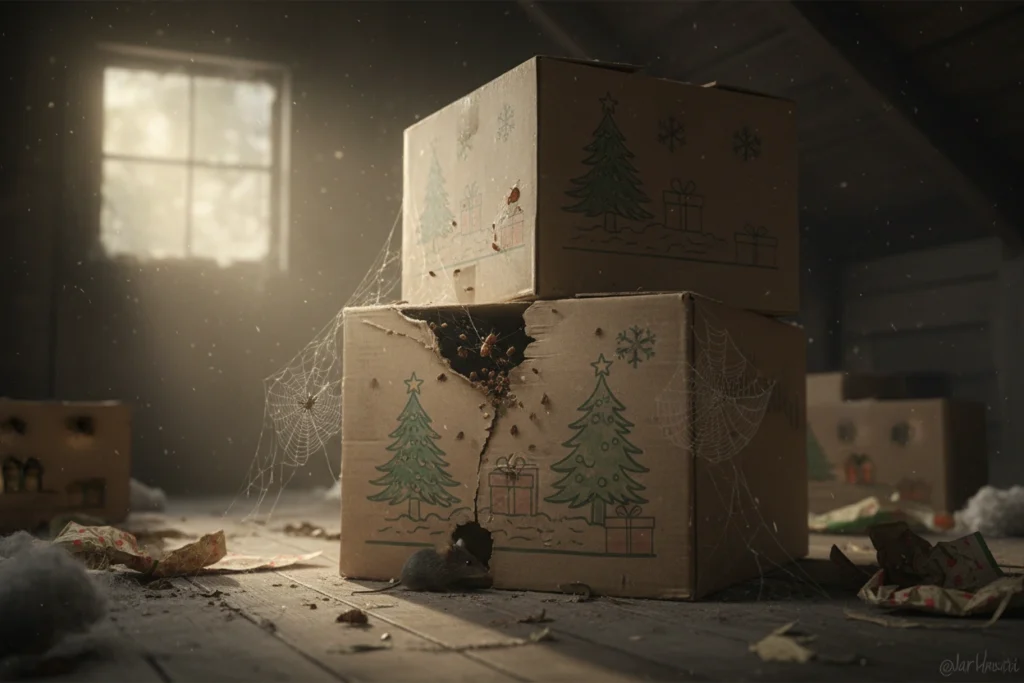
Your attic boxes have likely been sheltering pests for months without your knowledge. Mice, spiders, cockroaches, and silverfish actively seek out dark, undisturbed spaces, and cardboard boxes filled with soft decorations are ideal nesting environments. You’ll want to watch for droppings, gnaw marks, shredded materials, and musky odors before bringing anything indoors. Switching to airtight plastic containers and conducting seasonal inspections dramatically reduces your risk. Keep going to learn exactly how to protect your home this holiday season.
Key Takeaways
-
Attic boxes attract pests because dark, warm, undisturbed environments make cardboard containers ideal nesting spots for mice, spiders, cockroaches, and silverfish.
-
Soft decorations like fabric ornaments serve as nesting material, while corrugated cardboard provides concealed tunneling space for rodents and insects.
-
Warning signs include shredded paper, droppings, gnaw marks, spider webs, grease smears, and musky or ammonia-like odors.
-
Long-term, undisturbed storage significantly increases pest attraction, as minimal human activity allows infestations to develop undetected over time.
-
Switching from cardboard to rigid, airtight plastic containers dramatically reduces pest access and protects holiday decorations year-round.
What Pests Are Actually Living in Your Attic Boxes
When you pull down those attic boxes each December, you may be opening more than just holiday memories. Several pest types commonly nest in undisturbed attic storage, including mice, rats, spiders, cockroaches, and silverfish.
These pests seek dark, warm, and rarely disturbed environments — making cardboard decoration boxes ideal harborage sites.
Recognizing infestation signs early helps you avoid spreading pests throughout your living space. Watch for shredded paper or fabric, droppings along box edges, gnaw marks on cardboard, egg casings, shed skins, or foul odors. Regular inspections can further aid in identifying potential issues before they escalate.
Spider webs woven between boxes also indicate long-term occupancy.
Mice and rats pose the greatest risk, as they can chew through wiring and contaminate surfaces with disease-carrying waste. Identifying these signs before unpacking protects your home.

Why Holiday Decorations Are a Perfect Pest Habitat
Holiday decorations provide nearly everything a pest needs to establish a harborage: shelter, nesting material, darkness, and minimal disturbance. Understanding these pest attraction factors helps you recognize why your storage boxes aren’t as harmless as they look.
Holiday clutter risks increase considerably when materials sit undisturbed for 10–11 months annually.
Three conditions make decoration storage ideal for pests:
-
Soft materials — fabric ornaments, tree skirts, and ribbon provide direct nesting substrate for mice and spiders.
-
Corrugated cardboard boxes — the hollow fluting offers concealed tunneling space for cockroaches and rodents.
-
Irregular stacking patterns — gaps between boxes create protected microenvironments with stable temperatures and low airflow.
You’re fundamentally offering pests a controlled habitat. Recognizing these conditions is the first step toward eliminating them. Additionally, multiple infestation points in your storage area can exacerbate the problem and lead to larger pest issues.
Warning Signs Pests Have Gotten Into Your Storage
Knowing what makes your storage attractive to pests is only useful if you can recognize when they’ve already moved in. During seasonal inspections, examine boxes before bringing them inside.
Look for gnaw marks on cardboard, shredded paper or fabric used as nesting material, and dark grease smears along walls or box edges from rodent fur. Droppings are a reliable pest detection indicator—rice-shaped pellets suggest mice, while smaller dark specks point to cockroaches or other insects.
You might also notice a musky or ammonia-like odor in enclosed storage areas. Chewed wiring, damaged ornaments, and torn plastic bags all signal active pest presence. Additionally, compromised insulation effectiveness can lead to increased energy costs and further complications if pests are not addressed.
If you find any of these signs, don’t unpack the boxes indoors—contain the problem before it spreads into your living space.
How to Safely Unpack Decorations Without Spreading an Infestation
If you’ve spotted warning signs of pest activity in your stored decorations, how you unpack matters as much as where you store. Apply these unpacking tips with full pest awareness to stop a localized problem from spreading into your living space.
-
Unpack outdoors or in a garage — Open boxes away from your home’s interior. Shake out items over a trash bag to dislodge droppings, nesting debris, or live insects before bringing anything inside.
-
Inspect each item individually — Don’t dump entire boxes at once. Check every wreath, ornament, and string of lights for egg sacs, gnaw marks, or insect casings.
-
Seal and discard compromised materials immediately — Place contaminated packing materials in sealed plastic bags before disposal to prevent pests from escaping. Additionally, be mindful that small openings in your storage areas can attract rodents and other pests, making thorough inspections even more critical.
Storage Habits That Keep Pests Out Year-Round
Once you’ve inspected your decorations and confirmed they’re pest-free, how you store them determines whether you’ll face an infestation next season.
Swap cardboard boxes for rigid, airtight plastic containers, since cardboard absorbs moisture, breaks down easily, and gives rodents and insects both a nesting material and an entry point. Additionally, keeping food sources appealing can help prevent pests from being drawn to your stored items.
Before sealing each container, do a final inspection of every item you’re placing inside, ensuring you’re not locking pests or eggs in with your decorations.
Seal Containers Properly
Proper container selection makes a significant difference in keeping pests out of your holiday storage year-round. The right container materials and sealing techniques eliminate entry points that rodents, insects, and spiders exploit during colder months.
Follow these three practices when storing decorations:
-
Choose rigid, hard-sided plastic bins with tight-fitting, snap-lock lids—rodents chew through cardboard boxes easily, making them unreliable for long-term attic storage.
-
Inspect lid gaskets regularly for cracks or warping, replacing damaged containers immediately to maintain an airtight seal.
-
Wrap fragile items in sealed plastic bags before placing them inside bins, eliminating interior micro-habitats where insects nest between seasons.
Consistent application of these sealing techniques prevents infestations before they start, protecting both your decorations and your home’s structural integrity.
Avoid Cardboard Boxes
Selecting the right container goes beyond lid seals—the box material itself determines whether pests stay out entirely.
Cardboard absorbs moisture, weakens over time, and gives rodents and insects an easy material to chew through and nest inside. Once a cardboard box gets damp, it becomes a pest magnet you’re fundamentally storing decorations alongside.
Switch to hard-sided plastic bins as your primary cardboard alternatives.
Plastic resists chewing, doesn’t absorb moisture, and stacks securely without collapsing under weight. For moisture control, add silica gel packets inside each bin before sealing. These absorb residual humidity that builds up in attics and crawl spaces throughout the year.
Eliminate cardboard entirely from your long-term storage system—it’s the single easiest structural change you can make to reduce pest risk.
Inspect Before Storing
Before anything goes into a bin, inspect every decoration for signs of pest activity—droppings, gnaw marks, egg casings, or webbing. Pair this habit with a quick attic inspection each season to catch infestations before they spread.
Accurate pest identification tells you what you’re dealing with and how urgently you need to act.
Work through this process methodically:
-
Examine each item in bright light, checking crevices, fabric folds, and hollow ornaments where pests hide or lay eggs.
-
Inspect storage containers for breach points—cracks, warped lids, or chewed edges signal existing activity.
-
Document what you find, photographing any evidence to support pest identification if you need professional evaluation later.
Don’t store anything suspicious without addressing the problem first.
When to Call a Pest Control Professional
Even with diligent storage practices, you’ll sometimes find evidence of pests that have already taken hold—and that’s when professional intervention becomes necessary.
If you’re discovering droppings, gnaw marks, nesting material, or live insects repeatedly despite your pest prevention strategies, don’t attempt to manage the infestation alone. A licensed technician can accurately identify the species, locate entry points, and apply targeted treatments safely.
Seasonal inspection tips only go so far when an established colony is involved.
Professionals assess structural vulnerabilities you might miss, such as compromised insulation, unsealed pipe penetrations, or deteriorating eaves. Early professional involvement prevents minor activity from escalating into a costly infestation.
If you’re in the Portland metro area, contact Pest Patrol for a thorough attic and storage area evaluation before the holiday season begins.
Frequently Asked Questions
Can Pests From Attic Boxes Spread to the Rest of My Home?
Yes, they can. Pests from infested boxes spread quickly once disturbed. Follow pest prevention tips and apply seasonal storage precautions—inspect containers, seal gaps, and you’ll stop insects or rodents from migrating into your living spaces.
Are Certain Holiday Decoration Materials More Attractive to Pests Than Others?
Yes, certain decoration materials attract pests more than others. You’ll find that natural materials like wood, fabric, and dried plants invite infestations. Implement pest prevention strategies by choosing synthetic decoration materials whenever possible to minimize risk.
Does Pest Patrol Serve the Portland Metro Area for Attic Pest Problems?
Yes, Pest Patrol serves the Portland metro area for attic pest problems. They’ll inspect your attic insulation, apply targeted treatments, and provide pest prevention tips to methodically protect your home from infestations before they escalate.
How Much Does Professional Pest Inspection for Attic Storage Typically Cost?
Costs vary based on cost factors like attic size and infestation severity. You’ll typically pay $100–$300. Pest Patrol offers transparent pricing, so contact them directly to determine your inspection frequency and get an accurate quote.
Can Extreme Attic Temperatures Kill Pests Living Inside Storage Boxes?
Extreme temperatures rarely guarantee pest survival elimination. While temperature extremes stress insects and rodents, they’ve evolved remarkable tolerances. You can’t rely solely on heat or cold—professional treatment remains your most methodical, preventative solution for attic box infestations.
Conclusion
Don’t wait until you’ve already unpacked your decorations to address a potential pest problem. If you’ve spotted warning signs — droppings, gnaw marks, or nesting material — you’ll need to act fast before an infestation spreads. Switching to sealed plastic containers, inspecting boxes outdoors, and maintaining proper attic conditions are your first lines of defense. If the problem’s already beyond DIY control, contact Pest Patrol in Portland for a professional assessment before it escalates further.