
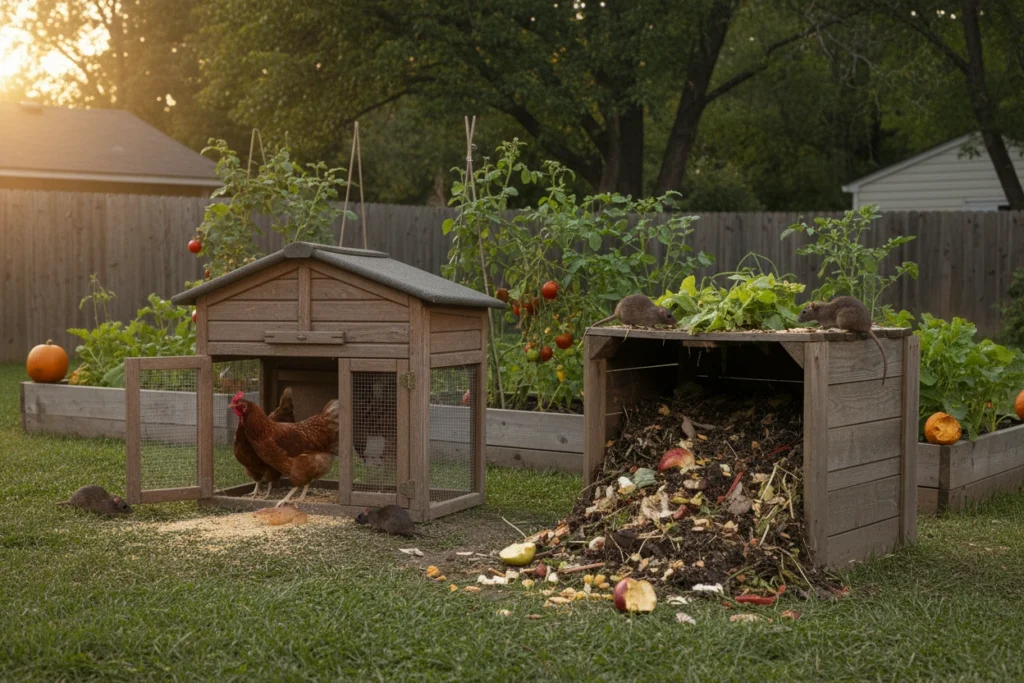
Backyard chickens, compost bins, and vegetable gardens give rats everything they need — food, water, and shelter — all in one place. Spilled chicken feed, decomposing scraps, and ripe produce create calorie-dense food sources rats can detect from considerable distances. Once they find a reliable supply, they establish burrows and reproduce quickly. Understanding exactly what’s drawing them in is the first step toward keeping your yard rat-free for good.
Key Takeaways
-
Spilled chicken feed creates calorie-dense scent trails that attract rats and signal safety, encouraging them to establish nearby burrows.
-
Compost bins offering food scraps, warmth, and moisture become prime rat habitats, especially when meat or dairy is included.
-
Dense garden plantings, water features, and fallen fruit provide rats with reliable cover, hydration, and consistent food sources.
-
Nesting materials like straw in coops attract rats seeking shelter, and gaps as small as half an inch allow entry.
-
Rats detect food from considerable distances, and multiple attractants combined accelerate reproduction and rapid infestation establishment.
Why Rats Are Drawn to Backyard Food Sources
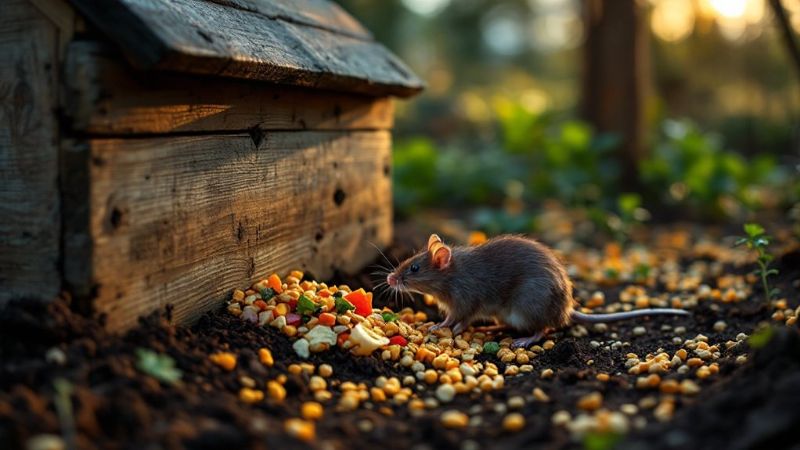
Rats are opportunistic feeders that thrive wherever food is accessible, and your backyard may be offering more than you realize. In urban environments, natural food sources become scarce, pushing rats toward residential properties where food is abundant and shelter is nearby.
Your chickens’ feed, compost pile, and vegetable garden each represent reliable food sources that rats will exploit consistently once discovered. Calorie-dense foods from these sources attract rats quickly, establishing scent trails that can lead to infestations. Rats rely on smell to locate food, detecting it from considerable distances. Once they identify your yard as a feeding site, they’ll establish burrows nearby and begin reproducing rapidly. A small problem can escalate into a serious infestation within weeks.
Understanding what draws rats to your property is the first step toward eliminating the conditions that make your backyard an attractive target.
How Backyard Chickens Attract Rats Without You Realizing
Backyard chickens don’t directly invite rats—your management habits do. Spilled chicken feed beneath feeders creates a reliable, calorie-dense food source that rats locate quickly, often within days.
Even small accumulations signal safety and abundance, prompting rats to establish nearby burrows.
Nesting materials compound the problem. Rats use loose straw, shavings, and feathers to build their own nests, so an accessible coop becomes both a food source and a shelter opportunity.
They’ll exploit gaps as small as half an inch to enter.
You can reduce risk considerably by using enclosed, gravity-fed feeders, removing uneaten feed nightly, and securing coop seams with hardware cloth. Additionally, keeping outdoor areas clean and food sources distant from the home will help deter rats.
Consistent management disrupts the conditions rats depend on, making your property a far less attractive target.
The Truth About Rats and Compost Bins
Compost bins are a prime rat attractant because they contain food scraps, moisture, and warmth—everything a rat needs to thrive. If you’re composting meat, dairy, or cooked foods, you’re basically running a rat buffet in your backyard. Switching to a rodent-resistant bin with a sealed base and locking lid dramatically reduces your exposure risk. Implementing proper waste management can further minimize the food sources that attract rodents.
Compost Attracts Rats
Three things draw rats to compost bins almost instantly: food scraps, warmth, and moisture. Decomposing organic material generates heat, creating an environment that’s particularly attractive during colder months.
If you’re adding meat, dairy, or cooked foods, you’re fundamentally setting out a buffet.
Effective compost maintenance greatly reduces rodent prevention challenges. Use a sealed, hard-sided bin rather than an open pile. Bury food scraps deep within the pile and cover them with brown material like dried leaves or cardboard.
Avoid adding high-protein food waste entirely. Turn your pile regularly to disrupt nesting and accelerate decomposition.
Elevating your bin off the ground and installing a wire mesh barrier underneath adds another layer of protection. Small adjustments in how you manage compost make a considerable difference in deterring rats.
Securing Your Compost Bin
Even the best composting habits won’t fully protect you if your bin itself is easy to access. Compost bin design matters greatly—opt for a hard-sided container made from thick plastic or metal rather than an open pile or flimsy wire frame.
Your bin should include a secure, latching lid and a solid or hardware cloth bottom with openings no larger than ¼ inch to block entry points.
Beyond structure, consistent compost maintenance tips include turning your pile regularly to reduce odor, which is the primary signal attracting rats.
Keep moisture levels balanced—overly wet compost intensifies smell. Elevate your bin slightly off the ground if possible, and inspect it weekly for gnaw marks, burrow attempts, or gaps in the frame that rats could exploit.
Garden Features That Quietly Invite Rats In
Your garden’s design can work against you in ways you mightn’t expect. Dense plantings give rats the ground-level cover they need to move and nest undetected, while water features like ponds or birdbaths provide a reliable drinking source that keeps rodents coming back. Fallen fruit from trees or berry shrubs adds a consistent food supply that quietly turns your yard into a rat’s ideal habitat. Additionally, compromised insulation in nearby structures can lead to increased rodent activity as they seek shelter and nesting sites.
Dense Plantings Provide Cover
Dense plantings like ivy, juniper, and ornamental grasses create the low-profile shelter rats need to move through your yard undetected.
Dense foliage functions as a network of natural habitats, giving rats protected corridors between food sources, nesting zones, and entry points into your home. The thicker the ground cover, the harder it becomes to spot burrow entrances, droppings, or runway paths along fences and walls.
You don’t need to eliminate all landscaping, but you should manage it strategically.
Trim ground cover back at least 12 inches from your home’s foundation. Pull ivy away from fences and structures regularly. Keep ornamental grasses thinned and elevated off the soil.
Reducing dense coverage removes the concealment rats depend on and makes early detection far more realistic.
Water Features Attract Rats
Water features like birdbaths, koi ponds, and decorative fountains give rats something they constantly need: a reliable water source close to shelter and food.
Rats don’t travel far from nesting sites, so when your garden combines water, food scraps, and dense cover within a small area, it becomes an ideal habitat.
To reduce the risk, empty and refill birdbaths frequently, and eliminate standing water wherever possible.
Install pond edges with smooth barriers that limit easy access. Keep vegetation around water features trimmed short so rats can’t move between nesting sites undetected.
Fix leaky irrigation lines and remove saucers that collect water beneath potted plants.
Eliminating even one resource makes your yard considerably less attractive to rats looking to establish a permanent presence.
Fallen Fruit Feeds Rodents
Beyond standing water, the food sources scattered across your yard play an equally powerful role in drawing rats in.
Fallen fruit is one of the most overlooked attractants in residential gardens. Rodent behavior is largely opportunistic—rats actively patrol yards for reliable, low-effort food sources, and rotting fruit on the ground fits that profile perfectly.
If you have apple, pear, plum, or cherry trees, check beneath them daily during harvest season. Remove dropped fruit promptly and seal it in a bin rather than adding it to open compost.
Even small amounts of decomposing fruit emit odors that rats detect from considerable distances. Consistent cleanup eliminates the scent trail that keeps rats returning to your yard night after night.
Signs You Already Have a Rat Problem in Your Yard
Before addressing a rat problem, you need to know what to look for. Rat behavior follows predictable patterns, making early detection possible if you know the indicators.
Poor outdoor hygiene accelerates infestations, so spotting signs early gives you an advantage.
Watch for these warning signs:
-
Droppings – Dark, capsule-shaped pellets near food sources or along fences
-
Burrows – Smooth, 2–3 inch diameter holes along garden beds or compost bins
-
Gnaw marks – Damage on wood, irrigation lines, or food containers
-
Grease trails – Dark smear marks along walls or pathways rats repeatedly travel
-
Nighttime activity – Scratching sounds or movement after dark near chicken coops or gardens
Additionally, keeping an eye out for unsealed garbage can help identify potential attractants before they become a problem.
How to Rat-Proof Your Chickens, Compost, and Garden
Once you’ve confirmed rat activity, the next step is eliminating the conditions that make your yard an easy target.
Prioritize chicken coop security by installing hardware cloth with openings no larger than ½ inch, burying it at least 12 inches underground to block burrowing. Store feed in metal containers with locking lids, and remove uneaten feed nightly.
For compost bin maintenance, use a sealed, rodent-resistant bin rather than an open pile. Avoid adding meat, dairy, or cooked food, and turn your compost regularly to disrupt nesting opportunities.
In your garden, harvest ripe produce promptly, eliminate ground cover near fences, and clear debris piles where rats shelter.
These targeted measures reduce harborage and food access, making your yard considerably less attractive to rats.
Frequently Asked Questions
Are Certain Rat Species More Common in Portland Backyards Than Others?
Yes, Norway rats and roof rats dominate Portland’s urban rat species. Norway rats burrow underground, while roof rats climb structures. Both thrive in backyard habitats, so you’ll likely encounter one of these two species.
Can Rats Spread Diseases to Backyard Chickens or Their Eggs?
Yes, rats can spread rat-borne diseases like Salmonella and Leptospirosis to your flock, directly threatening chicken health. They’ll contaminate feed, water, and nesting areas, potentially compromising egg safety. Eliminate rat access points immediately to protect your chickens.
Do Rat Problems Get Worse During Specific Seasons in Oregon?
Yes, you’ll notice rat problems worsen in fall and winter as weather influence drives them indoors seeking warmth and food. Their seasonal behavior intensifies around your backyard chickens, compost, and gardens during Oregon’s wet, cold months.
Will Having Outdoor Cats Actually Deter Rats From Your Yard?
Outdoor cats provide limited rat deterrent effectiveness. While their presence and outdoor cat behavior can discourage some rats, determined rodents often adapt and avoid cats entirely. You’ll need professional pest control for reliable, long-term rat management.
How Quickly Can a Small Rat Problem Turn Into an Infestation?
You can go from a few rats to a full infestation in 4–6 weeks. Rat breeding accelerates fast when food sources are available, so you’ll want to act immediately at the first sign.
Conclusion
Your backyard chickens, compost, and garden don’t have to be an open invitation for rats. By securing feed storage, managing compost correctly, and eliminating harborage points, you’re cutting off the food, water, and shelter rats depend on. Don’t wait until you’ve spotted droppings or tunneling — take preventive action now. Consistent management across all three areas is your most effective defense against an infestation taking hold.