
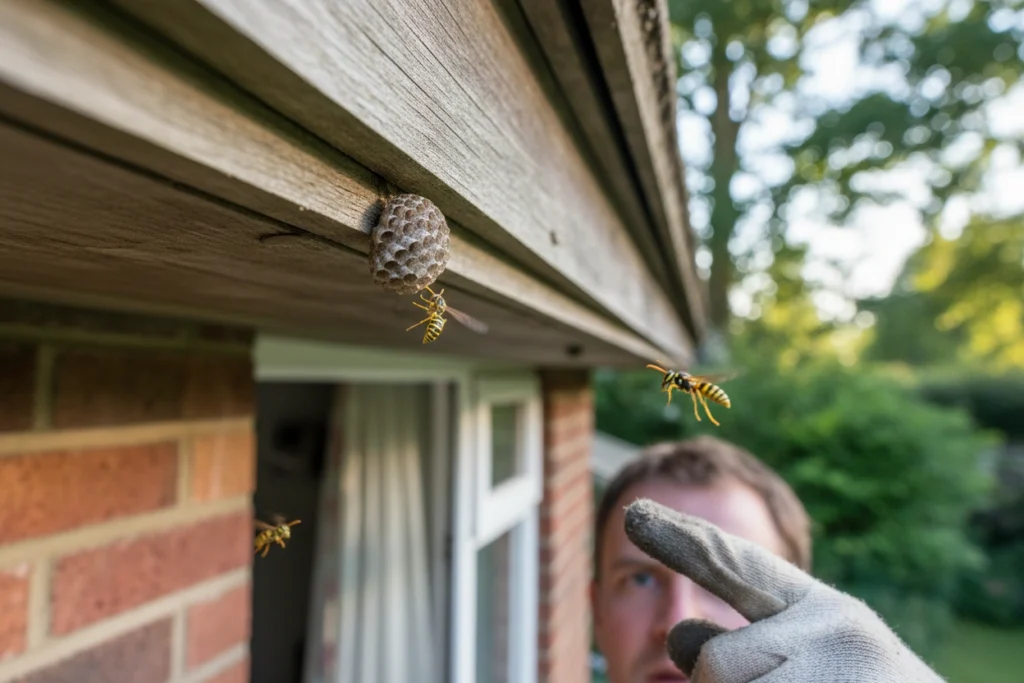
To spot a wasp nest early, check sheltered areas like eaves, deck undersides, wall voids, and dense shrubs. Watch for repeated flight patterns and small wood-scraping grooves on fences or railings—these are clear signs of nest-building activity. Ground-nesting species favor abandoned burrows and loose soil. The sooner you identify these indicators, the safer your removal options become. Keep going to learn exactly what to look for and when to act.
Key Takeaways
-
Wasps commonly nest under eaves, inside wall voids, beneath decks, and in dense shrubs, so inspect these areas regularly for activity.
-
Repeated flight patterns in the same area often indicate nearby foraging routes or an established nest.
-
Small, shallow grooves on wood surfaces like fence posts or deck railings signal wasps scraping material for nest construction.
-
Active nests have a distinctive papery, layered appearance, with paper wasps showing open honeycomb structures and yellow jackets having enclosed nests.
-
Increased wasp traffic near entry points or audible buzzing are early warning signs of colony establishment requiring prompt attention.
Where Wasps Like to Build Their Nests
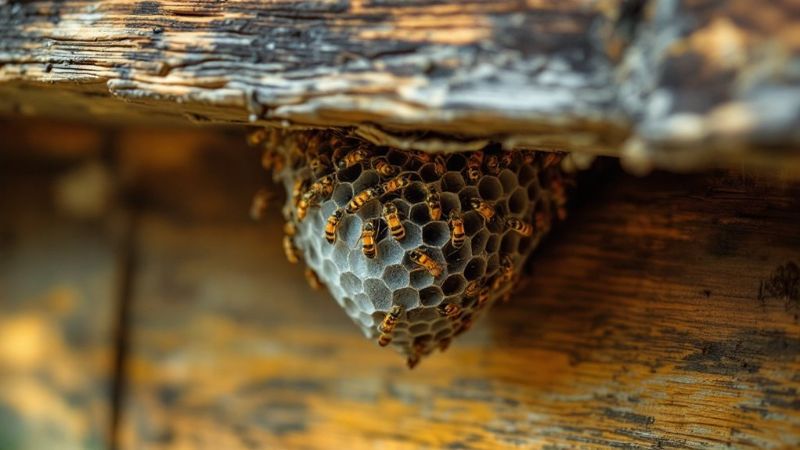
Wasps are opportunistic builders, choosing sheltered locations that offer protection from the elements and easy access to foraging routes.
You’ll typically find nests tucked under eaves, inside wall voids, beneath decks, and within dense shrubs or tree cavities. Ground-nesting species target abandoned rodent burrows or loose soil.
Their seasonal behavior follows a predictable pattern. Queens emerge in spring, select a site, and begin constructing small paper-like structures from chewed wood fiber and saliva—their primary nesting materials. Successful past nesting locations influence wasps to return to the same sites, making these areas more attractive for new colonies.
By midsummer, colonies expand rapidly, making nests harder to remove safely.
Check sheltered, dark spaces regularly, particularly between April and September. Attic vents, gutters, and fence posts are frequent targets.
Early detection is critical—a nest discovered in spring is far easier to address than one found in late summer.
Early Warning Signs of Wasp Activity
Knowing where wasps prefer to build gets you halfway there—but spotting a nest before it’s fully established means recognizing the activity that precedes it.
Watch for repeated wasp flight patterns along a consistent path—this indicates foraging or nest-building routes. You’ll also notice wasps scraping exposed wood surfaces, collecting fiber to produce nest materials.
Check fence posts, deck railings, and wooden siding for small, shallow grooves. A single queen in early spring signals colony establishment is underway.
As workers emerge, you’ll see increased wasp behavior near entry points like eaves, vents, or wall gaps. Catching these signs early—before the colony grows to hundreds or thousands—gives you a far safer window for removal or professional intervention. Understanding wasp activity patterns can help you identify and address nests more effectively.
How to Spot a Wasp Nest Around Your Home
Wasps typically build nests in sheltered, concealed spots—under eaves, inside wall voids, beneath decks, in attic spaces, and within dense shrubs or ground burrows. You’ll recognize an active nest by its papery, layered appearance, ranging from a golf ball-sized structure to one exceeding a basketball depending on colony maturity. If you notice wasps repeatedly flying in a fixed pattern toward a specific point, you’re likely tracking workers returning to a nearby nest. Additionally, increased wasp activity can indicate a nearby nest that needs attention.
Common Nesting Locations
Finding a wasp nest early means checking the spots where wasps most commonly build. Inspect tree branches, particularly where limbs fork or where bark provides a sheltered anchor point.
Check eaves, soffits, and roof overhangs, as wasps favor protected surfaces that deflect rain and wind. Examine attic spaces carefully, especially near vents, gaps in fascia boards, or exposed framing.
Beyond the exterior, survey wall voids, deck undersides, fence posts, and ground-level burrows. Yellow jackets frequently nest underground near foundation edges.
Paper wasps prefer open, elevated surfaces, while hornets often build enclosed, papery globes suspended from branches or structures.
Move methodically from ground level upward, scanning for papery gray or brown material with a layered, hexagonal structure. Early detection in any of these locations prevents a small colony from becoming a serious infestation.
Visual Warning Signs
Spotting a wasp nest before it grows into a serious problem starts with recognizing a few reliable visual cues. Nest appearance varies by species, but most active nests share identifiable characteristics.
Paper wasps build open, honeycomb-structured nests with visible cells. Yellow jackets construct enclosed, papery gray nests with a single entry point. Hornets produce large, football-shaped nests with layered exteriors.
Examine your property systematically—check eaves, soffits, fence lines, and dense shrubs. Watch for increased wasp traffic converging on one location, which typically signals a nearby nest.
Seasonal changes also affect visibility; nests expand rapidly through summer and become easier to detect by late July. Discoloration on wood surfaces or repeated wasp activity near a fixed point warrants closer inspection.
Unusual Wasp Activity
Beyond visual identification, behavioral patterns often reveal a nest’s presence before you can see it directly. Monitoring wasp behavior patterns gives you critical early indicators.
Watch for repeated flight paths converging on a single point — wasps travel consistent routes between their nest and food sources. If you notice five or more wasps regularly disappearing into the same wall gap, roofline, or shrub, a nest is almost certainly present.
Seasonal activity trends also guide your assessment. Colonies expand rapidly between June and September, when worker populations peak and foraging activity intensifies.
Increased wasp presence near your trash, outdoor dining areas, or flowering plants during these months signals nearby nesting activity. Track frequency and flight direction to pinpoint the source accurately.
What a Growing Nest Means for Your Property
A growing wasp nest on your property isn’t just a nuisance—it’s an active structural and safety risk that escalates quickly. Understanding nest growth implications helps you act before damage compounds.
Colonies expand rapidly through summer, with workers chewing through wood, drywall, and insulation to enlarge cavity nests. These property damage risks intensify as populations peak in late summer, sometimes reaching thousands of individuals.
Structurally compromised wood becomes vulnerable to moisture intrusion and secondary pest activity. Nests built inside walls or attic spaces are particularly destructive and harder to access safely.
Beyond structure, a mature colony dramatically increases sting risk to anyone nearby, as their stinging behavior can lead to multiple stings and serious allergic reactions. You’re not managing a static problem—you’re managing one that doubles in threat level with every passing week.
When Is a Wasp Nest Actually Dangerous?
Not every wasp nest demands immediate alarm, but several conditions shift a nest from manageable to genuinely hazardous.
Nest behavior becomes aggressive when colonies sense vibration, proximity, or disruption near entry points. You’re at elevated risk if a nest sits within three feet of a doorway, window, or HVAC intake.
Seasonal risks intensify in late summer and early fall. Colony populations peak during this window, food sources decline, and workers become highly defensive.
A nest that seemed dormant in spring can house several thousand wasps by August.
Additional danger indicators include multiple nest sites on a single structure, nests inside wall voids, and any household member with a known venom allergy. Professional extermination is essential for addressing these conditions safely rather than any DIY intervention.
When to Call a Pest Control Professional
Certain conditions make professional intervention the only reasonable course of action.
If the nest exceeds softball size, sits inside a wall void, or occupies an enclosed attic space, don’t attempt nest removal yourself.
Aggressive wasp behavior—unprovoked stinging, guard wasps hovering near you, or audible buzzing from within a structure—signals an established, defensive colony that responds violently to disturbance.
You should also call a professional if anyone in your household has a known venom allergy, or if the nest is within ten feet of a frequently used entry point.
Pest Patrol serves the Portland metro area and surrounding communities, using targeted treatments that eliminate the colony while minimizing risk to your family and pets.
Fast response times mean the problem gets resolved before the nest grows larger.
Frequently Asked Questions
How Long Does It Take for a Wasp Nest to Fully Form?
A wasp nest’s growth stages span 4–6 months. You’ll see it reach full size by late summer. Understanding its nest lifespan helps you act early before colonies grow too large to manage safely.
Can Wasps Return to the Same Location After Nest Removal?
Yes, wasps can return to the same location due to seasonal patterns and residual pheromones. You’ll need to treat the site after removal to discourage nest relocation, as scouts actively seek familiar, previously successful nesting spots.
What Time of Year Are Wasps Most Active in Portland?
You’ll notice peak wasp behavior in Portland from late summer through early fall. Seasonal patterns show colonies reach maximum size between July and September, making August your highest-risk month for aggressive encounters and visible nest activity.
Do Wasps Cause Structural Damage to Homes or Buildings?
Wasps don’t typically cause structural damage, but their nest identification reveals risks: they’ll chew wood fibers to build nests, and wasp behavior inside walls can weaken insulation, create moisture issues, and attract secondary pests over time.
How Much Does Professional Wasp Nest Removal Typically Cost?
Professional wasp nest removal typically costs $100–$500, depending on nest size and location. You’ll save more avoiding DIY removal risks. Pest Patrol offers transparent pricing and nest prevention strategies to protect your property effectively.
Conclusion
Spotting a wasp nest early is your best defense against a full-scale infestation. You’ve now got the key indicators to watch for — from unusual flight patterns to visible nest structures around your roofline, eaves, and yard. Don’t wait until activity intensifies. Once you’ve confirmed nest presence, act quickly. If the nest is established or in a high-traffic area, you’ll want a licensed pest control professional handling removal to minimize your risk of stings.