
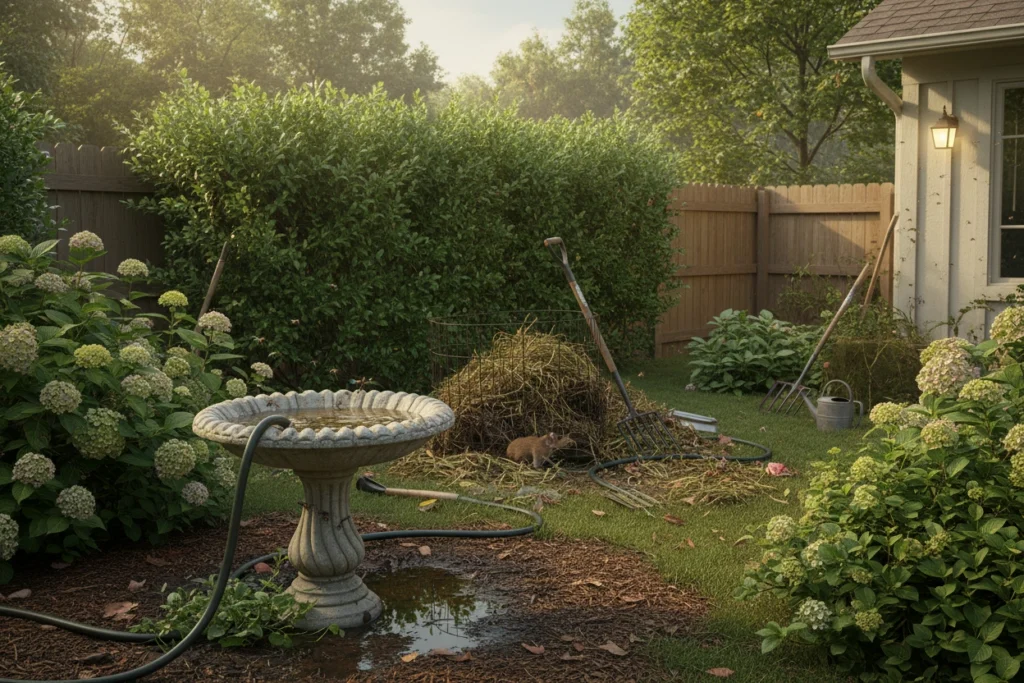
Your summer landscaping can quietly turn your yard into a pest haven through a few key mistakes. Dense ground cover, bark mulch against your foundation, and standing water in plant saucers all create ideal breeding and nesting conditions. Overgrown shrubs touching your siding give pests direct access inside. Even your fertilization habits and mowing height can worsen the problem. The specific changes that make the biggest difference might surprise you.
Key Takeaways
-
Dense ground covers and overgrown shrubs touching foundations create direct pest access points and ideal shelter conditions.
-
Standing water in plant saucers and saturated soil provide breeding grounds for mosquitoes and cockroaches.
-
Bark mulch placed against siding retains moisture, attracting termites, fungus gnats, and other moisture-seeking pests.
-
Fruit-bearing trees and heavy-nectar flowers like fennel attract wasps, rodents, and beetles to your property.
-
Overwatering and excess nitrogen fertilization encourage lush growth that draws and sustains larger pest populations.
Landscaping Choices That Quietly Attract Pests

Your landscaping decisions can quietly turn your yard into a pest magnet. Seasonal landscaping trends—like dense ground cover, decorative mulch beds, and ornamental water features—create ideal harborage and moisture conditions for ants, rodents, and spiders.
Overgrown shrubs touching your foundation give pests direct structural access, while standing water in plant saucers or low-lying garden beds attracts mosquitoes and cockroaches.
Applying pest identification techniques early helps you connect specific landscaping choices to the species exploiting them. Bark mulch piled against siding retains moisture that draws moisture-seeking pests like earwigs and carpenter ants.
Native plantings, though ecologically valuable, can still harbor aphid colonies that attract predatory wasps. Recognizing these connections lets you make smarter landscaping decisions before infestations take hold. Additionally, early recognition of pest activity can prevent a small issue from escalating into a major infestation.
Which Plants and Mulches Bring Pests Closest to Home
The plants and mulches you choose for your summer landscape directly influence which pests end up at your foundation.
Dense ground covers, fruit-bearing shrubs, and flowering plants that produce heavy nectar draw ants, wasps, and beetles close to your home’s exterior.
Wood chip and bark mulch, while visually appealing, retain moisture and create ideal harborage conditions for cockroaches, earwigs, carpenter ants, and rodents. Additionally, implementing sanitation practices can further deter pests from making your landscape their home.
Pest-Attracting Plant Choices
Many homeowners don’t realize that their landscaping choices directly influence which pests move in close to their home’s foundation. Certain plants consistently attract pest populations by providing food, shelter, or breeding sites.
Fruit-bearing trees and shrubs like elderberry and ornamental cherry draw wasps, yellow jackets, and rodents when fruit drops and ferments. Dense ground covers such as English ivy create protected harborage zones for rats, spiders, and moisture-loving insects.
Flowering plants with heavy nectar production, including fennel and sweet clover, attract stinging insects in large numbers. Choosing pest resistant varieties and prioritizing native species reduces these vulnerabilities considerably.
Native plants are adapted to local conditions, require fewer interventions, and don’t over-produce the fruit, sap, or foliage that typically sustains pest populations near your home.
Mulch Types and Risks
Mulch plays an essential role in moisture retention and soil health, but choosing the wrong type creates ideal conditions for pests to establish harborage zones directly against your foundation.
Organic mulch—including wood chips, bark, and straw—delivers real mulch benefits but retains moisture and decomposing material that attracts termites, carpenter ants, earwigs, and rodents.
Mulch pests thrive when you pile material within 12 inches of your foundation walls.
Decorative mulch like dyed wood products carries the same structural risks despite its aesthetic appeal.
Prioritize mulch maintenance by keeping depth between two and three inches and pulling it back from your home’s perimeter.
Consider mulch alternatives such as gravel, crushed rock, or rubber mulch near foundation zones—these materials drain efficiently, discourage burrowing, and considerably reduce pest harborage opportunities.
How Yard Moisture Creates a Pest Breeding Ground
Excess moisture in your yard is one of the most overlooked factors driving pest activity during summer months. Standing water, saturated soil, and consistently damp organic material create ideal breeding conditions for mosquitoes, fungus gnats, and moisture-seeking cockroaches.
Even minor irrigation inefficiencies compound the problem over time.
Effective moisture management starts with auditing your irrigation schedule. Overwatering creates subsurface saturation that attracts soil-dwelling insects and encourages rodents seeking hydration.
You should also evaluate your drainage solutions—clogged gutters, compacted soil, and poor grading all trap water near your foundation, drawing pests directly toward your structure.
Correct low spots in your yard, extend downspouts away from the foundation, and water during early morning hours to allow surface drying before nightfall. Regular pest control can help mitigate the risks associated with larger infestations, ensuring your efforts in moisture management are effective.
Controlling moisture controls pest pressure.
Common Lawn Care Habits That Make Pest Problems Worse
Moisture control addresses one critical variable, but the way you maintain your lawn introduces several others.
Overwatering plants saturates root zones, creating fungal growth and decomposing organic matter that attract fungus gnats, earwigs, and soil-dwelling beetles.
Improper fertilization compounds the problem—excess nitrogen accelerates soft, lush plant growth that draws aphids, whiteflies, and caterpillars seeking easy feeding sites.
Leaving grass clippings in thick layers provides ground-level cover where pests shelter and reproduce.
Cutting grass too short stresses turf, weakening its natural resistance and exposing bare soil that rodents and ants exploit for nesting.
Even mulching incorrectly—piling it against foundation walls or plant stems—creates insulated corridors that let termites, carpenter ants, and moisture-loving pests move directly toward your structure undetected. Additionally, professional pest control services can provide tailored strategies to help mitigate these issues effectively.
Landscaping Changes That Actually Keep Pests Out
Strategic landscaping choices give you a functional defense against pest pressure without relying solely on chemical treatments.
You can incorporate pest-repelling plants like lavender, mint, and marigolds near entry points, pull mulch at least six inches back from your foundation to eliminate moisture and harborage zones, and eliminate standing water in gutters, planters, and low-lying areas where mosquitoes and other insects breed. Additionally, cleaning gutters regularly helps prevent access points for rodents and birds.
These targeted adjustments disrupt the conditions pests depend on, making your yard measurably less attractive to the species most active during Portland summers.
Choose Pest-Repelling Plants
Certain plants produce natural compounds that insects and wildlife find repellent, making them a functional addition to any Portland-area landscape.
Pest repelling herbs like lavender, mint, basil, and rosemary emit volatile oils that deter mosquitoes, aphids, and ants. Aromatic flowers such as marigolds and chrysanthemums release pyrethrin and similar compounds that repel a broad spectrum of insects.
Plant these strategically near entryways, garden borders, and foundation lines where pest pressure is highest. Mint spreads aggressively, so contain it in pots to prevent it from overtaking adjacent plants.
While these selections reduce pest activity, they won’t eliminate established infestations. If you’re already dealing with significant pest pressure, contact Pest Patrol for targeted treatment before using plants as a complementary deterrent.
Optimize Mulch Placement
Mulch placement directly affects how much moisture and shelter pests find near your home’s foundation. Keep mulch depth between two and three inches — anything deeper retains excess moisture and creates ideal harborage conditions for cockroaches, earwigs, and rodents.
Maintain a six-inch clearance between mulch and your foundation walls; closing that gap eliminates a primary entry corridor pests exploit.
Mulch material matters equally. Avoid wood chip varieties near your foundation, as they decompose into organic matter that attracts termites and fungus gnats.
Opt instead for inorganic materials like gravel or rubber mulch in perimeter zones. Reserve wood-based mulch for garden beds positioned well away from the structure.
These targeted adjustments greatly reduce the conditions that draw pests toward your home.
Eliminate Standing Water
Standing water is one of the most overlooked pest attractants in residential landscaping, creating breeding grounds for mosquitoes, drawing rodents, and accelerating conditions that support cockroach and ant activity.
Even shallow accumulation in plant saucers, clogged gutters, or low-lying turf can sustain pest populations throughout summer.
Audit your property for drainage solutions that redirect water away from your foundation and landscaped beds. French drains, regraded soil slopes, and downspout extensions are effective water management tools that eliminate persistent pooling.
Empty decorative containers after rainfall, and make sure irrigation systems aren’t overwatering. Compacted soil holds moisture longer, so aerating high-traffic areas reduces saturation.
Addressing standing water systematically removes a critical resource pests depend on, making your landscape considerably less hospitable without applying a single treatment.
When to Call Pest Control Instead of Digging Deeper
While some pest activity can be managed with basic landscaping adjustments, others require professional intervention. If you’re seeing recurring infestations despite corrective measures, accurate pest identification becomes critical. Misidentifying a pest leads to ineffective treatment and wasted effort.
Call a pest control professional when you notice structural damage to your home’s foundation or siding, visible rodent burrows near landscaped areas, active wasp nests in ground cover, or persistent ant trails returning after multiple treatments. These signs indicate established colonies that DIY prevention strategies won’t resolve.
Pest Patrol serves the Portland metro area and surrounding communities, offering precise identification and targeted treatment plans. Acting quickly limits property damage and reduces the scope of treatment needed, saving you both time and money.
Frequently Asked Questions
Does Landscaping Affect Pest Problems Inside My Home Too?
Yes, your landscape maintenance directly impacts indoor pest prevention. Overgrown plants, mulch against your foundation, and dense ground cover create pathways that let pests migrate inside, turning outdoor landscaping issues into serious interior infestations.
Are Certain Portland Neighborhoods More Prone to Landscaping-Related Pest Issues?
Yes, your landscaping choices combined with neighborhood conditions greatly influence pest pressure. Portland’s wooded, wetter areas like Forest Park’s edges or older Eastside neighborhoods tend to amplify pest activity more than newer, drier developments.
How Quickly Can Landscaping Changes Lead to a Pest Infestation?
Landscaping timing directly impacts pest lifecycle acceleration—you can see an infestation develop within days. Fresh mulch, new plantings, or standing water quickly attract scouts, triggering rapid colony establishment before you’d typically notice warning signs.
Can Pets or Children Be Harmed by Pests Attracted Through Landscaping?
Yes, pests attracted through landscaping can harm your pets and children. You’ll minimize risks by adopting safe landscaping practices and pest prevention strategies that eliminate nesting sites, standing water, and vegetation harboring dangerous stinging, biting, or disease-carrying pests.
Does Homeowners Insurance Cover Pest Damage Linked to Landscaping?
Most homeowners insurance policies won’t cover pest damage. You’ll need proactive pest prevention strategies and consistent landscaping maintenance tips to protect your property, as insurers typically classify infestations as preventable neglect rather than covered accidental losses.
Conclusion
Your landscaping choices directly determine whether pests stay outside or find their way in. By eliminating excess moisture, rethinking mulch placement, and removing harborage points near your foundation, you’re cutting off the conditions pests depend on to survive and reproduce. These aren’t minor adjustments — they’re structural changes that reduce infestation risk at the source. If pests have already established themselves despite your efforts, contact Pest Patrol for a targeted, professional assessment.