
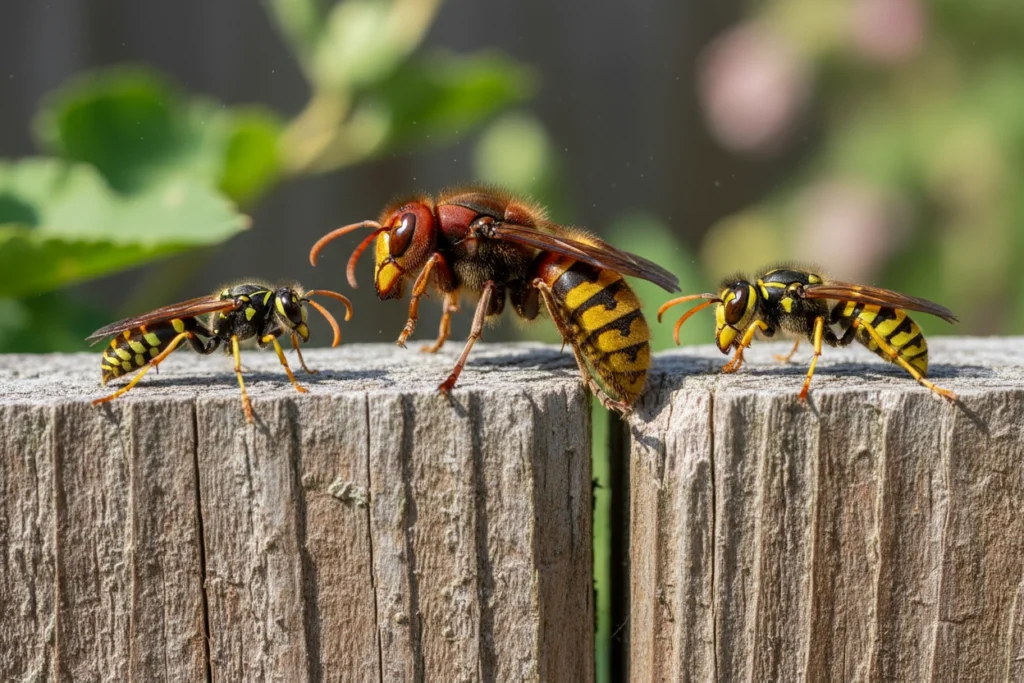
Wasps, hornets, and yellow jackets all belong to the family Vespidae within the order Hymenoptera, but they’re taxonomically distinct groups. Hornets fall under the Vespa genus and are the largest, exceeding 25mm. Yellow jackets (Vespula and Dolichovespula) are compact and highly aggressive. You can separate them by body size, color patterning, and nest architecture. Each group also carries a different sting risk profile — something worth understanding before you encounter one up close.
Key Takeaways
-
Hornets are the largest, measuring 25–35mm, while yellow jackets are the smallest at 10–16mm, with wasps falling in between.
-
Yellow jackets display compact, high-contrast yellow and black bodies, whereas hornets feature broader thoraxes and distinctive white or ivory facial markings.
-
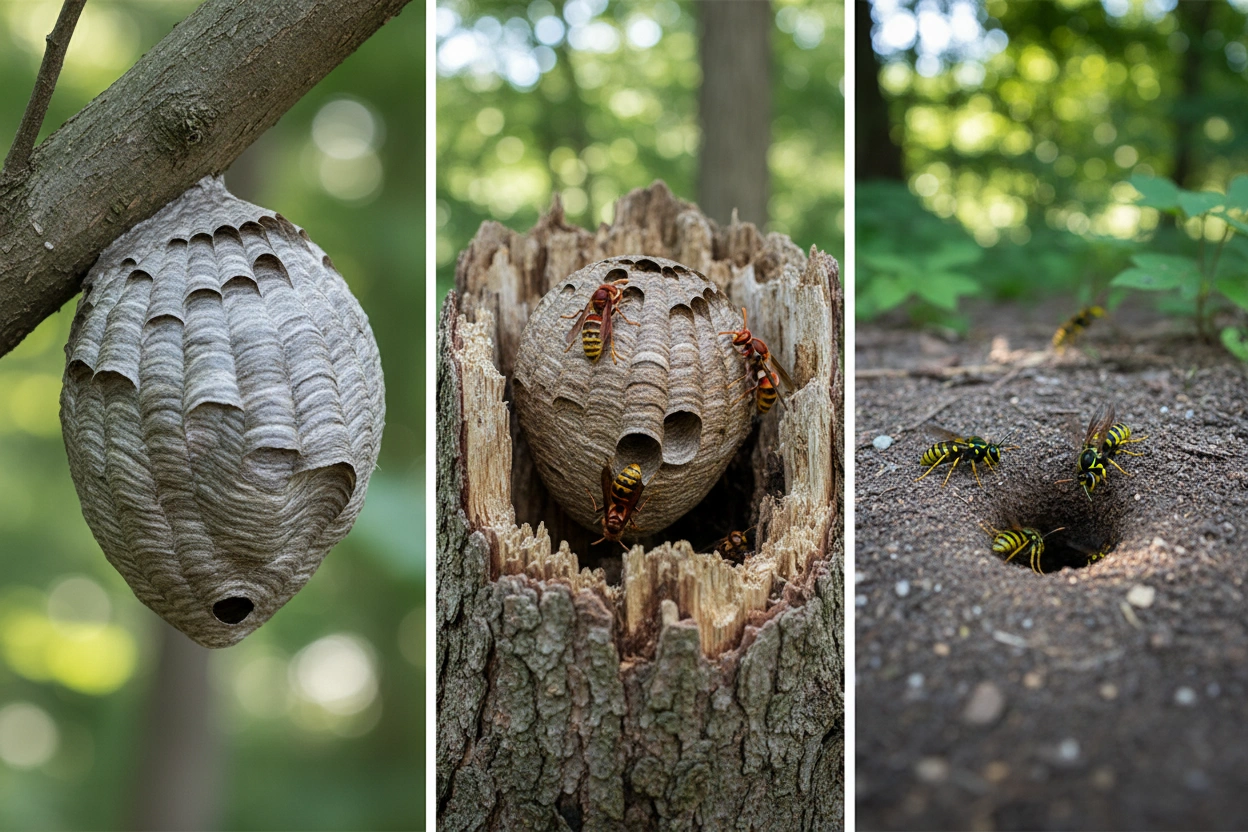
Hornets nest in elevated, paper-enveloped structures; yellow jackets nest underground or in wall voids; wasps build exposed, umbrella-shaped aerial nests.
-
Yellow jackets are the most aggressive, attacking in swarms, while paper wasps sting only when threatened and solitary wasps rarely attack humans.
-
Hornets deliver more venomous stings due to larger venom volumes, making their stings more painful and potentially dangerous than those of yellow jackets.
How Wasps, Hornets, and Yellow Jackets Differ at a Glance
When you encounter a stinging insect, distinguishing between wasps, hornets, and yellow jackets can feel overwhelming—yet the differences are more straightforward than you’d expect.
All three belong to the order Hymenoptera, family Vespidae, but they diverge considerably in morphology, nesting habits, and sting severity.
Wasps represent the broadest category, encompassing thousands of species with slender bodies and varied nesting habits—from solitary burrows to papery aerial colonies.
Hornets, technically a wasp subset (Vespa genus), are remarkably larger and construct enclosed aerial nests.
Yellow jackets (Vespula and Dolichovespula genera) typically nest underground or in wall voids and demonstrate heightened aggression, increasing sting severity risk during encounters.
Recognizing these distinctions helps you assess threat levels and respond appropriately when you’re near their colonies.
Size, Color, and Body Shape: Telling Them Apart Visually
Beyond behavioral and taxonomic distinctions, visual identification offers your fastest route to telling these insects apart. Examining color variations and body proportions lets you distinguish species quickly and accurately.
-
Wasps (Vespula spp. and Polistes spp.) display slender, elongated abdomens with a pronounced petiole and yellow-black banding.
-
Hornets (Vespa and Dolichovespula spp.) are the largest, featuring broader thoraxes, white or ivory facial markings, and muted yellow-brown coloration.
-
Yellow jackets (Vespula squamosa and relatives) show compact, robust body proportions with vivid, high-contrast yellow and black patterns.
-
Key marker: hornets typically exceed 25mm in length, yellow jackets measure 10–16mm, and paper wasps occupy an intermediate range.
You’ll notice these distinctions become reliable identifiers once you know exactly what structural features to prioritize.
Where Wasps, Hornets, and Yellow Jackets Build Their Nests
Nest architecture and site selection diverge sharply across these three groups, giving you a reliable secondary identification method when direct visual inspection isn’t possible.
Solitary and paper wasps construct exposed, umbrella-shaped combs using chewed wood fiber, favoring aerial nest locations like eaves, branches, and porch ceilings.
Hornets (Vespa and Dolichovespula spp.) encase their combs within a layered paper envelope, selecting elevated nest locations in tree canopies or structural voids.
Yellow jackets demonstrate the broadest nesting flexibility — you’ll find them exploiting subterranean cavities, wall voids, and occasionally exposed aerial sites. Their nesting materials remain consistent across species: masticated wood pulp processed into gray, papery cells.
Recognizing these distinctions in nest location and nesting materials lets you make a confident genus-level identification without handling the insects directly.
Which One Is Most Likely to Sting You?
Sting risk correlates directly with colony size, nesting ecology, and species-level behavioral thresholds — and understanding these variables lets you predict which genus poses the greatest threat in a given encounter.
-
Yellow jackets (Vespula/Dolichovespula) exhibit the most aggressive defensive behavior, attacking en masse when you disturb subterranean or enclosed nests.
-
Hornets (Vespa/Dolichovespula maculata) deliver superior sting intensity due to larger venom volumes and acetylcholine concentrations.
-
Paper wasps (Polistes) demonstrate comparatively moderate defensiveness, stinging primarily when you directly threaten their open-comb nest.
-
Nest proximity determines your actual risk — ground-nesting yellow jackets present the highest accidental disturbance probability.
Yellow jackets remain statistically most dangerous to you due to cryptic nesting sites, large colony populations, and pronounced collective defensive behavior thresholds.
Why Yellow Jackets Turn Aggressive in Late Summer
Late summer behaviors intensify further because colonies simultaneously rear reproductive gynes and males, demanding heightened resource defense.
With no queen-directed suppression of worker foraging flexibility, individual workers exhibit amplified threat responses.
You’re fundamentally encountering a colony operating under nutritional stress and reproductive urgency.
Nest disturbance at this stage provokes rapid, coordinated stinging responses far exceeding those observed during peak larval-rearing phases earlier in the season.
Are Wasps, Hornets, and Yellow Jackets Actually Useful?
When you observe wasps, hornets, and yellow jackets in your environment, you’re actually witnessing highly functional predators that suppress aphid, caterpillar, and beetle populations through active predation.
You’ll also find that these Vespidae members contribute to pollination by transferring pollen between flowering plants as they forage for carbohydrates.
Their roles as both predators and pollinators position them as critical regulators within trophic food webs, maintaining ecological equilibrium across diverse biomes.
Pest Control Benefits
Despite their fearsome reputations, wasps, hornets, and yellow jackets serve critical ecological roles as natural pest controllers. You’ll find these insects are remarkably efficient predators, offering significant pest control advantages across diverse ecosystems.
These species target and enable effective removal of numerous agricultural and garden pests:
-
Caterpillars and larvae – Vespula and Dolichovespula species actively hunt lepidopteran larvae, reducing crop damage.
-
Aphids – Yellow jackets (Vespula squamosa) consume aphid populations, protecting vegetation.
-
Flies – Hornets (Vespa crabro) capture and dismember dipteran species with precision.
-
Spiders and beetles – Various wasp species regulate arachnid and coleopteran populations, maintaining biodiversity.
Without these predators, pest populations would escalate dramatically, requiring increased chemical pesticide intervention and disrupting ecological balance.
Pollination Roles Explained
Beyond their predatory functions, these insects also contribute to plant reproduction through pollination — though far less efficiently than bees. You’ll find that wasps, hornets, and yellow jackets lack the dense, branched body hairs that facilitate substantial pollen transfer in bees. Their smooth exoskeletons carry minimal pollen loads between visits.
Their floral preferences lean toward open, shallow-structured flowers — species within Apiaceae and Asteraceae families — where nectar remains easily accessible without specialized morphological adaptations.
You should understand that pollination efficiency among these Vespidae members remains considerably lower than that of Apidae, yet it’s not negligible.
Certain orchid species within genera like Epipactis depend specifically on wasp visitation for reproduction.
Ecosystem Balance Contributions
Though their stings provoke instinctive aversion in most people, Vespidae members — wasps, hornets, and yellow jackets — function as critical regulators within terrestrial ecosystems. Their ecosystem roles extend far beyond nuisance classification:
-
Predatory regulation: They suppress arthropod populations, including caterpillars, aphids, and flies, maintaining invertebrate equilibrium.
-
Food sources: They provide essential nutritional resources for birds, spiders, praying mantises, and badgers within food webs.
-
Nutrient cycling: Scavenging species decompose carrion and organic debris, accelerating biochemical breakdown.
-
Larval provisioning: Adults capture and paralyze prey, delivering high-protein food sources directly to developing colony larvae.
You’ll find that removing Vespidae from an ecosystem triggers measurable cascading disruptions across multiple trophic levels, demonstrating their indispensable functional significance within balanced ecological communities.
When a Wasp, Hornet, or Yellow Jacket Nest Is Too Close
When a nest of Vespula, Dolichovespula, Vespa, or related vespid species is established within close proximity to high-traffic human activity zones — such as doorways, eaves, or recreational areas — it greatly elevates the risk of defensive stinging behavior.
You should assess nest location, species identity, and colony size before determining appropriate nest removal protocols. Aerial nests of Dolichovespula and subterranean colonies of Vespula require distinct intervention strategies.
You must implement targeted safety measures, including protective clothing, ideal timing during low-temperature periods when workers are less active, and, when necessary, licensed pest management consultation.
Attempting unsanctioned removal of a mature Vespa mandarinia or Vespula germanica colony without proper equipment considerably increases envenomation risk and potential anaphylactic exposure.
How to Identify Which One You Saw
To distinguish the species you encountered, examine the physical characteristics first: yellow jackets (Vespula and Dolichovespula spp.) display bold black-and-yellow banding on a compact, hairless abdomen, while hornets (Vespa and Dolichovespula spp.) are noticeably larger with white or ivory facial markings.
Solitary wasps exhibit slender, thread-waisted bodies with variable coloration. Behavioral patterns also provide reliable taxonomic clues—yellow jackets aggressively forage at food sources and nest in subterranean or enclosed cavities, hornets construct large aerial paper nests and exhibit strong colony defense, and paper wasps (Polistes spp.) build open, umbrella-shaped combs under eaves with comparatively less aggression.
Cross-referencing both morphological features and observed behaviors against geographic range data will yield the most accurate species identification.
Physical Appearance Differences
Telling a wasp, hornet, or yellow jacket apart comes down to a few key physical markers. You’ll notice distinct color patterns and body markings that separate each species taxonomically.
-
Wasps display slender, elongated abdomens with smooth, shiny exoskeletons and minimal hair; coloration varies widely across species.
-
Hornets (Vespa spp.) present larger, robust body structures with white, orange, or black body markings concentrated on the head and abdomen.
-
Yellow jackets (Vespula spp.) exhibit compact bodies featuring bright yellow-and-black banded color patterns with a distinctly narrow petiole.
-
Key differentiator: Body size matters—hornets typically measure 25–35mm, wasps 10–25mm, and yellow jackets 10–16mm.
Examining these morphological characteristics under close observation lets you accurately classify which species you’ve encountered.
Behavioral Identification Clues
Beyond physical markers, behavioral patterns offer reliable taxonomic clues for field identification.
You’ll observe distinct interspecific differences in both aggressive behavior and nesting habits that help distinguish these Vespidae members.
Yellow jackets exhibit highly defensive aggressive behavior, attacking repeatedly when you disturb their underground or wall-cavity nests.
Hornets (Vespa spp.) construct aerial paper nests in trees or structural overhangs, responding aggressively when you approach within several meters.
Solitary wasps like Sceliphron demonstrate minimal defensive aggression, typically ignoring human proximity.
Monitor foraging patterns as additional taxonomic indicators.
Yellow jackets scavenge protein and sugars near human food sources.
Hornets primarily hunt insects aerially.
Paper wasps forage methodically on vegetation, harvesting caterpillars for larval provisioning.
These behavioral signatures collectively provide you with reliable, non-morphological identification criteria.
Frequently Asked Questions
Can Wasps, Hornets, or Yellow Jackets Sting More Than Once?
Unlike bees, you’ll find that wasps, hornets, and yellow jackets can sting multiple times. Their smooth stingers don’t detach, allowing repeated venom potency delivery, increasing sting frequency and your risk of significant envenomation.
Are Any of These Insects Protected or Considered Endangered Species?
Generally, you won’t find wasps, hornets, or yellow jackets listed as endangered. However, you should note that certain species face conservation status concerns due to habitat loss, prompting taxonomic researchers to monitor their population dynamics closely.
Do Wasps, Hornets, and Yellow Jackets Die After the Winter?
Most don’t survive winter. You’ll find that colony members perish in cold temperatures, while mated queens exhibit winter survival by hibernating. They’ll then initiate new nest behavior come spring, establishing entirely fresh colonies.
Can These Insects Cause Allergic Reactions Beyond the Sting Site?
Yes, you can experience systemic allergic reactions beyond the sting site. Your immune response may trigger sting symptoms like hives, swelling, or anaphylaxis. You’ll want to explore treatment options, including antihistamines or epinephrine, immediately.
Do Wasps, Hornets, and Yellow Jackets Communicate With Each Other?
Yes, you’ll find these vespids rely on chemical signals and alarm pheromones to coordinate social behavior. They’ve evolved sophisticated nest communication systems, alerting nestmates to threats and orchestrating colony-wide defensive responses with remarkable taxonomic efficiency.
Conclusion
Whether you’ve encountered a paper wasp (Polistes spp.), a European hornet (Vespa crabro), or a yellow jacket (Vespula spp.), you’re now equipped to distinguish these Vespidae family members by morphology, nesting behavior, and aggression thresholds. You’ve learned that each taxon occupies a distinct ecological niche. When you identify your specimen accurately, you’ll make smarter decisions about coexistence or removal—recognizing that these hymenopterans aren’t interchangeable insects but taxonomically discrete organisms with unique behavioral profiles.