
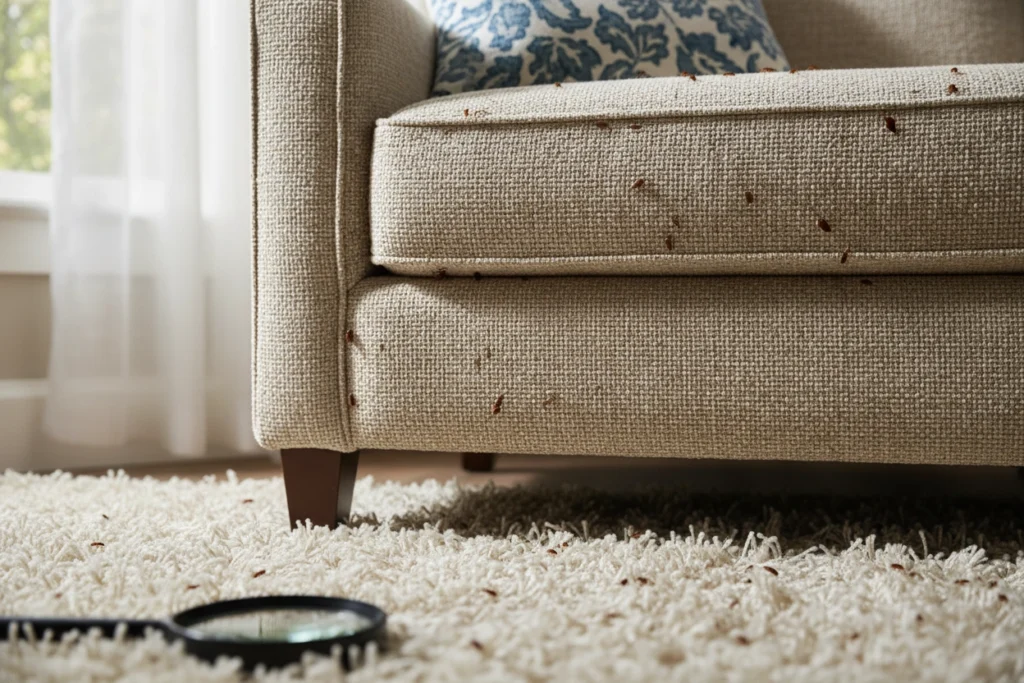
Bed bugs don’t just live in your mattress — they can absolutely infest your couch, chairs, and carpets too. They hide in upholstery seams, tufting buttons, frame joints, and carpet fibers, particularly near areas where you rest regularly. Any furniture within 8 feet of a sleeping area is vulnerable. Carpets near baseboards and rug undersides are especially common nesting zones. The sections below break down exactly where they hide and how to get rid of them.
Key Takeaways
-
Bed bugs can absolutely live in couches, chairs, and carpets, hiding in seams, tufting buttons, frame joints, and carpet fibers.
-
They typically infest furniture within 8 feet of human resting areas, making any frequently used furniture vulnerable to infestation.
-
Bed bugs spread from beds to nearby furniture after 6–8 weeks, traveling along baseboards and floors toward human heat and carbon dioxide.
-
Signs of infestation include rust-colored fecal stains, translucent shed skins, pearl-white eggs, and live or dead 5–7mm flat bugs.
-
Effective removal combines heat treatment above 120°F, steam cleaning, and systematic vacuuming of seams, crevices, and carpet edges.
Can Bed Bugs Live in Couches, Chairs, and Carpets?
While bed bugs are notorious for infesting mattresses, they’re equally capable of colonizing couches, chairs, and carpets. Understanding bed bug behavior is critical to protecting your home.
These insects seek harborage in dark, tight spaces close to human hosts, making upholstered furniture types prime targets. Couches and chairs offer numerous hiding spots—seams, cushions, and frame crevices—while carpets provide low-pile fibers ideal for egg-laying and sheltering juvenile nymphs.
You’ll typically find them within 8 feet of where people regularly rest or sleep. Unlike common belief, bed bugs don’t exclusively target bedrooms.
Any furniture where you spend prolonged periods becomes vulnerable. Identifying and treating all furniture types simultaneously is essential, as overlooking even one harborage point can allow an infestation to persist and spread rapidly.
How Bed Bugs Spread From Your Bed to Your Furniture
Bed bugs spread from your bed to your furniture through predictable behavioral patterns driven by population pressure and resource-seeking instincts.
As your mattress becomes overcrowded, bed bug behavior shifts toward exploration. They’ll travel along baseboards, walls, and floors, colonizing nearby furniture materials like upholstered sofas, wooden chair frames, and carpet fibers.
You’ll typically see this migration pattern when infestations mature past 6–8 weeks. Bed bugs follow carbon dioxide trails and heat signatures you emit while sleeping or resting.
If you regularly sit on a couch after waking, you’re inadvertently creating a secondary host location.
Their flattened bodies let them penetrate fabric seams, cushion folds, and wooden joints easily.
Understanding this spread pattern helps you target multiple furniture pieces simultaneously during treatment.
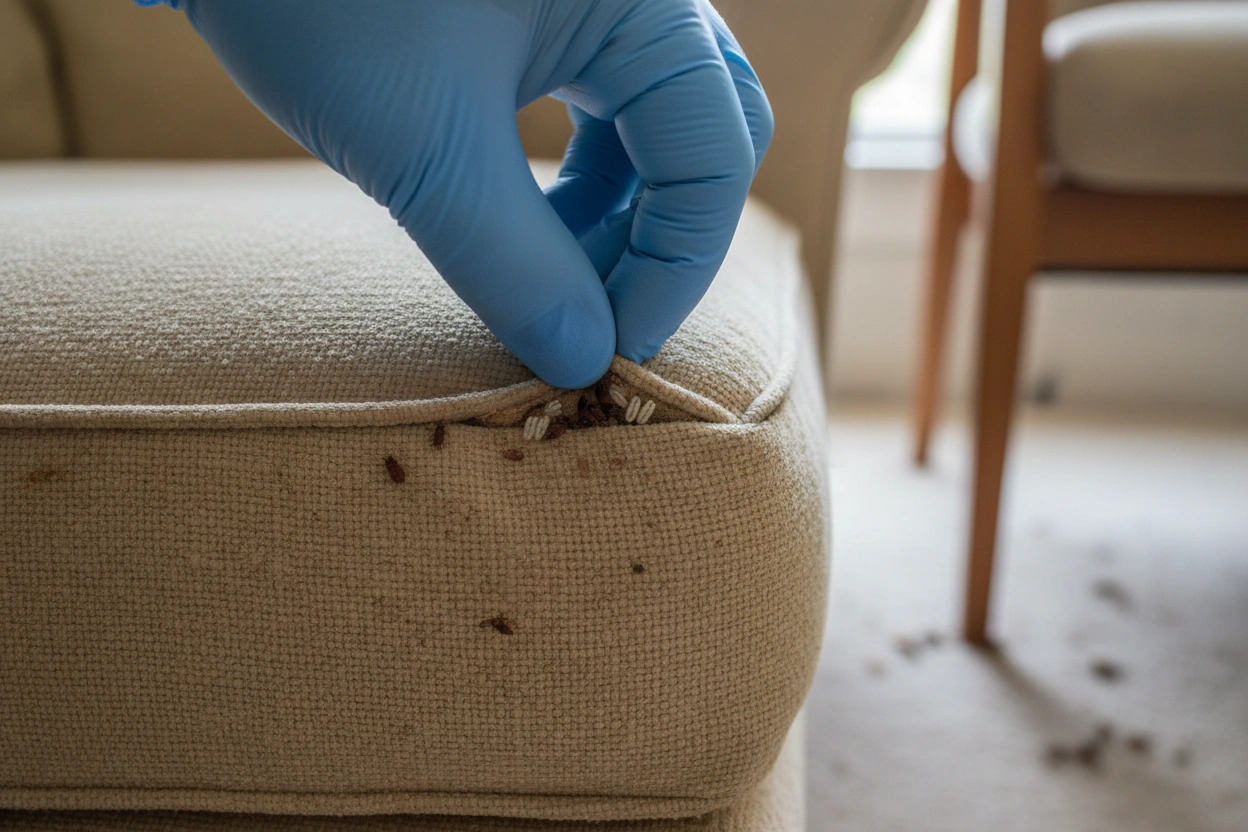
The Exact Spots Bed Bugs Hide in Your Couch and Chairs
Your couch and chairs offer bed bugs dozens of discrete harborage points that most people overlook during inspections.
Different fabric types create unique hiding opportunities, making thorough detection critical for effective pest control.
Check these three high-priority zones:
-
Seams and tufting buttons — bed bugs compress their flat bodies into stitched edges, piping, and decorative button folds where fabric overlaps.
-
Frame joints and wooden slats — underneath removable cushions, the exposed frame corners and stapled fabric edges provide dark, undisturbed cavities.
-
Dust cover and leg attachments — the thin fabric panel on the underside and where legs bolt into the frame create rarely inspected entry points.
Ignoring these zones during inspections virtually guarantees a missed infestation.
Where Bed Bugs Nest in Carpet and Area Rugs
Carpets and area rugs don’t offer bed bugs the same structural complexity as furniture, but they still create viable nesting zones that catch many homeowners off guard.
Bed bugs burrow into carpet fibers along baseboards, underneath area rugs, and near bed frames where foot traffic is minimal. They favor low-pile carpets near sleeping areas over high-traffic zones.
The rug’s underside provides dark, undisturbed shelter that’s easy to overlook during routine rug maintenance. You’ll often find eggs and shed skins concentrated at carpet edges rather than the center.
Inspect seams where carpet meets the wall, lift area rugs regularly, and vacuum aggressively along borders. Neglecting these zones allows infestations to persist even after treating furniture and bedding.
What Bed Bug Evidence Actually Looks Like on Furniture
When you’re inspecting furniture for bed bugs, you’ll encounter several distinct visual clues that confirm an active infestation.
Look for small, rust-colored or dark brown fecal spots on fabric seams, wooden joints, and cushion edges, which result from digested blood the bugs excrete after feeding.
You’ll also find translucent shed skins, called exuviae, in tight crevices and along frame edges, left behind as bed bugs molt through their developmental stages.
Identifying Visual Infestation Signs
Spotting a bed bug infestation early hinges on knowing exactly what evidence looks like on your furniture. Understanding bed bug behavior helps you apply targeted detection techniques before populations explode.
Look for these three distinct visual indicators:
-
Fecal stains — Small, dark rust-colored spots roughly the size of a pen tip, typically clustered along seams, tufts, and crevices of couches and chairs.
-
Cast skins — Translucent, hollow exoskeletons left behind as nymphs molt through five developmental stages. You’ll find these tucked inside cushion folds.
-
Live or dead bugs — Adult bed bugs measure approximately 5–7mm, appear mahogany-brown, and display a distinctly flat, oval shape unless recently fed.
Methodically inspect each furniture component using a flashlight and magnifying glass.
Spotting Fecal And Shed Skin
Beyond recognizing what evidence exists, you need to understand its specific appearance up close—because fecal stains and shed skins are the two most reliably consistent indicators you’ll encounter on infested furniture before you ever spot a live bug.
Fecal droppings appear as tiny, rust-colored or dark brown spots roughly the size of a pen tip. They don’t wipe away cleanly—instead, they smear when wet, distinguishing them from debris or dirt.
You’ll typically find clusters along seams, cushion edges, and frame joints.
Shed skins are translucent, hollow casings that mirror a bed bug’s exact shape. Nymphs shed five times before reaching adulthood, so multiple casings in one location confirm an active, progressing infestation.
These skins are fragile and often accumulate near harborage points within upholstery folds.
How to Thoroughly Inspect Your Furniture for Bed Bugs
To thoroughly inspect your furniture for bed bugs, you’ll need a few key tools: a flashlight, a magnifying glass, and a flat-edged object like a credit card or putty knife to probe tight spaces.
Focus your inspection on common hiding spots, including seams, tufts, and folds of upholstered furniture, along with joints, cracks, and crevices in wooden frames.
As you inspect, look for the telltale signs of infestation — live or dead bugs, shed exoskeletons, tiny white eggs, and dark reddish-brown fecal stains.
Gather Your Inspection Tools
Before you begin your inspection, you’ll need a few key tools to do the job effectively. Having the right essential tools guarantees your inspection techniques are thorough and accurate.
-
Flashlight – A high-powered flashlight illuminates dark crevices, seams, and hidden areas where bed bugs typically shelter inside couches, chairs, and carpets.
-
Magnifying Glass – Bed bugs and their eggs are small. A magnifying glass helps you identify them, along with rust-colored stains or shed skins.
-
Latex Gloves and a Credit Card – Gloves protect your hands during contact, while a credit card lets you scrape along tight seams and fabric folds to disturb and expose hiding bed bugs.
Gather these tools before starting your inspection.
Check Common Hiding Spots
With your tools ready, it’s time to focus on the areas where bed bugs are most likely hiding. Understanding bed bug habits is critical—they prefer tight, dark spaces close to where people rest.
On couches and chairs, inspect seams, cushion folds, wooden joints, and underneath stapled fabric. Remove cushions completely and examine every crease.
For carpets, concentrate on edges along baseboards, beneath furniture legs, and along tack strips. Use your flashlight to illuminate dark crevices and your magnifying glass to identify rust-colored stains, shed skins, or live insects.
Run the stiff-bristled brush along seams to dislodge hidden bugs. Consistent furniture cleaning disrupts harborage sites and exposes infestations earlier.
Document everything you find with your phone camera for accurate pest control reporting later.
Identify Bed Bug Signs
Knowing what to look for transforms a casual glance into a meaningful inspection. Bed bug behavior leaves distinct physical evidence across various furniture materials, giving you reliable clues during your search.
Watch for these three critical indicators:
-
Rust-colored stains — Small reddish-brown spots on fabric seams or cushion edges indicate crushed bugs or excrement deposits.
-
Shed exoskeletons — Translucent, hollow casings collected in crevices signal active molting, confirming an established population.
-
Live eggs or nymphs — Tiny, pearl-white eggs or near-invisible juvenile bugs clustered near stitching reveal active reproduction.
Examine fabric textures carefully, since porous furniture materials trap evidence differently than smooth surfaces.
Use a flashlight and magnifying glass to distinguish bed bug signs from ordinary debris or dust accumulation.
Heat, Vacuuming, and Sprays: Removing Bed Bugs From Furniture
Once you’ve confirmed a bed bug infestation in your furniture, acting quickly with the right combination of heat, vacuuming, and chemical treatments gives you the best chance of full eradication.
Heat treatment at 120°F or higher kills bed bugs at all life stages, making steam cleaners highly effective on most furniture materials.
Use vacuum techniques systematically, targeting seams, cushions, and crevices, then immediately seal and discard the bag.
Spray effectiveness varies by product — contact sprays kill on impact, while residual formulas provide ongoing protection.
Always verify that your chosen spray is safe for specific furniture materials like fabric, leather, or wood.
Combining all three methods simultaneously increases your success rate considerably over using any single approach alone.
When the Infestation Is Too Big to Handle Yourself
Sometimes, despite your best efforts with heat, vacuuming, and sprays, a bed bug infestation reaches a scale that DIY methods simply can’t resolve.
A severe infestation spreading across multiple furniture pieces and rooms requires professional extermination immediately.
Recognize these critical signs you need professional help:
-
Widespread presence — You’re finding bed bugs in multiple rooms, furniture pieces, and wall voids simultaneously.
-
Repeated reinfestation — Despite consistent DIY treatments, bed bugs return within days or weeks.
-
Large egg clusters — You’re discovering dense egg deposits deep within furniture joints and carpet fibers.
Professional exterminators use commercial-grade heat treatment systems and EPA-approved chemical applications that penetrate areas your household methods can’t reach, eliminating the infestation completely at every life stage.
Frequently Asked Questions
Can Bed Bugs Survive in Outdoor Furniture or Patio Cushions?
Yes, bed bugs can survive in outdoor furniture and patio cushions. You’ll want to prioritize pest prevention by regularly inspecting these outdoor habitats, as bed bugs thrive in fabric and hidden crevices, regardless of location.
Do Bed Bugs Infest Furniture in Storage Units or Moving Trucks?
Yes, bed bugs can infest furniture in storage units and moving trucks. You’ll want to take moving truck precautions and understand storage unit risks, as these confined spaces provide ideal hiding conditions for bed bugs to survive and spread.
How Long Can Bed Bugs Live Without Feeding on Furniture?
You should know that a bed bug lifespan can extend 12-18 months without feeding. They’ll survive extended feeding intervals by entering a dormant state, making furniture a long-term hiding spot even when unoccupied.
Can Bed Bugs Transfer From Furniture to Clothing or Personal Belongings?
Yes, bed bugs can transfer from furniture to your clothing and personal belongings. They’ll crawl onto items you’ve placed on infested surfaces, causing clothing contamination and spreading through your personal belongings to new locations.
Are Certain Furniture Materials or Fabrics More Resistant to Bed Bug Infestations?
You’ll find that smooth, non-porous furniture types like leather resist bed bugs better than rough fabric textures. Regular cleaning methods and professional pest control can considerably reduce infestation risks across all materials you own.
Conclusion
Bed bugs don’t stay confined to your mattress—they’ll colonize your couches, chairs, and carpets given enough time. You’ve now learned where they hide, what evidence they leave behind, and how to eliminate them from upholstered furniture and floor coverings. If your infestation has spread beyond what DIY methods can handle, you’ll need a licensed pest control professional who can deploy commercial-grade heat treatments or residual insecticides to fully eradicate the problem.