
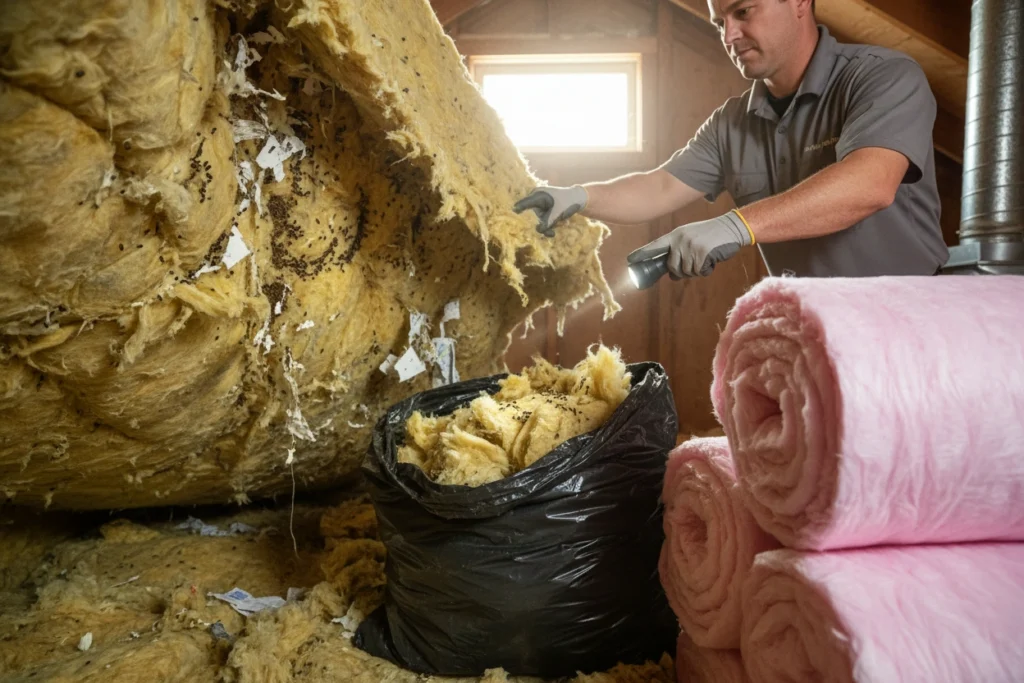
You should replace rodent-damaged insulation as soon as you spot visible droppings, urine stains, nesting debris, or compressed batts. Waiting lets biological contaminants spread, mold develop, and your R-value drop further—driving up energy bills and health risks. Vulnerable household members, like children and the elderly, face the greatest danger from airborne pathogens. The sections below break down exactly what to look for, what it costs, and how to protect your home long-term.
Key Takeaways
-
Replace insulation immediately if you notice visible droppings, urine stains, nesting debris, or persistent ammonia odor indicating deep contamination.
-
Heavily chewed or tunneled insulation loses R-value and requires replacement, as compressed batts significantly reduce thermal resistance.
-
Rising energy bills often signal R-value degradation from rodent damage, indicating insulation replacement is necessary.
-
Contaminated fiberglass or cellulose insulation harboring pathogens should be replaced, as salvaging it risks ongoing health hazards.
-
Always address rodent entry points before reinstalling new insulation to ensure long-term effectiveness and prevent recurring damage.
Why Rodent Insulation Damage Is Worse Than It Looks
When you spot chewed insulation in your attic or crawl space, what you’re seeing is only part of the problem.
Rodent behavior compounds the damage greatly — they don’t just chew through insulation types like fiberglass batts or blown-in cellulose, they also nest, urinate, and defecate throughout the material.
Those biological contaminants saturate the insulation, creating pathways for mold growth and airborne pathogens like Hantavirus.
You can’t remediate this damage by simply patching affected areas.
Compressed and soiled insulation loses its R-value, meaning your HVAC system works harder and your energy costs climb.
The contamination also spreads beyond what’s visibly damaged.
Understanding the full scope of rodent-related insulation damage helps you make smarter, faster decisions about when replacement — not repair — is the only viable option.
Warning Signs Your Insulation Needs to Be Replaced
Catching the warning signs early lets you act before contamination spreads or energy losses compound. Inspect your attic or crawl space regularly, regardless of insulation types installed.
Replace insulation immediately if you identify these indicators:
-
Visible droppings, urine stains, or nesting debris embedded throughout the material
-
Compressed or flattened batts showing tunneling activity that destroys thermal resistance
-
Persistent ammonia odor indicating deep saturation beyond surface-level contamination
-
Rising energy bills revealing R-value degradation caused by structural damage
Once you’ve confirmed replacement is necessary, address rodent prevention simultaneously.
Seal entry points, install hardware cloth, and eliminate food sources before installing new material. Skipping prevention guarantees repeat damage, making your insulation investment worthless within one season.
Health Risks of Leaving Rodent-Contaminated Insulation in Place
Leaving rodent-contaminated insulation in place exposes your household to serious, well-documented health hazards. Rodent droppings, urine, and nesting materials harbor dangerous pathogens, including Hantavirus, Salmonella, and Leptospira bacteria. These contaminants become airborne when insulation is disturbed, putting you and your family at direct inhalation risk.
The contamination risks extend beyond immediate infection. Prolonged exposure to degraded, rodent-soiled insulation can trigger chronic respiratory conditions, allergic reactions, and immune system stress.
Children, elderly individuals, and immunocompromised persons face heightened vulnerability.
You shouldn’t underestimate secondary risks either. Rodent-soiled insulation attracts mold growth due to moisture from urine saturation, compounding existing health hazards.
Prompt removal and replacement isn’t optional—it’s a necessary step to restore a safe, habitable environment for your household.
Can Rodent-Damaged Insulation Ever Be Salvaged?
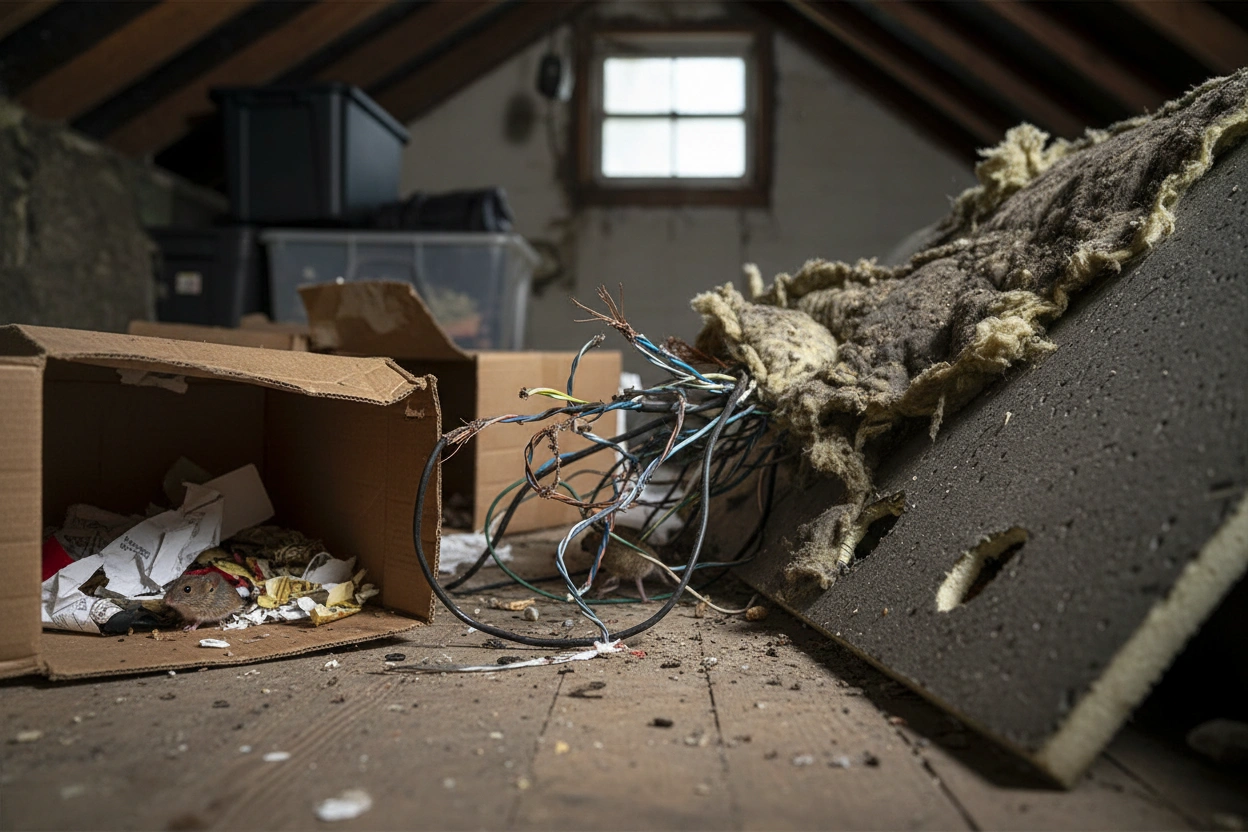
Salvaging rodent-damaged insulation is rarely viable, but the answer depends on the contamination’s extent, the insulation type, and where it’s located. Before pursuing insulation restoration, assess these critical factors:
-
Contamination level – Minor surface contact without urine or feces may allow salvage techniques like HEPA vacuuming and antimicrobial treatment.
-
Insulation type – Rigid foam boards tolerate cleaning better than fiberglass batts or blown-in cellulose, which absorb contaminants deeply.
-
Location – Accessible areas, like basement walls, make evaluation and treatment more feasible than enclosed wall cavities.
-
Structural integrity – Heavily chewed or compressed insulation loses its R-value, making replacement the only practical solution.
When in doubt, replace it. Salvaging compromised insulation risks ongoing health hazards and reduced energy efficiency.
Insulation Replacement After Rodents: Costs, Timeline, and Next Steps
Once you’ve confirmed that rodent-damaged insulation needs replacing, understanding the costs, timeline, and next steps helps you plan efficiently and avoid surprises.
Costs vary based on insulation types, contamination extent, and affected square footage. Blown-in cellulose or fiberglass removal typically runs $1–$2 per square foot, while batt insulation costs slightly less. The removal process itself involves containment, HEPA vacuuming, and sanitizing before new material installs.
Timeline-wise, most residential projects complete within one to three days.
Schedule a professional inspection first, obtain multiple contractor quotes, then verify permits if your municipality requires them. Address any entry points rodents used before reinstalling insulation—otherwise, you’re solving half the problem.
Prioritizing these steps protects your investment and guarantees the replacement insulation performs correctly long-term.
Frequently Asked Questions
Which Insulation Types Resist Rodent Damage and Infestation the Best?
Rigid foam board and spray foam are your best insulation materials for resisting rodent damage. These eco-friendly options don’t attract nesting, and they’re harder for rodents to chew through compared to fiberglass or cellulose alternatives.
How Do I Prevent Rodents From Returning After Insulation Replacement?
Seal all entry points using rodent proofing techniques like steel wool and caulk. You’ll want to implement preventive measures such as wire mesh barriers, regular inspections, and eliminating food sources to keep rodents from returning permanently.
Does Homeowner’s Insurance Typically Cover Rodent-Damaged Insulation Replacement Costs?
Most standard policies won’t cover rodent-damaged insulation, as insurers classify it as a maintenance issue. You’ll need a thorough damage assessment to appeal, but don’t rely on insurance coverage—budget independently for replacement costs.
How Long Does Rodent Contamination Remain Dangerous in Untreated Insulation?
Rodent health risks in untreated insulation don’t diminish over time—pathogens like Hantavirus remain active for years. You’re facing ongoing insulation degradation and biological hazards that won’t resolve themselves, making immediate professional remediation your only safe solution.
Should I Vacate My Home During Rodent Insulation Replacement Work?
You should pursue temporary relocation during rodent insulation replacement. Health considerations demand it—airborne hantavirus particles, disturbed feces, and chemical treatments create serious respiratory risks. Don’t re-enter until professionals confirm complete ventilation and contamination clearance.
Conclusion
Don’t delay replacing rodent-contaminated insulation — you’re risking your home’s energy efficiency and your family’s health every day you wait. If you’ve spotted the warning signs, the decision’s already made for you. Hire a licensed pest control professional first to eliminate the infestation, then bring in an insulation contractor to assess the damage and complete the replacement. Acting quickly minimizes remediation costs and prevents secondary contamination from spreading throughout your home.