
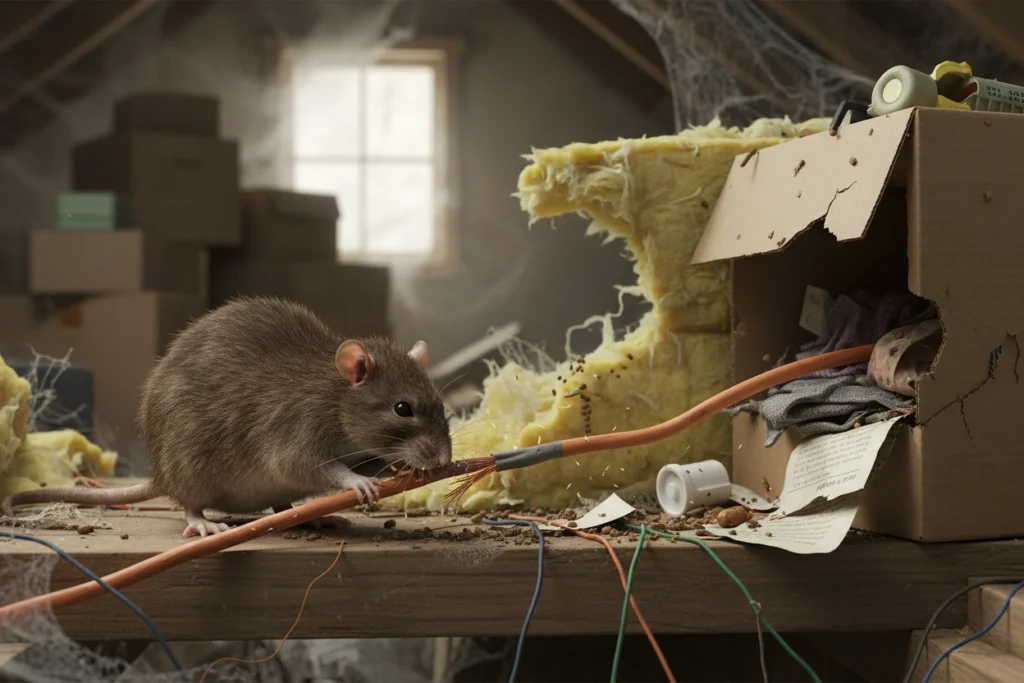
Rodents can silently wreck your home’s insulation, wiring, and stored belongings before you spot a single clue. They shred insulation to build nests, slashing its R-value and driving up energy bills. They gnaw through wire insulation, creating serious fire hazards. They’ll contaminate stored items with urine and droppings, making them unsafe to handle. If you suspect activity, acting fast matters — and what follows will help you identify, assess, and address every form of damage they cause.
Key Takeaways
-
Rodents displace and destroy insulation, reducing its R-value and forcing HVAC systems to work harder, significantly increasing energy bills.
-
Contaminated insulation creates biohazard conditions from urine and feces, requiring complete removal and sanitization costing $1,500 to $4,000.
-
Rodents gnaw on wire insulation to file down teeth, creating exposed conductors that risk arcing, short-circuiting, and fires.
-
Immediate electrical inspection and wiring replacement are essential if rodent activity is detected near junction boxes or appliances.
-
Rodents shred cardboard, contaminate clothing, and destroy stored items; sealed plastic containers and metal shelving help prevent damage.
How Rodents Get Inside Your Home
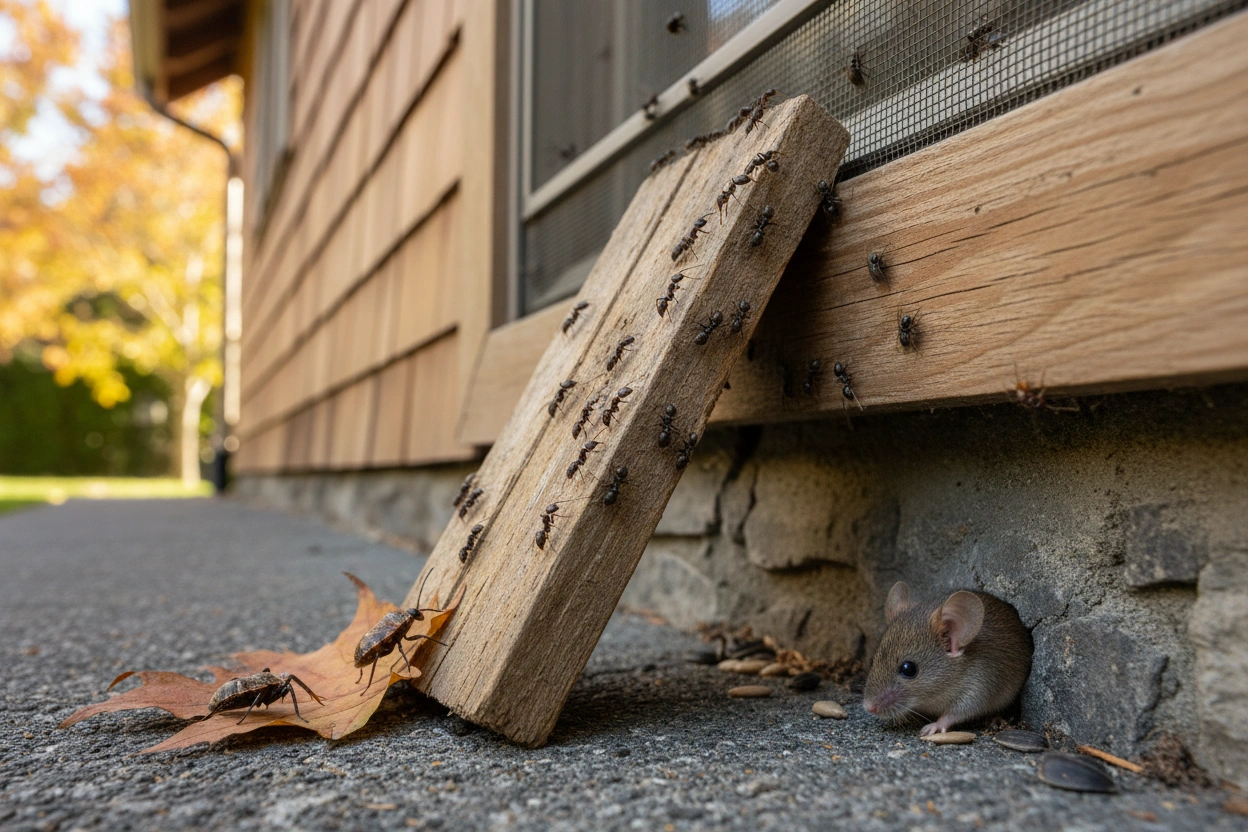
Rodents are remarkably skilled at finding ways into your home, often exploiting vulnerabilities you’d never think to check. Common entry points include gaps around utility pipes, foundation cracks, damaged roof vents, and spaces beneath doors.
Mice can squeeze through openings as small as a dime, while rats need only a quarter-sized gap.
Once inside, their nesting habits drive them toward insulation, wall cavities, and cluttered storage areas where they’ll shred materials to build shelters. They’re most active at night, making early detection difficult.
To prevent intrusion, seal exterior gaps with steel wool or caulk, install door sweeps, and inspect your roofline regularly.
Identifying and closing entry points before rodents establish nesting habits is your most effective line of defense.
Signs of Rodent Damage You Shouldn’t Ignore
Many signs of rodent damage are easy to overlook until the problem has already escalated. You should regularly inspect your home for chew marks on baseboards, wiring, and food packaging.
Watch for droppings near entry points, inside cabinets, and along walls. Nesting materials like shredded paper or fabric tucked into hidden corners signal an active infestation.
Gnawed furniture legs and damaged goods in storage areas indicate prolonged activity. Urine stains, often visible under UV light, confirm rodent presence.
You’ll also notice unusual noises, particularly scratching or scurrying sounds within walls at night. Foul odors, especially in enclosed spaces, suggest either urine buildup or a dead rodent.
Identifying these warning signs early lets you intervene before structural and safety risks worsen.
The Real Cost of Rodent Damage to Insulation
When rodents burrow into your insulation, they don’t just displace the material—they systematically destroy its thermal efficiency.
Compressed or contaminated insulation loses its R-value, forcing your HVAC system to work harder and driving up energy bills. Insulation replacement costs typically range from $1,500 to $4,000 depending on your attic’s size and contamination severity.
Beyond thermal performance, rodent urine and feces saturate insulation fibers, creating biohazard conditions requiring complete removal and sanitization. That additional remediation work considerably increases your total expense.
Implementing effective pest prevention strategies before an infestation occurs is markedly cheaper than post-damage restoration.
Sealing entry points, installing wire mesh barriers, and scheduling routine inspections protect your insulation investment and prevent the cascading financial consequences of unchecked rodent activity.
How Chewed Wiring Turns a Rodent Problem Into a Fire Risk
Chewed electrical wiring ranks among the most dangerous—and least visible—consequences of a rodent infestation. Rodents gnaw through wire insulation to file down their continuously growing teeth, exposing bare conductors that can arc, short-circuit, or ignite nearby materials.
These chewed wires create serious fire hazards inside walls, attics, and crawlspaces—areas you rarely inspect. You won’t always smell smoke or see sparks before damage becomes catastrophic. Electricians estimate that rodents contribute to thousands of house fires annually.
To reduce your risk, schedule periodic electrical inspections if you’ve detected rodent activity. Look for chewed wires near entry points, junction boxes, and appliances.
Replace damaged wiring immediately and seal all gaps rodents use to access your home’s interior. Early detection is your strongest defense.
How Rodents Destroy Stored Items in Attics and Basements
Electrical wiring isn’t the only target rodents focus on once they’ve settled inside your home. Attics and basements become prime zones where rodents shred cardboard boxes, contaminate clothing, destroy photographs, and nest inside upholstered furniture.
Their urine and droppings carry pathogens that compromise stored items beyond simple physical damage.
Follow these storage tips to protect your belongings:
-
Replace cardboard boxes with sealed, hard plastic containers
-
Elevate items off floors using metal shelving
-
Avoid storing food-scented materials like candles or linens near organic debris
Take necessary safety precautions when inspecting contaminated areas. Wear gloves and an N95 respirator before handling rodent-damaged materials, since dried droppings release airborne particles linked to hantavirus.
Seal any gaps around pipes and foundation walls to eliminate entry points before infestation escalates.
Frequently Asked Questions
Which Rodent Species Causes the Most Damage to Home Insulation?
Norway rats and house mice cause the most damage, as their rodent behavior drives them to shred fiberglass and foam insulation types for nesting. You’ll want to seal entry points to prevent costly deterioration.
Can Rodent-Damaged Insulation Affect Your Home’s Energy Efficiency Rating?
Yes, rodent damage absolutely affects your home’s energy efficiency rating. You’ll experience significant energy loss through compromised insulation, raising utility costs. Scheduling prompt insulation repair restores thermal performance and helps you maintain an ideal efficiency rating.
Does Homeowners Insurance Typically Cover Rodent-Related Wiring and Insulation Damage?
Most homeowners insurance policies won’t cover rodent-related wiring and insulation damage since insurers classify it as preventable neglect. Review your policy’s coverage limits carefully before filing insurance claims, as exclusions typically apply to pest-related deterioration.
How Long Does It Take Rodents to Cause Significant Structural Damage?
Rodents can cause significant structural damage within 30-90 days. Their relentless rodent behavior accelerates the damage timeline rapidly. You’ll notice compromised wiring, insulation, and supports quickly, so don’t delay inspections—act preventatively before minor infestations escalate into costly structural failures.
What Insulation Materials Are Rodents Least Likely to Chew Through?
You’ll find rodents least likely to chew through rigid foam board, spray foam, or fiberglass batts. These rodent proof materials serve as effective insulation alternatives, deterring gnawing behavior while maintaining your home’s thermal efficiency and structural integrity.
Conclusion
Rodents don’t just create a nuisance—they’re actively compromising your home’s safety and value every day they go undetected. You’re dealing with degraded insulation, live fire hazards from chewed wiring, and ruined belongings when you ignore the warning signs. Don’t wait until the damage becomes catastrophic and expensive. Inspect your home regularly, seal entry points immediately, and contact a pest control professional at the first sign of rodent activity to protect your property.