
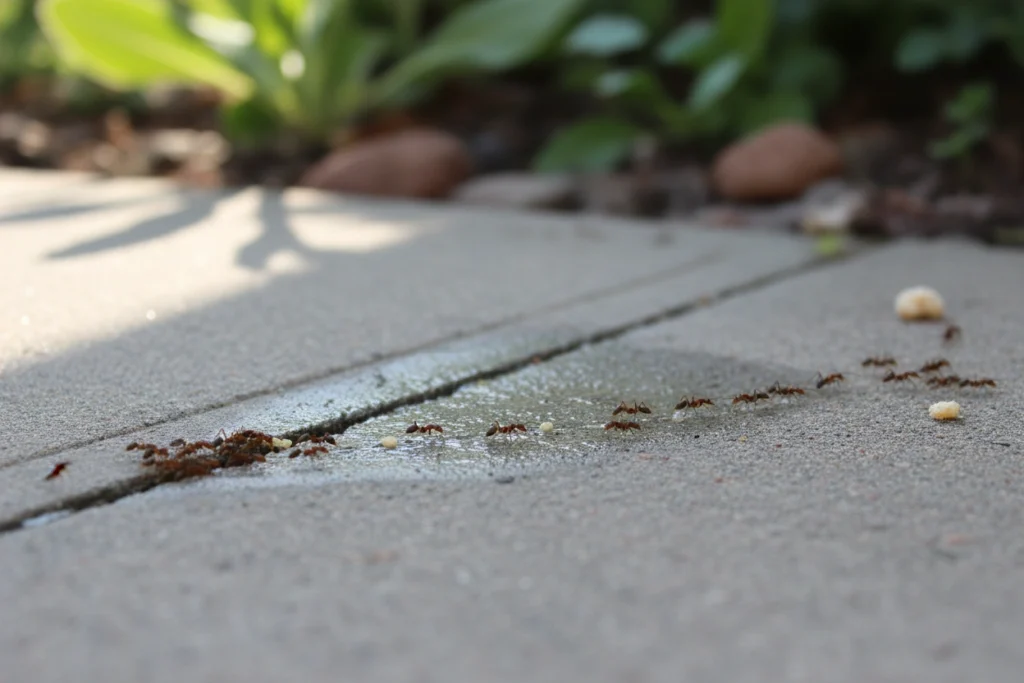
When you wipe away an ant trail, you’re only removing surface-level pheromone deposits. The chemical signals from worker ants’ metapleural and Dufour’s glands penetrate porous materials like wood and grout, leaving residual traces that standard cleaning products can’t fully neutralize. These embedded compounds allow ants to reconstruct their trails within hours along nearly identical paths. Without addressing the underlying attractants and chemical architecture driving recruitment, you’re only treating a symptom — and there’s much more to understand about breaking the cycle entirely.
Key Takeaways
-
Pheromones penetrate porous surfaces like wood and grout, leaving residual traces that persist beneath cleaned areas and guide ants back along the same paths.
-
Standard cleaning products remove only visible surface deposits without eliminating embedded chemical compounds that continue signaling other ants to follow.
-
Ants rebuild disrupted trails within hours by detecting residual pheromone traces and reinforcing them with fresh glandular secretions.
-
Unaddressed attractants like food, moisture, and entry points sustain foraging activity, continuously motivating ants to reestablish chemical trails.
-
Eliminating visible trails without targeting the nest leaves the pheromone signal source intact, ensuring ongoing recruitment and trail reconstruction.
How Ant Pheromone Trails Actually Work
Ant pheromone trails operate through a sophisticated chemical communication system rooted in glandular secretions and neurological responses.
When you observe a structured ant trail, you’re witnessing pheromone signaling executed at a molecular level. Worker ants deposit chemical compounds from their metapleural and Dufour’s glands onto substrates as they navigate between food sources and colonies.
These secretions activate specific olfactory receptors in trailing ants, triggering deterministic behavioral responses. Ant communication functions through concentration gradients — stronger signals indicate more valuable resources, compelling additional workers to reinforce existing trails.
Each ant that traverses a path deposits additional pheromones, amplifying the chemical signal exponentially. You’ll notice this creates a self-reinforcing feedback loop that sustains trail integrity even under moderate environmental disruption.
Food, Moisture, and Entry Points That Keep Attracting Ants
While pheromone chemistry drives trail formation, persistent ant activity in structures requires sustained attractant sources that continuously recruit foragers.
You’ll find that food sources like grease residues, sugar deposits, and protein matter maintain chemical gradients that reinforce trail networks. Elevated moisture levels around leaking pipes, condensation zones, and humid crawlspaces create ideal nesting sites that anchor colony satellite expansion indoors.
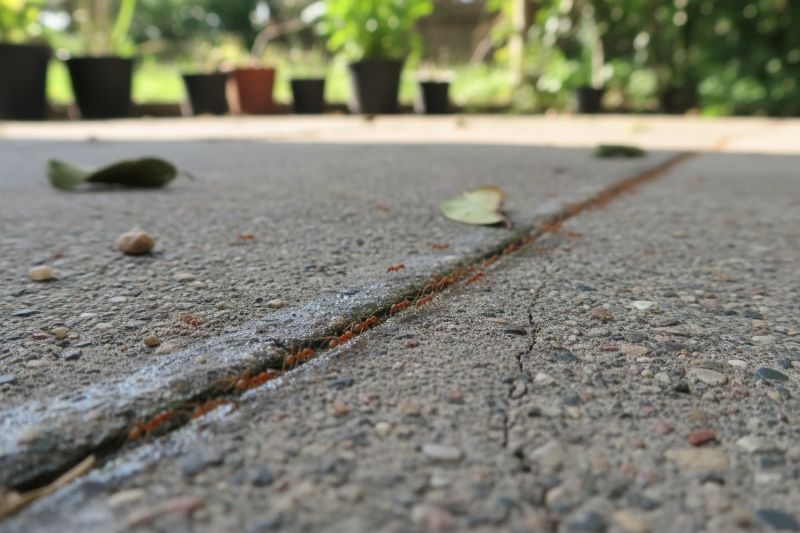
Entry points—including foundation cracks, utility penetrations, and weathered door seals—provide consistent access corridors that foragers exploit repeatedly.
Seasonal patterns shift bait preferences considerably; colonies prioritize carbohydrates during spring reproductive phases and proteins during larval development periods.
You must address these underlying attractants systematically, because eliminating visible trails without removing the core resources guarantees continued forager recruitment and trail re-establishment.
Why Wiping Ant Trails Down Doesn’t Actually Work
Understanding why surface cleaning fails requires examining what pheromone trails actually are at a chemical level. These chemical signals aren’t simply sitting on your countertop’s surface — they penetrate porous materials like wood, grout, and unsealed stone.
When you wipe a visible trail, you’re removing surface-level deposits while deeper molecular layers remain intact.
Ant behavior relies on trail communication through layered pheromone deposition. Each passing ant reinforces the signal by adding additional chemical compounds, creating concentrated gradients that penetrate substrates.
Standard cleaning products like soap and water disrupt surface molecules but don’t chemically neutralize or fully extract embedded compounds.
You’re fundamentally trimming the visible portion of a deeply rooted signal. Ants detect residual traces beneath what you’ve cleaned and reconstruct their trails within hours, often along nearly identical paths.
How to Disrupt Ant Trails at the Source
Disrupting ant trails at the source requires targeting the chemical architecture of the pheromone system rather than its surface expression.
You’ll need to interfere with pheromone production, detection, or reinforcement to achieve effective trail disruption. Apply compounds like diatomaceous earth or boric acid at colony entry points, where ant behavior shifts from foraging to recruitment signaling.
These substances interrupt the neurochemical feedback loops ants use to maintain trail integrity. You can also deploy competitive chemical masking agents that overwhelm olfactory receptors, rendering existing pheromone gradients undetectable.
Targeting the nest directly eliminates the biological infrastructure generating new pheromone signals. Without addressing this upstream source, surface-level interventions remain structurally incomplete, allowing ants to rapidly reestablish chemically coherent pathways through alternative routes.
Signs Your Ant Trail Problem Needs Professional Treatment
Even with source-level interventions in place, some infestations exceed the scope of DIY control, and recognizing when you’ve crossed that threshold prevents compounding structural damage and colony expansion.
You’ve likely reached that point when ant behavior patterns indicate multiple satellite colonies operating simultaneously across different zones of your structure. Specifically, watch for trail regeneration within 24–48 hours despite repeated chemical application, worker ants emerging from wall voids or subflooring, and visible structural compromise near moisture-damaged wood.
When ant behavior suggests polydomous colony architecture—meaning distributed nesting across several locations—standard consumer-grade pest control products lose effectiveness rapidly.
A licensed pest control professional can execute thorough baiting matrices and perform thermal imaging to identify concealed nesting sites that remain inaccessible through conventional treatment approaches.
Frequently Asked Questions
How Long Does an Ant Pheromone Trail Last Without Reinforcement?
Without trail reinforcement, you’ll find an ant pheromone trail typically fades within minutes to hours. Ant communication relies on continuous scent deposition; once workers stop traversing the path, volatile compounds evaporate, causing the chemical signal to dissipate completely.
Can Different Ant Species Follow Each Other’s Pheromone Trails?
Generally, you’ll find that different ant species can’t reliably follow each other’s pheromone communication trails. Species interaction in trail navigation remains largely species-specific, as ant behavior depends on chemically unique signals that other species’ receptors typically don’t recognize.
Do Ants Leave Pheromone Trails During Nighttime Hours?
Yes, you’ll find that ants exhibit nocturnal activity, depositing pheromone trails regardless of light conditions. Their ant behavior isn’t light-dependent; they’re continuously foraging, marking chemical pathways that guide colony members efficiently throughout nighttime hours.
Are Certain Weather Conditions Known to Intensify Ant Trail Activity?
Yes, you’ll notice weather patterns directly intensify ant trail activity. Rising humidity levels trigger foraging surges, while temperature fluctuations accelerate pheromone volatility. During seasonal changes, you’ll observe colonies dramatically increasing trail establishment to secure critical resources efficiently.
Can Ants Create New Trails if Their Colony Queen Dies?
Yes, you’ll observe that ant colony dynamics shift dramatically upon queen survival impact. Without a queen, workers can’t reproduce, yet they’ll continue foraging trails until the colony’s inevitable collapse from population decline.
Why Ant Trails Keep Coming Back
Ant trails are not just visible paths you can wipe away. They are part of a chemical communication system that guides other ants to food and shelter. Even after cleaning, trace pheromones can remain on surfaces and continue attracting more ants. To stop the cycle, it is important to remove food sources, treat affected areas properly, and seal off entry points at the same time. Missing one of these steps often leads to the trail returning in a new form.
If ant activity keeps reappearing despite your efforts, Pest Patrol can identify the source of the colony and apply a targeted solution that breaks the cycle for good. Contact Pest Patrol for a free quote and take the next step toward keeping your home consistently ant-free.