
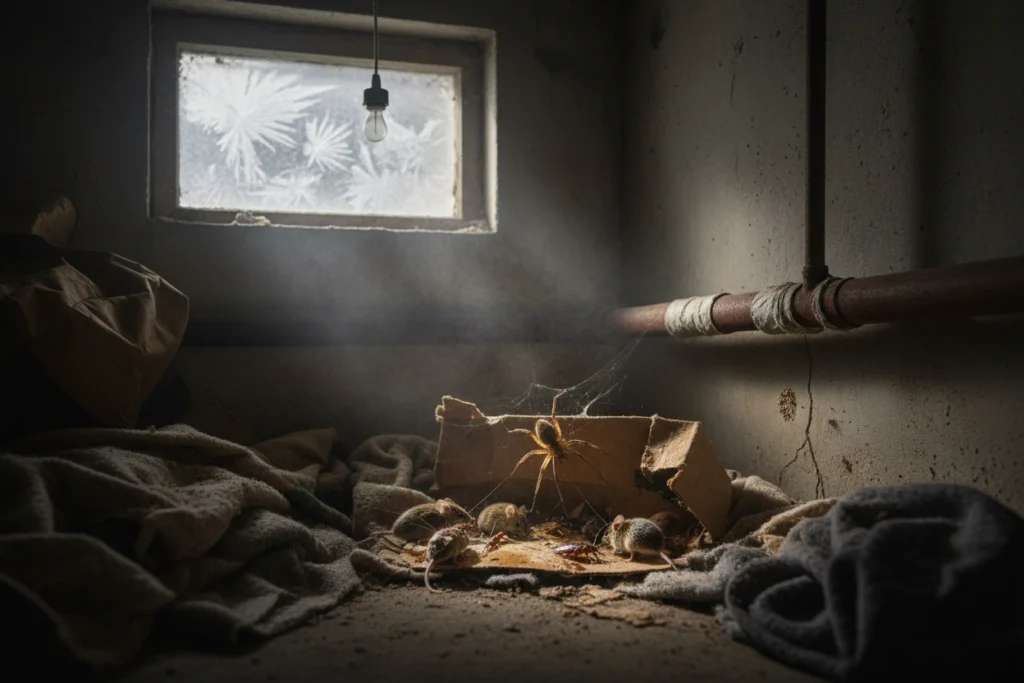
Winter doesn’t eliminate your pest problems — it redirects them into your home. As outdoor temperatures drop, mice, rats, cockroaches, and overwintering insects actively seek warmth, food, and shelter inside your walls, attic, and crawl spaces. Rodents can squeeze through gaps as small as a dime, while cockroaches reproduce faster in heated environments. Silent winter infestations cause structural damage and serious health risks that compound by spring — and there’s much more you need to know.
Key Takeaways
-
Pests like mice, cockroaches, and cluster flies actively seek warmth indoors during winter, making heated homes prime infestation targets.
-
Cockroaches reproduce faster in heated environments, meaning winter conditions indoors can accelerate pest population growth significantly.
-
Silent winter infestations cause structural and financial damage, often going undetected until costly repairs become unavoidable by spring.
-
Rodents gnaw wiring, insulation, and wooden beams year-round, creating serious health and safety hazards regardless of season.
-
Overwintering insects and rodents multiply within heated wall voids, proving pest activity does not meaningfully slow in winter.
Which Winter Pests Are Most Active Inside Your Home?
When temperatures drop, several pest species actively seek warmth, food, and shelter inside residential structures.
You’ll typically encounter mice, rats, cockroaches, and overwintering insects like cluster flies and stink bugs as your most persistent winter invaders.
Rodent behaviors shift dramatically during colder months — they’ll exploit structural gaps as small as a dime to infiltrate your home, contaminating food supplies and gnawing electrical wiring.
Insect survival strategies also intensify; cockroaches accelerate reproduction in heated indoor environments, while overwintering species enter diapause within wall voids and attic spaces.
You need to understand that winter doesn’t eliminate these biological pressures — it concentrates them.
Your home’s warmth fundamentally becomes a beacon, making proactive identification and monitoring critically important throughout the colder season.
Why Your Home Becomes a Winter Pest Magnet
Your home generates a constellation of thermal, olfactory, and structural signals that pests exploit with remarkable biological precision. Cold climate adaptations drive insects and rodents toward indoor warmth attractions when external temperatures become physiologically unsustainable.
Your home broadcasts four critical attractants:
-
Thermal gradients: Wall gaps and foundation cracks emit detectable heat differentials.
-
Moisture sources: Condensation, plumbing, and humidity create crucial hydration zones.
-
Food signatures: Stored pantry items release volatile organic compounds pests chemoreceptively detect.
-
Structural vulnerabilities: Aging seals, deteriorating weatherstripping, and compromised insulation create accessible entry corridors.
You’re fundamentally operating an involuntary shelter system. Pests don’t randomly enter—they’re responding to precise environmental cues your structure continuously broadcasts throughout winter’s most climatically hostile periods.
The Diseases and Structural Damage Winter Pests Cause
When winter pests invade your home, they bring more than just an unsettling presence—they carry pathogens, allergens, and parasites that pose direct health risks to you and your family.
Rodents, for instance, spread hantavirus, salmonella, and leptospirosis through their urine, feces, and saliva, while cockroaches trigger asthma attacks and allergic reactions through their shed exoskeletons and droppings.
Beyond these disease risks, pests like termites, carpenter ants, and rodents actively compromise your home’s structural integrity by gnawing through wood, insulation, and electrical wiring, creating conditions that range from fire hazards to costly foundation damage.
Disease Risks From Pests
Beyond the nuisance factor, winter pests pose serious health and structural risks that you shouldn’t underestimate.
Disease transmission occurs through direct contact, contaminated surfaces, and pest droppings. Effective pest management requires understanding these specific biological threats:
-
Rodents spread hantavirus, salmonella, and leptospirosis through urine, feces, and saliva.
-
Cockroaches trigger asthma and allergic reactions by depositing pathogens across kitchen surfaces.
-
Mice contaminate food storage areas with bacteria-laden droppings, compromising household food safety.
-
Stored-product insects introduce fungal spores and bacterial contaminants directly into your pantry supplies.
You’re exposed to these risks whether you observe active pest activity or not.
Secondary contamination from invisible residues remains a persistent concern, making proactive winter pest management a critical health priority rather than an optional precaution.
Structural Damage Winter Pests Cause
Structural damage from winter pests compounds the health risks already outlined, creating costly repairs that worsen over time if you don’t intervene early.
Rodents gnaw through electrical wiring, wooden beams, and pipe insulation, compromising both fire safety and structural integrity. They’ll also shred insulation materials to construct pest habitats, dramatically reducing your home’s thermal efficiency and driving up energy costs.
Carpenter ants exploit moisture-weakened wood, excavating galleries that progressively undermine load-bearing structures.
Cockroaches and moisture pests accelerate mold growth within wall cavities, contributing to insulation damage that proves expensive to remediate.
These deterioration processes operate silently behind walls, making early detection critical.
You’ll need professional inspection protocols to identify concealed damage before minor structural compromise escalates into significant foundational or systemic building failure.
Warning Signs You Already Have a Winter Pest Problem
Even with the best preventive measures in place, pests can still breach your home’s defenses, making early detection critical to minimizing damage and health risks.
Understanding pest behavior during winter survival modes helps you identify infestations faster. Watch for these key indicators:
-
Droppings or urine trails near food storage areas, walls, or insulation
-
Gnaw marks on wiring, wood structures, or food packaging
-
Unusual sounds like scratching or scurrying within walls or ceilings, particularly at night
-
Nesting materials such as shredded insulation, paper, or fabric tucked into hidden corners
If you’re noticing any of these signs, act immediately.
Delayed response allows populations to grow exponentially, compounding both structural damage and potential disease transmission risks.
Hidden Entry Points Winter Pests Use to Get Inside
Winter pests exploit structural vulnerabilities you’d never suspect, including gaps around utility pipes, deteriorating weatherstripping, foundation cracks as narrow as 1/16 of an inch, and unsealed soffit vents.
Rodents can compress their bodies to fit through openings the size of a dime, while insects navigate microscopic fissures in mortar, caulking, and window frames.
You’ll greatly reduce winter pest intrusions by systematically inspecting and sealing these access points with appropriate materials—steel wool, copper mesh, silicone caulk, or expandable foam—before temperatures drop.
Common Winter Pest Entryways
As temperatures drop, pests actively seek thermal refuge by exploiting structural vulnerabilities that homeowners often overlook. Understanding pest behavior helps you identify critical infiltration zones before infestations establish.
Entryway materials deteriorate seasonally, creating microscopic gaps that rodents, insects, and arthropods systematically exploit.
Key entry points include:
-
Foundation cracks — Rodents penetrate gaps as small as 6mm using flexible skeletal compression
-
Utility penetrations — Pipe and cable conduits create uninsulated pathways directly into wall cavities
-
Weatherstripping gaps — Degraded door and window seals allow insects to exploit thermal gradients
-
Roofline vulnerabilities — Deteriorating fascia boards and soffit panels provide elevated access for overwintering pests
Conduct systematic exterior inspections focusing on entryway materials at structural junctions, particularly where dissimilar building components meet and thermal bridging occurs.
Sealing Hidden Access Points
Sealing hidden access points requires understanding where pest ingress pressure concentrates beyond obvious entryways. Entry point identification demands systematic inspection of utility penetrations, including pipe chases, electrical conduits, and HVAC connections, where gaps frequently exceed 1/4 inch — sufficient for rodent entry.
You’ll also find compromised access along foundation cracks, soffit junctions, and deteriorated weatherstripping.
Effective sealing techniques vary by location and pest type. Use copper mesh or steel wool as primary infill for larger gaps before applying appropriate caulk, since rodents can’t chew through metal.
Hydraulic cement works best for masonry foundation cracks. For utility penetrations, fire-rated expanding foam provides both pest exclusion and thermal performance.
You should reinspect all sealed points after significant temperature fluctuations, as materials contract and create new vulnerabilities.
Why Ignoring Winter Pests Costs You More by Spring
Many homeowners assume that pest activity slows enough in winter to justify delaying treatment, but this reasoning consistently leads to compounded structural and financial damage by spring.
Winter infestations develop silently, making reactive pest prevention strategies far costlier than proactive intervention.
Documented consequences of delayed treatment include:
-
Structural wood damage from rodents gnawing insulation, wiring, and framing
-
Multiplied populations as overwintering insects and rodents reproduce within heated wall voids
-
Contaminated insulation requiring full replacement rather than simple remediation
-
Electrical fire hazards from chewed wiring left unaddressed through colder months
You’re fundamentally allowing colonies to mature undisturbed.
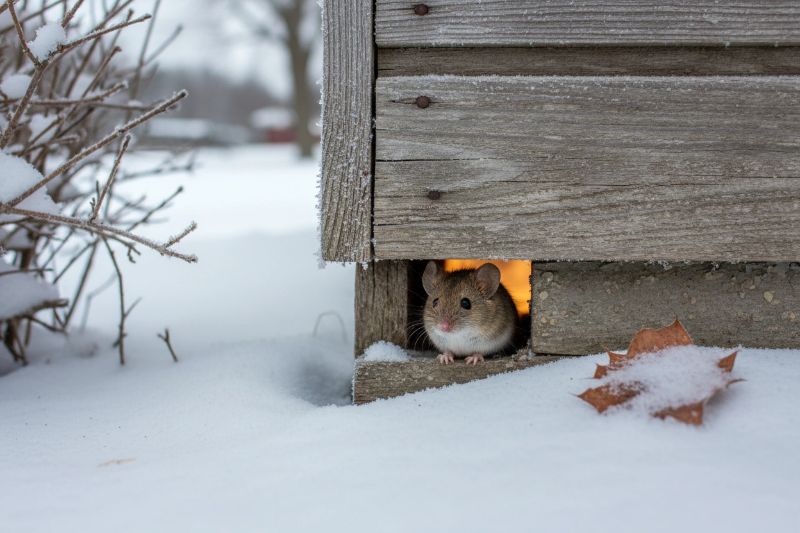
How to Pest-Proof Your Home Before Winter Sets In
Effective pest-proofing begins before temperatures drop, because thermal gradients between your home’s interior and the outside environment actively draw rodents and insects toward structural entry points.
Apply these pest prevention tips systematically: seal foundation cracks exceeding 1/4 inch using silicone-based caulk, install door sweeps on all exterior thresholds, and replace damaged weatherstripping immediately.
Your winter readiness protocol should also include inspecting utility penetrations, pipe entry points, and attic vents for compromised screening.
Store firewood at least 18 inches off the ground and 2 feet from your structure, since wood piles harbor overwintering insects.
Clear gutters of organic debris, which retains moisture and attracts carpenter ants and silverfish.
You’ll greatly reduce infestation probability by addressing these vulnerabilities before the first frost arrives.
When to Call a Pest Control Professional
Although DIY pest-proofing substantially reduces infestation risk, certain conditions require professional intervention. Accurate pest control timing is critical—delaying a professional assessment allows colonies to establish deeper harborage sites, complicating eradication.
Contact a licensed pest control professional when you observe:
-
Recurring activity despite repeated DIY treatments
-
Structural damage including gnawed wiring, compromised insulation, or weakened joists
-
Multiple species simultaneously, indicating complex, overlapping infestations
-
Unidentified entry points that standard inspection hasn’t resolved
Professionals deploy integrated pest management protocols, utilizing targeted chemical applications, thermal imaging, and exclusion techniques unavailable to homeowners.
They’ll identify cryptic harborage zones you’ve missed and implement scientifically validated treatment strategies. Early professional assessment ultimately reduces remediation costs and prevents escalating structural and health-related consequences.
Frequently Asked Questions
Can Winter Pests Survive if My Home’s Heat Suddenly Goes Out?
Yes, pest survival remains likely even if your heat fails. Pests’ve already established winter habitats within your walls, insulation, and crawlspaces, using your home’s residual warmth and structural materials to maintain their colonies effectively.
Do Pest Control Treatments Remain Effective During Freezing Outdoor Temperatures?
Yes, most pest control treatments retain their treatment longevity indoors regardless of freezing outdoor temperatures. You’ll find that cold weather doesn’t neutralize chemical barriers, though it can alter pest behavior, potentially reducing treatment contact opportunities.
Are Certain Geographic Regions More Vulnerable to Winter Pest Infestations?
Yes, geographic vulnerability notably impacts your winter pest hotspots. You’ll face greater infestation risks in milder coastal climates, the Southeast, and Southwest regions, where temperatures rarely drop low enough to naturally suppress pest populations and breeding cycles.
Can Pets or Children Safely Remain Home During Winter Pest Treatments?
You shouldn’t keep pets or children home during winter pest treatments. Following child pet precautions and pest treatment safety protocols, you’ll need to evacuate them until technicians confirm treated areas are fully ventilated and chemical residues have dissipated.
Does Homeowners Insurance Ever Cover Winter Pest Damage Repair Costs?
Generally, your homeowners insurance won’t cover winter pest damage, as most insurance policies classify it under homeowner responsibilities. You’re expected to prevent infestations proactively, since insurers typically consider pest control a routine maintenance obligation.
Winter Pests Do Not Disappear, They Move In
Cold weather does not stop pest activity. It pushes it indoors. Rodents, insects, and other pests relocate into attics, walls, and crawl spaces where warmth and shelter are available. Signs like droppings, debris, or subtle damage often build up quietly through the winter months, making early detection and consistent monitoring essential.
Staying proactive with sealing entry points, reducing hiding areas, and addressing issues as soon as they appear can prevent a much larger problem by spring. If you are noticing signs of winter pest activity or want a professional assessment to stay ahead, Pest Patrol can inspect your home and recommend a targeted plan. Contact Pest Patrol for a free quote and keep your home protected through the colder months and beyond.