
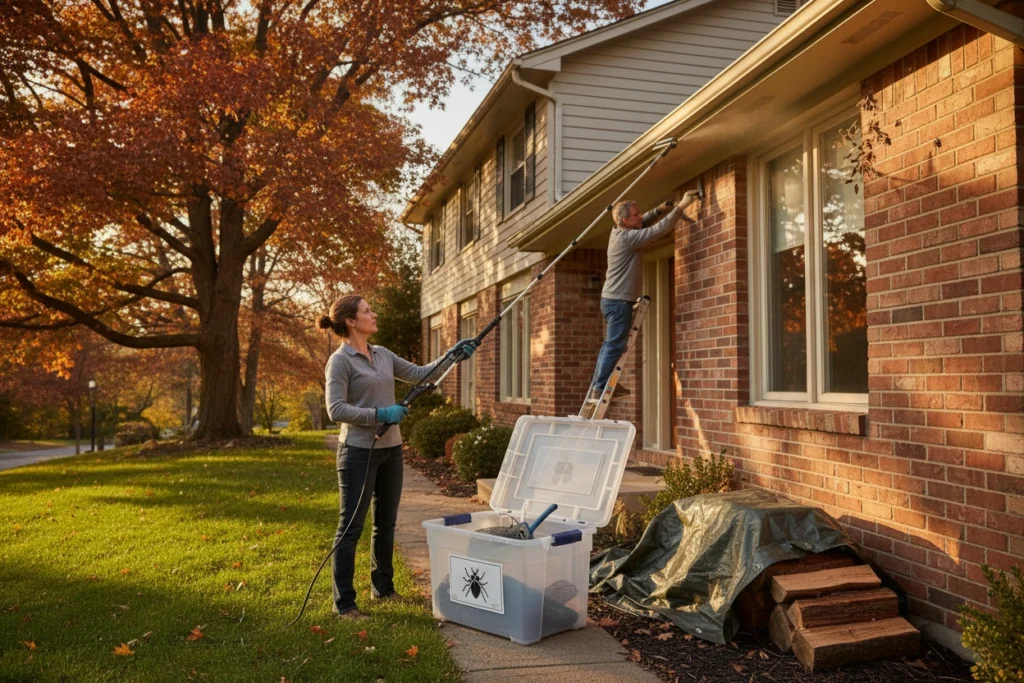
To prevent boxelder bugs seasonally, you’ll want to seal foundation cracks, gaps around windows, and utility penetrations with silicone-based sealant before temperatures drop below 50°F. Install door sweeps, repair damaged screens, and apply pyrethrin or bifenthrin barrier sprays along foundations and door frames each fall. Remove leaf litter, wood piles, and female boxelder trees from your property to eliminate food and shelter sources. Every strategy you need to protect your home is covered ahead.
Key Takeaways
-
Seal cracks around windows, doors, and utility penetrations with silicone sealant or expandable foam before temperatures drop below 50°F.
-
Apply barrier sprays containing pyrethrin or bifenthrin along foundations, windowsills, and door frames each fall and spring.
-
Remove or replace seed-bearing female boxelder trees and promptly rake fallen seeds to eliminate food sources.
-
Clear leaf litter, wood piles, and decaying debris from foundation perimeters to eliminate overwintering harborage sites.
-
Stack firewood at least 20 feet from your home and vacuum any indoor bugs, sealing the bag immediately.
How Boxelder Bugs Find Their Way Inside
Boxelder bugs are opportunistic invaders that exploit the smallest structural vulnerabilities in your home. Understanding boxelder bug behavior helps you anticipate their movements before infestations develop.
During seasonal migration in late summer and fall, these insects actively seek warm shelter as temperatures drop. They’ll squeeze through gaps around window frames, door sweeps, utility penetrations, and deteriorating weatherstripping.
You’ll typically find entry points where different building materials meet — siding joints, foundation cracks, and soffit gaps are common culprits. Boxelder bugs also congregate on sun-warmed south and west-facing exterior walls before pushing inside.
They’re not entering randomly; they’re following thermal gradients toward heat. Identifying these specific vulnerabilities lets you target your prevention efforts precisely where they matter most.
Seal Entry Points Before Boxelder Bug Season
Once you’ve identified where boxelder bugs enter, sealing those vulnerabilities before late summer is your most effective defense.
Understanding pest behavior and shifting weather patterns helps you time interventions strategically.
Prioritize these three sealing measures:
-
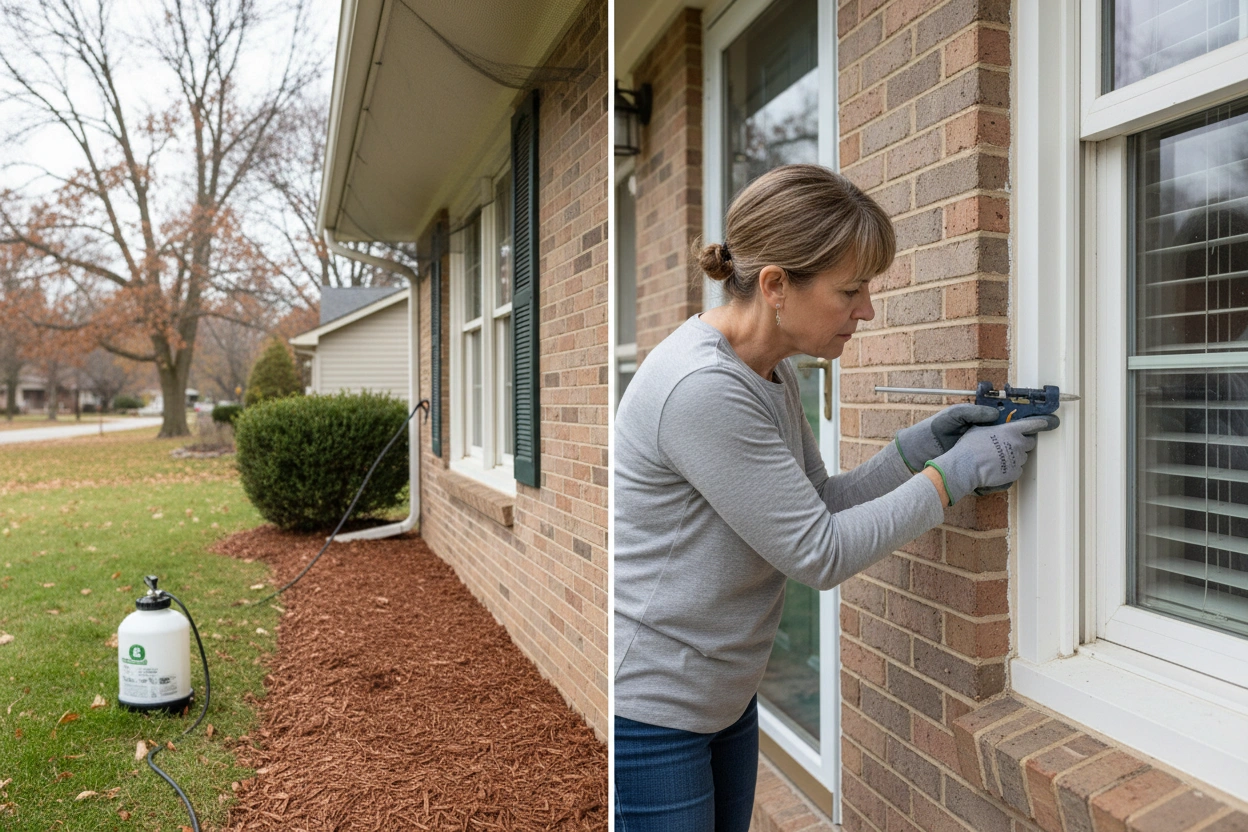
Caulk foundation cracks and window frames using silicone-based sealant rated for exterior use.
-
Install door sweeps and weatherstripping on all exterior entry doors, including garage doors.
-
Repair or replace damaged window screens and seal utility pipe penetrations with expandable foam.
As weather patterns cool in early fall, boxelder bugs aggressively seek overwintering sites.
Completing these repairs before temperatures drop below 50°F disrupts that pest behavior cycle.
Inspect sealed areas annually since freeze-thaw cycles degrade materials, reopening entry points each season.
The Best Sprays and Barriers for Keeping Boxelder Bugs Out
Even with entry points sealed, chemical barriers and targeted sprays give you a second line of defense when boxelder bugs breach the perimeter.
Apply barrier sprays containing pyrethrin or bifenthrin along your foundation, windowsills, and door frames before peak season hits. These effective insecticides disrupt the bugs’ nervous systems on contact.
For DIY solutions, mix dish soap with water and spray directly on visible clusters—it works fast without harsh chemicals. Natural repellents like essential oils, particularly tea tree and peppermint, deter boxelder bugs when applied to entry zones.
Incorporate these preventative measures into your seasonal treatments every fall and spring. Consistent pest control scheduling maximizes results, since single applications rarely provide lasting protection against recurring infestations throughout the warmer months.
Landscaping Changes That Deter Boxelder Bugs
Since boxelder bugs depend heavily on boxelder trees (Acer negundo) as their primary host, removing or replacing female seed-bearing specimens on your property eliminates the bugs’ main food source and breeding ground.
Strategic landscaping adjustments substantially reduce infestations:
-
Optimize plant spacing and sunlight exposure — Dense plantings retain moisture, attracting aggregations; proper spacing improves airflow and reduces harborage zones.
-
Select native plants and barrier plants — Incorporate insect-repelling herbs like lavender or mint near entry points to naturally discourage bug movement.
-
Control moisture and mulch types — Avoid moisture-retaining mulches near foundations; use cedar mulch instead, which deters insects.
Careful tree placement away from structures further limits migration pathways into your home.
How to Remove the Few Boxelder Bugs That Slip Through
Even with the best preventive measures in place, a few boxelder bugs will occasionally find their way indoors, so you’ll need reliable removal strategies ready.
Your first line of defense is manual removal—use a vacuum to capture live bugs quickly, then seal and discard the bag immediately to prevent escape or odor release.
If populations persist, apply an indoor-safe residual insecticide, such as a pyrethrin-based spray, directly along baseboards, window frames, and entry points where bugs congregate.
Manual Removal Methods
Despite your best prevention efforts, a handful of boxelder bugs will occasionally slip through. When that happens, don’t reach for chemical sprays immediately.
These three manual removal methods effectively handle small indoor populations:
-
Vacuum removal: Use a shop vac or standard vacuum to collect live bugs directly. Empty the canister immediately outdoors to prevent escape.
-
Sticky traps: Position glue-based traps along baseboards and windowsills where bugs travel most frequently.
-
Soapy water spray: Mix two tablespoons of dish soap per quart of water and apply directly to visible bugs, killing them on contact.
Avoid crushing boxelder bugs, as they release a pungent odor and can leave staining residue on walls and fabrics.
Safe Indoor Pesticides
When manual methods aren’t enough to manage a persistent indoor presence, targeted pesticide application becomes your next practical step. Choose products containing pyrethrins, which are derived from chrysanthemum flowers and rank among the most effective natural repellents available for indoor use.
These eco-friendly options break down rapidly, minimizing household exposure risks.
Apply residual sprays directly along baseboards, window frames, and door thresholds where bugs congregate. Diatomaceous earth serves as another powerful eco-friendly option, destroying insects through physical abrasion rather than chemical toxicity.
Dust it lightly into wall voids, electrical outlets, and entry-point gaps.
Always follow label instructions precisely. Avoid saturating surfaces, as over-application reduces effectiveness and increases unnecessary chemical exposure for your household occupants.
Year-Round Habits That Keep Boxelder Bugs Outside
Preventing boxelder bugs from becoming a recurring problem starts with two non-negotiable habits: sealing entry points and keeping your yard clean throughout the entire year.
You’ll want to inspect and re-seal gaps around windows, doors, utility lines, and foundation cracks each spring and fall, since temperature shifts cause materials to expand and contract, creating new vulnerabilities.
Simultaneously, remove boxelder tree seed pods, leaf litter, and debris from your yard regularly, as these materials serve as prime harborage sites that attract bugs to your property’s perimeter.
Seal Entry Points Consistently
Sealing entry points is one of the most reliable long-term defenses against boxelder bug intrusions, and it’s a habit you’ll want to maintain throughout the entire year—not just during fall when the bugs are most visible.
Consistent exterior maintenance closes vulnerabilities before infestations develop.
Prioritize these three weatherproof sealing tasks:
-
Caulk gaps around window frames, door casings, and utility penetrations using silicone-based sealant rated for exterior use.
-
Install door sweeps on all exterior doors, including garage entries, to eliminate ground-level gaps.
-
Repair damaged screens on windows, vents, and crawlspace openings immediately after discovering tears or holes.
Inspect these areas each season, since temperature fluctuations cause materials to expand, contract, and degrade.
Staying proactive prevents boxelder bugs from exploiting newly formed gaps.
Maintain Yard Cleanliness Year-Round
Closing gaps in your home’s exterior stops boxelder bugs at the threshold, but your yard itself can either invite or discourage infestations depending on how well you manage it.
Consistent yard maintenance directly reduces harborage sites these insects exploit. Prioritize debris removal by clearing leaf litter, wood piles, and decaying organic matter from foundation perimeters, since boxelder bugs overwinter in dense ground-level cover.
Rake fallen seeds from female boxelder trees promptly, as seed accumulation provides both shelter and a food source. Keep grass trimmed short and eliminate weedy overgrowth near your home’s base.
Stack firewood at least 20 feet from the structure. These disciplined, year-round habits systematically eliminate the environmental conditions boxelder bugs need to establish populations on your property.
Frequently Asked Questions
Are Boxelder Bugs Harmful to Pets or Children if Accidentally Ingested?
Boxelder bugs aren’t toxic, but their insect ingestion risks include mild gastrointestinal upset. Their boxelder bug behavior includes releasing defensive chemicals that may cause temporary nausea. You should monitor your pet or child and consult a doctor if symptoms persist.
Do Boxelder Bugs Cause Structural Damage to Homes Over Time?
You don’t need to worry about structural damage — boxelder bug behavior doesn’t include wood-boring or material destruction. However, their waste stains surfaces. Prioritize boxelder bug control by sealing entry points to prevent large infestations from accumulating indoors.
Which Regions of North America Experience the Worst Boxelder Bug Infestations?
You’ll face the worst boxelder bug behavior in the Midwest, Rocky Mountain states, and parts of Canada. Prioritize infestation prevention if you’re in Minnesota, Colorado, or Ontario, where boxelder tree populations heavily concentrate these pests.
How Long Is the Typical Lifespan of a Boxelder Bug Indoors?
When boxelder bugs enter your home, they’ll typically survive several months indoors. Their lifecycle stages slow dramatically inside, as indoor behavior shifts to dormancy. You’re fundamentally hosting hibernating insects that won’t reproduce but remain until spring warmth triggers activity.
Can Boxelder Bugs Survive Winter Temperatures if Left Outside?
Boxelder bugs can’t survive harsh winter temperatures outdoors. They’ll seek shelter instinctively, demonstrating classic boxelder bug behavior. Their winter survival strategies involve finding warm crevices, so you should seal entry points before temperatures drop considerably.
Conclusion
Keeping boxelder bugs outside is entirely achievable when you’re consistent with prevention. You’ve now got the tools to seal entry points, adjust your landscaping, apply targeted barriers, and handle any stragglers that make it inside. Don’t wait until you’re seeing dozens on your walls—start your prevention routine before fall temperatures drop. Combine these strategies year-round, and you’ll greatly reduce the chances of a full-scale boxelder bug invasion in your home.