
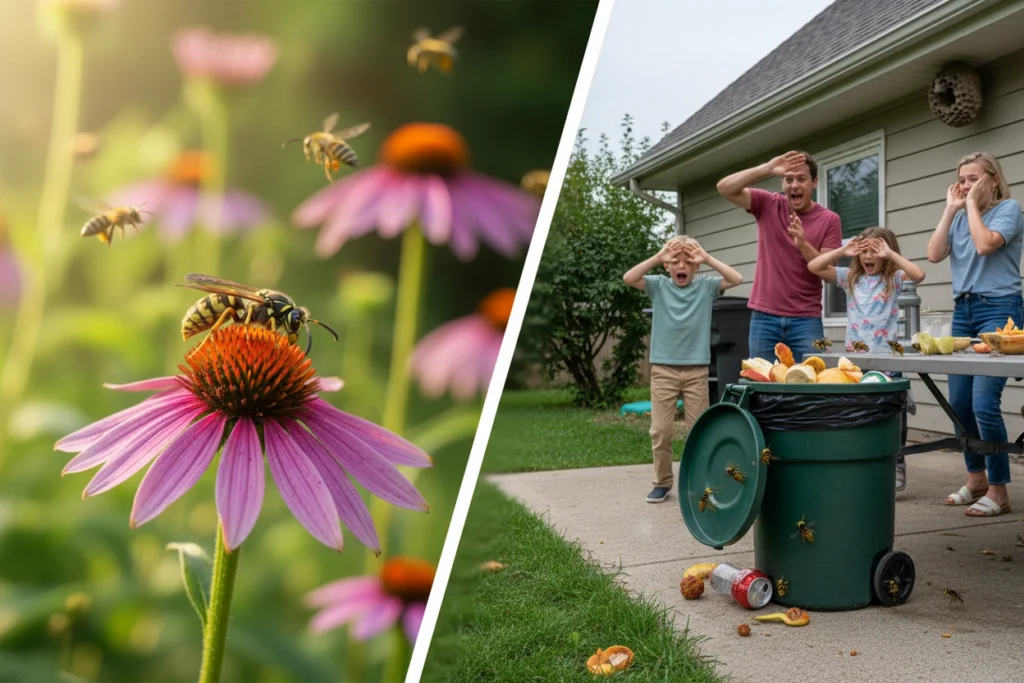
Wasp activity is normal when you spot occasional foragers near flowers, garbage bins, or eaves during late spring through early fall. It becomes a problem when you notice increased traffic around entry points, visible nest growth, aggressive dive-bombing, or defined flight paths near your home. These signs indicate an expanding colony that could pose real safety risks. Understanding exactly what to look for will help you determine your next move.
Key Takeaways
-
Wasp activity is normal from late spring through early fall, with occasional sightings near flowers or garbage indicating standard foraging behavior.
-
Increased wasp traffic around eaves, entry points, or defined flight paths signals an expanding colony and potential problem.
-
Aggressive behaviors like dive-bombing or multiple stinging incidents indicate territorial defense, suggesting a nearby, growing nest.
-
Wasp presence becomes problematic when nests exceed softball size, appear in wall voids, or threaten allergy-prone individuals.
-
Seasonal peaks in late summer intensify wasp presence, making it critical to distinguish normal activity from infestation signs.
What Normal Wasp Activity Actually Looks Like
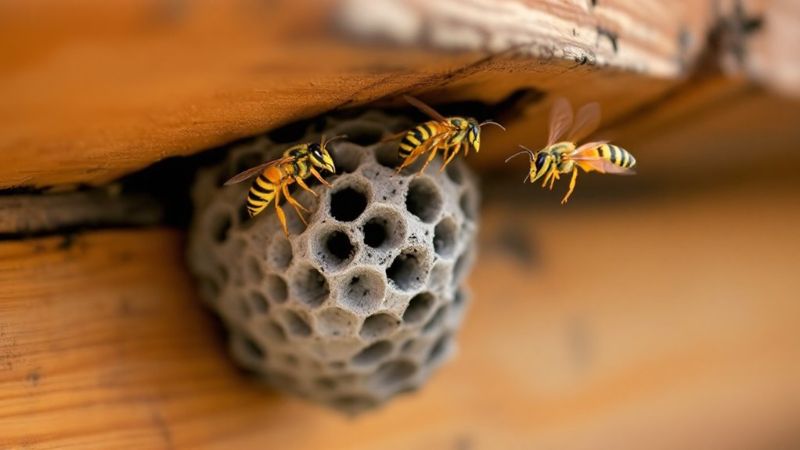
Before calling a pest control company, it’s worth knowing what normal wasp activity looks like. Wasps follow predictable seasonal patterns, becoming most visible from late spring through early fall when colonies actively forage for food.
You’ll typically see worker wasps traveling in irregular flight paths between food sources and their nest.
Normal nesting habits include building small colonies in sheltered locations—under eaves, in tree branches, or in soil cavities. A single nest may house anywhere from a few dozen to several hundred workers during peak season.
If you’re spotting occasional wasps near flowers, garbage bins, or outdoor food, that’s standard foraging behavior.
Seeing two to five wasps in a general area doesn’t automatically signal an infestation—it often just means a nest exists nearby. Additionally, auditory indicators like buzzing sounds can also help you identify their presence without assuming a problem.
Which Wasp Species Are Common in the Portland Area
Several wasp species compete for territory across the Portland metro area, each with distinct nesting habits and aggression levels you’ll want to recognize.
Yellow jacket identification typically involves noting their bright yellow-and-black banding, compact bodies, and ground-level or wall-void nests. They’re highly defensive and will sting repeatedly when threatened.
Bald-faced hornets, though technically yellowjackets, build large paper nests in trees and eaves.
Paper wasp behavior differs noticeably—they’re less aggressive, construct open-celled umbrella nests under overhangs and eaves, and typically only sting when directly handled.
Mud daubers are solitary, rarely sting, and build tubular clay nests on walls.
Knowing which species you’re dealing with directly affects how urgently you should respond and what removal method is appropriate. Understanding their attraction factors can help you minimize their presence effectively.
Signs a Wasp Problem Is Growing Near Your Home
If you’re noticing more wasps flying around your yard, eaves, or entry points than usual, that increased traffic often signals an expanding colony nearby.
Check for visible nest growth—paper wasp combs, yellow jacket burrows, or bald-faced hornet globes that appear larger week over week confirm active reproduction.
When wasps start dive-bombing or aggressively patrolling a specific zone unprovoked, the colony has likely reached a size where it perceives a defined territory and will defend it. This behavior aligns with their aggressive defense patterns, indicating a heightened risk of stings.
Increased Wasp Traffic
One of the clearest indicators that a wasp problem is escalating is a noticeable spike in wasp traffic around a specific area of your property.
If you’re consistently seeing wasps flying in and out of the same gap, eave, or shrub, that’s directional behavior tied to wasp nesting habits — not random foraging. Wasps returning repeatedly to a fixed point are typically workers traveling to and from an established colony.
Seasonal activity also plays a role. Colony populations peak in late summer, meaning traffic that seemed minor in spring can intensify dramatically by August.
If you’re noticing a defined flight path or clustering near a structure, the nest is likely nearby and growing. That’s your signal to act before the problem compounds further.
Visible Nest Growth
Wasp nests grow fast — a colony that started as a golf ball-sized structure in spring can expand to the size of a basketball or larger by late summer.
As seasonal changes push colonies into peak production, workers continuously add nest materials — chewed wood fiber mixed with saliva — creating new layers and chambers.
If you’re noticing a nest getting visibly larger week over week, that’s a direct indicator of an actively expanding colony.
Check eaves, overhangs, wall voids, and tree branches regularly. A growing nest means a growing population, and a larger colony responds more aggressively to disturbances.
Don’t wait until the nest reaches full size — early identification gives you more control and greatly reduces the risk of stings during removal.
Aggressive Behavior Nearby
Aggressive behavior near your home is one of the clearest indicators that a wasp colony has grown beyond its early stages.
As colony populations expand, wasp defense responses intensify markedly. Workers become highly territorial, targeting perceived threats within an expanded perimeter around the nest.
Watch for these behavioral warning signs:
-
Unprovoked dive-bombing near doorways, eaves, or outdoor activity areas
-
Increased wasp presence when you’re near landscaping, utility boxes, or roof overhangs
-
Multiple wasps tracking movement rather than single insects passing through
These patterns indicate workers are actively patrolling a defended zone.
Once aggressive behavior becomes consistent, the colony is likely well-established and poses a genuine stinging risk.
Don’t attempt removal yourself—contact a licensed pest control professional immediately.
Where Wasps Like to Build Nests on Your Property
On your property, check these common nesting sites:
-
Eaves and overhangs – sheltered from rain and wind
-
Wall voids and attic spaces – warm, undisturbed cavities
-
Deck and fence railings – hollow sections trap nesting materials effectively
-
Ground burrows – yellow jackets frequently nest underground
-
Shrubs and tree branches – paper wasps favor low vegetation
Inspect these areas regularly throughout late spring and summer. Early-stage nests are golf ball-sized and easier to treat. Ignoring a wasp nest can lead to significant health risks as the colony grows, making removal more complex. Delay increases colony size and removal complexity considerably.
When Wasp Activity Becomes a Safety Risk
Most wasp activity is incidental, but certain conditions shift that activity into genuine safety territory. Understanding wasp behavior patterns helps you identify when proximity becomes risk.
Late summer intensifies seasonal activity trends as colonies peak in size and food competition increases—this is when defensive aggression escalates sharply.
Watch for these conditions that signal elevated danger:
-
Nest proximity to high-traffic areas: Nests within 10 feet of doors, play areas, or HVAC intakes create repeated disturbance opportunities.
-
Multiple stinging incidents: More than one unprovoked sting indicates territorial defense behavior, not random contact.
-
Visible foraging inside structures: Wasps entering your home signal either an interior nest or a critical gap in your building envelope.
Each condition warrants immediate professional assessment, not DIY intervention. Additionally, the severity of infestation can greatly influence how aggressive wasps become, making it crucial to address any signs promptly.
When to Call a Pest Control Professional
When wasp activity crosses into safety risk territory, calling a pest control professional isn’t optional—it’s the correct next step.
Attempting DIY removal without proper training and equipment increases your exposure to aggressive stings and colony disruption responses.
Contact a pest control professional immediately if you identify a nest larger than a softball, notice a nest inside a wall void or structural cavity, experience repeated stings near entry points, or discover activity near anyone with venom allergies.
Professionals assess nest size, species, and location before applying targeted treatments.
They also implement safety precautions that protect surrounding occupants and minimize chemical exposure.
Without these measures, improper removal often displaces the colony rather than eliminating it, compounding the original problem.
Frequently Asked Questions
How Long Does a Typical Wasp Colony Survive Before Dying off Naturally?
Most wasp colonies don’t survive beyond one season. You’ll notice colony lifecycle ends as seasonal changes bring fall’s first frost, killing workers and queens, leaving only newly mated queens to overwinter and start fresh colonies next spring.
Can Wasps Return to the Same Nest Location the Following Year?
Yes, wasps can return to the same nest location due to seasonal behavior patterns. New queens often scout previous sites for nest relocation, so you’ll want to remove old nests promptly to deter reinfestation.
Do Wasps Serve Any Beneficial Purpose in a Backyard Garden?
Yes, wasps do benefit your garden. They assist with pollination benefits by visiting flowers and they’re natural pest control agents, actively hunting caterpillars, aphids, and other insects that damage your plants.
What Time of Day Are Wasps Generally Least Active and Aggressive?
You’ll find wasps least active during early morning habits, before temperatures rise, and during evening behavior after dusk. Cool temperatures slow their metabolism, reducing aggression considerably—making these windows your safest times for nearby outdoor tasks.
Are Wasp Stings More Dangerous During Certain Seasons Than Others?
Sting severity doesn’t change seasonally, but you’ll face greater risk in late summer when colony dynamics peak, environmental factors drive aggressive behavior, and seasonal behavior shifts make wasps more defensive and likely to sting repeatedly.
Conclusion
Knowing the difference between passing wasp activity and a developing infestation lets you respond before the situation escalates. If you’re seeing repeated forager traffic, finding nests near entry points, or noticing aggressive behavior, don’t wait. Early intervention is always safer and less costly than addressing an established colony. When activity crosses from occasional to persistent, you’ll want a licensed pest control professional evaluating your property and eliminating the threat before it becomes unmanageable.