
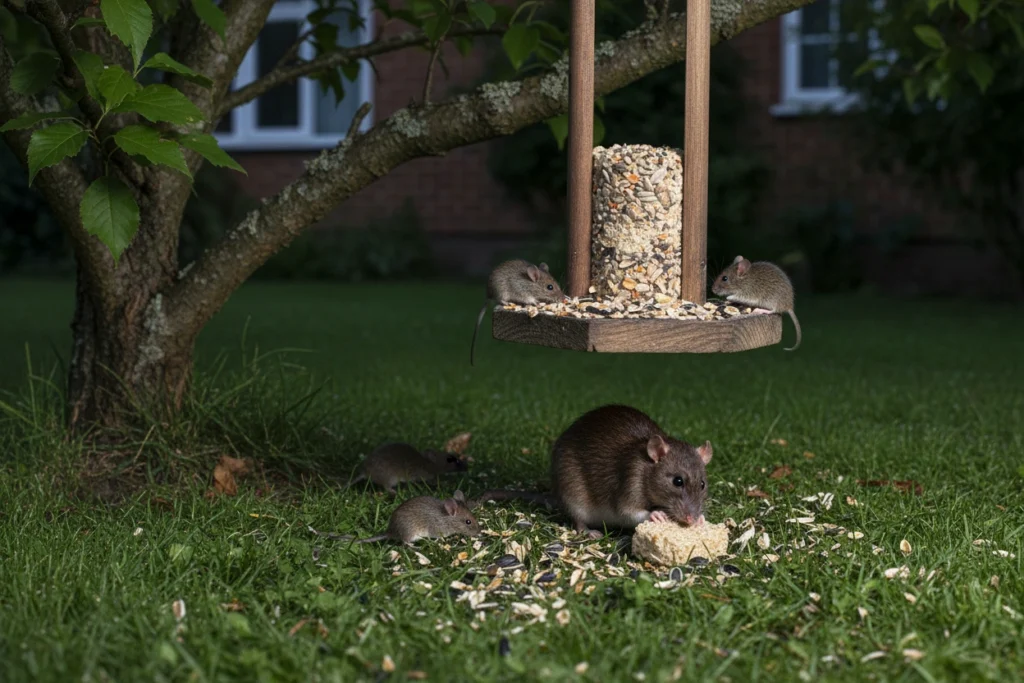
Bird feeders become rodent magnets in summer because warmer temperatures speed up seed spoilage beneath feeders, driving stronger foraging signals. Increased bird activity scatters more high-fat seeds like sunflower and peanuts onto the ground, creating a reliable food source. Rodents follow consistent scent trails back to these sites, and peak breeding cycles in summer push them to forage more aggressively. Understanding exactly how this happens can help you take the right steps.
Key Takeaways
-
Bird feeders cause seed spillage on the ground, creating an easy, accessible food source that attracts opportunistic rodents like mice and rats.
-
High-fat seeds such as sunflower seeds and peanuts are especially appealing to rodents foraging beneath feeders.
-
Increased bird activity in summer accelerates seed spillage, making feeders more attractive to nearby rodent populations.
-
Once rodents discover a feeder, they establish scent trails within 48 hours, recruiting more rodents to the location.
-
Rodents are drawn not just to seeds but also to insects, bird droppings, and standing water near feeders.
Why Bird Feeders Attract Mice and Rats in Summer

Bird feeders are a welcoming sight in any backyard, but they’re also one of the most reliable attractants for mice and rats during summer months.
Different bird feeder types present varying levels of risk. Platform and ground feeders scatter seed most aggressively, while tube and hopper designs still produce significant spillage beneath them.
Rodents are opportunistic foragers, and research confirms they follow consistent food sources once they identify them. During seasonal feeding periods, bird activity increases, meaning more seed hits the ground daily.
Mice and rats detect food through scent from considerable distances, often scouting new sources at dusk. Once they establish a feeding pattern near your yard, they’re unlikely to abandon it without intervention. Additionally, scent trails quickly recruit more rodents to reliable food sources.
What Rodents Are Actually Eating Under Your Feeder
Scattered seed accumulates beneath feeders in greater quantities than most homeowners realize, and what rodents consume there reflects deliberate nutritional foraging rather than indiscriminate scavenging.
Mice and rats preferentially select high-fat, high-calorie seed types, targeting sunflower seeds, peanuts, and safflower while largely ignoring millet and thistle.
Feeder designs directly influence ground accumulation rates — platform and hopper feeders produce considerably more spillage than tube feeders with catch trays.
Rodents also consume discarded seed hulls, extracting residual oils and nutrients.
Beyond seed, they feed on insects drawn to fermenting debris, bird droppings containing undigested nutrients, and standing water collecting beneath feeders.
You’re effectively maintaining a diversified food source that sustains rodent populations well beyond what visible seed scatter alone suggests. Additionally, regular inspections and early detection can help minimize rodent issues linked to feeders.
How Rats and Mice Move In Once They Find a Food Source
Once a mouse or rat identifies a reliable food source beneath your feeder, its behavior shifts from exploratory to territorial with remarkable speed.
Research on rodent behavior shows that within 24 to 48 hours of discovering consistent food sources, individuals begin establishing scent trails and returning along the same routes repeatedly. Others follow those chemical signals quickly.
What starts as one mouse becomes a small colony within weeks. Rats, being neophobic by nature, take slightly longer to commit, but once they do, they’re extraordinarily difficult to displace.
They’ll burrow nearby, cache seeds, and begin seeking shelter in adjacent structures. Your yard fundamentally becomes their home range, and your feeder becomes the anchor point organizing their entire daily activity pattern. To avoid infestations, it’s crucial to seal entry points around your property.
Signs Rodents Have Found Your Bird Feeder
Knowing what to look for makes early detection far more reliable than waiting until an infestation is obvious.
Watch for droppings near the base of your feeder — rodent feces are small, dark, and tapered, typically appearing in clusters. You’ll also notice gnaw marks on feeder components, disturbed soil or flattened vegetation beneath the pole, and seed scattered in patterns inconsistent with bird feeding.
Rodent behavior follows predictable pathways, so look for grease smears along nearby fences or walls indicating repeated travel routes.
Incorporate feeder maintenance into your routine by inspecting the surrounding ground every few days. A sudden spike in seed consumption overnight is another reliable indicator, since mice and rats feed most actively between dusk and dawn. Additionally, keep an eye out for signs of mice like nests or scratch marks in the area, which can indicate a nearby rodent population.
How to Keep Birds Fed Without Attracting Rats and Mice
You don’t have to choose between feeding birds and keeping rodents away—strategic adjustments to your setup greatly reduce the risk.
Feeder placement is your first line of defense; mounting feeders on smooth metal poles at least five feet high and six feet from any structure limits rodent access.
Pairing smart placement with rodent-resistant feeders—those designed with catch trays, weight-sensitive perches, and seed-tight closures—further cuts off the food supply that draws mice and rats in the first place. Additionally, keeping food and garbage sealed tightly inside your home can help minimize attractants that draw rodents near your feeders.
Feeder Placement Matters
Where you place your bird feeder is one of the most effective variables you can control to reduce rodent activity. Position feeders at least 10 feet from structures, woodpiles, shrubs, and fences—surfaces rodents use as travel corridors.
Feeder height also plays a measurable role. Mount feeders a minimum of 5 feet off the ground, and attach a baffle below the pole to block climbing access.
Feeder type determines how much seed scatters. Tube feeders and feeders with catch trays greatly reduce spillage compared to open platform designs. Scattered seed is the primary attractant, not the feeder itself.
You’re fundamentally managing a food source, so controlling where seed lands directly correlates with how much rodent activity you’ll observe beneath it.
Use Rodent-Resistant Feeders
Feeder placement reduces rodent exposure, but the feeder’s physical design determines how much seed reaches the ground in the first place.
Rodent proof designs typically incorporate weight-sensitive perches that close seed ports when heavier animals apply pressure, limiting spillage at the source.
You’ll also want to evaluate feeder materials carefully — metal construction resists gnawing, while plastic cracks over time, creating gaps that accelerate seed loss.
Tube feeders with integrated catch trays collect fallen seed above ground level, reducing surface accumulation.
Tray-style feeders, by contrast, expose seed broadly and spill readily, making them poor choices in rodent-active areas.
Selecting a structurally sound, mechanically restrictive feeder directly reduces the seed volume that reaches the ground and ultimately determines what you’re inviting into your yard.
When to Call a Pest Control Professional
Even with diligent seed management and feeder placement, mice populations can establish quickly—a single pair can produce up to 35 offspring per year under favorable conditions.
If you’re noticing droppings near feeding stations, gnaw marks on structures, or activity during daylight hours, infestations are likely already underway.
At that point, pest prevention strategies alone won’t resolve the problem. Professional intervention provides rodent behavior insights that allow technicians to identify entry points, harborage zones, and foraging corridors you might overlook.
Pest Patrol serves Portland and surrounding communities, offering targeted rodent management with treatments that are safe for families and pets.
Early professional assessment greatly reduces long-term structural risk and limits population growth before it compounds further.
Frequently Asked Questions
Are Certain Bird Feeder Types Less Likely to Attract Rodents?
Yes, feeder design greatly impacts rodent attraction. You’ll find tube feeders with catch trays and no-mess seed types like shelled sunflower reduce ground spillage, giving mice and rats fewer opportunities to forage beneath your feeder.
Do Bird Feeders Attract Rodents More in Urban or Rural Areas?
Urban wildlife’s denser populations make your bird feeders higher-risk for rodent activity. Studies show rodent behavior and habitat preferences drive rats toward urban bird seed more aggressively, while rural pests exhibit more dispersed, opportunistic feeding habits.
Can Rodents Attracted to Feeders Also Harm Garden Vegetables Nearby?
Yes, rodents attracted to your feeders can damage nearby gardens. Their behavior drives them to gnaw vegetables, consuming roots, stems, and fruits. You’ll observe significant vegetable damage to crops like tomatoes, carrots, and lettuce throughout summer months.
Will Removing My Bird Feeder Permanently Solve an Existing Rodent Problem?
Removing your feeder won’t permanently solve an existing rodent problem. You’ve already triggered established rodent behavior—they’ll seek alternative food sources. Feeder placement contributed, but you’ll need professional extermination to fully eliminate the active infestation.
How Far Can Rats Travel From Their Nest to Find Food?
Rats can travel up to 300 feet from their nest to reach food sources. Understanding this rodent behavior means your bird feeder doesn’t need to be nearby—it can still attract them from considerable distances.
Conclusion
Your bird feeder creates measurable conditions that predictably attract rodents — spilled seed accumulates, scent trails form, and repeat visits follow. Data consistently shows that rodents return to reliable food sources and expand their range toward nearby structures. You can interrupt this pattern by managing seed waste, using no-mess feeders, and monitoring for early signs of activity. When evidence suggests an established population, professional intervention produces more reliable results than reactive, do-it-yourself methods alone.