
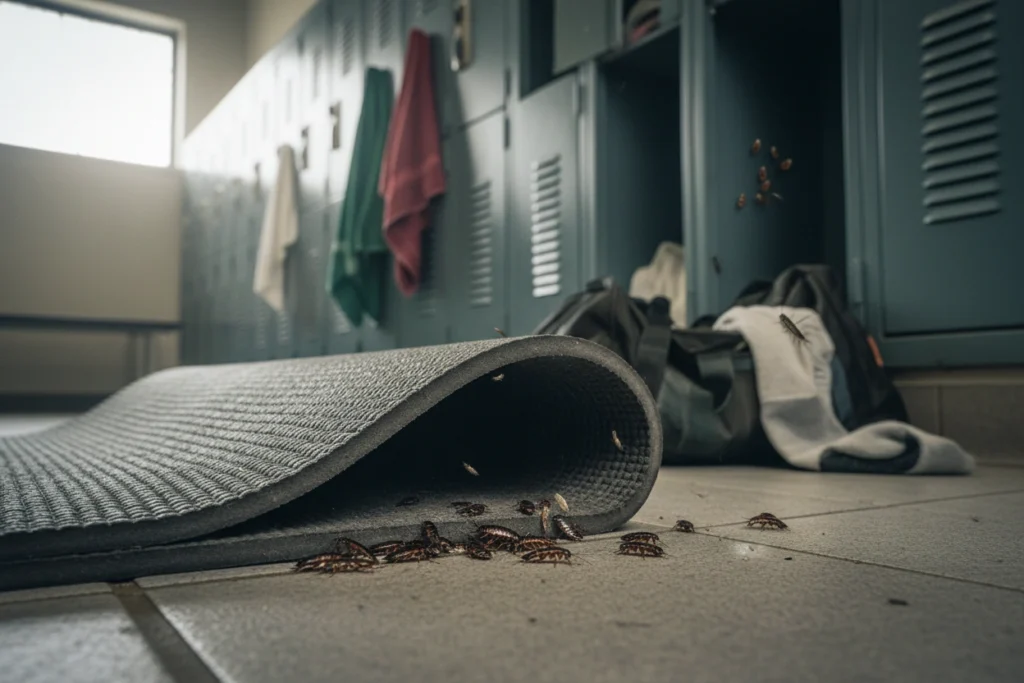
Gyms create ideal conditions for pests you rarely see until it’s too late. Moisture, warmth, and food residue attract cockroaches, rodents, ants, and mites into equipment voids, locker room drains, and compressed mats. These pests spread bacteria, trigger allergic reactions, and degrade air quality — putting your members and staff at serious risk. Effective control requires sealing entry points, eliminating moisture, and enforcing strict hygiene protocols. There’s more to uncover about protecting your facility.
Key Takeaways
-
Locker room moisture from showers attracts cockroaches and silverfish, making consistent drain cleaning and ventilation essential for pest prevention.
-
Compressed foam mats trap organic debris, creating hidden habitats for beetles and mites that standard cleaning often misses.
-
Cluttered lockers and storage areas provide nesting sites for spiders and rodents, requiring regular inspection and organization.
-
Pest droppings and shed skin degrade indoor air quality, triggering allergic reactions and respiratory issues among gym members.
-
Professional pest control services identify species-specific entry points and harborage zones that DIY methods consistently fail to address.
Where Pests Hide in Gyms (And Why It’s Hard to Spot)

Gyms create ideal pest habitats without most owners realizing it. Pest behavior follows moisture, warmth, and food sources — all of which your facility produces in abundance.
Rodents exploit hidden habitats behind equipment panels, inside wall voids near locker rooms, and beneath rubber flooring where heat accumulates. Cockroaches nest inside steam room drains and behind water heaters. Ants trail along baseboards toward protein shake residue and discarded food wrappers. Spiders colonize rarely disturbed storage areas stacked with equipment.
You won’t spot most of these infestations during routine walkthroughs because pests remain active primarily at night and inside structural cavities. Additionally, signs like grease marks along baseboards can indicate repeated rodent travel paths, which are often overlooked.
High foot traffic, frequent cleaning, and ambient noise also mask early warning signs, making professional inspection the only reliable method for accurate detection.
The Pests Most Commonly Found in Fitness Facilities
Cockroaches congregate near cardio and weight equipment, drawn by heat, rubber, and residual sweat.
Rodents exploit cluttered storage rooms, nesting behind supply boxes and inside wall voids where foot traffic is minimal. Additionally, the presence of calorie-dense foods can attract these pests, particularly if nutrition bars or snacks are left out.
Ants zero in on member snack bars, vending areas, and any surface where protein powders or energy drinks leave a sugary residue.
Cockroaches Near Equipment
Among the most alarming pest threats in fitness facilities, cockroaches gravitate toward weight machines, treadmills, and other equipment where sweat, skin cells, and moisture accumulate in hard-to-reach spaces.
Understanding cockroach behavior is critical—they’re nocturnal, reproduce rapidly, and exploit tight voids within equipment frames, motor housings, and cable channels. You won’t typically spot them during operating hours, but the contamination they leave behind is constant.
Equipment contamination occurs through fecal deposits, shed exoskeletons, and saliva, all of which carry pathogens including Salmonella and E. coli. These organisms transfer directly onto surfaces your clients touch repeatedly.
Standard cleaning protocols don’t reach the internal cavities where cockroaches nest. Effective control requires professional inspection, targeted treatment within equipment structures, and ongoing monitoring to prevent reinfestation before populations establish.
Rodents In Storage
Storage rooms, supply closets, and equipment bays create ideal rodent harborage—dark, low-traffic spaces with insulation materials, foam padding, resistance bands, and other gnawable resources rodents exploit for nesting.
Understanding rodent behavior helps you implement targeted storage solutions before infestations establish:
-
Seal entry points — Close gaps larger than ¼ inch around pipes, vents, and door frames.
-
Elevate stored equipment — Keep gear on metal shelving at least 12 inches off the floor.
-
Use hard-sided containers — Replace cardboard boxes with sealed plastic bins rodents can’t chew through.
-
Inspect regularly — Check storage areas weekly for droppings, gnaw marks, or nesting material.
Pest Patrol delivers systematic rodent assessments and elimination protocols designed specifically for commercial fitness environments throughout the Portland metro area.
Ants Targeting Snacks
Ants rank among the most persistent nuisances gym and fitness studio owners face, drawn consistently to protein bars, sports drinks, pre-workout supplements, and the residual sugars left on counter surfaces and blender bottles.
Poor snack storage accelerates the problem. Open containers, unsealed bins, and accessible retail displays create reliable foraging routes that ant colonies reinforce through pheromone trails. Once established, those trails attract continuous traffic regardless of how often you clean visible surfaces.
Eliminating ant activity requires addressing both entry points and food sources simultaneously. Audit your snack storage protocols, seal all consumables in airtight containers, and enforce consistent hygiene practices across reception areas, juice bars, and supplement stations.
Wiping down surfaces after every use removes the sugar residue ants detect and target with precision.
Why Locker Rooms and Mats Are High-Risk Zones
Locker rooms and mat areas create ideal harborage conditions for pests because they combine persistent moisture, warmth, organic debris, and high foot traffic in a confined space.
Poor locker room hygiene and inconsistent mat maintenance accelerate pest establishment.
Four structural and behavioral factors drive this risk:
-
Standing moisture from showers and wet gear attracts cockroaches and silverfish.
-
Compressed foam mats trap dead skin cells, sweat, and hair—prime food sources for certain beetles and mites.
-
Lockers with accumulated clutter provide undisturbed nesting sites for spiders and rodents.
-
Drain buildup creates organic matter that sustains moisture-dependent pest populations.
You can’t eliminate these conditions entirely, but you can manage them systematically to reduce pest pressure before an infestation takes hold. Additionally, maintaining regular sanitation practices is crucial to prevent attracting pests in these high-risk areas.
Health Risks Gym Pests Pose to Members and Staff
When pests invade your gym, they bring direct health consequences that extend well beyond simple annoyance.
Cockroaches, rodents, and stinging insects trigger allergic reactions ranging from mild skin irritation to severe anaphylaxis, putting sensitive members and staff at serious risk.
These same pests also carry and transmit dangerous pathogens—rodents spread hantavirus and salmonella, while cockroaches contaminate surfaces with bacteria that cause food poisoning and respiratory illness. Additionally, exposure to pest droppings can degrade indoor air quality, further exacerbating respiratory issues among gym-goers.
Allergic Reactions and Bites
Pest bites and stings in gym environments carry real health risks that extend well beyond minor irritation.
When members and staff encounter insects in high-traffic fitness spaces, bite symptoms can escalate quickly depending on individual sensitivity. Allergic reactions range from localized swelling to life-threatening anaphylaxis.
Four common bite-related risks you’ll encounter in gym settings:
-
Bed bug bites – Cause clustered welts, intense itching, and secondary skin infections from scratching.
-
Spider bites – Produce localized necrosis in severe cases, particularly with hobo or brown recluse spiders.
-
Wasp or yellow jacket stings – Trigger systemic allergic reactions requiring immediate medical intervention.
-
Ant bites – Generate painful burning sensations and pustules, especially from aggressive species.
Identifying the pest source determines the appropriate treatment response.
Disease Transmission Risks
Beyond bite reactions, disease transmission represents a more serious and often invisible threat that gym pests introduce into shared fitness environments.
Rodents function as primary disease vectors, shedding pathogens like hantavirus and salmonella through urine, droppings, and direct contact with surfaces your members touch daily.
Cockroaches spread E. coli and other bacteria across mats, benches, and locker room floors as they forage overnight.
Even flies transfer pathogens mechanically through surface contact alone.
Standard sanitation practices reduce contamination risks but don’t eliminate pest-borne disease exposure entirely.
When pests infiltrate your facility, they compromise surfaces between cleaning cycles in ways your staff can’t detect or anticipate.
Treating pest activity as a public health issue rather than a nuisance distinguishes well-managed gyms from facilities that unknowingly expose members to preventable illness.
What Gym Owners Can Do to Prevent Pest Problems
Keeping pests out of your gym starts with consistent, proactive habits that eliminate the conditions pests need to survive.
Preventive maintenance and staff training are your two most effective defenses.
Implement these four core practices:
-
Seal entry points — Inspect doors, windows, and utility penetrations quarterly. Gaps as small as a quarter-inch admit rodents.
-
Eliminate moisture — Repair leaking pipes, improve locker room ventilation, and dry wet mats promptly.
-
Control food sources — Enforce strict policies around protein bars, supplements, and beverages in non-designated areas.
-
Establish cleaning protocols — Train staff to recognize early pest indicators during daily cleaning routines, including droppings, gnaw marks, and shed skins.
Consistent execution of these steps greatly reduces your facility’s vulnerability to infestation, as early detection of infestations can save time and resources.
When to Call a Professional Pest Control Service
Even with rigorous preventive measures in place, some infestations require professional intervention. Recognizing pest control signs early determines whether you contain the problem or face a full-scale infestation.
Call a licensed pest control service when you identify droppings near equipment storage, detect musty or ammonia-like odors in locker rooms, notice gnaw marks on structural elements, or find active nests in utility spaces.
Don’t delay a professional assessment if members report bites or skin irritation, since bed bugs and mites spread rapidly in high-traffic environments.
A certified technician will inspect harborage points, identify species-specific entry routes, and implement targeted treatments that comply with health codes.
Attempting DIY remediation in a commercial gym setting typically accelerates the problem rather than resolving it.
Frequently Asked Questions
Does Pest Control Require Closing the Gym Temporarily During Treatment?
You don’t always need to close your gym. Treatment duration and pest visibility determine downtime. Targeted applications often let you reopen within hours, while severe infestations may require extended closures for complete eradication.
Are Pest Control Treatments Safe Around Gym Equipment and Surfaces?
Yes, modern pest safety protocols protect your gym hygiene by using low-toxicity, targeted treatments that won’t damage equipment or surfaces. You’ll get effective pest control without compromising the integrity of mats, machines, or shared contact areas.
How Much Does Professional Gym Pest Control Typically Cost?
Pest control pricing varies based on your facility’s size and infestation severity. For accurate gym infestation prevention costs, you’ll want to contact Pest Patrol directly—they’ll assess your specific needs and provide transparent, customized pricing.
Can Pests Spread Between Neighboring Businesses in Shared Commercial Buildings?
Yes, pests absolutely migrate between neighboring businesses through shared walls, plumbing, and HVAC systems. You’re vulnerable to neighboring infestations even if you maintain a clean facility, making coordinated pest management across adjacent tenants essential.
Do Pest Control Companies Offer Service Contracts for Ongoing Gym Maintenance?
Yes, you’ll find that pest control companies offer service contracts with scheduled visits tailored to your gym’s needs. These agreements deliver clear service benefits, letting you control maintenance frequency while ensuring consistent, proactive protection year-round.
Conclusion
Your gym’s reputation depends on what members don’t see just as much as what they do. Pests exploit moisture, warmth, and organic matter — conditions your facility produces constantly. You can’t eliminate these risks through cleaning alone. You need systematic monitoring, targeted treatments, and professional oversight built into your operational routine. Don’t wait for a sighting to act. Implement a structured pest control plan now, before an infestation compromises your members’ health and your business’s standing.