
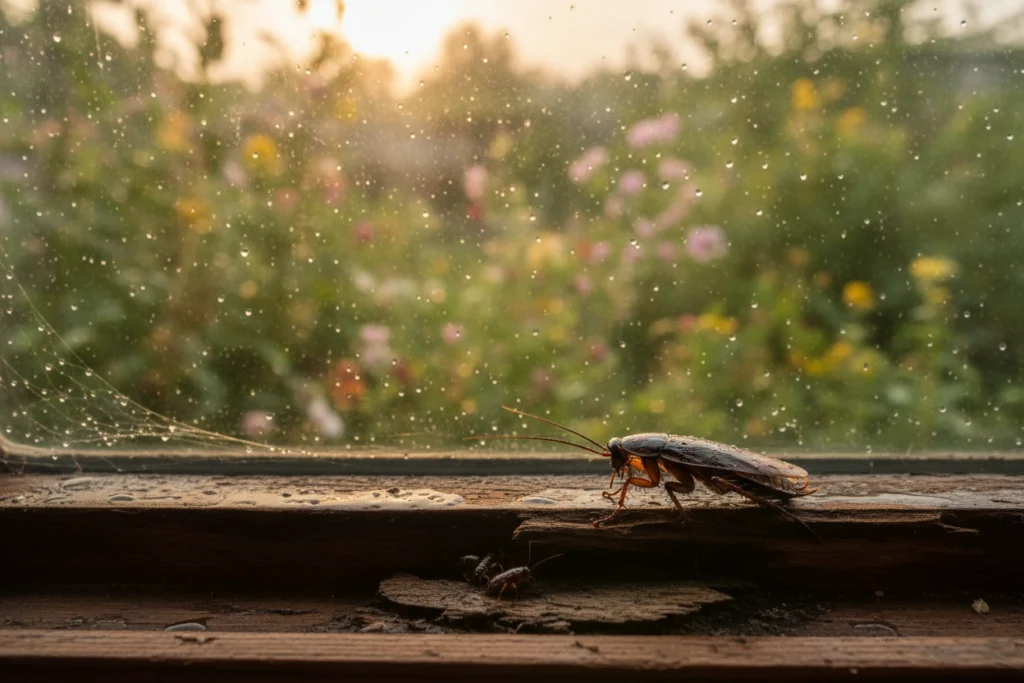
Apartment buildings struggle with summer roach problems because dense occupancy, shared wall voids, and plumbing networks give cockroaches unlimited travel corridors between units. When temperatures climb above 70°F, German cockroaches compress their reproductive cycle to as little as 36 days, while high humidity reduces desiccation stress and accelerates egg development. A single infested unit can seed an entire structural zone within weeks. There’s a lot more to understand about why standard treatments fail and what actually works.
Key Takeaways
-
Summer heat above 70°F accelerates cockroach reproduction, with German cockroaches completing a full generation in as little as 36 days.
-
High humidity from summer conditions reduces roach desiccation stress, accelerates egg development, and extends favorable habitats through shared plumbing networks.
-
Shared walls and utility conduits act as hidden highways, allowing a single infestation to spread across multiple units within weeks.
-
Dense occupancy provides cockroaches consistent access to food, moisture, and shelter, making apartment buildings especially vulnerable during peak summer conditions.
-
Open windows and deteriorated door seals create additional summer entry points, with gaps as small as 1.6mm allowing nymph-stage roaches inside.
Why Roaches Thrive in Apartment Buildings

Apartment buildings create near-perfect conditions for cockroach infestations. Dense occupancy means roach behavior spreads rapidly across units through shared wall voids, plumbing chases, and ventilation systems. A single infestation in one unit can colonize an entire floor within weeks.
Roaches exploit three core survival requirements: food, moisture, and shelter. Apartment buildings supply all three consistently. Communal trash areas, shared laundry rooms, and interconnected drainage systems give cockroaches reliable access to resources regardless of how clean your individual unit stays.
This structural reality makes pest prevention considerably more difficult than in single-family homes. You can’t fully control neighboring units, building maintenance schedules, or shared infrastructure. Additionally, the presence of harmful bacteria carried by cockroaches can exacerbate health concerns for residents.
Understanding these environmental factors is the first step toward implementing targeted, effective control strategies within the limits of your living situation.
How Shared Walls Turn One Unit’s Problem Into Everyone’s
Shared walls aren’t just a noise problem—they’re a biological highway for cockroach dispersal. Roaches exploit utility conduits, pipe chases, electrical channels, and wall voids to move laterally between units with minimal resistance.
A single harborage point in one apartment can seed infestations across multiple floors within weeks.
This migration dynamic means individual treatment efforts frequently fail. If you treat your unit while adjacent units remain untreated, reinfestation occurs through the same structural pathways you can’t seal alone. Roaches don’t recognize lease boundaries.
Effective containment requires unit cooperation and coordinated treatment across shared spaces—common hallways, laundry rooms, and mechanical areas included.
Without synchronized intervention, you’re addressing symptoms rather than the source, and the population simply redistributes rather than collapses.
Summer Conditions That Make Infestations Worse
Summer’s environmental conditions actively work against you when it comes to cockroach control in apartment buildings. Elevated temperatures accelerate roach reproductive cycles, compressing the time between egg hatching and sexual maturity. High humidity creates the moisture-rich environment roaches require to thrive. Additionally, when you open windows for ventilation, you’re creating direct entry points that allow roaches to migrate between units and from the exterior. This rapid reproduction can lead to rapid infestations if not managed effectively.
Heat Accelerates Roach Breeding
When temperatures climb above 70°F, cockroach reproductive cycles accelerate greatly, compressing egg incubation periods and shortening the time between generations.
German cockroaches, the dominant apartment species, can complete a generation in as little as 36 days under peak summer heat. Extended heat waves amplify this effect considerably, sustaining ideal breeding cycles for weeks rather than days.
You’re dealing with exponential population growth when these conditions persist. A single female produces multiple egg cases, each containing 30 to 48 eggs.
Multiply that across dozens of reproductive adults, and a manageable population becomes a full infestation within one summer season.
Understanding this thermal relationship helps you recognize why summer complaints spike so dramatically in apartment buildings and why early intervention produces measurably better outcomes than reactive treatment.
Humidity Creates Ideal Conditions
Humidity compounds the thermal problem considerably. Cockroaches require moisture for survival, and summer humidity levels in the Pacific Northwest create near-optimal conditions for colony maintenance and expansion.
You’ll find roaches gravitating toward moisture-dense zones: under-sink cabinets, bathroom wall voids, laundry rooms, and basement mechanical spaces.
Relative humidity above 50% accelerates egg capsule development and reduces desiccation stress on nymphs. In multi-unit buildings, plumbing networks distribute moisture across multiple floors, effectively extending favorable habitat throughout the structure.
Effective pest prevention requires addressing moisture alongside heat. You should inspect pipe joints, exhaust ventilation, and condensation points before infestations establish.
Without controlling humidity, even aggressive treatment protocols produce diminishing returns—roaches simply retreat to wetter zones and rebuild population density within weeks.
Open Windows Invite Entry
Open windows and compromised door seals create direct entry points that cockroaches exploit with minimal resistance.
During summer, you’re likely running fans or opening windows for ventilation, but damaged or missing window screens eliminate your first line of structural defense. Cockroaches detect interior humidity and food odors from several feet away, then follow those gradients directly inside.
Common entry vulnerabilities include:
-
Torn or improperly fitted window screens that leave gaps exceeding 1.5mm
-
Ventilation issues around exhaust fans, HVAC vents, and dryer ducts lacking protective mesh
-
Door sweeps worn down from seasonal use, creating ground-level access points
-
Shared hallway ventilation systems that distribute roach pheromones across multiple units
Each opening functions as a sensory beacon, drawing roaches toward your living space systematically.
The Common Entry Points Roaches Use in Apartments
Roaches exploit structural vulnerabilities in apartment buildings through three primary pathways: gaps around plumbing penetrations, compromised door and window seals, and shared wall voids that connect adjacent units.
You’ll find that pipe chases and utility conduits create unobstructed channels between floors and units, giving roaches direct access to your living space. Once inside the wall void network, a population can spread laterally across an entire building floor without ever crossing an open surface. Additionally, these hidden entry points can facilitate rapid reproductive capabilities, enabling infestations to escalate quickly if not addressed.
Gaps Around Plumbing
Gaps around plumbing pipes are among the most frequent entry points cockroaches exploit in apartment buildings. Where pipes penetrate walls, floors, and ceilings, installers often leave unsealed voids.
These gaps provide direct pathways between units and into wall voids. Routine plumbing maintenance rarely addresses these structural vulnerabilities, making pest prevention difficult without deliberate inspection.
Common access points you’ll find in apartments include:
-
Gaps where supply and drain pipes enter under sinks
-
Unsealed penetrations behind toilets and washing machine hookups
-
Open spaces around bathtub and shower drain collars
-
Voids where heating or refrigerant lines pass through walls
Each opening connects roaches to neighboring units, shared wall cavities, and exterior entry points.
Sealing these gaps with caulk or expanding foam remains one of the most effective mechanical control strategies available.
Door And Window Cracks
Doors and windows represent considerable structural vulnerabilities in apartment units, particularly as buildings age and materials shift, warp, or degrade.
Deteriorated door seals create measurable gaps at thresholds and frames, giving cockroaches direct access from hallways, exterior walls, and adjacent units. Even a gap of 1.6mm is sufficient for nymph-stage roaches to pass through.
Window screens with torn mesh or improper frame fits offer similarly exploitable entry points. Roaches don’t require large openings — they exploit micro-gaps where framing meets drywall, where caulk has cracked, or where weatherstripping has compressed unevenly.
You’ll often find these vulnerabilities concentrated around older sliding doors and double-hung windows.
Routinely inspecting and replacing compromised door seals and window screens considerably reduces roach infiltration risk during peak summer activity periods.
Shared Wall Voids
While door and window gaps are visible and addressable, shared wall voids present a more complex infiltration pathway — one that’s largely hidden from view.
Understanding shared space dynamics helps you recognize why roaches move so freely between units through internal structures.
Wall voids act as protected conduits, offering:
-
Thermal stability — consistent temperatures that roaches actively seek during summer heat spikes
-
Moisture retention — condensation from plumbing lines creates ideal harborage conditions
-
Undisturbed travel corridors — roaches move laterally across multiple units undetected
-
Limited treatment access — standard perimeter sprays don’t penetrate void networks
Effective wall void management requires targeted injection treatments and structural assessments that go beyond surface-level applications.
Without addressing these internal pathways, roach pressure will persist regardless of how thoroughly you treat visible entry points.
Why DIY Treatments Rarely Work in Multi-Unit Buildings
Many residents instinctively reach for store-bought sprays or bait traps when roaches appear, but these solutions address only the visible symptom rather than the underlying infestation.
DIY limitations become apparent quickly in multi-unit environments—repellent sprays scatter roaches into adjacent units rather than eliminating colonies. This displacement effect is one of the most damaging treatment misconceptions among apartment dwellers.
Over-the-counter baits lack the active ingredient concentrations required to penetrate deep harborage zones within shared wall voids, utility chases, and subfloor cavities.
Without structural access and population mapping, you’re treating a fraction of the infestation. Roaches reproduce faster than surface-level treatments can suppress them.
Effective elimination requires coordinated, building-wide intervention using professional-grade products applied systematically across all connected units simultaneously. Additionally, understanding the signs of a cockroach infestation is crucial for early detection and management.
When to Call a Pest Control Company for Roaches
Given that DIY methods consistently fall short in multi-unit settings, knowing when to act can prevent a manageable infestation from becoming a building-wide crisis.
Recognizing signs infestations have crossed critical thresholds determines whether professional intervention is necessary.
Contact a licensed pest control company when you observe:
-
Daytime roach activity, which indicates population pressure exceeding available harborage
-
Egg casings or molted exoskeletons concentrated near plumbing, appliances, or wall voids
-
Multiple unit complaints reported within the same structural zone or shared wall system
-
Failed repeated treatments using store-bought baits, traps, or sprays over a two-week period
Pest Patrol serves Portland-area apartment buildings with targeted, professionally administered cockroach protocols designed for multi-unit environments.
This ensures treatments address both active populations and structural entry points systematically. Consistent sanitation practices are essential to prevent the conditions that allow infestations to thrive.
Frequently Asked Questions
How Much Does Professional Cockroach Treatment Cost for Apartment Buildings?
Professional cockroach treatment costs vary based on infestation severity and treatment frequency. You’ll typically spend $100–$300 per unit. Cost comparison favors recurring service contracts, which reduce long-term expenses while ensuring methodical, systematic eradication throughout your apartment building.
Are the Chemicals Used in Roach Treatments Safe for Pets?
Most roach treatments are safe when applied correctly, but you’ll want to discuss pet safety concerns with your technician. They can recommend treatment alternatives like gel baits or low-toxicity formulas that minimize chemical exposure risks to your animals.
How Long Does It Take to Fully Eliminate a Roach Infestation?
You’ll typically eliminate a roach infestation within 3–6 weeks. Technicians deploy common roach bait strategically, targeting colonies at the source. Combining treatments with infestation prevention strategies accelerates results, ensuring thorough, methodical eradication throughout your property.
Can Landlords Legally Require Tenants to Pay for Pest Control?
Laws vary by state, but landlords typically can’t shift pest control responsibilities to you without cause. Know your tenant rights — if you’ve maintained cleanliness, pest control responsibilities generally fall on your landlord.
Which Cockroach Species Are Most Commonly Found in Portland Apartments?
You’ll most commonly encounter German and brown-banded cockroaches in Portland apartments. Accurate roach identification drives effective infestation prevention—German roaches prefer kitchens, while brown-banded species spread throughout rooms, requiring distinct, methodical treatment protocols for each.
Conclusion
Summer roach infestations in apartment buildings aren’t random — they’re predictable outcomes of shared infrastructure, accelerated breeding cycles, and interconnected living spaces. You’re dealing with a systemic problem that no single treatment resolves. Once you’ve identified entry vectors, eliminated harborage conditions, and coordinated with building management, you’ll markedly reduce infestation risk. Without building-wide intervention, individual unit treatments remain largely ineffective against populations migrating through plumbing corridors and wall voids.