
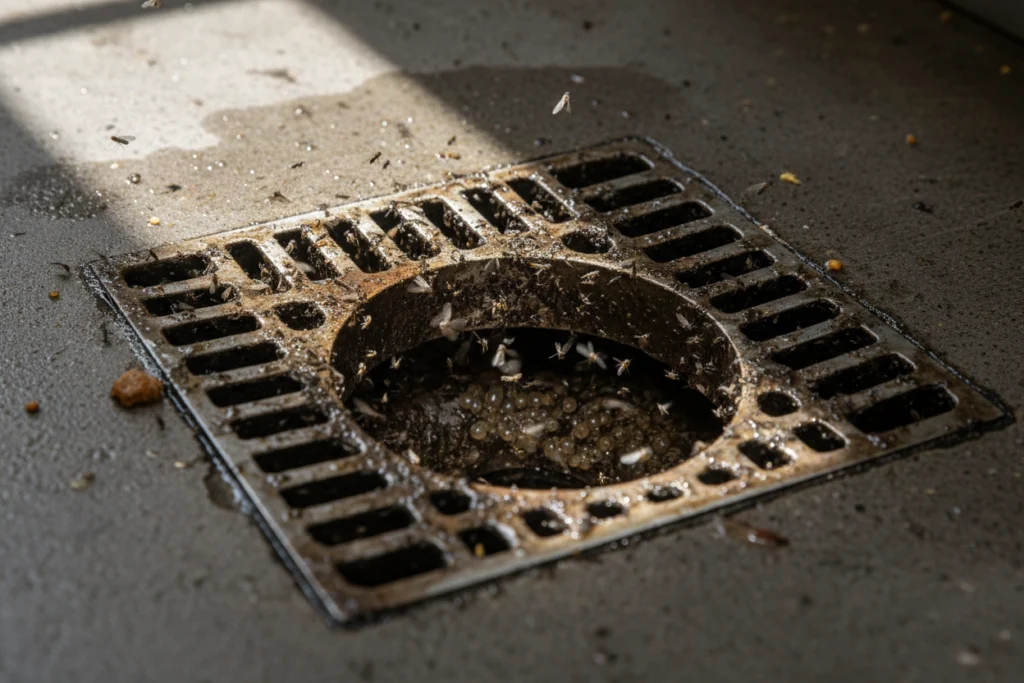
Your restaurant drains become fly breeding sites when organic waste, moisture, and heat combine to form a dense biofilm inside pipe walls. Food particles, fats, and sugars break down into a nutrient-rich layer where drain flies, phorid flies, and fruit flies lay their eggs directly. Larvae then burrow into the biofilm, feeding undisturbed through their full development cycle. Understanding which drains carry the highest risk—and why—is the first step toward stopping infestations before they take hold.
Key Takeaways
-
Moisture, warmth, and decaying food waste inside drains create ideal conditions for fly eggs and larvae to develop undisturbed.
-
Organic residue forms a dense biofilm that ferments, providing the nutrient-rich environment flies need to breed continuously.
-
Drain flies, phorid flies, and fruit flies lay eggs directly into biofilm, accelerating infestation cycles year-round.
-
High-risk areas include floor drains, bar drains, mop sinks, and grease trap inlets due to heavy organic accumulation.
-
Poor drain hygiene thickens biofilm over time, creating deeper breeding substrates that are increasingly difficult to eliminate.
Why Restaurant Drains Attract Flies in the First Place
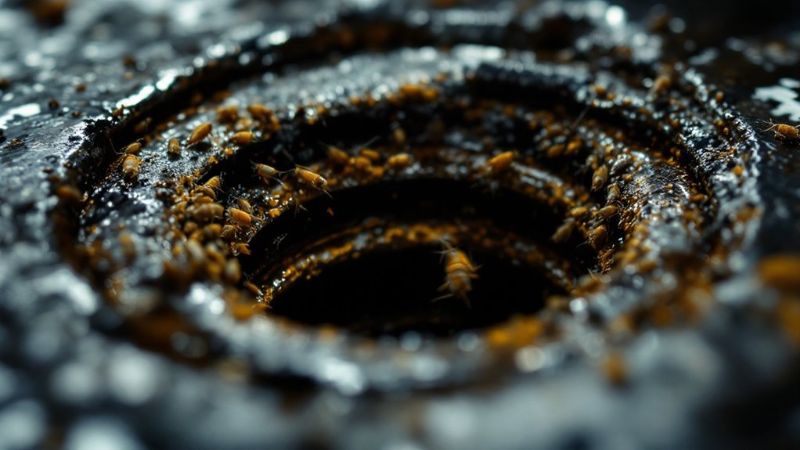
Restaurant drains are prime fly breeding grounds because they accumulate exactly what flies need to reproduce: moisture, organic matter, and warmth.
As food waste breaks down inside your drains, it forms a dense, gelatinous biofilm along pipe walls. This layer contains fats, proteins, sugars, and bacteria — an ideal nutritional matrix for fly larvae.
Drain flies, phorid flies, and fruit flies all exploit this environment, depositing eggs directly into the biofilm where larvae can feed and develop undisturbed.
Poor drain hygiene accelerates biofilm buildup, compressing the fly reproductive cycle and increasing infestation pressure.
Your kitchen’s ambient heat further stabilizes these conditions year-round. Understanding the lifecycle of drain flies is essential — without addressing what draws flies to drains, any control measure you apply will only produce temporary results.
Which Drains in Your Restaurant Are Highest Risk
Not all drains in your restaurant carry equal risk — location, usage frequency, and organic load determine which ones will drive fly activity most aggressively.
Understanding drain types helps you prioritize pest prevention efforts where they matter most.
Floor drains beneath prep tables and dishwashing stations accumulate the heaviest organic buildup and rank as your highest-risk sites.
Bar drains follow closely — sugary residue from spilled beverages creates ideal breeding conditions.
Mop sink drains often go overlooked despite receiving heavy contamination from soiled cleaning water.
Grease trap inlet drains present serious risk due to sustained fat and protein deposits.
Roof drains and exterior utility drains can also harbor larvae if debris accumulates.
Inspect these locations first when diagnosing fly pressure inside your facility. Additionally, regular preventive measures can significantly reduce the likelihood of fly infestations in these critical areas.
How Flies Breed Inside Floor and Sink Drains
When organic residue—grease, food particles, and slime—accumulates inside your drains, it creates an ideal nutrient source that draws flies in to lay eggs.
Moisture accelerates the breeding cycle by keeping that organic matter soft and hospitable, allowing eggs to hatch into larvae within 24 hours.
Those larvae then burrow deeper into the drain’s biofilm layer, where they feed, develop, and eventually emerge as adults ready to contaminate your food prep surfaces.
Drain Buildup Attracts Flies
Floor and sink drains in commercial kitchens collect a persistent mix of grease, food particles, and organic debris that bonds to pipe walls and creates a nutrient-dense biofilm.
This buildup doesn’t just accumulate—it ferments, generating the warm, moist, decomposing organic matter that phorid and fruit flies require for egg-laying and larval development.
When you neglect drain maintenance, that biofilm thickens and becomes a self-sustaining breeding substrate that standard floor cleaning won’t reach.
Flies detect this material through chemical cues and target drains even in otherwise clean facilities.
Consistent drain maintenance is a foundational component of pest prevention in food service environments.
Without it, you’re not just managing sanitation—you’re actively providing flies with the conditions they need to reproduce at scale.
Moisture Accelerates Fly Breeding
Moisture doesn’t just support fly breeding—it actively drives it. Drain interiors maintain near-constant humidity, creating breeding conditions that allow fly populations to develop year-round, independent of outdoor seasons. Phorid and drain flies deposit eggs directly into the wet organic film coating drain walls, and larvae complete their development without ever leaving the drain.
You need to recognize the specific moisture sources contributing to this cycle: condensation from temperature differentials, residual water from cleaning operations, and slow drainage from partially clogged lines. Each adds humidity that sustains larval development.
Even briefly dried drains can reactivate breeding once moisture returns. Controlling these moisture sources disrupts the cycle at its foundation. Without consistent wetness, the biofilm degrades and breeding conditions collapse, making fly reproduction inside drains unsustainable.
Larvae Thrive In Drains
Drain interiors give fly larvae everything they need to complete development: warmth, constant moisture, and a food source in the form of biofilm.
Females deposit eggs directly onto this organic layer, and hatching occurs within 24 to 48 hours. The larvae lifecycle moves quickly under these conditions — larvae burrow into the biofilm, feed continuously, and pupate within four to six days.
Adults emerge and restart the cycle within the same drain system. Without consistent drain maintenance, this process repeats undetected beneath your floor.
You won’t see eggs or larvae during routine walkthroughs because development happens inside the pipe walls. Inspecting drains weekly and breaking down biofilm with enzymatic cleaners disrupts the lifecycle before adult populations establish and spread throughout your facility.
Signs Your Drains Have Become a Fly Breeding Site
How do you know if your drains have crossed the line from a minor nuisance to an active fly breeding site? Watch for these specific indicators: adult flies consistently hovering near drain openings, particularly during early morning or evening hours; larvae visible along drain walls or in standing water; and a persistent foul odor even after routine drain maintenance.
Conduct a simple tape test—place clear tape over the drain overnight. If you capture adult flies or larvae by morning, breeding activity is confirmed.
Fly populations that reappear days after treatment signal an unresolved source, typically organic buildup inside drain pipes. Flies transfer pathogens quickly, making early identification critical to pest prevention, allowing you to target the infestation before it escalates into a full-scale facility problem.
How to Clean and Treat Drains to Eliminate Fly Larvae
To eliminate fly larvae, you’ll need to physically remove the organic buildup lining your drains before any treatment can be effective—use a stiff-bristled brush to scrub pipe walls, dislodging the slime layer where eggs and larvae develop.
Follow the mechanical cleaning with a biological drain treatment containing live bacteria or enzymes, which breaks down residual organic matter that chemical cleaners leave behind.
Apply treatments consistently on a scheduled basis, as a single application won’t prevent reinfestation if buildup begins accumulating again between cleanings.
Cleaning Drain Buildup Effectively
Eliminating fly larvae from drains starts with physically removing the organic buildup that sustains them. Use a stiff-bristled drain brush to scrub pipe walls, breaking apart the grease, food debris, and biofilm layers where larvae develop.
Follow scrubbing with boiling water to flush loosened material through the line.
Consistent drain maintenance requires establishing a strict cleaning frequency based on volume. High-traffic kitchens should scrub drains nightly and apply enzymatic cleaners at least three times per week.
Enzymatic treatments break down organic residue at the molecular level, eliminating the nutrient base larvae depend on. Standard chemical cleaners won’t achieve the same result because they don’t fully dissolve biofilm.
Document your cleaning schedule to identify gaps and maintain accountability across kitchen staff shifts.
Treating Drains Against Larvae
For effective drain maintenance, follow this treatment protocol:
-
Apply larvicidal gel weekly during peak fly season.
-
Use enzyme foam monthly as a preventive measure.
-
Treat all floor drains, not just the ones showing activity.
-
Reapply after any deep cleaning or pressure washing.
These preventive measures interrupt the fly lifecycle before adults emerge.
Consistency matters — skipping applications allows organic buildup to return quickly, restarting the breeding cycle and undoing your previous efforts.
When a Fly Infestation Requires Professional Pest Control
While many drain fly issues respond to consistent cleaning and enzyme treatments, a heavy or persistent infestation often signals a deeper structural or sanitation problem that requires professional intervention.
If you’re seeing adult flies reappear days after treatment, you likely haven’t broken the fly lifecycle at its source.
A professional technician can locate hidden breeding sites, assess pipe integrity, and apply targeted treatments that over-the-counter products can’t match.
They’ll also identify sanitation gaps driving reinfestation and build a pest prevention plan tailored to your facility’s layout and workflow. In Oregon’s diverse climate, seasonal changes can exacerbate pest issues, making expert advice crucial.
For Portland-area restaurants, Pest Patrol offers commercial pest control services designed to address drain fly infestations at every stage.
Don’t let a recurring fly problem put your health inspection score or reputation at risk.
Frequently Asked Questions
Can Fly Infestations From Drains Lead to Restaurant Health Code Violations?
Yes, fly infestations can trigger health code violations. You’ll face inspector scrutiny when poor drain maintenance and inadequate sanitation practices allow breeding. Document your corrective actions to demonstrate compliance and reduce liability during health department reviews.
How Long Does It Take for Fly Eggs in Drains to Hatch?
Fly eggs hatch within 24–48 hours, accelerating the fly life cycle rapidly. You can’t ignore drain maintenance—organic buildup speeds development, turning your drains into active breeding zones within days.
Are Certain Restaurant Cuisines More Prone to Drain Fly Problems?
Yes, your cuisine type matters. High-moisture cuisines like seafood or Asian restaurants accelerate drain fly issues. Your ingredient sourcing and cuisine cleanliness practices directly influence organic buildup rates, making consistent drain maintenance non-negotiable regardless of menu style.
Do Fly Breeding Problems in Drains Worsen During Portland’s Rainy Season?
Yes, Portland’s rainy season worsens drain fly breeding. You’ll notice increased organic buildup as excess moisture accumulates faster in your drains. Consistent drain maintenance during this period helps you control humidity levels and prevent fly population surges.
Can Drain Flies Spread From One Restaurant Location to Neighboring Businesses?
Yes, drain flies can spread to neighboring businesses through shared plumbing and air gaps. You’ll need consistent drain maintenance and professional pest control to stop infestations from migrating and establishing new breeding colonies next door.
Conclusion
Your drains don’t have to become fly breeding grounds if you’re taking the right preventive steps. Clean your floor drains, sink drains, and grease traps on a consistent schedule, apply enzyme-based treatments to break down organic buildup, and monitor for early warning signs. If you’ve already got an active infestation, don’t delay — contact a licensed pest control professional to eliminate larvae before populations escalate and compromise your health inspection compliance.