
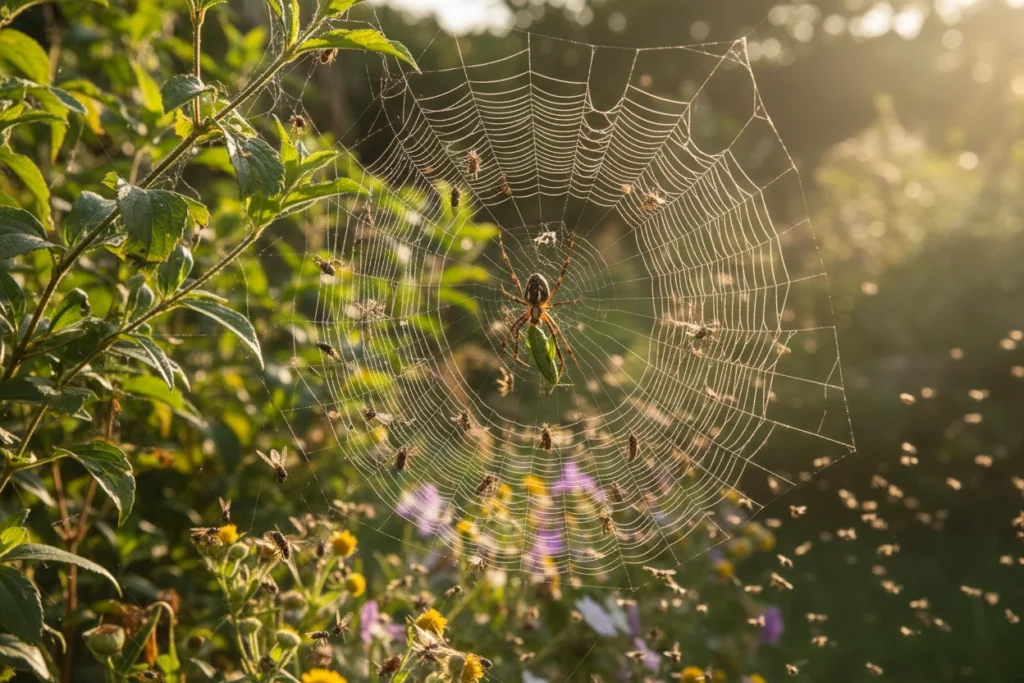
When summer temperatures rise, dipterans, coleopterans, and hymenopterans complete multiple reproductive cycles, flooding your home’s microhabitats with prey. Spiders detect these arthropod concentrations through vibration and pheromone cues, triggering active foraging and web placement near entry points and moisture zones. You’re not dealing with a spider problem—you’re dealing with a trophic cascade. Understanding the entomological conditions driving this relationship is the first step toward controlling it.
Key Takeaways
-
Warm summer temperatures accelerate insect reproduction, creating abundant prey that attracts spiders into residential areas seeking reliable food sources.
-
Diptera, moths, and collembola congregating near moisture and light signals spiders to establish webs in high-yield zones.
-
Summer humidity sustains microhabitats around homes, supporting insect populations that draw ground-hunting and web-building spiders indoors.
-
Predictable insect movement patterns along entry corridors guide spiders through structural gaps into interior harborage sites.
-
Fluctuating prey availability during summer directly influences spider population dynamics, increasing their visibility and overall activity levels.
Why Summer Brings So Many Bugs to Portland Homes

Portland’s warm summer months create ideal breeding and foraging conditions for a wide range of arthropod species. Rising temperatures accelerate metabolic rates across insect orders, intensifying bug behavior tied to reproduction, feeding, and dispersal.
Summer humidity in the Pacific Northwest further supports this surge by sustaining moisture-dependent microhabitats beneath leaf litter, mulch, and structural debris around your home’s perimeter.
Dipterans, coleopterans, and hymenopterans proliferate rapidly under these conditions, with many species completing multiple reproductive cycles between June and September.
Residential landscapes provide abundant harborage and food sources, drawing species like fungus gnats, aphids, and carpenter ants into close proximity to your structure.
This seasonal arthropod bloom doesn’t happen in isolation — it directly sets the stage for increased spider activity throughout your property. Additionally, increased food supply from rising insect populations attracts more spiders, further enhancing their presence in your home.
Which Summer Insects Attract the Most Spiders
Several insect groups drive spider activity more than others, and understanding which taxa are most implicated helps explain why spiders concentrate in specific areas of your home.
Diptera, particularly fungus gnats and fruit flies, produce dense aggregations near moisture and decomposing organic matter, creating reliable foraging zones.
Ant populations from genera like Lasius and Tapinoma trigger heightened spider vigilance, as workers follow consistent pheromone trails that predators learn to intercept.
Lepidopteran larvae and adult moths near artificial lighting attract orb-weavers and cobweb spiders to windows and entryways.
Collembola concentrations in humid substrates draw ground-hunting lycosids indoors.
Insect behaviors involving predictable movement corridors and aggregation points fundamentally signal spiders toward high-yield microhabitats, explaining why you’ll find webs consistently appearing in the same locations each summer. Additionally, the presence of these insects can increase the likelihood of spider bites and health risks, making it essential to manage pest populations effectively.
How Spiders Follow Their Food Supply Indoors
When insects like Diptera, Coleoptera, and Lepidoptera migrate indoors seeking warmth, moisture, or light, they create a reliable prey base that draws predatory spiders in pursuit.
Spiders such as Tegenaria and Cheiracanthium species exploit structural vulnerabilities—gaps in door frames, foundation cracks, utility penetrations, and torn window screens—to follow this food supply inside.
Once indoors, they establish harborage sites in proximity to zones of high insect activity, concentrating their webs and hunting ranges near light sources, moisture points, and entry corridors. Additionally, professional inspection can help identify potential entry points and facilitate effective control measures against these intruders.
Insects Attract Hungry Spiders
Spiders follow their prey. As summer insect lifecycle activity peaks, elevated prey populations draw spiders inside your home. Understanding spider behavior helps explain why infestations intensify seasonally.
Common insects attracting spiders indoors include:
-
Flies – breed rapidly near waste and moisture
-
Mosquitoes – enter through gaps and screens
-
Moths – drawn to interior lighting at night
-
Ants – forage along baseboards and countertops
-
Gnats – proliferate near drains and overripe produce
Each species represents a viable prey target. Spiders detect these insects through vibration and chemical cues, following them through cracks, gaps, and poorly sealed entry points.
Reducing interior insect populations directly disrupts spider foraging incentives. Eliminating food sources remains the most mechanistically sound strategy for reducing spider presence throughout summer months.
Spiders Enter Through Gaps
Gaps, cracks, and unsealed penetrations in your home’s envelope function as primary ingress routes for spiders tracking prey indoors.
Foundation gaps, utility conduits, window frame voids, and compromised weatherstripping all constitute viable entry points exploited through chemosensory and mechanosensory-guided spider behavior.
Araneae species detect vibrational signatures and chemical cues associated with concentrated insect populations, orienting their movement accordingly.
Once prey density increases inside your structure—drawn by lighting, warmth, and moisture—spiders follow this gradient inward.
You’ll typically find higher spider concentrations near light fixtures, window sills, and basement perimeters where insect traffic peaks.
Sealing these structural vulnerabilities with silicone caulk, expanding foam, and door sweeps disrupts this prey-tracking pathway, reducing interior colonization by hunting and web-building spider species alike.
Common Spots Where Spiders Hide During Summer
As insect activity peaks in summer, spiders concentrate in specific microhabitats that offer proximity to prey, structural shelter, and reduced thermal exposure. Knowing where they establish web hiding sites helps you detect infestations early and minimize indoor colonization.
Common summer shelter locations include:
-
Basement corners and crawl spaces – low humidity variation supports stable web architecture
-
Window frames and door casings – high insect traffic zones near light sources
-
Garage rafters and wall voids – undisturbed structural cavities with abundant prey access
-
Dense vegetation and woodpiles – exterior harborage zones adjacent to your foundation
-
Attic insulation and storage boxes – thermally buffered spaces with minimal human disturbance
Each location provides the ecological conditions spiders require for successful foraging and reproductive activity throughout summer months. Additionally, as temperatures drop in late summer, many spiders transition to seeking shelter indoors, further increasing the chances of indoor encounters.
How to Reduce the Bugs That Draw Spiders In
Reducing spider pressure begins upstream—at the prey base that sustains foraging activity. Target Diptera and Coleoptera populations by eliminating standing water, repairing torn window screens, and sealing gaps around utility penetrations.
You’ll disrupt arthropod entry pathways that funnel prey species—and consequently spiders—indoors.
Indoor cleanliness directly limits food web density. Remove organic debris, crumbs, and moisture accumulation that sustain scavenging insects like Blattodea and stored-product pests.
Without stable prey populations, resident and transient spider taxa can’t maintain territory or reproductive cycles.
Deploy natural deterrents strategically—peppermint oil, cedarwood, and diatomaceous earth disrupt chemoreception and desiccate soft-bodied insects that spiders depend on.
Combine these protocols with exterior lighting management, since phototactic insects aggregate near light sources and create high-density foraging zones that actively recruit spider colonization. Additionally, evidence of multiple sightings may indicate a larger pest problem, which can further attract spiders.
When to Call Pest Control for a Spider Problem
-
Persistent egg sacs across multiple harborage zones
-
Recurring web reconstruction despite mechanical removal
-
Confirmed Latrodectus or Loxosceles specimens
-
Elevated prey insect populations sustaining spider recruitment
-
Bite incidents requiring medical evaluation
Pest Patrol deploys integrated pest management strategies targeting both spider populations and their arthropod prey base, disrupting the trophic relationship driving infestation.
Serving Portland and surrounding communities, their licensed technicians perform taxonomic identification, harborage elimination, and residual barrier applications—addressing the entomological conditions that make spider population suppression sustainable long-term.
Frequently Asked Questions
Are Certain Spider Species in Portland Actually Venomous or Dangerous?
Yes, you’ll encounter two venomous species in Portland: Latrodectus hesperus (black widow) and Loxosceles reclusa (brown recluse). Don’t let spider myths mislead you — most local species pose zero medically significant threat to you.
How Long Does a Typical Spider Infestation Last Without Treatment?
Without treatment, you can expect a spider infestation to persist indefinitely, as the spider life cycle continuously repeats. You’ll notice infestation signs worsening each season, with populations expanding as long as prey insects remain abundant.
Can Spiders Cause Damage to My Home’s Structure or Belongings?
Spiders won’t structurally damage your home, but their spider webs accumulate in corners, staining surfaces and soiling belongings. You’ll also face secondary pest control concerns, as webs trap debris and signal broader arthropod infestations requiring taxonomic identification and treatment.
Do Spiders Reproduce Faster During Summer Months in the Pacific Northwest?
Yes, you’ll find spider mating accelerates during summer months in the Pacific Northwest. The warm summer climate triggers faster egg sac development, causing populations to surge as spiders exploit abundant insect prey for increased reproductive success.
What Time of Day Are Spiders Most Active Inside Portland Homes?
You’ll find spiders most active at night, as nocturnal foraging aligns with their prey’s nighttime behavior. Seasonal patterns shift peak activity to late evening hours when summer insect populations surge throughout Portland homes.
Conclusion
When arthropod prey populations — Diptera, Coleoptera, and Lepidoptera among them — surge during summer months, predatory arachnids follow predictably. You’re not dealing with random spider intrusion; you’re observing classic predator-prey dynamics playing out inside your home. If you reduce the insect populations attracting them, you’ll disrupt the food web sustaining spider colonies. Don’t treat these infestations as isolated problems — address the entomological root cause, and you’ll control both simultaneously.