
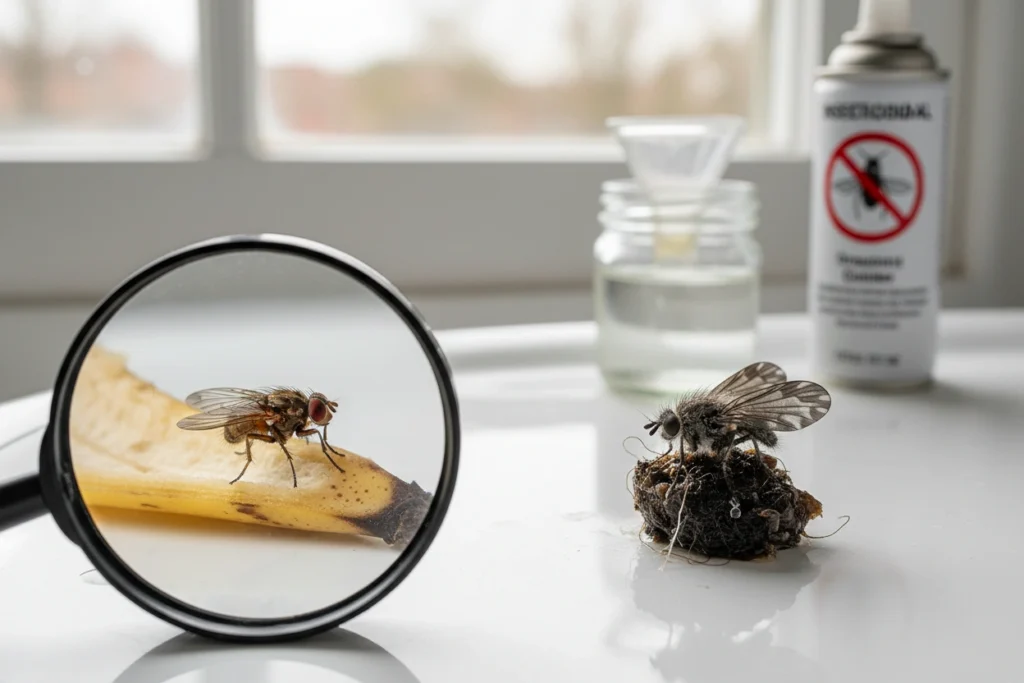
If you’re dealing with tiny flies indoors, the species matters. Fruit flies (Drosophila melanogaster) measure 3–4 mm, display tan coloration with distinctive red compound eyes, and breed in fermenting organic matter near produce. Drain flies (Psychoda spp.) are fuzzy, dark gray-brown insects with broad, leaf-shaped wings that breed in gelatinous biofilm inside your drains. You’ll eliminate them faster by targeting the correct breeding site — and there’s much more ahead to help you do exactly that.
Key Takeaways
-
Fruit flies are tan with red eyes and hover near produce; drain flies are fuzzy, gray-brown, and cluster around sinks and drains.
-
Fruit flies breed in fermenting organic matter like overripe fruit; drain flies breed in the gelatinous biofilm inside slow or unused drains.
-
Confirm identification by examining wings: fruit flies have clear, reduced-vein wings, while drain flies have broad, leaf-shaped, densely scaled wings.
-
Eliminate fruit flies by discarding overripe produce, cleaning disposals, and setting apple cider vinegar traps with dish soap.
-
Remove drain flies by scrubbing drain walls, applying enzymatic cleaners, and contacting a pest professional if infestations persist.
How to Tell a Fruit Fly From a Drain Fly
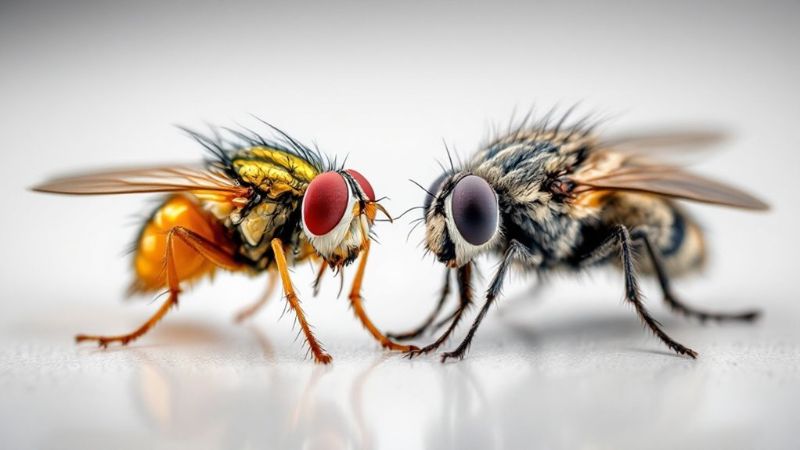
Whether you’re dealing with fruit flies or drain flies, proper identification is the first step toward effective control. These two species share similar habitats but have distinct distinguishing features.
Fruit flies (Drosophila melanogaster) are 3–4 mm long, tan to brownish-yellow, and have characteristic bright red compound eyes. Their wings are clear, and their abdomens are banded with alternating dark segments.
Drain flies (Psychoda spp.) are slightly larger at 1.5–5 mm, dark gray or brown, and densely covered in fine hairs, giving them a moth-like appearance. Their wings are broad, leaf-shaped, and held roof-like over the body at rest.
Fly behavior also differs: fruit flies hover near ripening produce, while drain flies cluster around sinks, floor drains, and sewage sources. Understanding the health risks associated with flies in restaurants can help you implement more effective control measures.
Where Each Fly Comes From in Your Home
Fruit flies (Drosophila melanogaster) originate near fermenting organic matter—overripe fruit, vegetable scraps, spilled juice, or alcohol residue in your kitchen or trash.
Drain flies (Psychoda spp.) breed exclusively in the gelatinous bacterial film that accumulates inside slow or infrequently used drains, particularly in bathrooms and utility sinks.
Identifying which fly you’re dealing with often comes down to locating its source: follow fruit flies to your countertops and compost bins, and follow drain flies to your plumbing.
Fruit Fly Origin Spots
Drain fly environments differ structurally.
Psychodidae breed exclusively within the gelatinous biological film lining slow or stagnant drains, particularly in bathroom sinks, shower drains, floor drains, and sump pits. The female deposits eggs directly into this decomposing slime layer.
If your flies concentrate near plumbing fixtures rather than food prep areas, you’re dealing with drain flies, not fruit flies.
Drain Fly Breeding Sites
Common drain fly habitats in your home include:
-
Bathroom sink drains harboring soap scum and hair buildup
-
Shower and tub drains with slow drainage and accumulated debris
-
Floor drains in basements or laundry rooms with infrequent use
-
Sump pits containing stagnant, organic-rich water
Identifying your specific breeding site is essential before attempting any targeted elimination strategy.
How to Confirm Which Fly You Actually Have
Once you’ve spotted a small fly in your kitchen or bathroom, confirming its identity comes down to three diagnostic criteria: body morphology, wing venation, and breeding site.
Examine the wings first—drain flies display dense, moth-like scales and a distinctive parallel venation pattern; fruit flies show clear, unscaled wings with reduced venation.
Next, assess body color: Drosophila species present a tan-to-yellow thorax with red compound eyes, while Psychodidae appear uniformly gray-brown.
For fly identification tips, trace the insect back to its source. Fruit flies hover near fermenting organic matter; pest behavior differences become evident when drain flies rest exclusively on vertical drain and pipe surfaces. Additionally, understanding the importance of early detection can help prevent a small issue from escalating into a larger infestation.
Use a hand lens for precise morphological confirmation before initiating any treatment protocol.
How to Get Rid of Fruit Flies for Good
Execute these steps systematically:
-
Remove substrates: Discard overripe fruit, clean garbage disposals, and eliminate fermenting residue from bins.
-
Deploy traps: Apple cider vinegar with dish soap disrupts surface tension, trapping adult flies effectively.
-
Apply natural repellents: Basil, peppermint oil, and eucalyptus deter oviposition near food-prep surfaces.
-
Sanitize drains: Flush with boiling water or enzymatic cleaners to eliminate decaying organic buildup.
Consistent substrate elimination combined with adult population reduction terminates the Drosophila reproductive cycle within one to two weeks. Additionally, effective control requires identifying food sources that attract these pests to your home.
How to Get Rid of Drain Flies at the Source
To eliminate drain flies, you must target their breeding habitat directly by scrubbing drain walls with a stiff brush to remove the organic biofilm they depend on for reproduction.
Enzymatic drain cleaners can break down residual organic matter that mechanical cleaning misses, cutting off the larvae’s food source. Additionally, regular inspection of common allergen accumulation can help prevent future infestations by addressing areas where pests may thrive.
If infestations persist after thorough drain cleaning, contact a licensed pest control professional like Pest Patrol to assess and treat the underlying source.
Clean Drains Thoroughly
Apply these cleaning solutions in sequence:
-
Boiling water flush: Pour slowly to soften and dislodge accumulated organic matter lining pipe walls.
-
Stiff-bristle drain brush: Physically scrub the interior pipe surface to break apart biofilm layers.
-
Enzymatic cleaner: Apply an enzyme-based product overnight to digest residual organic debris chemically.
-
Baking soda and vinegar flush: Follow enzymatic treatment with this combination to neutralize remaining buildup.
Repeat this drain maintenance protocol every five to seven days until adult emergence stops completely.
Irregular cleaning allows biofilm regeneration, giving larvae sufficient nutrients to resume their development cycle.
Call a Professional
When drain fly infestations persist despite thorough mechanical cleaning and enzymatic treatment, you likely have a deeper organic accumulation issue beyond standard DIY reach.
Psychodidae colonies often establish within inaccessible pipe sections, septic systems, or subsurface drainage infrastructure where biofilm deposits exceed what household tools and consumer-grade products can eliminate.
Professional pest control technicians carry commercial-strength enzymatic formulations, hydro-jetting equipment, and inspection tools—including drain cameras—that accurately locate and eliminate larval breeding substrates at the source.
Professional services also address structural drainage deficiencies contributing to organic buildup, reducing reinfestation risk systematically rather than symptomatically.
If you’re in the Portland metro area, Pest Patrol’s licensed technicians can diagnose your specific infestation, implement targeted treatment protocols, and restore sanitary drain conditions efficiently.
When the Infestation Is Too Much to Handle Alone
Recognizing critical infestation signs helps you determine when professional pest control becomes necessary:
-
Populations rebound within days after repeated DIY treatments
-
Multiple breeding sites exist across plumbing, walls, or structural voids you can’t access
-
Large-scale drain fly colonies indicate deep organic buildup requiring industrial-grade enzymatic treatment
-
Fruit fly swarms persist despite eliminating all identifiable food and moisture sources
At this threshold, a licensed pest control technician can perform systematic source identification, apply targeted treatments, and implement prevention protocols tailored to your specific infestation.
Pest Patrol serves Portland and surrounding communities with fast response times, transparent pricing, and a 100% satisfaction guarantee. Additionally, they can help mitigate health risks associated with cockroach infestations that may complicate your living environment.
Frequently Asked Questions
Are Fruit Flies or Drain Flies Harmful to My Health?
Neither pest poses direct harm, but you’ll find fruit fly behavior spreads bacteria onto food surfaces, while drain fly habits introduce allergens and pathogens from organic sewage matter, contaminating your living environment.
How Long Does a Fruit Fly or Drain Fly Live?
Fruit flies live 40–50 days; drain flies only 8–24 days. Environmental factors like temperature and food availability affect this lifespan comparison. You’ll notice warmer, humid conditions accelerate both species’ reproductive cycles considerably.
Can Fruit Flies and Drain Flies Infest a Home Simultaneously?
Yes, you can have both simultaneously. Fruit fly behavior draws them to fermenting produce, while drain fly habitats center on organic-rich pipe biofilm — two distinct ecological niches that’ll coexist independently within your home.
Do Fruit Flies or Drain Flies Bite Humans or Pets?
Neither fruit flies nor drain flies bite humans or pets. Both species lack biting mouthparts, making biting behavior absent in pest identification of either insect. You don’t need to worry about physical harm from either fly.
What Time of Year Are Fruit Fly Infestations Most Common in Portland?
You’ll see fruit fly (Drosophila melanogaster) activity peak in late summer through fall, when Portland’s fall produce ripens and ferments. Maintaining strict kitchen cleanliness during August–October greatly reduces your infestation risk.
Conclusion
Now that you’ve distinguished Drosophila spp. from Psychodidae, you can apply the correct remediation protocol. Target Drosophila by eliminating fermenting organic matter; eradicate Psychodidae by mechanically removing biofilm from drain interiors. Don’t conflate the two infestations—misidentification prolongs the infestation cycle. If larval breeding sites persist despite intervention, you’ll need professional inspection to locate cryptic sources. Precise identification drives precise treatment.