
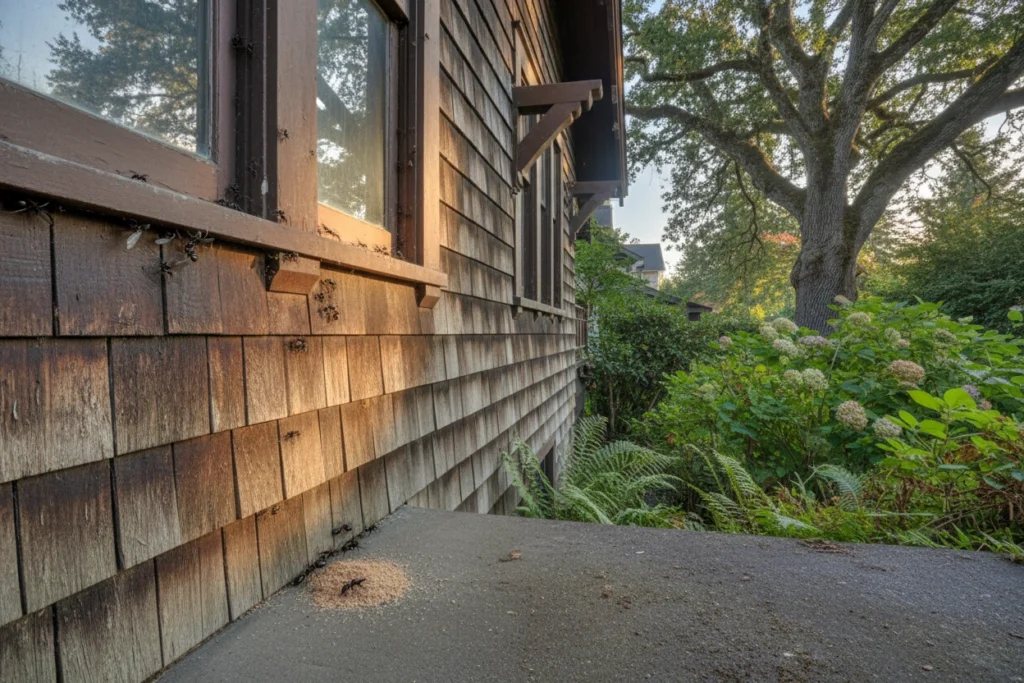
Portland’s century-old Craftsman homes attract carpenter ants because their aging Douglas fir and redwood absorb moisture easily, and Portland’s 36 annual inches of rain keeps wood moisture content above 19%—the threshold where fungal decay begins. Once decay softens the wood, carpenter ants move in fast. Your home’s original siding, porch columns, and window casings make things worse by lacking modern moisture protection. Keep exploring to understand exactly what’s putting your Craftsman at risk.
Key Takeaways
-
Portland’s 36 inches of annual rainfall raises wood moisture content above 19%, triggering fungal decay that softens wood and attracts carpenter ants.
-
Century-old Craftsman homes use original old-growth Douglas fir and redwood, which lose structural resistance once moisture compromises their integrity.
-
Decorative features like exposed rafter tails, fascia boards, and porch columns degrade over time, creating ideal carpenter ant nesting sites.
-
Original window and door casings lack modern flashing, allowing water infiltration that softens framing and invites carpenter ant colonization.
-
Interconnected wall voids, subfloor cavities, and attic spaces enable carpenter ant colonies to tunnel extensively through Craftsman home framing.
Why Old Wood and Moisture Make Craftsman Homes Vulnerable
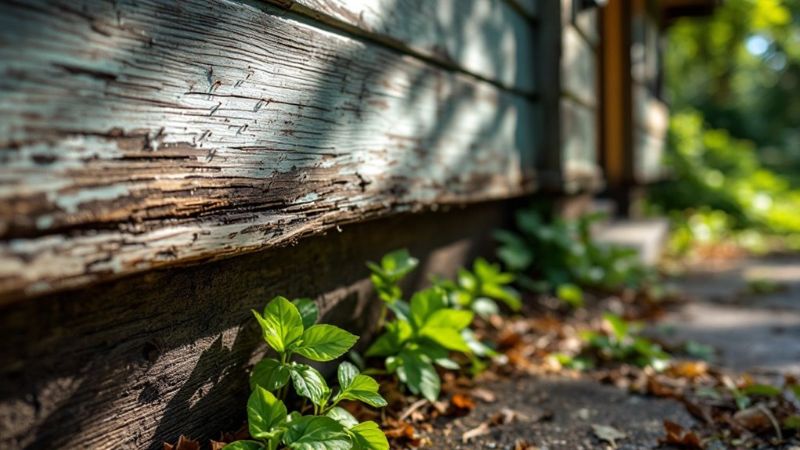
Craftsman homes, built primarily between 1905 and 1930, rely heavily on old-growth Douglas fir and redwood framing—wood that’s now over a century old and increasingly susceptible to moisture intrusion.
Portland’s rainy climate accelerates wood deterioration in these structures, particularly where original siding, window casings, and porch beams have lost their protective finishes.
Carpenter ants don’t eat wood—they excavate it, and they specifically target softened, moisture-damaged material for nesting.
Poor moisture management around foundations, clogged gutters, and aging crawl spaces create ideal conditions.
You’ll often find infestations concentrated near roof junctions, basement sills, and wood-to-soil contact points—areas that trap humidity and rarely dry out.
These structural vulnerabilities don’t just invite carpenter ants; they sustain colonies for years if left unaddressed. Additionally, prompt action is crucial to minimize risks and prevent further damage from these infestations.
The Structural Features Carpenter Ants Exploit Most
Your home’s wide decorative fascia boards, exposed rafter tails, and built-up box beams create large surface areas where wood composition degrades over time, especially where end grain meets exterior conditions.
Porch columns sitting directly on concrete bases wick moisture upward, softening interior wood fibers and compromising structural integrity without visible exterior damage.
Deep roof overhangs, while protective against rain, trap humidity against soffits and frieze boards.
Original window and door casings often lack modern flashing, allowing water infiltration at joints.
These features don’t just invite entry—they provide interconnected tunneling corridors that let colonies expand systematically through your home’s framing.
Additionally, the presence of wet, decaying wood can significantly increase the risk of infestation, making it crucial to address any moisture issues promptly.
How Portland’s Climate Accelerates Wood Decay and Ant Activity
Portland’s climate creates near-ideal conditions for both wood decay and carpenter ant activity, compressing the timeline between minor moisture exposure and serious structural damage.
Portland averages 36 inches of rain annually, and relative humidity regularly exceeds 80% during fall and winter months. These conditions elevate wood moisture content in exterior framing, sills, and fascia well above the 19% threshold where fungal decay begins.
Once decay softens the wood fiber, carpenter ants colonize it rapidly — they don’t eat the wood, but they excavate it with precision.
Your Craftsman’s old-growth Douglas fir, once remarkably resistant, loses that advantage once moisture compromises its cellular structure. Effective pest prevention requires you to address moisture intrusion directly, because Portland’s climate won’t give damaged wood time to recover on its own. Moreover, early detection of infestations can help minimize treatment and repair expenses, safeguarding your home against further damage.
Where Carpenter Ants Hide Inside Century-Old Homes
Because century-old Craftsman homes were built before modern moisture barriers and pressure-treated lumber existed, they concentrate carpenter ant activity in predictable locations.
You’ll find hidden nests inside window sills, door frames, and porch columns where moisture infiltration has softened the original fir and Douglas-fir framing. Subfloor cavities near bathrooms and kitchens create ideal habitats, particularly where plumbing leaks have gone undetected for years.
Attic spaces with inadequate ventilation trap condensation against roof sheathing, accelerating wood decay and attracting satellite colonies. Basement rim joists—frequently untreated and exposed to ground moisture—are primary nesting zones.
Wall voids adjacent to exterior penetrations, including older knob-and-tube wiring routes, also harbor colonies. These structural features aren’t random vulnerabilities; they’re consistent, predictable entry points shaped by a century of exposure. Additionally, signs of multiple infestation points can indicate a widespread problem, making early detection essential.
Signs You Already Have a Carpenter Ant Problem
Knowing where carpenter ants nest is useful only if you can recognize the evidence they leave behind. The most reliable infestation signs include frass deposits—coarse, sawdust-like material mixed with insect parts and soil—pushed out of galleries near wood entry points.
Unlike termites, carpenter ants don’t consume wood; they excavate it, so frass accumulates in distinct piles. You’ll also notice ant behavior patterns: workers foraging after dark along consistent trails, particularly near moisture-damaged wood.
Audible rustling inside walls during quiet hours indicates active colony movement. Winged reproductives, called swarmers, emerging indoors in spring signal an established, mature colony.
If you’re spotting large black ants consistently inside your home—not just occasionally—that’s a strong indicator the infestation is already structural, not incidental. Allowing these ants to remain unchecked can lead to significant structural damage, making early intervention crucial.
How to Protect Your Craftsman Home From Carpenter Ants
Protecting a Craftsman home from carpenter ants requires targeting the structural and environmental conditions that make these homes attractive nesting sites.
Start with moisture control — repair leaking pipes, improve ventilation in crawl spaces, and replace any soft or water-damaged wood. These preventive measures eliminate the primary conditions carpenter ants exploit.
Seal exterior gaps around windows, door frames, and utility penetrations using caulk or expandable foam.
Keep firewood stored away from the foundation and trim vegetation that contacts the structure, as both create direct access points.
For effective treatments, apply residual insecticide perimeter barriers around the foundation and address interior galleries directly with targeted dust or foam applications.
Combining structural repairs with chemical controls produces the most reliable, long-term results.
Frequently Asked Questions
Are Carpenter Ants Dangerous to Humans or Household Pets?
Carpenter ants don’t pose direct health risks to you or your pets, as they rarely bite. However, their tunneling behavior damages wood structurally. You’ll want to apply prevention techniques early to protect your home effectively.
Can Carpenter Ants Return After a Professional Extermination Treatment?
Yes, carpenter ants can return after treatment. Their foraging behavior means new colonies can reinfest your home. You’ll need consistent prevention tips—sealing moisture entry points and removing decayed wood—to stop recurring carpenter ant behavior effectively.
Does Homeowner’s Insurance Cover Carpenter Ant Structural Damage Repairs?
Most homeowner’s insurance policies don’t cover carpenter ant structural damage, as insurers classify it as a maintenance issue. You’ll need a professional damage assessment to document repair costs, since insurance coverage typically excludes pest-related deterioration.
How Long Does a Professional Carpenter Ant Treatment Usually Take?
Professional carpenter ant treatment typically takes 1–2 hours. A technician will assess ant behavior patterns, then apply targeted treatment methods—including perimeter sprays and bait placements—throughout your home’s affected zones to guarantee thorough colony elimination.
Conclusion
Your century-old Craftsman home’s aging wood, moisture-saturated timbers, and intricate structural details create ideal carpenter ant habitat. Portland’s wet climate accelerates wood decay, expanding your vulnerability window annually. You’ll need to address moisture intrusion points, inspect structural voids, and eliminate satellite colonies before infestations compromise load-bearing elements. Early detection and targeted treatment protocols are your most effective defense against the excavation damage that silently degrades your home’s structural integrity over time.