
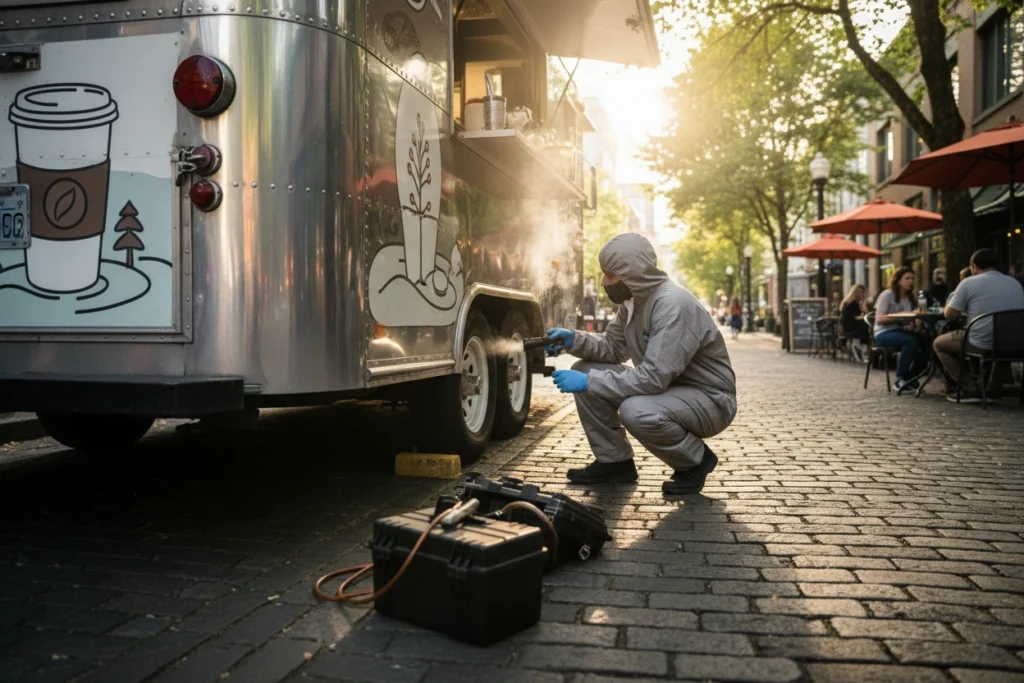
Your food truck’s enclosed space, constant food access, and mobile routes near dumpsters make it a prime target for German cockroaches, rodents, and drain flies. You’ll need consistent sanitation, sealed containers, and secured utility penetrations to stay compliant. In Portland, pest evidence triggers critical health code violations requiring corrective action within 24 to 72 hours. Proper documentation and proactive control are your strongest defenses—and there’s more you should know before your next inspection.
Key Takeaways
-
German cockroaches and Norway rats are the most common food truck pests, exploiting warmth, grease, and structural gaps to establish infestations.
-
Consistent sanitation, sealed food storage, and secured utility penetrations are essential preventive measures for Portland mobile kitchen operators.
-
Mobility exposes food trucks to high-risk zones like dumpsters, increasing pest pressure and requiring proactive management strategies.
-
Multnomah County inspectors require immediate access to pest inspection logs, treatment records, and corrective action reports during health inspections.
-
Active infestations discovered during reinspections can trigger immediate operational shutdowns, escalating fines, and permit suspensions for food truck owners.
Why Food Trucks Are Magnets for Roaches and Rodents

Food trucks operate in an environment that’s almost purpose-built for pest activity. You’re working within a compact, enclosed space where food sources are constantly accessible—raw ingredients, grease buildup, food debris, and residual moisture all concentrate within just a few square feet.
Unlike fixed restaurants, you’re moving between locations, which means you’re regularly parked near dumpsters, loading docks, and other high-risk zones.
Unsanitary conditions develop quickly in mobile kitchens because limited space makes thorough cleaning difficult during service hours. Grease traps, floor drains, and equipment gaps become harborage points for cockroaches and rodents.
Rats and mice can enter through utility line penetrations and poorly sealed compartments. Once established, infestations spread fast—and a single health inspection failure can shut down your operation immediately. Additionally, poor sanitation practices can significantly exacerbate pest issues, leading to rapid infestations.
The Pests Most Likely to Invade Your Food Truck
Several pests target food trucks with particular frequency, and knowing which ones you’re dealing with shapes every decision you’ll make about treatment and prevention.
German cockroaches dominate food truck infestations due to their rapid reproduction and preference for warm, greasy equipment. Norway rats and house mice exploit every structural gap, contaminating surfaces and compromising your food safety practices.
Odorous house ants trail directly to uncovered ingredients and prep areas. Fruit flies and drain flies emerge wherever organic debris accumulates in drains and grease traps.
Applying consistent pest identification techniques lets you distinguish between species accurately, which determines which treatment protocols apply under Oregon Department of Agriculture regulations.
Misidentifying a pest delays intervention, extends exposure risk, and increases the likelihood of a failed health inspection. Furthermore, understanding common household pests in your area can help tailor your prevention strategies effectively.
Where Pests Hide in a Mobile Kitchen
Knowing which pests target your food truck means little if you can’t locate where they’re sheltering and breeding.
Pests exploit hidden hotspots that operators routinely overlook during cleaning. Conduct systematic inspections of these critical zones:
-
Under and behind equipment – Fryers, griddles, and refrigeration units trap grease and warmth, creating ideal harborage.
-
Food storage areas – Dry goods cabinets and ingredient bins attract cockroaches and rodents when improperly sealed.
-
Wall voids and floor seams – Gaps around plumbing penetrations give pests direct access to structural cavities.
-
Generator and utility compartments – Dark, rarely disturbed spaces provide undisturbed nesting opportunities.
Documenting each location helps you track infestation patterns and prioritize treatment zones during professional pest control inspections. Additionally, multiple infestation points may indicate a more widespread problem that requires immediate attention.
Food Truck Pest Prevention Habits That Actually Work
Locating pest harborage zones gives you a diagnostic baseline, but eliminating the conditions that attract pests in the first place is what keeps infestations from taking hold. Consistent sanitation practices form your primary defense.
Wipe down all surfaces after each service shift, remove grease accumulation from equipment interiors weekly, and store dry goods in sealed, hard-sided containers. Dispose of waste in lidded receptacles and remove bags before closing.
Pest proofing techniques address structural vulnerabilities directly. Seal utility penetrations with stainless steel mesh or silicone caulk rated for high-heat environments.
Inspect door seals and window screens regularly, replacing compromised materials immediately. Maintain a sanitized perimeter around your parking location and avoid overnight food storage in the truck whenever operationally possible. Additionally, routine inspections help in identifying potential pest entry points before they become a problem.
When to Call a Professional Food Truck Pest Control Service
** Even with rigorous sanitation and exclusion measures in place, certain pest conditions exceed what operational adjustments can resolve on their own.
Call a licensed pest control service when you encounter:
-
Unidentified infestations requiring professional pest identification techniques to determine species, entry points, and harborage zones.
-
Recurring activity despite corrective measures, indicating a structural or systemic source.
-
Seasonal pest trends driving increased pressure—particularly rodents in fall and cockroaches in summer humidity.
-
Pre-inspection preparation before health department reviews or permit renewals.
A certified technician will assess your unit using integrated pest management protocols, apply compliant treatments, and document findings for regulatory purposes. Additionally, they can provide insights on natural deterrents to help prevent future infestations.
Partnering with a local Portland-area service guarantees you’re getting expertise aligned with Oregon food handler requirements and regional pest behavior patterns.
Portland Health Code Violations Pests Can Trigger
Pest activity in your food truck can trigger violations under Oregon’s Food Sanitation Rules (OAR 333-150), including citations for inadequate pest management programs, evidence of harborage conditions, and contaminated food contact surfaces.
If a Multnomah County Environmental Health inspector finds live or dead pests, droppings, or gnaw marks, you’re facing potential permit suspension, mandatory closure, or costly re-inspection fees.
You’ll also need to maintain written pest control documentation—service logs, treatment records, and pest sighting reports—available for immediate inspector review upon request.
Common Code Violations
Running a food truck in Portland means operating under Oregon’s food safety regulations, and pest activity can trigger several specific code violations that put your permit at risk.
Understanding these common violations keeps you ahead of pest regulations and helps you avoid costly consequences.
Inspectors most frequently cite food truck operators for:
-
Evidence of rodent or insect activity — droppings, gnaw marks, or live pests found during inspection
-
Improper food storage — exposed ingredients accessible to pests
-
Structural gaps or entry points — unsealed openings in walls, floors, or equipment compartments
-
Inadequate sanitation records — missing documentation of pest control treatments or inspections
Each violation carries potential fines, mandatory reinspections, or permit suspension.
Addressing these issues proactively protects your operation and your reputation.
Inspection Failure Consequences
Failing a health inspection in Portland carries consequences that escalate quickly depending on the severity and frequency of pest-related violations.
Inspection protocols classify violations as critical or non-critical, and pest evidence typically falls into the critical category. You’ll face mandatory corrective action windows, often 24 to 72 hours, before reinspection occurs.
Repeated pest consequences include escalating fines, operating permit suspension, or full closure orders issued by Multnomah County Environmental Health. Your violations become part of the public record, damaging your reputation and customer trust.
If inspectors find active infestations during reinspection, they can shut your truck down immediately. Understanding this escalation structure means you can’t afford reactive pest management—you need consistent, documented prevention protocols that demonstrate due diligence before inspectors ever arrive.
Required Pest Documentation
Documentation isn’t optional when pests trigger health code violations in Portland—it’s your primary defense. Oregon food service regulations require specific records demonstrating active pest management.
Using proper pest identification techniques guarantees your documentation accurately reflects the species involved, treatment methods applied, and infestation scope.
Your documentation requirements include:
-
Pest inspection logs – dated entries identifying species, location, and severity
-
Treatment records – licensed applicator credentials, chemicals used, and application dates
-
Corrective action reports – structural repairs or sanitation changes made post-treatment
-
Follow-up inspection confirmations – verified clearance from a certified pest control operator
Multnomah County inspectors expect these records immediately upon request.
Gaps in documentation signal negligence, accelerating permit suspension. Maintain organized, chronological files—your food truck’s operating license depends on it.
Frequently Asked Questions
How Much Does Professional Food Truck Pest Control in Portland Cost?
Pest control pricing for food trucks varies based on infestation severity and service frequency. You’ll typically invest $150–$400 per treatment, ensuring food safety compliance. Contact Pest Patrol for a customized Portland-area quote.
Can Pest Treatments Damage or Contaminate My Food Truck Equipment?
When applied correctly, treatments won’t damage your equipment. You’ll want to discuss equipment safety with your technician, who’ll select treatment options compatible with food-contact surfaces, ensuring you remain compliant with health regulations.
How Long Must I Keep My Food Truck Closed After Treatment?
You’ll typically need to follow treatment duration guidelines of 2–4 hours for most applications. Always check your technician’s specific reopening guidelines, as certain treatments require longer wait times before you can safely resume food service operations.
Does My Food Truck Insurance Cover Pest-Related Damage or Losses?
Your insurance policy may not automatically cover pest-related damage or losses—you’ll need to review your coverage limits carefully. Contact your provider directly, as exclusions often apply to infestations deemed preventable through routine maintenance.
Are Pest Control Services Available on Weekends for Portland Food Trucks?
Yes, you’ll find weekend availability through Pest Patrol, ensuring service flexibility that aligns with your food truck’s operational schedule. They’re equipped to address roach and rodent issues on your timeline, minimizing regulatory compliance disruptions.
Conclusion
You can’t afford to treat pest control as an afterthought when you’re operating a licensed food truck in Portland. Maintain your exclusion measures consistently, document your sanitation protocols, and schedule routine professional inspections to stay ahead of violations. Oregon food safety regulations hold you to the same standards as brick-and-mortar establishments — your mobility doesn’t exempt you. Act systematically, stay compliant, and you’ll protect both your health permit and your reputation.