
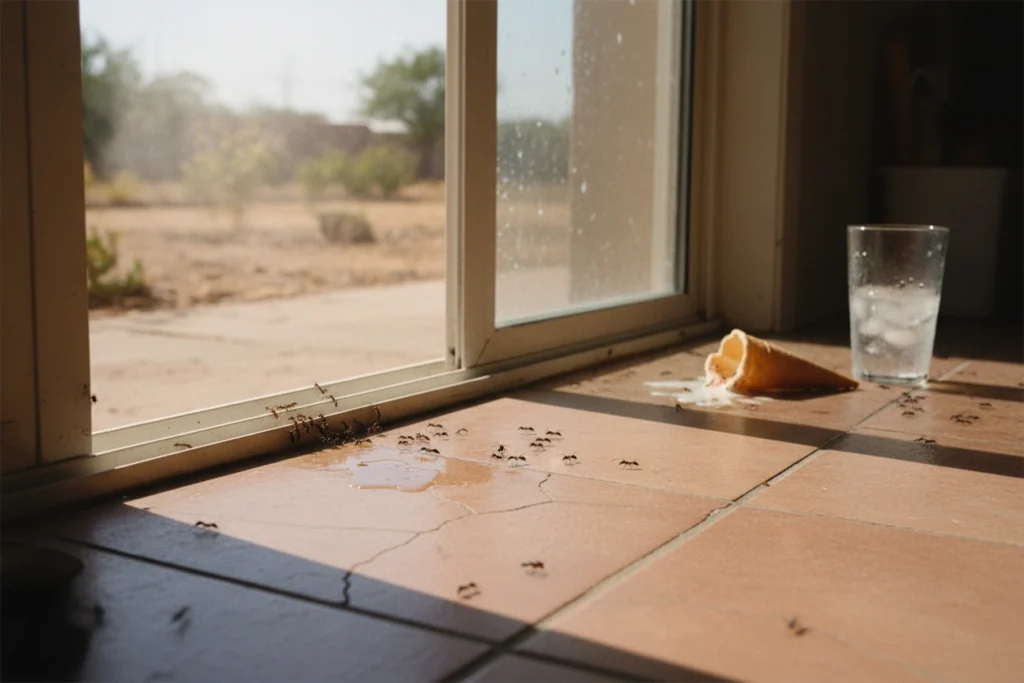
When temperatures exceed 90°F, your kitchen becomes a critical survival target for ant colonies under heat stress. Worker ants detect thermal gradients and shift their foraging toward cooler, moisture-rich environments. Your kitchen supplies exactly what their rapidly expanding colonies need: water, carbohydrates, proteins, and regulated temperature. Microscopic food residues and a single dripping faucet can trigger full-scale pheromone-guided invasions. Understanding what specifically attracts and guides them inside reveals how to stop them effectively.
Key Takeaways
-
Hot weather above 90°F stresses ant colonies, triggering increased foraging toward cooler, moisture-rich environments like kitchens.
-
Heat accelerates ant metabolism, expanding colony populations that require greater food and water resources.
-
Kitchens offer concentrated attractions including sugar residues, grease, protein materials, and consistent moisture.
-
Scout ants detect airborne food odors and thermal gradients, establishing pheromone trails directing foragers inside.
-
Peak ant activity occurs between 80°F and 95°F, aligning foraging surges directly with summer kitchen invasions.
Why Summer Heat Drives Ants Into Your Kitchen
As temperatures climb above 90°F, ant colonies face mounting physiological stress that triggers foraging behavior directed toward cooler, moisture-rich environments—like your kitchen.
Worker ants detect thermal gradients and chemical signals simultaneously, steering colonies toward structures that offer stable microclimates. Your kitchen provides three critical resources: water, food residue, and regulated temperature.
Ant behavior shifts measurably during heat events. Foragers increase scouting frequency and expand search radius, making even minor entry points exploitable. A single scout that locates food deposits a pheromone trail, converting a solo intrusion into a coordinated column within hours.
Kitchen cleanliness directly disrupts this recruitment cycle. Eliminating exposed food, standing water, and grease residue removes the chemical cues that sustain trail reinforcement, effectively severing the colony’s motivation to exploit your space. Furthermore, allowing ants to settle in can lead to hidden infestations that are more difficult to control.
What Ants Are Actually Looking for Inside Your Home
Understanding what drives ants through your walls clarifies why standard cleaning habits often fall short. Ants aren’t simply hungry — they’re executing precise foraging strategies based on chemical signals tied to specific ant attraction factors.
Inside your home, they’re targeting three primary food sources: simple carbohydrates like sugar and syrup residues, protein-based materials including grease and meat particles, and moisture combined with decaying organic matter. Your kitchen provides all three simultaneously.
Even surfaces that appear clean retain microscopic residues. A single drop of juice, an unwashed cutting board, or a compost bin left open generates enough volatile compounds to recruit scout ants within hours.
Once scouts confirm a viable food source, they deposit pheromone trails, systematically directing colony foragers directly to your kitchen. Additionally, understanding the specific ant attraction factors can help in implementing better preventive measures.
Where Ants Go First When They Get Inside
Once ants breach your home’s perimeter, they follow a predictable sequence driven entirely by chemosensory input. Scout ants enter through entry points like door gaps, utility penetrations, and foundation cracks, then systematically probe surfaces for volatile chemical signatures.
They’re detecting gradients of moisture, carbohydrate compounds, and protein residues. Your kitchen registers highest on all three indices. Scouts move toward it directionally, not randomly, responding to airborne food odors that intensify near your stove, sink, and countertops.
Once a scout locates viable food sources, it deposits a pheromone trail back to the colony. That trail functions as a biochemical highway, and within hours, foragers begin traveling it in both directions.
The kitchen becomes their primary operational zone before you’ve noticed a single ant. This underscores the importance of recognizing warning signs of hidden infestations before they escalate.
How Hot Weather Puts Ant Colonies Into Overdrive
What draws ants into your kitchen accelerates sharply when outdoor temperatures climb. Heat directly amplifies ant behavior by speeding up metabolic processes within the colony.
Worker ants become more active, queens increase egg production, and larval development cycles shorten. The result is a rapidly expanding population that requires considerably more food and water to sustain itself.
Colony activity peaks between 80°F and 95°F for most species common to the Portland area. At these temperatures, foragers extend their search radius considerably, pushing deeper into structures they’d otherwise ignore.
Your kitchen offers exactly what an overheated, resource-stressed colony needs: concentrated food sources and moisture in a climate-controlled environment. Understanding this biological pressure helps explain why ant intrusions aren’t random—they’re a predictable response to thermal and nutritional stress. Additionally, ant activity increases significantly with rising temperatures, driving them to seek food and shelter indoors.
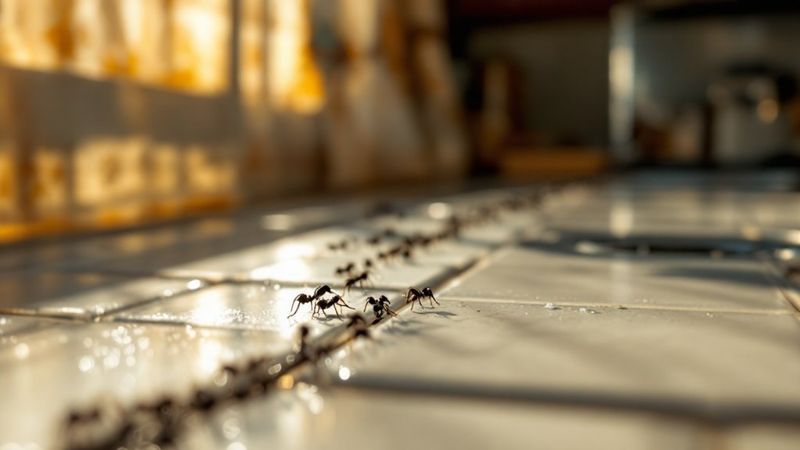
How to Keep Ants Out When Temperatures Rise
Blocking ant entry before colonies mobilize is more effective than reacting after foragers have already established scent trails into your kitchen.
Apply these ant prevention tips systematically: seal cracks around baseboards, window frames, and utility penetrations using silicone caulk.
Eliminate moisture sources—repair dripping faucets and dry sink basins nightly, since water scarcity during heat events makes your kitchen particularly attractive.
Kitchen cleanliness directly disrupts chemical communication. Wipe countertops with vinegar-based solutions to degrade pheromone trails, store food in airtight containers, and empty trash bins daily.
Keep pet food sealed between feedings.
Outdoors, trim vegetation contacting your home’s exterior, as branches and shrubs create structural bridges colonies exploit during peak foraging activity in elevated temperatures. Additionally, understanding pest behavior can help you anticipate and mitigate ant invasions effectively.
Frequently Asked Questions
How Long Does a Typical Ant Infestation Last Without Treatment?
Without treatment, you’ll face an infestation that persists indefinitely, as ant lifespan cycles sustain colonies for years. You should watch for infestation signs early, since colonies continuously expand, making professional intervention increasingly critical over time.
Are Certain Kitchen Materials or Surfaces More Attractive to Ants?
Yes, certain surfaces attract ants more. Your sticky countertops, unsealed food storage containers, and grout lines harbor residues that heighten bait effectiveness. Kitchen cleanliness and ant species both influence which materials they’ll target most aggressively.
Can Ants Cause Structural Damage to My Home Over Time?
Most ants don’t directly cause structural concerns, but carpenter ants do—they’ll excavate wood, threatening your property value. You’ll want to prioritize infestation prevention early, as prolonged ant behavior left unchecked can compromise load-bearing timber over time.
Do Ant Invasions in Kitchens Pose Any Real Health Risks?
Yes, ant species contaminate your food sources by depositing bacteria as they forage. You’ll reduce health risks by maintaining hygiene practices, applying sanitation tips, and implementing pest prevention strategies that counteract temperature effects driving ants indoors.
Is Professional Ant Control Worth It Compared to Store-Bought Solutions?
Yes, professional ant control outperforms store-bought solutions in both cost comparison and long-term effectiveness. You’ll eliminate colonies at the source, reducing reinfestation cycles that make DIY products repeatedly necessary, ultimately saving you time, money, and health risks.
Conclusion
When summer heat intensifies, you’re fundamentally offering ants a controlled refuge stocked with water, food, and stable temperatures. Their foraging behavior accelerates, their colony demands increase, and your kitchen becomes the most viable target within their search radius. You can disrupt this pattern by systematically eliminating entry points, moisture sources, and food accessibility. Understanding the precise biological triggers driving ant invasions puts you in a stronger position to prevent them before they establish a foothold.