
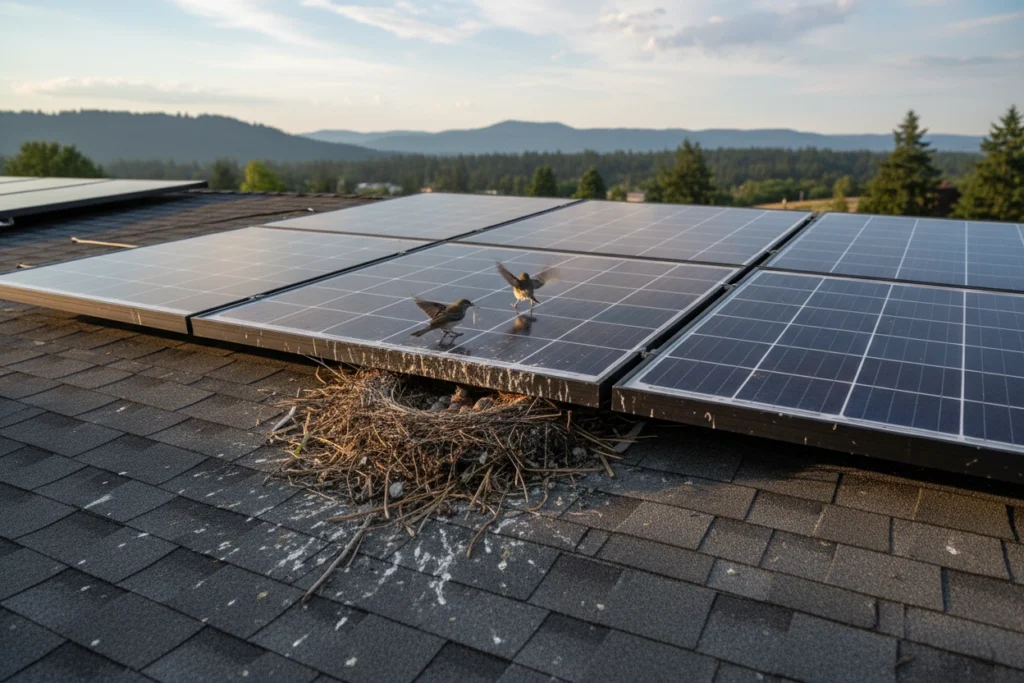
Solar panels on your Oregon roof create a 3–4 inch gap that functions as prime nesting habitat for house sparrows, European starlings, and pigeons. These colonies generate fire hazards, accelerate roofing degradation through moisture retention, and can reduce your panel efficiency by 15–25% through debris accumulation and soiling. Bird droppings corrode frames with uric acid while blocked ventilation shortens inverter lifespan. Understanding the full scope of this problem starts with knowing exactly what’s happening beneath your array.
Key Takeaways
-
Solar panels create a 3–4 inch gap above roof decks, providing sheltered, predator-resistant nesting spaces that strongly attract birds in Oregon.
-
House sparrows, European starlings, and pigeons are the most common species nesting under solar arrays across Oregon properties.
-
Nesting materials near electrical components create fire hazards, while droppings corrode panel hardware and reduce energy output by up to 25%.
-
Signs of infestation include low roofline flight patterns, audible scratching, visible nesting materials, droppings on fascia boards, and reduced energy output.
-
Galvanized steel mesh installed around panel perimeters before spring effectively prevents nesting without trapping birds or damaging wiring.
Why Solar Panels Are a Magnet for Nesting Birds
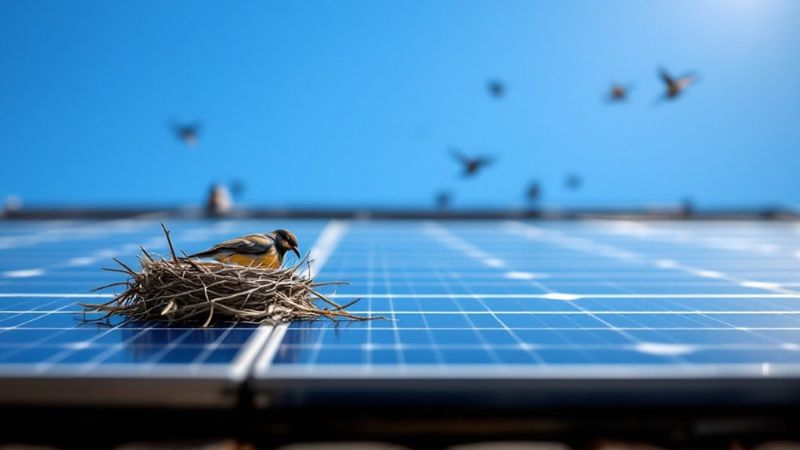
Solar panels create near-ideal nesting conditions for several bird species common to the Pacific Northwest, including house sparrows (Passer domesticus), European starlings (Sturnus vulgaris), and pigeons (Columba livia).
The gap between the panel and your roof deck typically measures 3–4 inches — precisely the sheltered cavity these species prefer for bird nesting behavior. Panels absorb and retain heat, maintaining temperatures that accelerate egg incubation and chick development. They also block rain and direct wind, reducing nest failure rates.
Solar panel attraction isn’t coincidental; it’s ecological. Your roof’s elevation provides predator avoidance, while the panel’s rigid frame offers structural anchoring.
Research indicates urban bird populations increasingly exploit artificial structures, and solar arrays represent one of the most thermally and spatially advantageous anthropogenic nesting sites available.
Which Birds Are Moving Under Oregon Solar Panels
Not all bird species exploit solar arrays equally — three species dominate Oregon’s urban solar nesting reports, each bringing distinct ecological pressures and removal challenges.
House sparrows (Passer domesticus) lead documented cases, and their aggressive nesting behaviors allow them to displace native cavity nesters while compacting insulating debris beneath panels.
European starlings follow, colonizing larger commercial arrays in dense, highly coordinated flocks.
Pigeons round out the trio, depositing corrosive uric acid that degrades wiring insulation and mounting hardware over time.
You’ll find that sparrow species are particularly persistent because they re-nest multiple times per season, meaning a single unaddressed colony compounds structural risk rapidly.
Each species demands a tailored exclusion strategy, so accurate identification before intervention directly determines your removal outcome’s long-term effectiveness.
The Real Damage Birds Cause Beneath Solar Panels
When birds colonize the space beneath your solar panels, they trigger a cascade of compounding damage mechanisms that extend well beyond superficial mess. Accumulated nesting materials—dry grasses, twigs, and feathers—create serious fire hazards near inverter connections and wiring harnesses.
These materials also retain moisture against roofing membranes, accelerating fungal degradation and shingle deterioration.
Droppings damage compounds quickly. Bird excrement contains uric acid at concentrations sufficient to etch aluminum panel frames, corrode mounting hardware, and degrade anti-reflective coatings, measurably reducing energy output over time.
Studies show soiling from biological debris can cut panel efficiency by 15–25%.
Beyond material degradation, nesting activity blocks critical ventilation gaps, raising panel operating temperatures and shortening inverter lifespan. Addressing these issues promptly is vital for protecting building safety and preventing further complications.
Each breeding season left unaddressed multiplies the structural and financial consequences substantially.
How to Tell if Birds Have Nested Under Your Panels
Early detection of bird colonization beneath solar arrays depends on recognizing a cluster of behavioral and physical indicators rather than waiting for visible structural damage.
You’ll notice repeated low-altitude flight patterns near your roofline, particularly during dawn and dusk foraging cycles. Audible vocalizations and scratching beneath panels signal active nesting behavior.
Accumulating droppings along fascia boards, gutters, and panel edges confirm regular occupation. Nesting materials—straw, twigs, feathers—protruding from panel gaps indicate established colonies rather than exploratory roosting.
Reduced energy output detected through your monitoring system may reflect debris-related shading or soiling. Compromised panel protection becomes measurable when wiring insulation shows abrasion signatures during professional inspection.
Document all observations with timestamps to help pest control technicians accurately assess colonization duration and species-specific intervention requirements.
Solar Panel Bird Exclusion: What Actually Works
Proven exclusion methods rely on physical barriers rather than deterrents, which studies consistently show fail to produce lasting behavioral displacement in established bird colonies.
Your most effective option is galvanized steel mesh installed flush against the panel perimeter, eliminating gap access entirely. Properly tensioned mesh withstands Pacific Northwest weather cycles without sagging or corroding.
You’ll want exclusion methods implemented before nesting season begins in early spring, as preventative measures outperform reactive ones considerably. Additionally, understanding squirrel behavior can help inform the choice of exclusion strategies, ensuring that your installation remains effective against various wildlife.
Once birds establish nesting sites, removal becomes legally complex — migratory species receive federal protection under the Migratory Bird Treaty Act, restricting what you can legally disturb.
Professional installation matters here. Improperly fitted mesh can trap birds inside or damage panel wiring.
Hire a wildlife management specialist familiar with Oregon’s regulatory framework.
Why Bird Removal Near Portland Requires a Pro
Attempting bird removal without professional oversight exposes you to significant legal and ecological risk. The Migratory Bird Treaty Act protects most species nesting on Oregon rooftops, meaning improper removal can result in federal penalties.
Bird behavior and nesting habits vary considerably by species, and misidentifying what’s living under your panels leads to ineffective or illegal interventions.
Pest Patrol’s technicians understand local avian ecology and apply species-specific exclusion strategies that comply with state and federal wildlife regulations. They’ll assess active versus inactive nests, determine seasonal timing constraints, and implement exclusion barriers only when legally permissible.
Moreover, neglecting to address bird nesting issues can lead to extensive pest infestations that further complicate the situation and may impact your property value.
If you’re in Portland, Beaverton, Hillsboro, or surrounding communities, don’t attempt DIY removal. The biological and legal complexity of the problem demands trained eyes and accountable execution.
Frequently Asked Questions
Does Homeowners Insurance Cover Bird Damage to Solar Panels?
Coverage varies—most standard policies don’t include bird damage to solar panels. You’ll want to review your specific insurance coverage terms, as some providers offer endorsements protecting against wildlife-related solar panel deterioration and structural compromise.
Will Bird Deterrents Void My Solar Panel Warranty?
Most bird deterrents won’t void your warranty if installed correctly, but you’ll want to verify warranty implications with your manufacturer first. Research confirms bird deterrents effectiveness varies, so choose installer-approved methods to protect both your panels and coverage.
How Much Does Solar Panel Bird Exclusion Typically Cost in Portland?
Solar panel bird exclusion methods in Portland typically cost $300–$800, depending on your roof size and system complexity. For precise solar panel maintenance pricing, you’ll want to contact Pest Patrol—they’ll assess your specific situation accurately.
Can Birds Under Solar Panels Attract Other Pests to My Roof?
Yes, bird behavior under your solar panels can trigger pest attraction. Their nesting materials, droppings, and food scraps draw rodents, insects, and mites, creating a cascading ecological chain that’ll rapidly compound your roof’s pest population.
Is Bird Nesting Under Solar Panels a Year-Round Problem in Oregon?
Bird nesting under solar panels isn’t strictly seasonal—you can face year-round activity. Oregon’s mild climate supports continuous bird behavior, with peak nesting habits occurring spring through summer, though starlings and sparrows actively colonize rooftop spaces even during winter months.
Conclusion
When you install solar panels, you’re altering the local microhabitat in ways that measurably attract cavity-nesting species. Your panels create thermal refugia that birds select based on documented behavioral preferences for protected nesting sites. You can’t afford to ignore the ecological cascade this triggers — structural degradation, pathogen accumulation, and reduced photovoltaic output are quantifiable outcomes. Acting early with evidence-based exclusion methods isn’t optional; it’s the most effective intervention the data supports.