
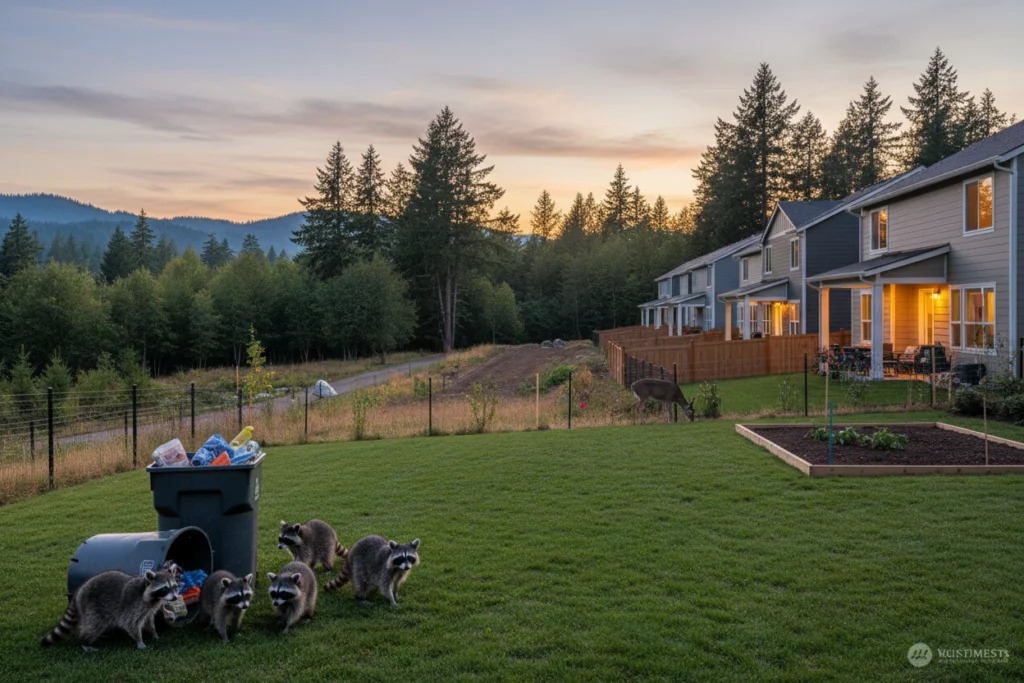
As Sherwood’s population surpasses 20,000, expanding subdivisions are fragmenting forest corridors and compressing wetland buffers, forcing native wildlife into direct contact with residential properties. You’re now sharing space with species that have adapted their feeding schedules and nesting behaviors to exploit human structures. This drives infestations of rodents, stinging insects, and ants—each carrying measurable health and structural risks. Keep going to understand exactly what’s happening, why it’s escalating, and what you can do about it.
Key Takeaways
-
Sherwood’s rapid suburban growth displaces native wildlife, compressing habitats and forcing animals to adapt by exploiting human structures for food and shelter.
-
Common pests like rodents, ants, and stinging insects enter homes through foundation cracks, deteriorating weatherstripping, and poorly sealed rooflines.
-
Wildlife intrusions cause serious property damage, including chewed wiring, compromised insulation, and moisture intrusion from damaged roof decking.
-
Homeowners can reduce wildlife encroachment by securing food sources, clearing debris, and installing deterrents like hardware cloth and chimney caps.
-
Licensed pest control professionals use integrated pest management protocols to accurately identify species and address established infestations before they escalate.
Why Sherwood’s Growth Is Pushing Wildlife Into Backyards

As Sherwood’s population has climbed past 20,000 and residential developments continue pushing into the Tualatin Valley’s western edge, native wildlife is losing critical habitat at a measurable pace.
Urban development impacts fragment forest corridors, compress wetland buffers, and eliminate forage zones that species like raccoons, squirrels, and moles have depended on for generations.
Rather than retreating, many animals deploy wildlife adaptation strategies—shifting feeding schedules, exploiting structural gaps in homes, and colonizing landscaped yards as surrogate habitat.
Research in urban ecology consistently shows that habitat compression drives human-wildlife conflict upward.
For you as a Sherwood homeowner, that means increased pressure on your property’s perimeter, attic spaces, and garden beds.
Understanding these ecological dynamics helps you recognize why professional pest management isn’t reactive—it’s structurally necessary. Additionally, regular pest control inspections can help identify infestations early, mitigating potential conflicts with wildlife.
Which Pests Are Most Common in Sherwood Neighborhoods
Sherwood’s position at the urban-rural interface creates overlapping pressure zones where structural pests, wildlife opportunists, and seasonal insects converge on residential properties in predictable patterns.
Understanding which species dominate helps you prioritize prevention strategies:
-
Ant species — Odorous house ants and moisture ants exploit foundation gaps, particularly in newer construction where soil settlement creates entry points.
-
Rodent behavior — Mice and rats follow edge habitats between undeveloped land and subdivision infrastructure, entering structures as temperatures drop.
-
Stinging insects — Yellow jackets and wasps colonize eaves and ground cavities, populations peaking mid-summer through early fall.
These aren’t random occurrences. Each pest follows measurable ecological triggers — moisture gradients, food availability, and thermal refugia — that your property’s specific conditions either suppress or amplify.
The Real Risks of Wildlife Too Close to Home
When wildlife like raccoons, squirrels, and rodents move too close to your home, they introduce measurable risks across both biological and structural domains.
From a public health standpoint, these animals carry zoonotic pathogens—including Leptospira, hantavirus, and rabies—that can transmit to humans and pets through direct contact, bites, or contaminated waste.
Structurally, gnawing rodents compromise electrical wiring (a documented fire hazard), while burrowing and nesting behaviors from squirrels and raccoons degrade insulation, roofing materials, and foundational integrity over time. Furthermore, rodent infestations can lead to allergic reactions and significant property damage, underscoring the importance of proactive pest management.
Health and Safety Hazards
Beyond their nuisance potential, wildlife intrusions carry measurable public health consequences that shouldn’t be underestimated. Pest transmission risks escalate sharply when wildlife diseases enter your living environment. Research consistently links urban wildlife contact to documented illness clusters.
Three primary hazards demand your attention:
-
Pathogen exposure — Raccoons carry Baylisascaris procyonis, a roundworm transmissible to humans through fecal contact, while rodents spread hantavirus through aerosolized droppings.
-
Ectoparasite transfer — Wildlife introduces fleas and ticks directly into your home, expanding vector-borne disease risk including Lyme disease and murine typhus.
-
Structural compromise — Gnawed wiring from squirrels and rats creates verified fire ignition points, representing a life-safety threat beyond biological hazards.
Recognizing these compounding risks helps you respond with appropriate urgency rather than treating wildlife intrusions as minor inconveniences.
Structural Property Damage
Structural damage from wildlife intrusions represents a financially devastating—and frequently underestimated—consequence that compounds well beyond the initial point of entry.
Rats gnaw through electrical wiring, increasing fire risk exponentially. Raccoons tear apart attic insulation, reducing thermal efficiency and spiking energy costs. Squirrels compromise roof decking and soffit boards, creating cascading moisture intrusion.
Research consistently shows that deferred property maintenance following wildlife entry accelerates deterioration at rates disproportionate to initial repair estimates. Your home’s structural integrity depends on fast, decisive wildlife management—every week of inaction widens the damage window.
Remediation costs for severe infestations routinely reach thousands of dollars, far exceeding what proactive intervention would have cost. If you’re in Sherwood, protecting your property means treating wildlife intrusions as urgent structural emergencies, not minor inconveniences.
Where Pests Are Actually Getting Into Your House
Most pests don’t enter your home by accident—they exploit specific structural vulnerabilities with remarkable consistency.
Common entry points include foundation cracks as narrow as 1/16 of an inch, gaps around utility penetrations, deteriorating weatherstripping, unscreened vents, and poorly sealed rooflines where soffits meet fascia boards.
You’re likely unaware of many of these openings because they’re hidden behind insulation, inside wall cavities, or positioned in areas you rarely inspect. Installing pest resistant insulation can significantly reduce the likelihood of infestations by sealing these vulnerabilities effectively.
Common Pest Entry Points
Even a well-maintained home in Sherwood offers dozens of structural vulnerabilities that pests exploit with remarkable efficiency. Entry point identification is foundational to any effective pest management strategy, and seasonal pest trends directly influence which openings become most problematic throughout the year.
Your home’s three most critical vulnerability zones include:
-
Foundation gaps and utility penetrations — pipes, conduits, and HVAC lines create unsealed corridors rodents and insects navigate instinctively.
-
Roofline and fascia deterioration — warped wood and lifted shingles give squirrels, raccoons, and wasps direct attic access.
-
Door and window weatherstripping failures — compressed or cracked seals allow ant colonies and cockroaches consistent indoor pathways.
Systematically inspecting these zones each season dramatically reduces your exposure to infestations before they establish.
Hidden Gaps and Cracks
Knowing where pests enter is one thing — locating the specific gaps they’re using is another. Research shows mice can compress through openings as small as 6mm, while insects exploit hairline fractures in foundation concrete.
These hidden entryways often go undetected because they’re structural rather than visible. Check where utility conduits, plumbing, and HVAC lines penetrate exterior walls — these penetrations frequently leave unsealed voids.
Inspect weatherstripping on garage doors, which degrades under Portland’s wet climate cycles, creating recurring access points. Roof-to-wall junctions and soffit intersections are statistically high-infiltration zones for wildlife.
Effective pest prevention requires systematic inspection using a flashlight and a thin probe, not just visual scanning. Sealing these gaps with steel wool, caulk, or expanding foam closes the primary corridors pests depend on year-round.
What Sherwood Homeowners Can Do to Deter Wildlife
While professional intervention is often necessary for established infestations, Sherwood homeowners can take several evidence-based steps to make their properties less hospitable to wildlife.
Applying these homeowner strategies reduces attractants and limits structural access points:
-
Secure food sources – Use wildlife-resistant containers for garbage, compost, and birdseed, as unsecured food sources are primary attractants for raccoons, squirrels, and rodents.
-
Eliminate harborage zones – Clear dense brush piles, wood stacks, and debris within 18 inches of your foundation to reduce nesting opportunities.
-
Install physical wildlife deterrents – Apply hardware cloth, chimney caps, and vent covers to block entry points identified during routine inspections. Additionally, ensure that food and garbage are sealed tightly to further minimize attractants.
These layered strategies work synergistically, greatly lowering the probability of wildlife encroachment before infestations establish.
When to Call a Sherwood Pest Control Professional
Preventive measures reduce risk, but they don’t eliminate it—and recognizing the threshold at which self-management fails is just as important as the measures themselves.
Understanding seasonal pest patterns helps you anticipate when pressure intensifies—late spring raccoon activity, summer wasp colony expansion, fall rodent intrusion—but accurate pest identification tips matter equally, since misidentifying a species leads to ineffective countermeasures.
Call a professional when you observe structural damage, repeated entry after exclusion attempts, or signs of colony establishment.
A licensed technician applies integrated pest management protocols calibrated to species-specific behavior, population thresholds, and site conditions. Additionally, regular inspections can help identify pest issues before they escalate into significant problems.
Pest Patrol serves Sherwood and surrounding communities with targeted residential and commercial solutions. Their 100% satisfaction guarantee means you’re not guessing—you’re getting a measurable outcome backed by expertise.
Frequently Asked Questions
Does Pest Patrol Offer Same-Day Pest Control Services in Sherwood?
Pest Patrol’s emergency response and service availability data aren’t confirmed for Sherwood specifically, but you can contact them directly to verify same-day scheduling, as they emphasize fast response times across Portland’s surrounding communities.
Are Pest Patrol’s Wildlife Removal Treatments Safe for Children and Pets?
Yes, Pest Patrol’s wildlife removal treatments prioritize pet safety through eco-friendly methods designed to protect your children and animals. You can trust their science-backed, family-safe approaches effectively minimize chemical exposure while delivering reliable pest management results.
How Much Does Professional Pest Control Typically Cost in Sherwood, OR?
Pest control pricing varies based on pest type and treatment scope. You’ll find local pest trends in Sherwood influence costs considerably. Contact Pest Patrol for transparent, customized quotes reflecting your specific infestation data and service needs.
Does Pest Patrol Provide Free Inspections for Sherwood Homeowners?
Pest Patrol doesn’t explicitly advertise free inspections, but you can contact them directly to request a free consultation. Understanding your property’s inspection benefits helps you identify pest pressures and develop data-informed treatment strategies tailored to your home.
Is Wildlife Removal in Sherwood Covered by Standard Homeowners Insurance?
Most standard homeowners insurance doesn’t cover wildlife insurance claims for removal services. You’ll find coverage limits typically exclude pest-related damages, so contact your insurer directly and consult Pest Patrol for affordable Sherwood wildlife removal solutions.
Conclusion
As Sherwood continues expanding into wildlife corridors, displacement pressure on local species will only intensify. You’re not dealing with random encounters — you’re experiencing a predictable ecological response to habitat fragmentation. Research consistently shows that human-wildlife conflicts increase proportionally with urban sprawl. You can’t stop development, but you can protect your property by combining structural exclusion, behavioral deterrents, and professional pest management. Don’t wait for an infestation to act — proactive intervention is always more effective than reactive damage control.