
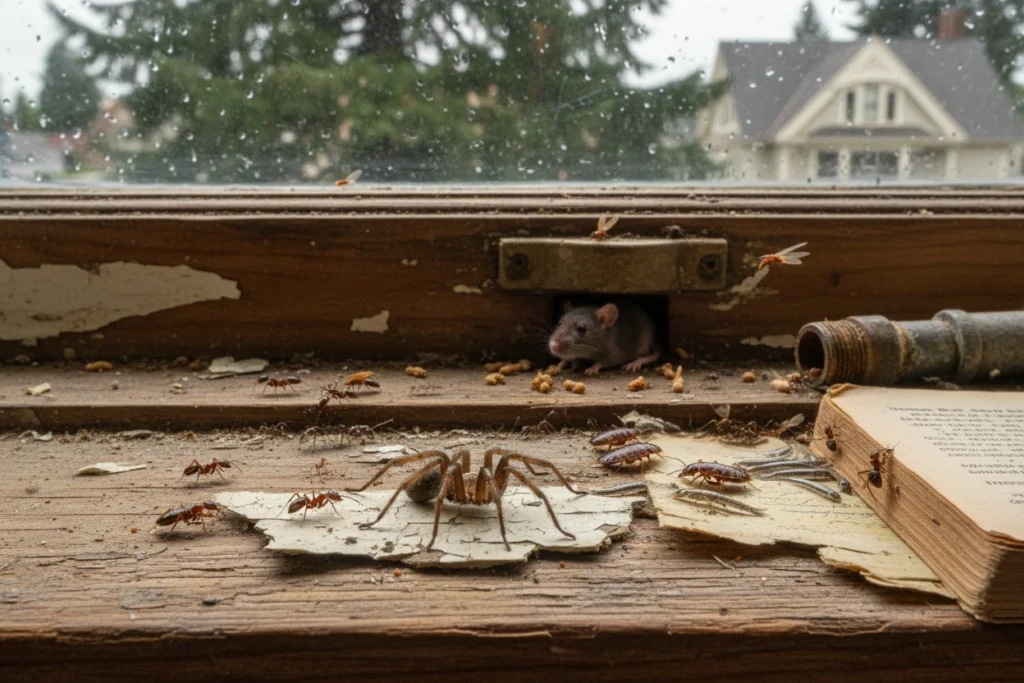
If you own an older home in Milwaukie or the greater Portland area, you’re dealing with decades of structural wear that makes pest intrusion far more likely. Rats, mice, carpenter ants, cockroaches, spiders, wasps, and even raccoons commonly exploit aging foundations, deteriorating wood, and failing seals. These pests don’t just cause nuisance—they damage wiring, compromise structural integrity, and create serious health risks. Keep going to understand exactly what you’re up against and how to stop it.
Key Takeaways
-
Older Milwaukie homes commonly attract rats, mice, and carpenter ants through foundation cracks, deteriorating wood, and unsealed utility penetrations.
-
Carpenter ants excavate galleries in moisture-damaged wood, while termites silently destroy load-bearing structures in aging Portland-area homes.
-
Cockroaches and spiders thrive in older homes with compromised plumbing, cluttered crawl spaces, and deteriorating weatherstripping.
-
Wasps and yellow jackets frequently nest in wall cavities and roof eaves common in older Milwaukie-area homes.
-
Raccoons and woodpeckers cause significant structural damage to attics, siding, and joists in older Portland-area properties.
Why Older Milwaukie Homes Attract More Pests
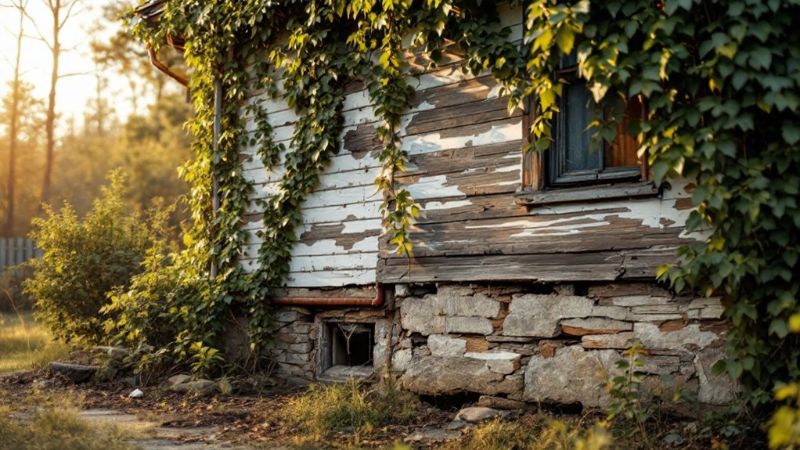
Older homes in Milwaukie tend to attract more pests simply because age creates vulnerabilities that newer construction doesn’t have. Foundations settle and crack, wood deteriorates, weatherstripping fails, and gaps form around pipes and utility lines.
These entry points give pests direct access to your home’s interior. Older insulation and moisture-damaged wood also create ideal nesting conditions for rodents, carpenter ants, and termites.
Without proactive home maintenance tips like sealing foundation gaps, replacing damaged fascia boards, and maintaining proper drainage, you’re fundamentally leaving the door open. Effective pest prevention strategies start with understanding that your home’s age is a structural liability. The older the construction, the more diligent you need to be about routine inspections and targeted repairs before infestations take hold. Additionally, multiple infestation points can escalate the risk of a pest problem quickly if not addressed.
The Most Common Pests Found in Portland-Area Homes
If you own an older Portland-area home, you’re likely sharing it with one or more of a handful of persistent pest species.
Rats and mice exploit deteriorating foundations and aging pipe chases, while odorous house ants and carpenter ants infiltrate through weathered wood and failing caulk lines.
Knowing which pests target your home—and recognizing their early warning signs—puts you in a stronger position to act before infestations escalate. Additionally, seeking professional pest control can provide tailored solutions for the unique challenges posed by these pests.
Frequent Pest Offenders
Whether your home was built in the 1920s or the 1970s, older construction tends to share the same vulnerabilities—and the same uninvited guests.
Seasonal infestations follow predictable patterns, and common attractants like moisture, food debris, and structural gaps make older homes prime targets.
Here’s what you’re most likely dealing with:
-
Rats and mice – exploit gaps in aging foundations and wall voids
-
Ants – trail through deteriorating wood and plumbing penetrations
-
Spiders – colonize cluttered basements and crawl spaces
-
Cockroaches – thrive near compromised plumbing and kitchen areas
-
Wasps and yellow jackets – nest inside wall cavities and roof eaves
Identifying the specific pest early determines the most effective treatment approach.
Signs of Infestation
Knowing what to look for is half the battle. Pest behavior leaves measurable evidence—you just need to recognize it.
Watch for droppings along baseboards, cabinet edges, or wall voids, which typically indicate rodent or cockroach activity. Gnaw marks on wood, wiring, or food packaging confirm rodent presence. Mud tubes along your foundation signal subterranean termite movement. Grease smears along walls indicate frequent rodent travel paths.
For insects, look for shed exoskeletons, egg casings, and surface staining near harborage zones. Soft or hollow-sounding wood often points to structural pest damage already in progress.
Early detection is essential to infestation prevention. The longer you wait, the deeper pests entrench themselves in your home’s structure.
Act on warning signs immediately—don’t wait for visible pest populations to confirm the problem.
Entry Points Pests Use in Aging Homes
As your Portland-area home ages, its structural integrity weakens, creating entry points that pests exploit with remarkable efficiency.
Gaps in aging foundations—whether from settling, cracking, or deteriorating mortar—give rodents, insects, and even larger wildlife direct access to your crawl space and interior walls.
Deteriorating roof edges, rotting eaves, and compromised fascia boards compound the problem, opening overhead pathways that raccoons, squirrels, and wasps readily use to establish nests. Additionally, it’s crucial to inspect for rodent activity early to prevent infestations from taking hold.
Gaps In Aging Foundations
Over time, concrete foundations develop cracks, mortar joints deteriorate, and sill plates rot—creating direct entry points for rodents, insects, and other pests.
Consistent foundation maintenance is critical to effective pest prevention in older Milwaukie homes.
Watch for these common foundation vulnerabilities:
-
Cracks in poured concrete or block foundations – even hairline cracks allow ant and cockroach access
-
Deteriorated mortar joints – gaps between foundation blocks widen as mortar crumbles
-
Rotted sill plates – wood-to-concrete contact zones attract carpenter ants and termites
-
Unsealed utility penetrations – pipes and conduits entering through foundations create open corridors
-
Crawl space vents without screening – unprotected vents invite rodents and moisture-seeking insects
Inspect your foundation annually and seal any compromised areas immediately.
Deteriorating Roof And Eaves
Roofs and eaves take a beating in the Pacific Northwest’s wet climate, and older homes show it—warped fascia boards, crumbling soffits, and lifting shingles all create direct pest entry points.
Rats, squirrels, raccoons, and starlings exploit these vulnerabilities to access your attic, where they nest, breed, and cause structural damage. Wasps frequently establish colonies inside deteriorated soffits, while carpenter ants target water-damaged fascia wood.
Neglecting roof maintenance accelerates this deterioration, turning minor seasonal wear into considerable infestation risks.
Prioritize eaves repair by replacing rotted wood, resealing gaps, and securing loose soffit panels before pests move in. Once wildlife or insects establish themselves inside a roofline, removal becomes notably more complex—and expensive.
Early intervention is always the more practical approach.
Which Pests Cause the Most Structural Damage?
Structural damage from pests is a serious concern in older Portland-area homes, where aging wood, moisture intrusion, and deteriorating insulation create ideal conditions for infestations.
Certain pests accelerate termite damage and wood rot, compromising your home’s structural integrity faster than you’d expect.
The most destructive pests include:
-
Termites – silently destroy load-bearing wood, worsening existing wood rot
-
Carpenter ants – excavate galleries through damp or decaying wood members
-
Rats and mice – gnaw through wiring, insulation, and wooden framing
-
Raccoons – tear apart attic structures, damaging joists and sheathing
-
Woodpeckers – drill repeatedly into siding and eaves, hastening moisture damage
Identifying these pests early limits repair costs considerably. Implementing simple prevention methods can help reduce the risk of infestations.
Schedule a professional inspection if you notice unexplained wood deterioration, droppings, or unusual sounds within your walls.
Signs You Already Have a Pest Problem
Many pest infestations leave clear physical evidence long before you notice the animals themselves. Knowing what to look for accelerates early detection and limits structural damage.
Watch for droppings along baseboards, in cabinet corners, or near wall penetrations — these indicate active rodent or cockroach activity. Gnaw marks on wood framing, wiring insulation, or food packaging confirm ongoing pest behavior.
Grease trails along walls signal repeated rodent movement patterns. You’ll also want to check for shed skins, egg casings, or wings near windowsills, which point to insect activity.
Soft or hollow-sounding wood suggests carpenter ant or moisture damage. If you’re hearing scratching inside walls at night, assume wildlife or rodents are already nesting. Ignoring unexplained droppings can lead to serious health risks for your household.
Don’t wait for visible animals — act on the evidence immediately.
When to Call a Milwaukie Pest Control Professional
Once you’ve spotted those warning signs, the next decision is whether this is a job you handle yourself or one that demands professional intervention.
DIY pest control tips rarely address root causes, especially when seasonal pest behavior drives recurring infestations into older Portland-area homes.
Call a Milwaukie pest control professional when you encounter:
-
Structural damage from rodents, carpenter ants, or wood-boring insects
-
Repeated infestations despite previous treatments
-
Multiple pest species active simultaneously
-
Spring or fall surges tied to seasonal pest behavior patterns
-
Health risks from stinging insects, cockroaches, or bed bugs
Older homes present compounded vulnerabilities—aging wood, deteriorating seals, and outdated foundations.
A licensed technician diagnoses the infestation source accurately and applies targeted treatments that over-the-counter products simply can’t match. Additionally, they utilize eco-friendly solutions that ensure safety for both customers and the environment.
Frequently Asked Questions
Does Homeowner’s Insurance Cover Pest Damage in Older Milwaukie Homes?
Most homeowner’s insurance policies don’t cover pest damage—it’s typically excluded. You’ll want to review your insurance policy limits carefully and invest in proactive pest exclusion methods to protect your older home from costly structural damage.
How Much Does Professional Pest Control Typically Cost in Milwaukie?
Pest control prices vary based on pest type and infestation severity. For local pest services in Milwaukie, you’ll typically pay $150–$300 for initial treatments, with ongoing service plans running $40–$100 monthly.
Are Certain Pest Control Treatments Unsafe for Older Home Materials?
Yes, some harsh chemicals can damage aged wood, plaster, and lead paint in older structures. You’ll want eco-friendly treatments that account for historical home considerations, protecting both your home’s integrity and your family’s safety.
How Long Does a Professional Pest Inspection Usually Take?
A professional pest inspection typically takes 30–90 minutes, depending on your home’s size and complexity. During inspection duration, technicians actively conduct thorough pest detection across key areas, ensuring they identify all infestation points accurately.
Can I Sell My Milwaukie Home if It Has an Active Infestation?
You can sell your home with an active infestation, but Oregon law requires infestation disclosure. Prioritizing treatment before listing strengthens your selling strategies, protects your liability, and prevents buyers from renegotiating or walking away entirely.
Conclusion
Your older home’s charm doesn’t have to come at the cost of structural integrity or safety. You’ve now learned where pests enter, what damage they cause, and which warning signs demand immediate attention. Don’t wait until a minor infestation becomes a costly structural repair. Contact a licensed Milwaukie pest control professional who understands the specific vulnerabilities of Portland-area older construction — because early intervention is always less expensive than remediation.