
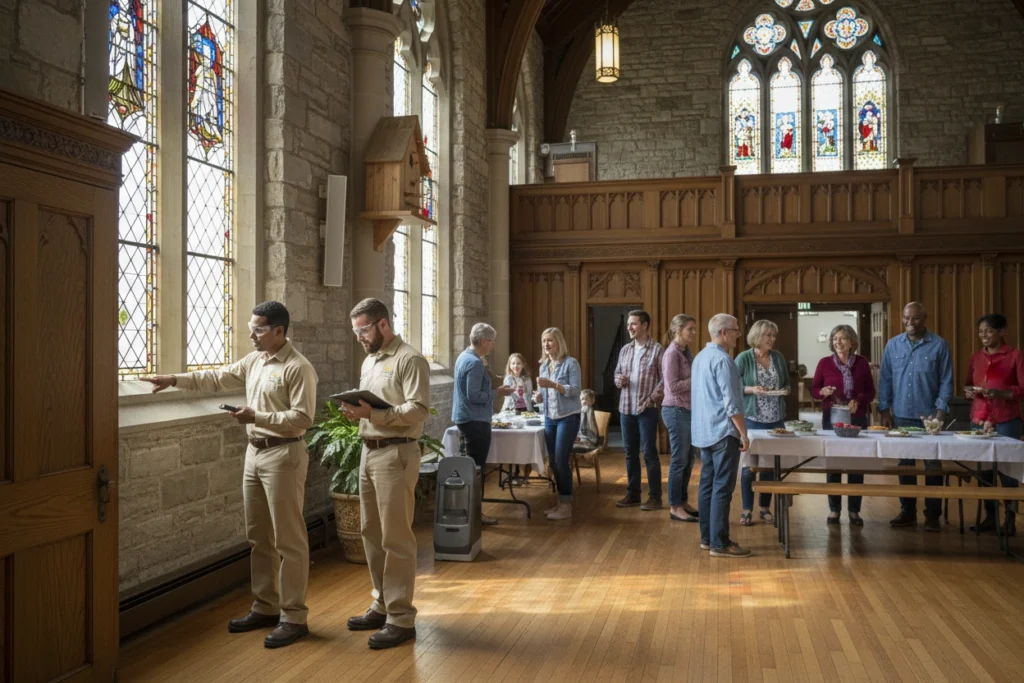
Managing pest pressure in your Salem church or community center requires a systematic, recurring program rather than reactive treatments. Your irregular occupancy schedule, high foot traffic, and shared food service areas create compounding vulnerabilities that attract rodents, cockroaches, ants, and stinging insects year-round. You’ll need to address critical zones like kitchens, restrooms, and entry points through exclusion, targeted treatments, and staff training. Keep exploring to understand exactly how to structure an effective, compliant program for your facility.
Key Takeaways
-
High foot traffic, propped doors, and irregular occupancy make Salem churches and community centers especially vulnerable to pest infestations.
-
Kitchens, restrooms, and entry points are high-risk zones requiring regular inspections and targeted maintenance to prevent pest activity.
-
Low-risk control methods like exclusion barriers, botanical repellents, and targeted bait stations effectively manage pests while minimizing chemical exposure.
-
Treatments should be scheduled during unoccupied hours to reduce human exposure and maintain public health compliance.
-
A recurring pest management program with formal assessments, structured inspections, and staff training ensures long-term infestation prevention.
Why Churches and Community Centers Attract Pests Year-Round

Churches and community centers operate on schedules that create ideal pest conditions: high foot traffic brings in food debris, propped doors allow entry, and irregular occupancy leaves infestations undetected for days or weeks.
Understanding your facility’s pest attraction factors requires evaluating structural access points, food storage practices, and HVAC systems that regulate interior temperatures year-round.
Seasonal pest fluctuations compound these vulnerabilities. Rodents infiltrate during fall and winter seeking warmth, while ants, wasps, and flies exploit summer events when exterior doors stay open.
Spring brings moisture-driven activity through foundation gaps and aging seals. Your facility’s size amplifies each risk—more square footage means more entry points, more hiding zones, and greater difficulty detecting early-stage activity before populations establish. Additionally, frequent pest control measures can help mitigate future pest incursions, ensuring a healthier environment for all users.
The Most Common Pests Found in Salem’s Large Shared Spaces
Those attraction factors translate directly into specific pest species that facility managers in Salem encounter repeatedly. Ant infestations and rodent sightings top the complaint list, but you’ll also contend with wasps, cockroaches, and occasional wildlife intrusions depending on your facility’s layout and seasonal patterns.
Three pest categories demand your immediate compliance attention:
-
Rodents – Mice and rats compromise food safety regulations and structural integrity through gnawing and contamination. To effectively manage these issues, it’s essential to understand common types of mice found in homes.
-
Ants – Carpenter and odorous house ants exploit moisture damage, triggering sanitation code concerns during inspections.
-
Stinging insects – Wasps and yellow jackets nesting near entries create documented liability exposure for your organization.
Identifying which species you’re managing determines your treatment protocol, documentation requirements, and the inspection schedule you’ll need to maintain regulatory compliance.
High-Risk Areas Inside Your Building That Pest Control Must Address
When managing pests in a shared building, you must prioritize three critical zones: kitchens and food storage areas, restrooms and utility rooms, and entry points and hallways.
Each zone presents distinct vulnerabilities that attract and sustain pest activity if left unaddressed. A systematic inspection and treatment protocol targeting these areas forms the foundation of any effective pest control plan. Regular inspections are essential for identifying potential entry points that may allow pests to infiltrate your space.
Kitchens And Food Storage
Kitchens and food storage areas represent the highest-risk zones in any shared building, as they provide pests with direct access to the three essentials they need to thrive: food, water, and shelter.
Maintaining food safety and consistent pest prevention protocols in these spaces isn’t optional—it’s a regulatory requirement and a public health responsibility.
Implement these critical controls:
-
Seal all dry goods in hard-sided, airtight containers to eliminate accessible food sources for rodents and insects.
-
Establish a daily cleaning schedule targeting grease buildup, crumbs, and spills along baseboards, under equipment, and inside cabinets.
-
Inspect deliveries immediately for signs of infestation before storing items, as shipments frequently introduce cockroaches and pantry pests into otherwise controlled environments.
Restrooms And Utility Rooms
Restrooms and utility rooms introduce persistent moisture and plumbing access points that make them structurally vulnerable to cockroach activity, drain flies, and rodent entry.
You’ll need to integrate restroom sanitation protocols that address floor drains, pipe penetrations, and under-sink cavities where infestations establish quickly. Inspect caulking around fixtures regularly and replace deteriorating seals that create harborage zones.
For utility room maintenance, prioritize eliminating standing water near HVAC equipment, water heaters, and floor sumps. Seal conduit openings and utility line entry points with appropriate pest-exclusion materials.
Schedule routine drain treatments to disrupt organic buildup that sustains fly populations.
Pest Patrol recommends incorporating these zones into your facility’s integrated pest management inspection cycle to maintain compliance and reduce structural infestation risk year-round.
Entry Points And Hallways
Entry points and hallways function as primary pest migration corridors, making them critical zones in any commercial pest management program.
You’ll need systematic protocols addressing both entry security and hallway maintenance to effectively interrupt pest movement throughout your facility.
Key inspection and mitigation priorities include:
-
Door sweeps and seals: Verify all exterior doors have functioning sweeps; gaps exceeding 1/4 inch permit rodent and insect entry.
-
Crack and crevice treatment: Apply targeted residual treatments along baseboard junctions, expansion joints, and wall penetrations throughout hallways.
-
Traffic-zone monitoring: Install pheromone or glue monitors at regular intervals along high-traffic corridors to detect early pest activity.
Consistent documentation of findings within these zones supports regulatory compliance and helps your pest management provider adjust treatment strategies efficiently.
How Pest Activity Disrupts Events, Programs, and Congregation Safety
When pest activity goes unaddressed in shared spaces, it creates cascading disruptions that extend well beyond structural or sanitary concerns.
Event disruptions become inevitable when infestations compromise food service areas, seating zones, or sound and electrical equipment. Rodents chew wiring, triggering fire code violations and equipment failures mid-program.
Visible pest sightings during congregation gatherings erode public trust and can prompt immediate venue closures under Oregon health and safety statutes.
Safety concerns escalate when stinging insects nest near high-traffic entrances or when cockroach allergens accumulate in HVAC systems serving enclosed assembly halls.
You’re also creating liability exposure if pest conditions remain undocumented and unaddressed. Proactive pest management isn’t optional for occupied community facilities—it’s a regulatory and operational requirement that directly protects attendees, staff, and programming continuity. Additionally, regular pest control services ensure peace of mind for both staff and attendees, reducing anxiety about potential infestations.
Pest Control Methods That Are Safe for High-Traffic Community Spaces
Protecting attendees from pest-related hazards requires more than identifying the problem—it demands treatment protocols that don’t introduce new risks into occupied spaces.
For churches and community centers, eco-friendly solutions and natural deterrents form the foundation of any responsible pest management plan.
Effective low-risk methods include:
-
Exclusion barriers — sealing entry points to block pest access without chemical application
-
Botanical-based repellents — plant-derived natural deterrents that minimize toxicity exposure in high-traffic zones
-
Targeted bait stations — enclosed systems that contain active ingredients away from human contact
You should require documentation of all products used, including safety data sheets. Additionally, implementing preventative measures can further enhance your pest management strategy by reducing the likelihood of future infestations.
Scheduling treatments during unoccupied hours further reduces exposure risk and keeps your facility compliant with public health standards.
How to Set Up Ongoing Pest Management for Your Salem Facility
Establishing a recurring pest management program for your Salem facility starts with a formal site assessment that documents existing vulnerabilities, pest pressure levels, and structural conditions.
From there, you’ll coordinate with your provider to define inspection intervals, treatment protocols, and response thresholds tailored to your facility type.
Ongoing inspections should follow a structured schedule—monthly or quarterly—with written reports filed after each visit for compliance documentation.
Integrate staff training into your program so employees can identify early warning signs, report activity promptly, and follow sanitation protocols that reduce attractants.
Pest Patrol serves Salem facilities with customized commercial programs that meet regulatory requirements and minimize disruption to your operations.
Contact them to schedule your initial assessment and establish a management plan built around your facility’s specific needs.
Frequently Asked Questions
Does Pest Patrol Offer Discounts for Nonprofit Churches and Community Centers?
We don’t have confirmed details on nonprofit pricing for churches and community centers, but you should contact Pest Patrol directly to discuss community support options and any available discounts for your Salem organization.
How Quickly Can Pest Patrol Respond to an Urgent Pest Emergency in Salem?
Pest Patrol’s urgent response covers Salem quickly, so you’ll receive fast service when pest identification matters most. They prioritize emergency calls, deploying trained technicians systematically to assess, document, and address your pest situation efficiently and safely.
Are Your Pest Control Technicians Licensed and Insured in Oregon?
Yes, you can trust that Pest Patrol’s technicians meet all pest technician qualifications and comply with Oregon’s pest control regulations—they’re fully licensed and insured, ensuring your Salem church or community center receives systematically safe, regulation-compliant service.
Can Pest Control Treatments Be Scheduled Around Our Weekly Worship Services?
Yes, you can coordinate pest control scheduling around your worship service coordination needs. We’ll systematically plan treatments during off-hours, ensuring minimal disruption while maintaining regulatory compliance and effective pest management for your Salem facility.
What Is the Cost of a Pest Inspection for a Large Salem Facility?
Pricing varies based on inspection factors like facility size, layout complexity, and pest risk zones. You’ll need to contact Pest Patrol directly for an accurate quote tailored to your Salem location’s specific regulatory and structural requirements.
Conclusion
You can’t afford to let pest activity compromise your facility’s safety, reputation, or compliance standing. By implementing a structured Integrated Pest Management protocol—combining routine inspections, exclusion measures, targeted treatments, and documentation—you’ll maintain regulatory compliance while protecting every person who uses your space. Partner with a licensed Salem pest control provider experienced in large shared facilities, and establish a consistent monitoring schedule that keeps your building pest-free regardless of seasonal pressures or occupancy fluctuations.