
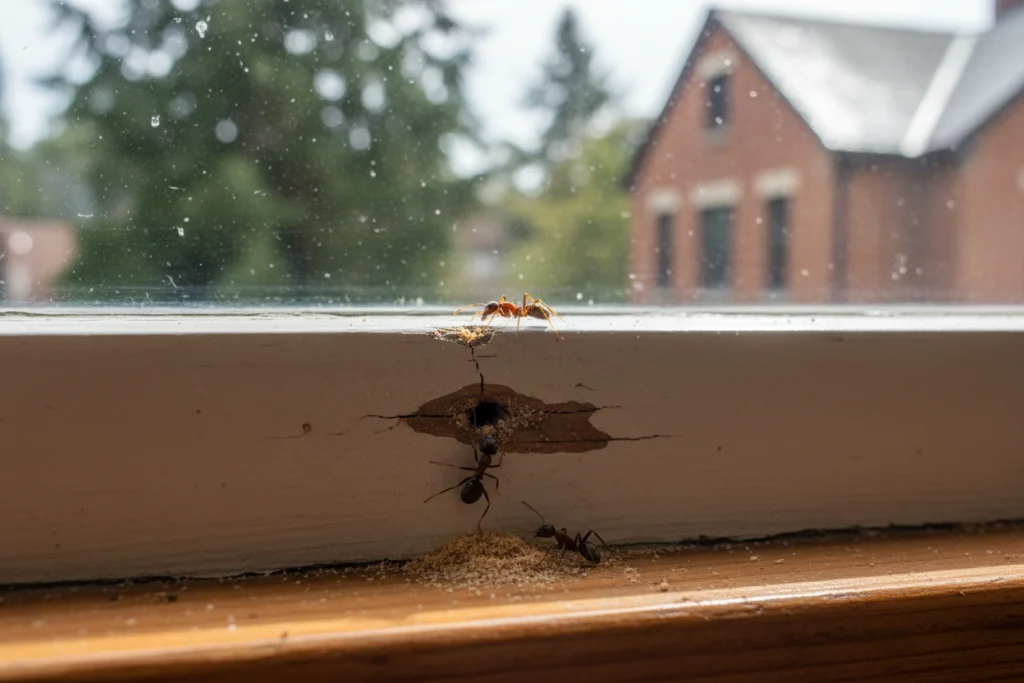
Carpenter ants don’t just invade your home—they systematically destroy it from the inside out. You’ll want to watch for frass deposits near baseboards, faint rustling sounds inside walls at night, and discarded wings along windowsills. Salem’s wet winters accelerate wood moisture damage, giving colonies the perfect environment to expand undetected. Tapping along structural members for hollow sounds can reveal hidden galleries before damage becomes catastrophic. There’s much more you should know to protect your home.
Key Takeaways
-
Frass deposits near baseboards, windowsills, or door frames signal active carpenter ant excavation and should prompt immediate inspection.
-
Faint rustling sounds inside walls at night often indicate carpenter ant colonies tunneling through structural wood.
-
Hollow or soft-sounding wood when tapped along structural members suggests existing gallery systems hidden within.
-
Discarded wings near windowsills indicate a mature colony has established itself nearby, requiring urgent attention.
-
Salem’s wet winters accelerate wood moisture damage, making Oregon homes especially vulnerable to carpenter ant infestation.
What Carpenter Ants Actually Do to Your Home
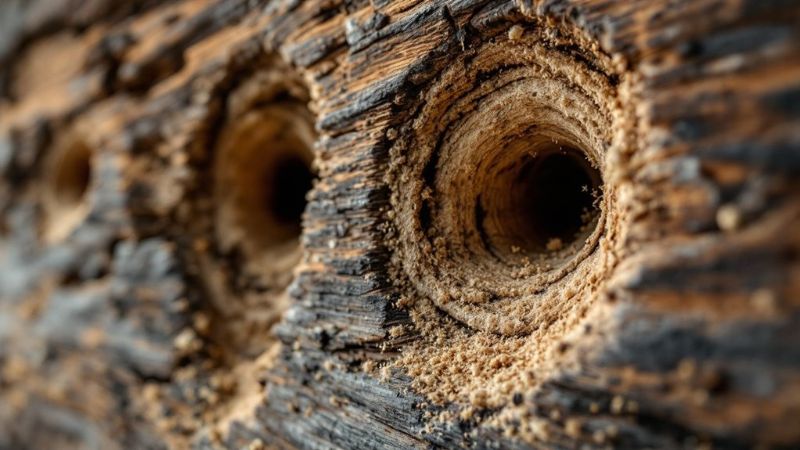
Carpenter ants don’t eat wood — they excavate it. Understanding carpenter ant behavior is essential to grasping why these pests cause serious damage. Worker ants chew through wood to create smooth, gallery-like tunnels called galleries, expelling the debris as a sawdust-like material called frass. They target soft, moisture-damaged wood first, then expand into sound structural timber as colonies grow.
Over time, this excavation compromises your home’s structural integrity in ways that aren’t immediately visible. Load-bearing beams, floor joists, wall framing, and window frames are all vulnerable. Because carpenter ants nest deep within walls and voids, the damage accumulates silently for months or years before you notice surface-level symptoms. Natural methods can be effective in controlling these pests, but by then, repairs can be costly and extensive.
Early Warning Signs Salem Homeowners Often Miss
Because carpenter ant activity stays hidden inside walls and structural voids, most Salem homeowners don’t recognize the warning signs until the damage is already significant.
Improving your homeowner awareness starts with knowing what to look for before structural compromise occurs.
Watch for these specific indicators:
-
Frass deposits — coarse sawdust mixed with insect parts near baseboards, windowsills, or door frames
-
Faint rustling sounds inside walls, particularly at night when carpenter ants forage
-
Discarded wings near windowsills, indicating a swarm event
-
Soft or hollow-sounding wood when tapped along structural members
-
Worker ant trails along exterior foundations or tree limbs contacting your roofline
Accurate pest identification requires distinguishing carpenter ants from termites — carpenter ants have segmented waists and elbowed antennae.
Additionally, understanding that carpenter ants are drawn to wet, decaying wood can help you identify potential nesting sites before they become a problem. Misidentification delays treatment and accelerates structural deterioration.
Why Salem’s Climate Makes Carpenter Ant Damage Worse
Salem’s wet winters create prolonged moisture exposure that softens wood and accelerates decay, giving carpenter ants ideal nesting conditions throughout your home’s structural timbers, sills, and framing.
Unlike drier climates where wood dries out seasonally, Salem’s persistent rainfall keeps moisture levels elevated long enough for ant colonies to establish and expand before you notice visible damage.
You’re also dealing with a year-round pest pressure problem, since milder Pacific Northwest temperatures allow carpenter ant colonies to remain active well beyond the short seasonal windows seen in colder regions. This humidity and frequent rainfall creates ideal conditions for carpenter ants, increasing the urgency for proactive pest management.
Salem’s Wet Winter Seasons
Oregon’s Willamette Valley delivers the kind of climate carpenter ants thrive in—wet, mild winters that keep wood saturated for months at a time.
Wet season impacts compound structural vulnerability in four measurable ways:
-
Persistent rainfall drives moisture deep into siding, fascia, and framing.
-
Saturated wood softens, making excavation effortless for overwintering colonies.
-
Winter pest behavior shifts inward—ants relocate into wall voids to escape soil flooding.
-
Extended dampness delays drying, allowing fungal decay to precede and accelerate ant damage.
You’re not dealing with a brief seasonal threat.
Salem’s winters routinely stretch moisture exposure across five to six months, giving colonies ample time to establish galleries before you notice a single sign of damage.
Moisture Accelerates Wood Decay
Moisture doesn’t just soften wood—it initiates a decay cycle that carpenter ants exploit at every stage. When fungi break down lignin and cellulose, wood loses structural integrity and becomes considerably easier to excavate.
Carpenter ants don’t cause the decay, but they actively seek it out, preferring compromised wood over sound material every time.
In Salem’s climate, moisture management isn’t optional—it’s essential to wood preservation. Without it, your sill plates, roof sheathing, and subflooring remain perpetually vulnerable.
Water infiltrates through failed flashing, poor drainage, and inadequate ventilation, creating sustained moisture conditions that accelerate fungal colonization. Once decay establishes, carpenter ants follow quickly.
You can’t address a carpenter ant infestation without addressing its moisture source. Treat the wood, and you’ve only solved half the problem.
Year-Round Ant Activity
Moisture creates the conditions—Salem’s climate sustains them. Unlike colder regions where ant behavior slows dramatically in winter, Salem’s mild temperatures compress seasonal patterns, keeping carpenter ants structurally active longer each year. That extended activity window means damage accumulates faster than most homeowners expect.
Salem’s climate creates four compounding risk factors:
-
Warm, wet winters prevent colony dormancy, allowing continuous tunneling through November and February.
-
Early spring emergence accelerates queen reproduction before most homeowners inspect for damage.
-
Dry summers push foraging workers deeper into moist wall voids seeking humidity.
-
Mild fall temperatures extend colony-building well past typical pest seasons.
You’re not dealing with a seasonal nuisance—you’re dealing with a year-round structural threat that exploits every vulnerability Salem’s climate produces.
Where Carpenter Ants Hide Inside Oregon Homes
Carpenter ants don’t nest randomly — they target specific structural zones where moisture has already begun softening wood.
You’ll most often find them inside wall voids near leaking pipes, beneath bathroom and kitchen subfloors, inside window and door frames with failing caulk, and within roof eaves exposed to Oregon’s persistent rainfall. Inspecting these moisture-prone areas first gives you the fastest path to locating an active colony before structural damage compounds. Implementing integrated pest management strategies can further enhance your prevention efforts against these destructive pests.
Common Indoor Hiding Spots
When carpenter ants move indoors, they gravitate toward areas where moisture has compromised wood — making certain spots in your home far more vulnerable than others.
Their common nesting behavior follows predictable patterns tied directly to moisture and nearby food sources.
Watch these four high-risk locations:
-
Bathrooms and kitchens — Plumbing leaks soften framing and subfloor wood, creating ideal nesting conditions.
-
Window and door frames — Poor sealing allows water intrusion, accelerating wood deterioration.
-
Attics — Inadequate ventilation traps moisture, compromising roof sheathing and rafters.
-
Crawl spaces — Ground moisture and organic debris provide both structural access and consistent food sources.
Identifying these zones early gives you a critical advantage before structural damage escalates beyond simple treatment options.
Moisture-Prone Problem Areas
Oregon’s wet climate creates persistent moisture conditions that carpenter ants exploit year-round, making certain areas of your home markedly more vulnerable than others.
Target your inspections around primary moisture sources: roof eaves, fascia boards, window frames, bathroom walls, and areas beneath kitchen sinks.
Crawl spaces with inadequate vapor barriers and poorly ventilated attics consistently rank among the highest-risk zones in Salem homes.
Effective prevention tips start with eliminating standing water, repairing leaking pipes promptly, and improving drainage around your foundation.
Verify gutters redirect water away from exterior walls.
Replace deteriorating weatherstripping around doors and windows to reduce humidity infiltration.
Without addressing these moisture conditions directly, carpenter ants will continue locating and colonizing softened wood throughout your structure, accelerating structural damage well before visible signs emerge.
Can You Fix Carpenter Ant Damage Yourself?
Whether you can fix carpenter ant damage yourself depends on the extent of the structural compromise and your ability to accurately assess it. DIY repairs are only viable when damage is surface-level and carpenter ants haven’t penetrated load-bearing components.
Follow this assessment framework:
-
Probe affected wood with a screwdriver to measure void depth and spread.
-
Identify moisture sources feeding the colony before attempting any repair.
-
Eliminate the active infestation completely before replacing damaged material.
-
Replace compromised wood sections using rot-resistant lumber and seal entry points.
If probing reveals extensive tunneling or structural members are involved, professional evaluation isn’t optional—it’s necessary. Additionally, understanding how to locate and eliminate decaying wood is crucial for preventing future infestations.
Incomplete repairs without colony elimination guarantee reinfestation.
When to Call a Salem Pest Control Professional
Some carpenter ant damage genuinely exceeds what DIY methods can safely address, and recognizing that threshold early prevents costlier structural failures down the line.
Call a licensed Salem pest control professional when you identify multiple satellite colonies, widespread gallery systems inside load-bearing lumber, or persistent activity after repeated treatment attempts.
Professionals deploy advanced pest control techniques—including void injections, perimeter baiting systems, and moisture remediation assessments—that aren’t accessible through retail products.
They’ll also implement targeted carpenter ant prevention strategies by locating and eliminating satellite entry points, correcting moisture intrusion sources, and establishing ongoing monitoring protocols.
If you’re finding frass in multiple locations, hearing hollow sounds in walls, or noticing structural softness, don’t delay.
Early professional intervention limits both biological spread and the cumulative repair costs that follow unchecked infestations, especially since carpenter ants can thrive in dark, tight spaces similar to how bed bugs do.
Frequently Asked Questions
How Much Does Carpenter Ant Treatment Typically Cost in Salem, Oregon?
Carpenter ant treatment costs vary based on infestation severity and treatment options selected. You’ll typically pay $150–$500 in Salem. Pest Patrol provides transparent pricing, effective treatments, and prevention tips to protect your home long-term.
Are Carpenter Ants Dangerous to Humans or Household Pets?
Carpenter ants don’t pose direct health risks to you or your pets, but their aggressive carpenter ant behavior includes painful bites when threatened. Prioritizing pest prevention protects your home’s structural integrity from their destructive wood-tunneling activity.
What Time of Year Are Carpenter Ants Most Active in Salem?
You’ll notice peak carpenter ant behavior in spring and summer. Seasonal activity surges between April and August in Salem, when warmer temperatures drive foraging workers indoors seeking food, moisture, and new nesting sites.
How Long Does a Professional Carpenter Ant Treatment Usually Take?
Professional carpenter ant treatment duration typically takes 1–2 hours. A pest control technician will inspect your structure, apply targeted treatments, and seal entry points. You’ll want to vacate treated areas for about 30–60 minutes post-application.
Will Homeowners Insurance Cover Carpenter Ant Damage Repairs?
Most insurance policies won’t cover carpenter ant damage since insurers classify it as a preventable maintenance issue. You’ll need to review your coverage limits carefully, as standard homeowner plans typically exclude pest-related structural repairs entirely.
Conclusion
Don’t wait for visible structural damage before you act. You’ve now got the knowledge to spot carpenter ant activity early — from frass accumulations to auditory wall disturbances. Salem’s persistent moisture means you’re fighting an ongoing battle, not a one-time event. Inspect your home systematically, address moisture sources immediately, and document any evidence you find. If you’re detecting multiple warning signs simultaneously, contact a licensed Salem pest control professional without delay.