
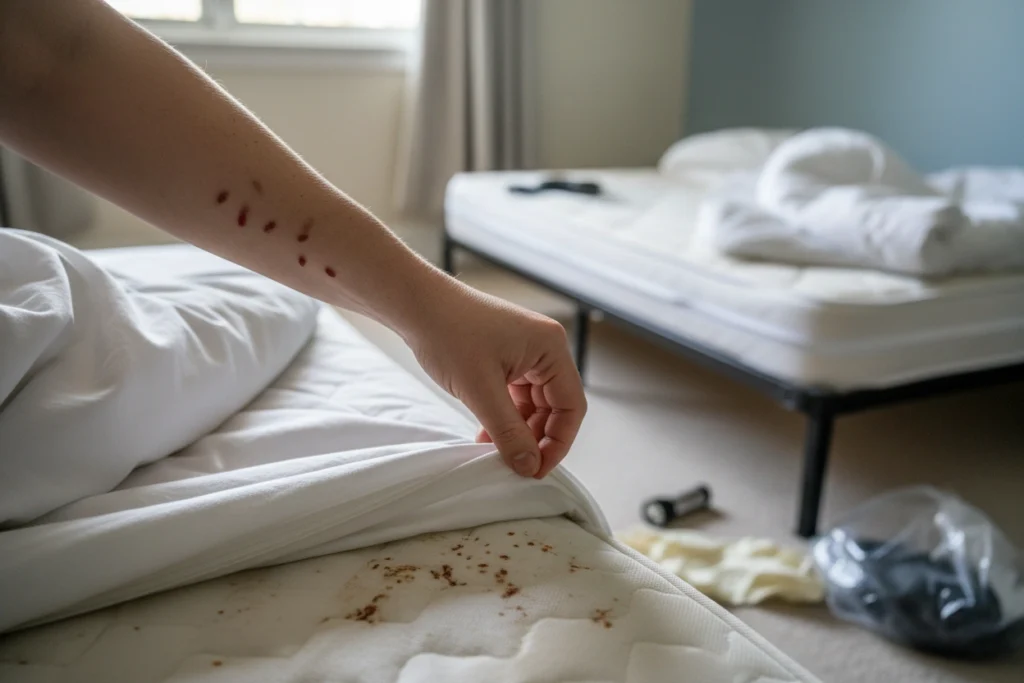
If you find bed bug bites or stains in your Hillsboro home, don’t relocate to another room—that spreads the infestation. Look for rust-colored stains, dark fecal spots, and shed exoskeletons near mattress seams and bed frames. Avoid store-bought sprays, as they scatter bugs deeper into your home. A single fertilized female lays up to 500 eggs in her lifetime, so fast action is critical. Everything you need to handle this correctly is covered below.
Key Takeaways
-
Bed bug bites appear in clusters or rows of three to five, presenting as red, itchy welts without a center puncture point.
-
Confirm infestation by checking mattress seams, box springs, and bedding for rust-colored stains, dark fecal spots, or shed exoskeletons.
-
Avoid relocating to another room or using store-bought sprays, as both actions can spread bed bugs further.
-
Act quickly, as a single female bed bug lays up to 500 eggs in her lifetime, causing rapid infestation growth.
-
Professional treatments, including heat remediation, chemical application, or Aprehend technology, effectively eliminate all bed bug lifecycle stages.
How to Tell If Bed Bug Bites Are Really Bed Bug Bites

Knowing whether your bites actually come from bed bugs—rather than mosquitoes, fleas, or another source—is the first step toward choosing the right treatment.
Symptoms identification starts with examining bite characteristics closely. Bed bug bites typically appear in clusters or linear rows of three to five welts, often along exposed skin areas like your arms, neck, or shoulders.
They’re red, slightly raised, and intensely itchy, but they don’t produce a center puncture point like flea bites do. You’ll also notice they appear overnight, since bed bugs feed while you sleep.
Unlike mosquito bites, which show up randomly, bed bug bites follow a deliberate, repeated feeding pattern that reflects the insect’s methodical behavior. To confirm the presence of bed bugs, look for signs of bites such as small marks or welts that align with the typical feeding behavior of these pests.
Blood Stains, Dark Spots, and Shells: Reading the Evidence
Bite patterns give you a strong starting point, but the physical evidence bed bugs leave behind on your mattress, bedding, and nearby surfaces confirms whether you’re actually dealing with an infestation.
Knowing these bed bug signs helps you read pest behavior accurately before calling for treatment.
Look for three specific indicators:
-
Rust-colored blood stains — small smears from crushed bugs or feeding sites on sheets and pillowcases
-
Dark fecal spots — tiny black or brown dots along mattress seams, baseboards, and box spring edges; these don’t wipe away cleanly
-
Shed exoskeletons — translucent shells ranging from 1–4.5mm, found in folds, crevices, and furniture joints
Finding two or more of these together confirms active infestation and warrants immediate professional inspection. Additionally, understanding bed bug dynamics is crucial for effective problem resolution.
Where to Check for Bed Bugs in Your Hillsboro Home
Bed bugs concentrate in specific, predictable locations, so a systematic inspection of your Hillsboro home will yield the most reliable results.
Start with your mattress seams, box spring folds, and upholstered furniture, as these tight, dark spaces give bed bugs direct access to sleeping hosts.
From there, expand your search to baseboards, electrical outlets, wall cracks, and gaps where walls meet flooring, since bed bugs routinely exploit these structural openings to establish satellite colonies away from the bed. Additionally, check for rusty stains on bedding, as these can indicate the presence of bed bugs.
Common Hiding Spots
Finding bed bugs early starts with knowing their six most common hiding spots in your Hillsboro home. Understanding bed bug habits helps you conduct a faster, more targeted inspection before infestation signs escalate.
Start your inspection in these four high-priority locations:
-
Mattress seams and box springs – bed bugs cluster tightly along stitched edges and corner guards.
-
Bed frames and headboards – check every joint, screw hole, and crack.
-
Upholstered furniture – inspect seams, cushion folds, and underneath the frame.
-
Nightstands and baseboards – examine drawer tracks, back panels, and wall gaps.
Beyond these four, also check behind wall outlets and inside curtain folds.
Bed bugs stay within eight feet of where you sleep, so concentrate your search in that radius.
Mattress and Furniture Inspection
Once you know where bed bugs hide, a systematic inspection of your mattress and furniture turns that knowledge into action. Strip your bed completely and examine every seam, tag, and corner of the mattress using a flashlight. Proper mattress care means inspecting both sides, including the box spring and frame joints. Look for rust-colored stains, shed skins, or live insects.
For furniture maintenance, work methodically through each upholstered piece. Press into cushion seams, check underneath cushions, and inspect wooden joints where fabric meets the frame.
Use a stiff card to drag along tight crevices, dislodging any hidden evidence. Document what you find with photos. A thorough, structured inspection gives Pest Patrol’s Hillsboro technicians the precise information needed to design an effective treatment plan.
Cracks and Wall Gaps
Beyond mattresses and furniture, cracks and wall gaps are prime hiding spots you can’t afford to overlook. Bed bugs exploit structural voids to avoid detection and treatment. Conduct a thorough crack inspection along every wall, floor junction, and ceiling line.
Focus your inspection on these high-risk areas:
-
Baseboards and trim gaps – Check where trim separates from drywall or flooring.
-
Electrical outlet and switch plate edges – Bed bugs nest behind cover plates regularly.
-
Wall cracks and peeling paint – Even hairline fractures provide sufficient harborage.
-
Door and window frame gaps – Inspect all perimeter joints carefully.
After confirming infestation points, wall sealing becomes essential. Use caulk to eliminate entry points, denying bed bugs harborage and reducing reinfestation risk between professional treatments.
What Not to Do After Finding Bed Bugs
Once you’ve found bed bugs, your instincts may push you toward quick fixes that actually make the problem worse.
Don’t relocate to another room to sleep — doing so causes bed bugs to spread and expand their territory throughout your home.
Avoid store-bought sprays and don’t delay contacting a professional, as both mistakes allow the infestation to grow deeper into your walls, furniture, and belongings. Early professional intervention can prevent further spread and ensure effective treatment of the infestation.
Don’t Sleep Elsewhere
When you discover bed bugs, your first instinct may be to sleep in another room or stay at a friend’s house—don’t. Relocating spreads the infestation and undermines bed bug prevention efforts entirely.
Bed bugs track movement and follow hosts, meaning you’ll carry them with you.
Sleeping elsewhere causes four critical problems:
-
Bed bugs migrate to your new sleep location within days.
-
You contaminate additional rooms, furniture, and belongings.
-
Treatment zones become harder to identify and isolate.
-
You disrupt sleep hygiene patterns that professionals use to monitor infestation activity.
Stay in your bedroom. Maintain your normal routine so bed bugs remain concentrated in one area.
A localized infestation is far easier and less costly to treat than one that’s spread throughout multiple rooms or locations.
Avoid DIY Sprays
Staying put protects the treatment zone—but reaching for a store-bought spray will undo that containment just as quickly.
DIY spray dangers are well-documented: over-the-counter pyrethroids kill on contact but leave no residual barrier, and bed bugs have developed widespread resistance to them.
Worse, the chemical disruption scatters bugs deeper into walls, electrical outlets, and adjoining rooms—expanding the infestation rather than eliminating it.
Ineffective home remedies like essential oils, rubbing alcohol, and diatomaceous earth follow the same pattern.
They neutralize surface insects while the core population retreats and reproduces undisturbed.
You’re effectively buying time for the infestation to entrench itself further.
Save those products for the trash and let a licensed Hillsboro technician apply a targeted, heat- or chemical-based protocol designed to eliminate every life stage.
Don’t Delay Treatment
Every day you wait, a single fertilized female bed bug can lay five to seven eggs—meaning a contained problem doubles and redoubles before a technician ever arrives.
Early intervention limits both structural spread and health risks, including allergic reactions and secondary skin infections from repeated bites. Delays compound costs and treatment complexity.
Postponing professional service accelerates:
-
Infestation spread to adjacent rooms and furniture
-
Increased exposure to allergens and bite-related health risks
-
Higher treatment costs as population density grows
-
Greater disruption to daily routines during remediation
Contact Pest Patrol the moment you identify bites, staining, or cast skins.
Don’t allow hesitation to transform a manageable infestation into a whole-home crisis requiring multiple treatment rounds.
Professional Bed Bug Treatment in Hillsboro: What to Expect
Hiring a professional bed bug exterminator in Hillsboro follows a clear, structured process that takes the guesswork out of treatment.
First, a technician inspects your home, identifying harborage zones, infestation severity, and bed bug lifecycle stages present — eggs, nymphs, and adults each respond differently to treatment. This assessment directly determines which treatment options apply to your situation.
Common methods include heat remediation, chemical application, or a combination of both.
Heat treatments penetrate mattresses, walls, and furniture to eliminate all lifecycle stages in a single session. Chemical treatments target residual activity and prevent reinfestation over time.
Your technician will provide pre-treatment instructions — typically washing bedding and decluttering — to maximize effectiveness. Additionally, Pest Patrol utilizes Aprehend technology for a non-toxic approach that targets bedbugs where they hide.
After treatment, a follow-up inspection confirms elimination and addresses any remaining activity.
Why Hillsboro Homeowners Shouldn’t Wait on Bed Bug Treatment
Delaying bed bug treatment compounds the problem fast. A single female lays up to 500 eggs in her lifetime, meaning a small infestation becomes a full-scale crisis within weeks. The longer you wait, the fewer treatment options remain straightforward.
Here’s what accelerates with every day you postpone:
-
Population growth outpaces localized bed bug prevention measures
-
Eggs hatch and instars mature into reproductive adults
-
Infestation spreads beyond the bedroom into adjacent rooms
-
Treatment complexity—and cost—increases considerably
Pest Patrol recommends acting at the first confirmed sign of bites, staining, or live insects. Early intervention keeps treatment options targeted and less invasive. Additionally, it’s crucial to understand that bed bug biology and behavior can significantly impact the effectiveness of your treatment strategy.
Waiting doesn’t give you time to research—it gives bed bugs time to multiply. Contact Pest Patrol in Hillsboro immediately.
Frequently Asked Questions
How Much Does Professional Bed Bug Treatment Typically Cost in Hillsboro?
Professional bed bug treatment in Hillsboro typically runs $300–$500+, depending on infestation severity. You’ll save more avoiding ineffective DIY methods and following prevention tips to stop reinfestation—contact Pest Patrol for accurate, transparent pricing today.
Can Bed Bugs Survive in Outdoor Spaces or Only Indoors?
Bed bugs can’t thrive in outdoor habitats—they’re strictly indoor pests. Their pest behavior depends entirely on proximity to human hosts, so you’ll find them nesting in mattresses, furniture, and walls, not outside.
How Long Does a Bed Bug Infestation Take to Develop?
You can see a full infestation timeline develop within two to six months. Starting from a single egg, populations double rapidly. Use detection methods like inspecting seams and stains early to catch growth before it escalates.
Do Hillsboro Rental Property Landlords Have to Pay for Bed Bug Treatment?
In Oregon, landlords typically bear landlord responsibilities for bed bug treatment if the infestation wasn’t tenant-caused. Know your tenant rights — document everything, notify your landlord in writing, and contact Pest Patrol for professional Hillsboro bed bug treatment.
Are Bed Bugs More Common in Certain Hillsboro Neighborhoods Than Others?
Bed bugs don’t discriminate by neighborhood, but you’ll find higher concentrations near high-turnover housing. Local statistics show denser activity in areas with apartment complexes. Neighborhood awareness helps you stay vigilant regardless of where you live in Hillsboro.
Conclusion
Bed bugs won’t resolve on their own, and every night you wait gives them more time to spread. You’ve now got the knowledge to identify the signs, avoid common mistakes, and understand what professional treatment involves. Don’t let a manageable infestation become a whole-home crisis. Contact a licensed bed bug treatment specialist in Hillsboro immediately, follow their preparation protocols precisely, and you’ll be on the fastest possible path to a bug-free home.