
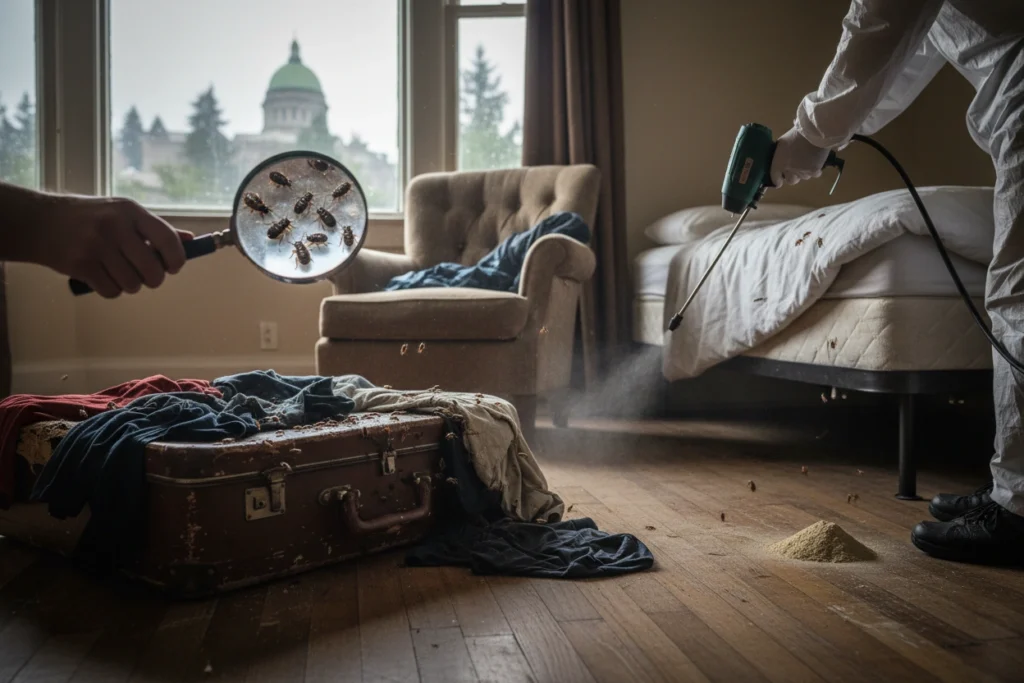
Bed bugs enter your Salem home by hitchhiking on luggage, clothing, and secondhand furniture — not because your home is dirty. Once inside, they hide in mattress seams, wall voids, and electrical outlets, with a single female laying up to five eggs daily. DIY sprays and foggers rarely eliminate them completely, allowing infestations to rebound fast. Professional heat or chemical treatments offer far more reliable results, and what follows breaks down exactly how each method works.
Key Takeaways
-
Bed bugs hitchhike on luggage, clothing, and secondhand items, spreading easily through hotels, transit, and multi-family housing via wall voids.
-
Signs of infestation include dark fecal stains, shed skins, and bites, with females laying up to 5 eggs daily.
-
DIY sprays and foggers fail to penetrate deep hiding spots, and eggs resist most chemicals, causing rapid reinfestation.
-
Professional removal involves thorough inspection, heat or chemical treatment, and follow-up visits to confirm complete elimination.
-
Prompt action is critical—delayed treatment allows infestations to grow, increasing cost, effort, and reinfestation risk significantly.
How Bed Bugs Get Into Salem Homes
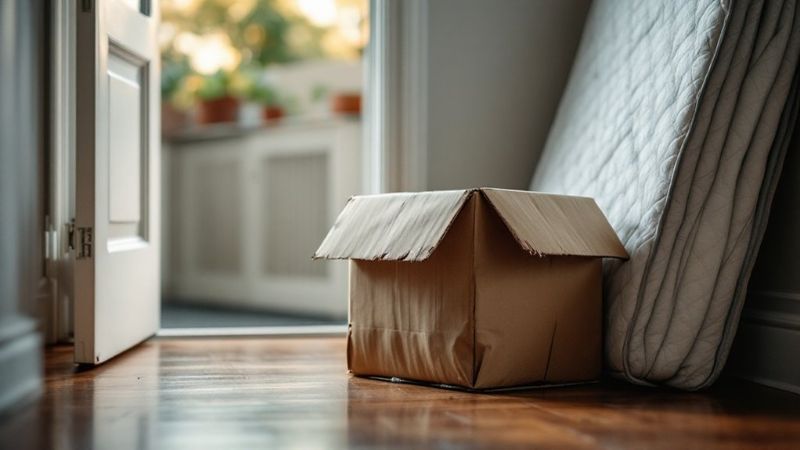
Bed bugs don’t appear out of nowhere—they hitchhike into Salem homes through everyday activities and items. Understanding bed bug behavior helps you identify exactly how entry occurs. They crawl onto luggage, clothing, used furniture, and personal belongings, then transfer to your home once you return.
Hotels, theaters, public transit, and secondhand stores are common transfer points.
One of the most persistent common myths is that bed bugs only infest dirty homes. That’s false—they’re attracted to warmth and carbon dioxide, not filth. Any home can become infested.
They spread rapidly between units in multi-family housing by moving through wall voids, electrical conduits, and plumbing channels. Once inside, they establish harborage points within mattress seams, baseboards, and upholstered furniture, making early detection critical. Additionally, regular home inspections can help identify potential hiding spots before infestations escalate.
Where They Hide and How Fast They Multiply
Once bed bugs enter your Salem home, they move quickly to establish hiding spots that make them difficult to detect and eliminate. They gravitate toward areas within a few feet of where people sleep or rest, making early detection critical.
Common hiding spots include:
-
Mattress seams, box springs, and bed frames — their primary harborage zones, where infestation signs like dark fecal stains and shed skins appear first.
-
Upholstered furniture, baseboards, and carpet edges — secondary locations they colonize as populations grow.
-
Electrical outlets, wall voids, and picture frames — deeper harborages that indicate a well-established infestation.
A single female deposits one to five eggs daily. Within six weeks, a small introduction becomes a full infestation, compounding with every day treatment is delayed. Additionally, understanding bed bug biology can help in identifying infestations early.
Why DIY Bed Bug Treatments Usually Fail
When facing a bed bug infestation, most Salem homeowners reach for over-the-counter sprays or foggers—and most fail.
These products rarely penetrate hardbacked hiding spots like wall voids, mattress seams, or furniture joints where eggs and nymphs survive. DIY misconceptions often center on surface-level treatment—if you don’t see bugs, you assume the problem’s solved. It isn’t.
Foggers disperse chemicals broadly but miss the precise locations bed bugs occupy. Eggs are chemically resistant, meaning even direct contact with store-bought pesticides won’t eliminate a full population.
You’ll reduce visible activity temporarily, then watch the infestation rebound within weeks.
Effective alternatives require heat treatment, professional-grade residual insecticides, or a combination of both—applied systematically by a licensed technician who understands bed bug behavior and harborage patterns. Additionally, using Aprehend’s non-toxic biopesticide can target bed bugs effectively in their hiding spots.
What Professional Bed Bug Removal Actually Involves
When you hire a professional for bed bug removal, the process starts with a thorough inspection—technicians check mattress seams, box springs, bed frames, baseboards, and furniture joints to map the full extent of the infestation. That assessment determines which treatment method fits your situation, whether heat treatment, chemical application, or a combination of both. Each approach targets bed bugs at every life stage, from eggs to adults, in ways that store-bought products simply can’t replicate. Additionally, professionals often utilize effective removal techniques that include heat treatment and systematic vacuuming to ensure comprehensive eradication.
Inspection and Assessment Process
Everything starts with a thorough inspection. A trained technician applies targeted inspection techniques, using knowledge of bed bug behavior to locate harborage sites you’d likely miss.
The process follows a precise sequence:
-
Mattress and box spring examination — seams, tufts, and tags are checked for live bugs, shed skins, and fecal spotting.
-
Furniture and baseboards — bed frames, nightstands, and wall junctions are inspected using flashlights and sometimes monitors or interceptors.
-
Adjacent rooms and travel paths — because bed bug behavior includes spreading through walls and shared spaces, nearby rooms get assessed too.
This assessment determines infestation severity, confirms species, and maps spread patterns.
That data drives your treatment plan — no guesswork, no generalized approach.
Treatment Methods Used
Once the inspection maps the infestation, treatment begins — and what that involves depends on severity, spread, and the specific harborage sites identified.
Pest Patrol typically deploys one or more of the following methods: residual insecticide applications targeting harborage zones, crack-and-crevice treatments along baseboards and furniture joints, and mattress encasements to eliminate accessible hiding points.
Treatment effectiveness increases greatly when multiple methods are combined rather than applied in isolation. A single application rarely resolves a full infestation — follow-up visits confirm elimination and address any missed harborage sites.
Bed bug prevention also becomes part of the treatment plan. Technicians identify conducive conditions — clutter, travel exposure, second-hand furniture — and provide specific corrective recommendations.
You leave the process with both a treated space and a strategy to prevent reinfestation.
Heat Treatment vs. Chemical Treatment: Which Works Better?
Choosing between heat treatment and chemical treatment depends on the severity of your infestation, your budget, and how quickly you need results. Each method carries distinct advantages and limitations:
-
Heat treatment benefits include single-session elimination, no chemical residue, and penetration into walls, furniture, and mattresses where bed bugs hide.
-
Chemical treatment risks include resistance buildup in bed bug populations, multiple application requirements, and potential exposure hazards for children and pets.
-
Combined protocols often outperform either method alone, targeting active bugs with heat while residual chemicals prevent reinfestation. Additionally, utilizing eco-friendly solutions can enhance effectiveness while reducing chemical exposure.
If you need fast, thorough results, heat treatment delivers the most reliable outcome.
If cost is your primary constraint, a structured chemical program can still work effectively when applied correctly.
When to Call a Bed Bug Exterminator in Salem
Whether you go with heat, chemicals, or a combined approach, there’s a point where DIY efforts stop being practical and professional intervention becomes the smarter call.
If you’re spotting multiple bed bug signs—live insects, shed skins, fecal staining across several rooms—the infestation has already advanced beyond surface-level treatment. Early detection gives you options; delayed action narrows them.
Call a bed bug exterminator in Salem if over-the-counter products haven’t produced results within two weeks, if you’re dealing with a multi-room or multi-unit situation, or if you can’t confirm whether the population is contained.
Pest Patrol assesses infestation severity, identifies harborage points, and applies targeted treatments calibrated to your specific conditions—eliminating guesswork and reducing the risk of reinfestation through incomplete control. Moreover, since bed bugs can live several months without a blood meal, prompt action is crucial to prevent further spread.
Frequently Asked Questions
Does Homeowners Insurance Cover Professional Bed Bug Removal Costs?
Most homeowners insurance policies don’t cover bed bug removal because insurers classify infestations as preventable maintenance issues. You’ll find coverage limits typically exclude pest control, so you’re responsible for professional treatment costs out-of-pocket.
How Do I Safely Dispose of Furniture Infested With Bed Bugs?
Wrap infested furniture tightly in plastic before moving it for furniture disposal. You’ll prevent infestation prevention failures by marking it “Bed Bugs” clearly, discouraging others from taking it and stopping further spread.
Can Bed Bugs Survive Salem’s Cold Winter Temperatures Outdoors?
Bed bugs don’t survive Salem’s outdoor winter temperatures. Their winter survival depends on warm indoor environments—they’ll die below 32°F. Understanding bed bug behavior confirms they’re strictly indoor pests, seeking heated spaces within your home year-round.
How Long Should I Stay Out of My Home After Treatment?
You’ll need to stay out of your home for 4–6 hours after treatment. Treatment duration varies by method, so follow your technician’s specific home safety instructions before re-entering to guarantee full chemical effectiveness.
Will Bed Bugs Spread to My Neighbors in an Apartment Building?
Yes, bed bugs can migrate to neighboring units through wall voids, electrical outlets, and shared plumbing. You’ll need immediate professional treatment combined with targeted prevention strategies to stop infestation spread throughout your apartment building.
Conclusion
Bed bugs won’t disappear on their own, and waiting only lets the infestation deepen. You’ve now seen how they enter Salem homes, where they hide, why store-bought treatments fall short, and what professional removal actually requires. Whether you choose heat treatment or chemical application, acting quickly determines your outcome. Don’t gamble with half-measures — contact a licensed Salem exterminator, get a thorough inspection, and execute a proven removal protocol before the problem compounds further.