
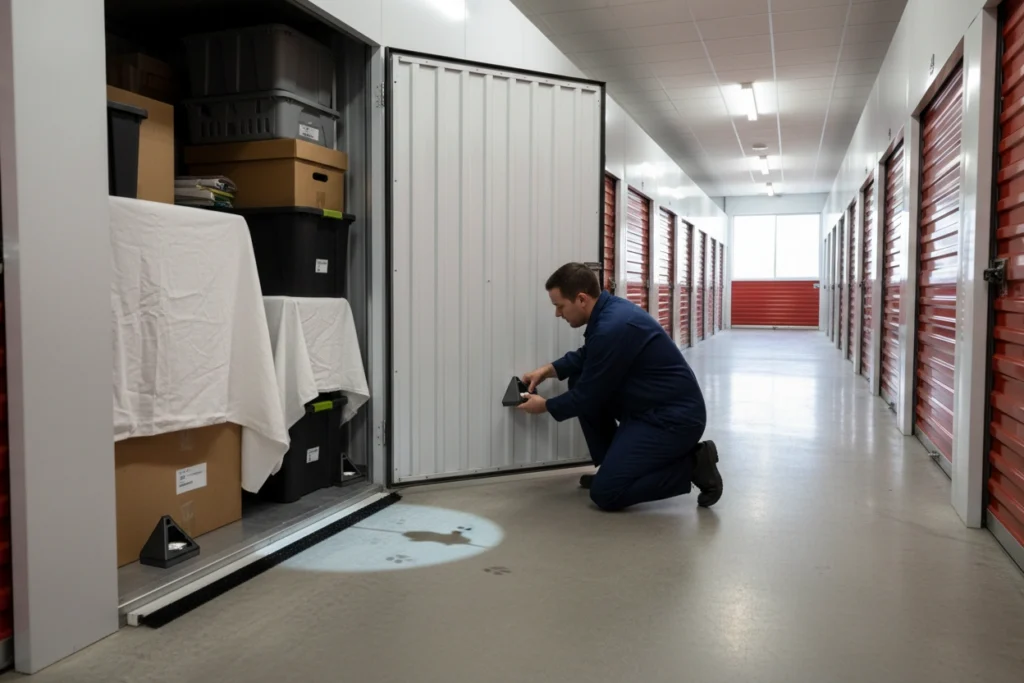
To protect your belongings in self-storage from rodents, you’ll need to address both facility design and unit-level precautions. Mice and rats squeeze through gaps as small as a quarter inch, targeting cluttered, climate-controlled units with infrequent activity. They’ll shred fabric, gnaw electronics, and contaminate porous materials with urine that’s nearly impossible to reverse. Combining sealed entry points, tamper-resistant bait stations, and proper packing habits greatly reduces your risk—and there’s much more to cover on each front.
Key Takeaways
-
Seal all structural gaps to ¼ inch or smaller, and install steel door sweeps to block common rodent entry points.
-
Rodents destroy furniture, documents, and fabrics through gnawing and urine contamination, often causing irreversible damage to stored belongings.
-
Use snap traps, tamper-resistant bait stations, and glue boards throughout the facility to control and monitor rodent activity.
-
Inspect storage units regularly for droppings, gnaw marks, grease smears, and ammonia odors indicating active rodent presence.
-
Report signs of infestation to management immediately, and seek professional pest control for widespread or recurring rodent activity.
Why Self-Storage Units Are a Magnet for Rodents

Self-storage facilities create near-ideal conditions for rodent harborage. Infrequent human activity, dense clutter, and minimal disturbance directly support rodent behavior patterns centered on nesting, feeding, and avoiding predators.
The storage environment compounds these conditions — cardboard boxes, fabric, insulation materials, and paper goods provide both nesting substrate and food sources. Rodents exploit structural gaps as small as a quarter inch to gain entry, then establish territories within units largely undisturbed for weeks or months.
Temperature regulation plays a role as well. Climate-controlled buildings maintain warmth during winter months, making them considerably more attractive than outdoor harborage.
You’ll also find that shared walls between units allow rodent populations to spread laterally across an entire facility once a single point of entry is compromised. Additionally, removing potential nesting sites is crucial in minimizing the risk of infestations in these spaces.
How Mice and Rats Damage Tenant Belongings
When mice and rats move into your storage unit, they immediately begin gnawing through boxes, furniture, documents, and other hard materials to wear down their continuously growing incisors.
They’ll shred fabric items like clothing, upholstery, and linens to construct nests, leaving these materials torn and unusable.
Perhaps most insidiously, rodents saturate your belongings with urine as they travel and nest, contaminating surfaces with pathogens that can’t always be cleaned away. Additionally, implementing natural deterrents can help reduce the likelihood of future infestations.
Gnawing Destroys Stored Items
Mice and rats gnaw constantly—not by choice, but by biological necessity. Their incisors grow continuously, forcing them to chew through materials to maintain manageable tooth length. The gnawing impact on stored belongings is significant and often irreversible.
Common items destroyed through active gnawing include:
-
Furniture – wooden frames, upholstered cushions, and structural joints are compromised quickly
-
Electronics – wiring insulation gets stripped, creating fire hazards and rendering devices nonfunctional
-
Documents and photographs – paper materials are shredded for nesting material
-
Clothing and textiles – fabrics are chewed into unusable fragments
Without effective prevention strategies, your facility becomes a high-risk environment for tenant losses.
Understanding exactly how rodents destroy property helps you prioritize the structural and procedural controls necessary to stop damage before it occurs.
Nesting Ruins Fabric Materials
Gnawing isn’t the only way rodents destroy what tenants store. Mice and rats actively shred fabric materials to construct nests, pulling fibers apart in systematic layers to build insulated breeding chambers.
They target specific fabric types with precision—wool, cotton, upholstered furniture, clothing, blankets, curtains, and mattress padding rank among their preferred nesting materials because these textiles retain warmth and compress easily.
Once rodents identify a viable fabric source, they’ll return repeatedly, stripping increasing amounts of material across multiple visits. A single nesting site can consume significant portions of stored garments or furniture upholstery.
You’ll typically find shredded remnants concentrated in corners, inside drawers, or tucked beneath stored items. The damage is rarely limited to one piece—rodents harvest nesting materials from multiple sources within the same unit.
Urine Contaminates Belongings
Rodent urine doesn’t just soil surfaces—it penetrates porous materials and binds permanently to fibers, making contaminated items effectively unrecoverable.
Beyond destruction, urine odors permeate enclosed storage units, spreading contamination to adjacent belongings. The health risks are serious, as dried urine becomes airborne when disturbed, potentially carrying pathogens like Hantavirus.
Contaminated materials include:
-
Upholstered furniture – urine saturates foam cores, making odor removal impossible without full replacement
-
Cardboard boxes – urine weakens structural integrity while wicking inward to stored contents
-
Clothing and linens – fibers absorb urine deeply, resisting conventional laundering
-
Paper documents and books – urine staining causes irreversible discoloration and material degradation
Once rodents establish urination patterns inside a unit, the cumulative damage escalates rapidly with each passing day.
Facility Design Features That Keep Rodents Out
Although pest control treatments address active infestations, facility design is your first and most effective line of defense against rodents. Preventive design and architectural barriers eliminate entry points before rodents ever reach tenant units.
Key design features to implement or verify include:
-
Foundation gaps sealed to ¼ inch or less, since mice compress their bodies through openings as small as a dime
-
Concrete perimeter aprons extending 12–18 inches outward to deter burrowing
-
Steel door sweeps on every unit with zero ground clearance
-
Corrugated metal roofing with sealed ridge caps to block roof rats
-
Recessed lighting and utility conduits caulked at entry points
-
Gravel borders replacing soil or mulch around the building perimeter
Retrofitting existing structures with these features greatly reduces rodent pressure facility-wide. Additionally, early identification of rodent signs can help prevent potential infestations before they escalate.
Rodent Control Methods That Work for Storage Sites
Even with strong structural defenses in place, rodents that breach the perimeter require targeted elimination methods suited to the unique layout of self-storage facilities.
Trapping techniques and baiting strategies must account for high foot traffic, tenant access schedules, and liability concerns.
Deploy control measures using this framework:
-
Snap traps: Position along unit corridors and perimeter walls where rodent runways are visible.
-
Tamper-resistant bait stations: Install at exterior entry points and loading dock areas to intercept rodents before they penetrate interior units.
-
Glue boards: Use inside mechanical rooms and utility spaces with restricted tenant access.
-
Monitoring stations: Place throughout the facility to detect activity patterns and guide treatment adjustments.
Rotate trap placements regularly. Rodents adapt quickly to static configurations, reducing capture rates over time. Additionally, maintaining cleanliness by storing food in airtight containers can significantly reduce attractants that lure rodents into the facility.
What Tenants Can Do to Protect Their Own Units
Before moving your belongings into a unit, inspect the space thoroughly for droppings, gnaw marks, grease trails, and entry points.
Pack items in hard-sided plastic bins with tight-fitting lids, keep food out entirely, and elevate stored goods off the floor to eliminate harborage opportunities.
If you spot evidence of rodent activity, report it to facility management immediately—early detection limits damage and prevents a localized problem from spreading to adjacent units. Additionally, be aware that rodent droppings can pose serious health risks, making it crucial to address any signs of infestation promptly.
Inspect Before Moving In
Taking a few minutes to inspect a self-storage unit before signing the lease or moving your belongings in can save you significant trouble down the line.
Tenant awareness at this stage is critical. Use these unit inspection tips to assess the space before committing:
-
Check corners, baseboards, and door seals for droppings, gnaw marks, or grease trails.
-
Look for gaps, cracks, or holes in walls, floors, and the door frame where rodents could enter.
-
Inspect the ceiling and any ventilation openings for signs of nesting material.
-
Smell for musty or ammonia-like odors, which often indicate active rodent presence.
If you notice any red flags, document them with photos, report them to management immediately, and request a different unit or remediation before moving anything in.
Pack and Store Wisely
Once you’ve vetted the unit itself, how you pack and store your belongings becomes the next line of defense against rodent damage. Your choice of packing materials matters greatly — avoid cardboard boxes, which rats and mice chew through and nest inside. Instead, use hard-sided plastic bins with tight-fitting lids. Rodents can’t gnaw through rigid polypropylene, making it the superior material for long-term storage.
Apply these storage techniques consistently: elevate bins on shelving units or pallets to eliminate ground-level harborage, maintain clear pathways between stacks for visual inspection, and never store food, birdseed, or pet supplies in your unit.
Remove fabric items from open bags and seal them in plastic bins. These measures remove the attractants and access points rodents depend on.
Report Signs Immediately
Even the best-prepared unit can attract rodents if neighboring spaces are poorly maintained, so your ability to recognize and report early warning signs is critical.
Prompt reporting to facility management enables faster intervention and limits cross-unit contamination. Don’t wait—tenant communication should happen the moment you observe any of the following:
-
Droppings along walls, corners, or on stored items
-
Gnaw marks on cardboard boxes, plastic bins, or electrical materials
-
Grease smears or rub marks along baseboards and entry points
-
Nesting material such as shredded paper, fabric, or insulation scraps
Document what you find with photos before notifying staff.
A timestamped record strengthens your report and helps pest control professionals pinpoint infestation zones with greater accuracy.
When to Call a Professional Rodent Control Company
While DIY traps and exclusion measures can manage minor rodent activity, a professional rodent control company becomes necessary when infestations exceed what basic methods can address.
If you’re finding active burrows, widespread droppings, gnawed structural components, or repeated trap failures, it’s time to schedule a professional assessment. Rodent behavior patterns—including nesting site selection, travel routes, and colony size—require trained interpretation to develop an effective control strategy.
Professionals deploy integrated pest management techniques, including targeted baiting systems, exclusion repairs, and population monitoring that go beyond consumer-grade solutions.
For self-storage facilities, where infestations can spread rapidly across multiple units, early professional intervention limits tenant property damage and liability exposure.
Don’t wait for visible rodent activity to escalate before contacting a licensed pest control company.
Frequently Asked Questions
Does Rodent Damage to Stored Belongings Typically Get Covered by Renters Insurance?
Renters insurance typically doesn’t cover rodent damage to your stored belongings. You’ll need to review your specific policy, as most insurers classify pest infestations as preventable maintenance issues, excluding them from standard coverage terms.
How Do Storage Facilities Legally Disclose Known Rodent Infestations to Tenants?
Storage facilities fulfill their legal obligations by issuing written tenant notifications, posting visible warnings at entry points, updating rental agreements, and verbally disclosing known infestations during lease signings or renewals—you’ll typically receive documented proof of disclosure.
Can Rodent Urine on Stored Items Create Health Hazards for People Later?
Yes, rodent urine creates serious health risks when you handle contaminated items. You’ll face contamination concerns from Hantavirus and leptospirosis exposure, which transmit through dried urine particles you can inhale or absorb through skin contact.
Are Climate-Controlled Storage Units Less Likely to Attract Rodents Than Standard Units?
Climate control doesn’t greatly deter rodents—they’ll exploit any entry point regardless of temperature regulation. You’ll still need active pest prevention measures, as rodents seek shelter and food sources rather than responding to controlled environmental conditions.
What Time of Year Do Rodent Infestations in Storage Facilities Peak Most Frequently?
You’ll see rodent infestations peak in fall and early winter, as dropping temperatures drive seasonal patterns of indoor migration. Cold weather and food scarcity are primary infestation triggers, pushing mice and rats aggressively into your storage facility.
Conclusion
Rodent control at your self-storage facility isn’t optional — it’s a operational necessity. By combining structural exclusion, targeted baiting programs, routine inspections, and tenant education, you’ll systematically eliminate entry points and harshly discourage infestations before they escalate. Don’t wait for tenant complaints or visible damage to prompt action. Implement a documented, layered control strategy now, and partner with a licensed Portland-area pest management professional to maintain consistent, measurable results across your entire facility.