
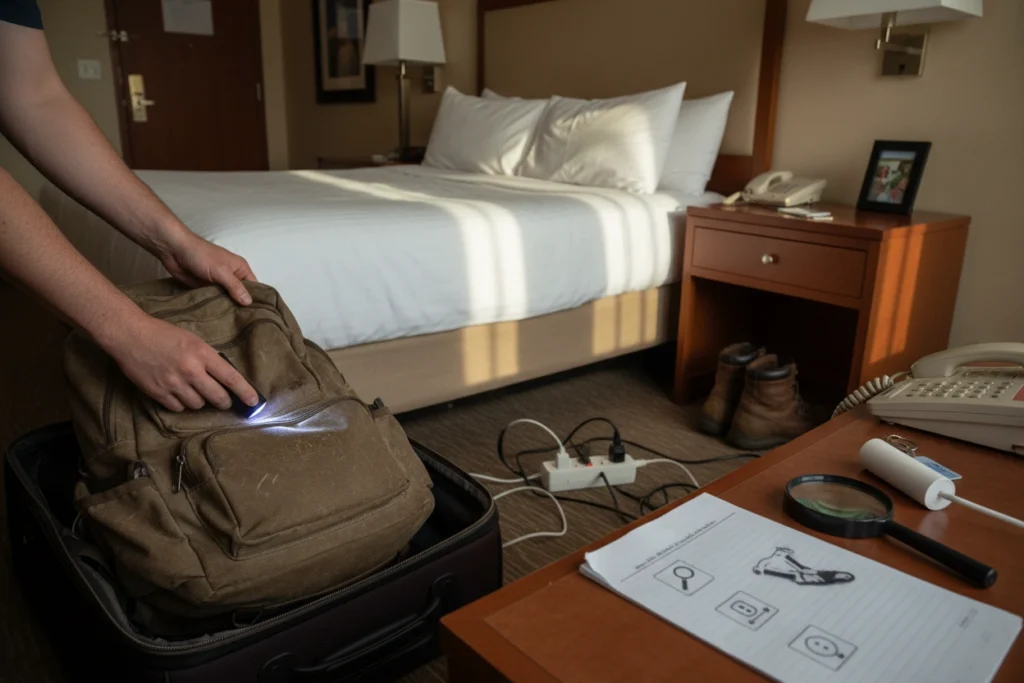
After a hotel stay, inspect your luggage before it enters your home — do it outside or in the garage. Use a flashlight to check every zipper, seam, and hidden pocket for tiny rust-colored stains, dark fecal spots, or shed exoskeletons resembling poppy seeds. Seal clothing in plastic bags and wash everything on high heat immediately. Even one pregnant bed bug can trigger a full infestation within weeks, so the details you catch now matter more than you’d expect.
Key Takeaways
-
Inspect all luggage seams, zippers, and hidden pockets using a flashlight before bringing bags inside your home.
-
Look for rust-colored stains, dark fecal spots, or shed exoskeletons resembling poppy seeds on fabric surfaces.
-
Unpack bags outside or in the garage, never in your bedroom, to avoid spreading potential hitchhikers.
-
Immediately wash all clothing on the hottest setting, followed by a high-heat dryer cycle for 30 minutes.
-
Isolate luggage in a sealed bag if infestation is suspected, and contact a pest control professional promptly.
How Bed Bugs Travel Home With You
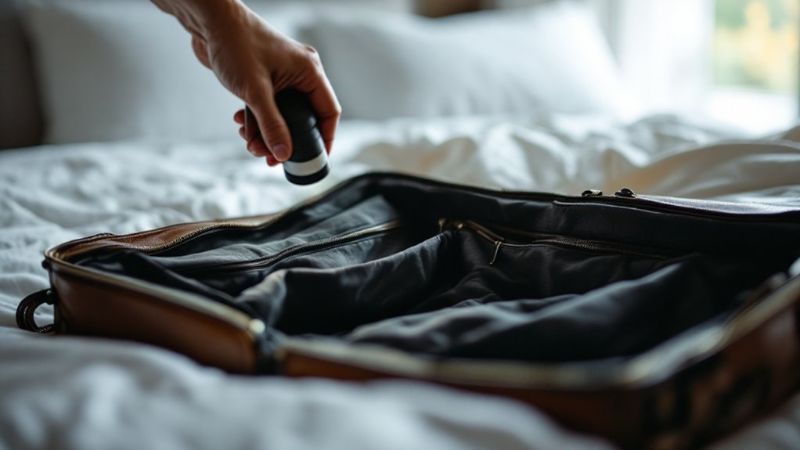
Bed bugs are expert hitchhikers, and a hotel stay is one of the most common ways they find their way into your home.
Understanding bed bug behavior helps explain why they’re so hard to detect. They hide in mattress seams, headboards, luggage racks, and upholstered furniture—waiting for a warm body to latch onto.
They don’t travel on you directly; instead, they crawl into your luggage, clothing, or personal items. By the time you unpack at home, you may have unknowingly transported an infestation. Bed bugs can inhabit couches, chairs, and carpets, making thorough inspections essential to prevent an outbreak.
Taking smart travel precautions before and after a hotel stay can prevent this. Even a single pregnant female can establish a full infestation within weeks, making early awareness and action critical to protecting your home.
Where to Inspect Your Luggage After a Hotel Stay
Once bed bugs hitch a ride in your luggage, your inspection needs to happen before you bring anything inside your home.
Choose a hard surface like a garage floor, porch, or driveway — never your bedroom or living room.
Open every zipper and examine all luggage compartments carefully, including interior pockets and hidden dividers.
Use a flashlight to check seams, corners, and folds where bed bugs prefer to hide.
Pay close attention to fabric materials, since bugs burrow into textured surfaces and blend in easily.
Remove your clothing and seal it directly into plastic bags for immediate washing on high heat.
Inspect your shoes, toiletry bags, and any soft-sided accessories with the same level of care before allowing anything to cross your threshold.
Signs of Bed Bugs You Might Have Missed
Even if your initial inspection seems clear, some bed bug signs are easy to overlook without knowing exactly what to look for.
Watch for tiny rust-colored stains on fabric, dark ink-like spots on seams or tags, or shed exoskeletons no bigger than a poppy seed.
Bites alone aren’t a reliable indicator, since reactions vary widely, but clusters of small, itchy welts appearing after your stay warrant a closer look at your luggage and clothing. Additionally, bed bugs can live several months without a blood meal, so it’s crucial to remain vigilant even after returning home.
Subtle Visual Warning Signs
While a live bed bug sighting is an obvious red flag, the signs you’re more likely to encounter are subtle and easy to overlook.
Start by examining the mattress seams, box spring edges, and headboard for tiny rust-colored stains — these are dried blood smears left behind after feeding. Look for dark ink-dot spotting, which is bed bug excrement. You might also spot translucent shed skins or tiny white eggs tucked into fabric folds and wooden joints.
Taking these travel precautions seriously means inspecting before you unpack, not after. Ignoring these details can turn a relaxing trip into a costly infestation at home.
Effective pest management starts with catching the problem early, and your eyes are your first line of defense.
Identifying Bites and Stains
Bed bug bites don’t always show up immediately — reactions can take days to appear, which makes it easy to dismiss them as mosquito bites or a skin reaction.
For accurate bite identification, look for small, red, itchy welts appearing in clusters or linear patterns, often on exposed skin like arms, neck, and shoulders.
Stain analysis is equally important when reviewing your own belongings after a stay. Check your pajamas and bed linens for small rust-colored or reddish-brown spots — these are dried blood smears left when a feeding bug gets crushed.
Tiny dark ink-like dots indicate fecal deposits. If you notice any of these signs on your clothing or luggage, act quickly — a prompt inspection can prevent bringing bed bugs into your home.
Wash and Heat-Treat Everything Before It Enters Your Home
Before anything from your hotel stay crosses the threshold of your home, wash and heat-treat it. Unpack your bags outside or in the garage — never in the bedroom.
Take laundry precautions seriously: place all clothing and fabric items directly into a sealed plastic bag, then transfer them straight into the washing machine. Wash everything on the hottest setting the fabric allows. Follow up with a full dryer cycle at high heat for at least 30 minutes.
Heat treatment is one of the most reliable ways to kill bed bugs at every life stage, including eggs. For items that can’t be washed, seal them in a bag and consider a portable heat chamber.
Don’t skip this step, even if you found no visible signs during your inspection.
What to Do If You Think You Brought Bed Bugs Home
If you suspect you’ve brought bed bugs home, isolate your luggage and belongings immediately in a sealed plastic bag or your garage to contain any potential spread.
Next, inspect your home thoroughly, focusing on mattress seams, bed frames, furniture joints, and baseboards for signs of activity.
If you find evidence of an infestation, call a professional pest control company right away, as bed bugs are notoriously difficult to eliminate without expert treatment. Additionally, understanding bed bug dynamics can help you take proactive measures to prevent future infestations.
Isolate Your Belongings
The moment you suspect you’ve brought bed bugs home, don’t carry your luggage inside and set it down anywhere.
Keep everything in your garage, on your porch, or in another contained space away from living areas. Bed bugs spread fast, and where you place your bags matters enormously.
Follow these luggage care steps immediately:
-
Bag everything: Seal clothing and soft items in plastic bags before handling them indoors.
-
Don’t unpack on beds or furniture: Use a hard, cleanable surface like a tile floor.
-
Wash and dry everything on high heat: This kills bed bugs at all life stages.
Good packing tips also help here — keeping items in organized bags makes it easier to identify and isolate potentially exposed belongings quickly.
Inspect Your Home Thoroughly
Once you’ve isolated your belongings, inspect your home carefully before assuming you’re in the clear. Start with your bedroom—pull back sheets, check mattress seams, and examine the box spring, headboard, and bed frame. Look for small reddish-brown bugs, tiny white eggs, or dark fecal spots on fabric and wood surfaces.
Expand your inspection to upholstered furniture, baseboards, electrical outlets, and any cracks in walls or flooring. Bed bugs hide in tight spaces throughout your home environment, so don’t limit your search to sleeping areas.
Catching an infestation early is critical for effective pest prevention. The longer bed bugs establish themselves, the harder they’re to eliminate.
If you spot any warning signs, contact a licensed pest control professional immediately.
Call a Professional
Spotting even one bed bug during your home inspection means it’s time to call a licensed pest control professional—don’t wait to see more.
Bed bugs reproduce quickly, and a small problem can escalate into a full infestation within weeks. A professional will conduct a thorough pest identification assessment, confirming whether what you’ve found is actually a bed bug and determining how far the infestation has spread.
From there, they’ll walk you through your treatment options, which may include heat treatment, chemical applications, or a combination of both.
DIY sprays rarely eliminate an infestation at its source. Acting fast limits the spread, reduces treatment costs, and gets your home back to normal sooner.
Don’t let hesitation turn a manageable situation into a major problem.
When to Call a Pest Control Professional
If you’ve unpacked your luggage and discovered live bed bugs, shed skins, or an active infestation spreading beyond a single item, it’s time to call a pest control professional immediately.
Don’t attempt to treat the problem yourself — store-bought sprays rarely eliminate a full infestation and can scatter bugs further into your home.
Contact a professional if you notice bites appearing in linear patterns, live insects in your mattress or furniture, or dark staining on your bedding.
Poor hotel hygiene practices make it easy to carry pests home without realizing it.
A licensed pest management specialist can inspect your home, confirm the infestation, and apply targeted treatments before bed bugs establish themselves deeper into your living space. Additionally, understanding the importance of accurate identification is crucial for effective treatment.
Frequently Asked Questions
Can Bed Bugs Survive in a Car After a Road Trip?
Yes, bed bugs can survive in your car. After a road trip, prioritize bed bug detection by thoroughly inspecting seats and luggage. Prompt car cleaning, including vacuuming all surfaces, helps eliminate any hitchhiking pests you’ve unknowingly transported.
Are Vacation Rentals More Likely to Have Bed Bugs Than Hotels?
Neither vacation rentals nor hotels are inherently safer—both carry bed bug risks. You should always prioritize bed bug prevention by conducting thorough vacation rental inspections, checking mattress seams, headboards, and furniture before you unpack anything.
Do Bed Bug Interceptor Traps Work Under Furniture Legs?
Yes, they do work! For strong interceptor effectiveness, you’ll want to place them correctly under each furniture leg. They’re a reliable bed bug prevention tool, but don’t let debris accumulate inside—that’ll compromise their ability to trap bugs.
Can Children or Pets Spread Bed Bugs Between Rooms?
Yes, children and pets can spread bed bugs between rooms. They’ll carry hitchhiking bugs on clothing, fur, or belongings. For bed bug prevention and child safety, practice pet hygiene, inspect everyone after travel, and apply smart travel tips consistently.
Does Travel Insurance Ever Cover Bed Bug Infestations?
Some travel insurance policies do cover bed bug-related expenses, but you’ll want to read the fine print carefully. For bed bug prevention and travel safety, document any infestation evidence immediately with photos before filing your claim.
Conclusion
Returning home from a trip doesn’t mean the job is done. You’ve got to stay vigilant by inspecting your luggage, washing your clothes immediately, and acting fast if something seems off. Bed bugs don’t give you much time before they settle in. The sooner you check, the better your chances of stopping an infestation before it starts. When in doubt, don’t hesitate — call a Portland pest control professional right away.