
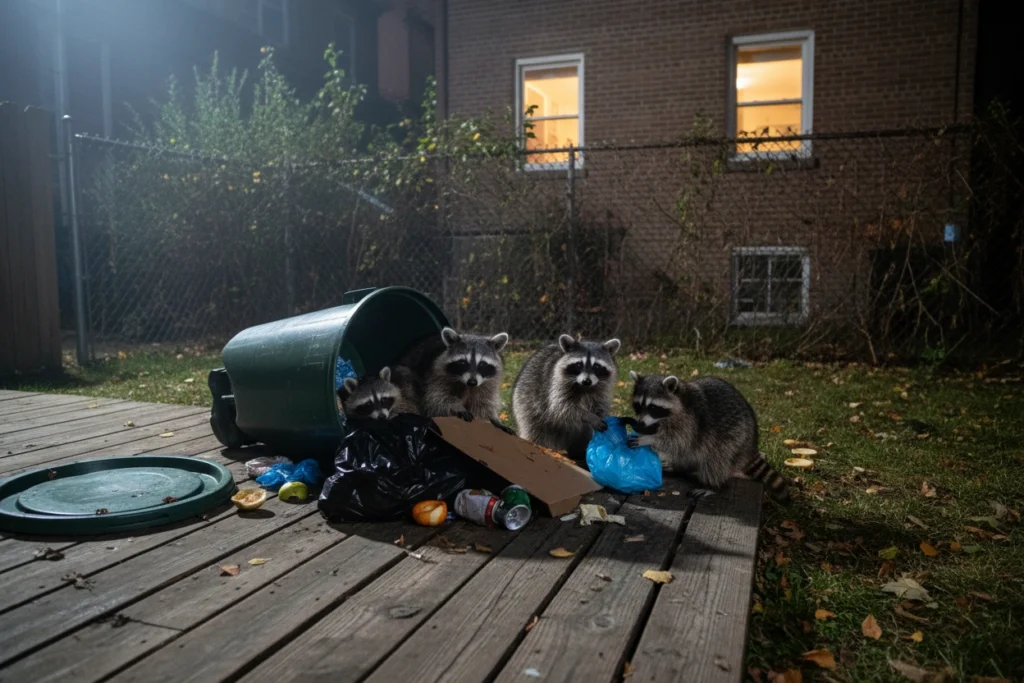
To stop raccoons from raiding your trash, you’ll need to target both the cans and your yard conditions simultaneously. Secure lids with bungee cords, carabiner locks, or weighted cinder blocks. Apply scent deterrents like cayenne pepper or ammonia around bins, double-bag food scraps, and store cans in your garage overnight. Eliminate secondary attractants like pet food dishes and bird feeders. Consistent nightly habits are what separate a temporary fix from a permanent solution—and there’s much more to cover.
Key Takeaways
-
Secure trash can lids with bungee cords, carabiner locks, or padlocks to prevent raccoons from opening them.
-
Apply scent repellents like cayenne pepper or ammonia around bins to overwhelm raccoons’ sensitive sense of smell.
-
Store trash bins in a garage overnight and only place them outside on collection morning.
-
Install motion-activated lights or sprinklers near trash areas to startle and discourage raccoons.
-
Eliminate additional food sources like outdoor pet food, bird feeders, and accessible compost piles nearby.
Why Raccoons Keep Targeting Your Trash Cans
Raccoons are opportunistic omnivores driven by instinct to seek out the most accessible, energy-rich food sources available — and your trash can fits that profile perfectly.
Their raccoon behavior is shaped by olfactory sensitivity far exceeding a human’s, allowing them to detect food odors through sealed lids. Once they’ve successfully raided a bin, they’ll return repeatedly — a conditioned trash habit reinforced by reward.
They’re also remarkably dexterous, capable of manipulating simple latches and tipping heavy containers. Urban environments amplify this problem by concentrating food waste in predictable locations.
Raccoons communicate resource locations through scent marking, meaning a single successful raid can attract others. Understanding these behavioral drivers is essential before implementing any deterrent strategy.
Yard Conditions That Make Raccoon Trash Problems Worse
Your yard’s layout can greatly amplify raccoon activity around your trash cans, particularly if you have bird feeders, compost piles, or fruit trees nearby that provide additional foraging opportunities.
Poor exterior lighting creates ideal nighttime cover, allowing raccoons to raid your bins with minimal risk of detection or deterrence.
Dense shrubs, overgrown hedges, and heavy ground cover give raccoons protected travel corridors and safe hiding spots within close proximity to your trash cans.
Nearby Food Sources
Even if you’ve secured your trash cans, other food sources in your yard can continue drawing raccoons onto your property. Raccoons thrive in urban habitats precisely because residential areas offer abundant, easily accessible nutrition beyond garbage.
Bird feeders, unsecured compost bins, fallen fruit from trees, and outdoor pet food dishes all function as supplemental attractants. You’ll need to eliminate these secondary food sources systematically to reduce raccoon activity.
Bring pet food indoors at night, harvest ripe fruit promptly, and use wildlife-resistant compost containers with locking lids. Suspend bird feeders on baffled poles that prevent climbing.
Addressing these multiple food sources simultaneously is critical — eliminating just one attraction while leaving others intact will keep raccoons returning to your yard consistently.
Poor Lighting Conditions
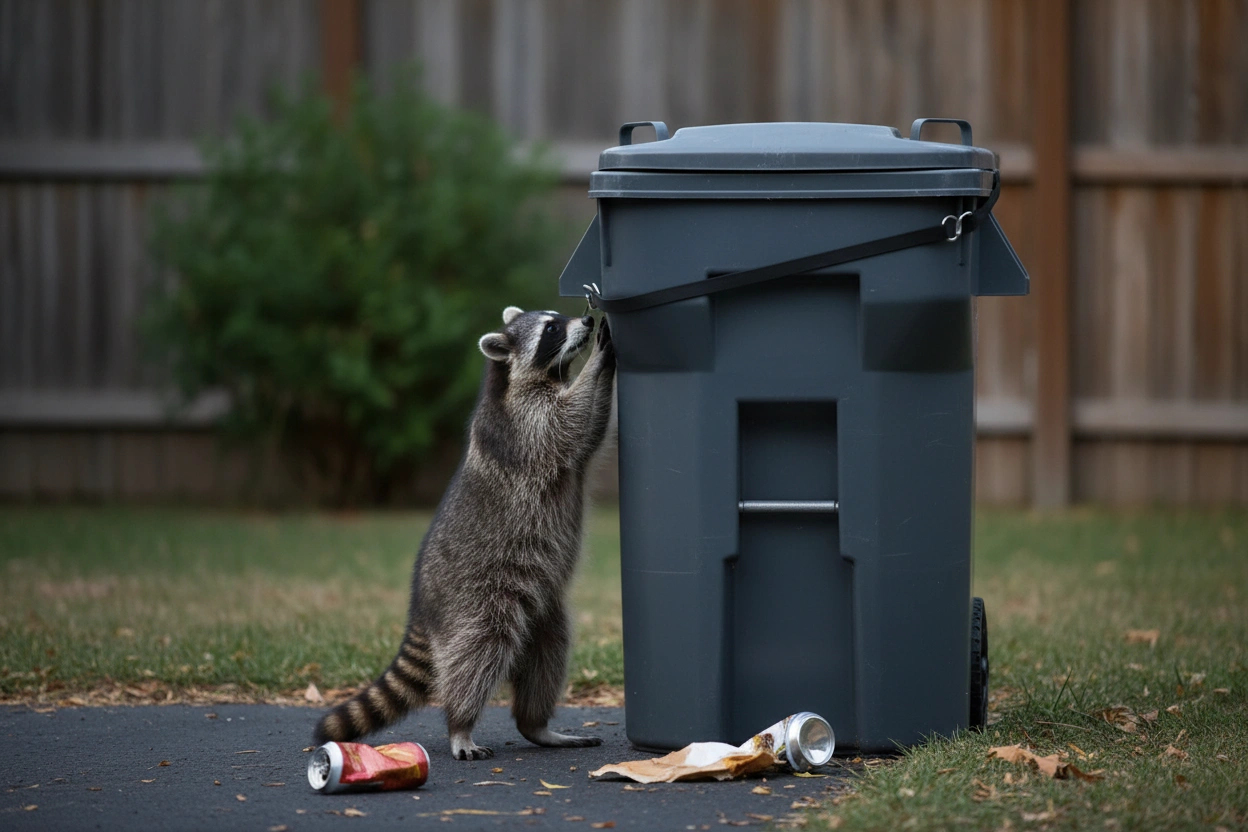
Poor lighting conditions around your trash storage areas give raccoons a considerable tactical advantage — they’re naturally nocturnal animals that feel most confident operating in darkness.
Poor visibility in your yard during peak nighttime activity hours (typically 2–5 AM) effectively eliminates your ability to detect intrusions early. Raccoons exploit shadowed zones near fences, shrubs, and structures to approach trash containers undetected. You’ll rarely notice them until damage is already done.
Installing motion-activated lighting directly addresses this vulnerability. Position lights to eliminate blind spots within a 10-foot radius of your trash storage area.
LED flood lights with motion sensors activate instantly, startling raccoons mid-approach. Consistent lighting coverage removes the concealment raccoons depend on, considerably reducing their confidence and frequency of returning to your property.
Dense Vegetation Cover
Lighting eliminates one layer of raccoon cover, but dense vegetation throughout your yard creates another problem entirely.
Overgrown shrubs, thick ground cover, and tangled brush form a dense habitat that directly supports raccoon behavior — giving them concealed travel routes straight to your trash.
Trim and manage these four vegetation problem areas:
-
Overgrown shrubs bordering trash storage zones
-
Dense ground cover along fence lines and property edges
-
Low-hanging tree branches that create shadowed corridors
-
Ivy or climbing vines covering walls near trash containers
Each eliminated shelter point forces raccoons into exposed, open spaces they instinctively avoid.
You’re not just tidying your yard — you’re systematically dismantling the concealment infrastructure that makes nighttime trash raids feel safe to them.
How to Choose a Raccoon-Proof Trash Can
Verify the can’s weight rating too. Raccoons will tip lighter containers sideways to shake contents loose.
A weighted base or anchor compatibility adds another critical layer of protection.
The Best Ways to Raccoon-Proof Your Trash Can Lids
Even a high-quality trash can becomes vulnerable if its lid isn’t properly secured. Raccoons exploit weak lid types and inadequate locking mechanisms with surprising dexterity.
Reinforce your lid using these proven methods:
-
Bungee cords – Thread two cords through the handles and across the lid to create cross-tension resistance.
-
Carabiner locks – Clip a carabiner through the lid handle and can handle to prevent lifting.
-
Padlocks or cable locks – Thread a cable lock through both handles for a rigid, tamper-resistant barrier.
-
Weighted lid blocks – Place a cinder block or heavy weight directly on the lid as a simple deterrent.
Combine at least two methods for maximum effectiveness, especially if raccoons have already learned your current setup.
Scents and Storage Habits That Make Trash Less Inviting
Beyond securing your lids, you can make your trash far less appealing to raccoons by targeting two key factors: scent and accessibility timing.
Apply scent repellents like ammonia-soaked rags, peppermint oil, or cayenne pepper around your bin’s perimeter — raccoons rely heavily on smell to locate food sources, so disrupting those olfactory cues greatly reduces their interest. Reapply after rain for consistent effectiveness.
Trash organization also matters notably. Double-bag food scraps, particularly meat, fish, and dairy, to contain odors. Rinse food containers before discarding them.
Don’t put trash out the night before pickup; instead, store bins in a garage or shed until morning collection. Eliminating overnight exposure removes the primary window raccoons exploit.
Combining scent deterrents with disciplined storage habits creates compounding barriers that most raccoons won’t persistently challenge.
Natural Raccoon Deterrents That Actually Work
While scent management and timing reduce your trash’s attractiveness, pairing those habits with natural deterrents adds another active layer of defense.
Understanding raccoon behavior helps you select natural repellents that genuinely disrupt their routines rather than temporarily inconvenience them.
Deploy these field-tested deterrents:
-
Cayenne pepper — Sprinkle around bin bases; capsaicin irritates raccoons’ nasal passages and discourages return visits.
-
Predator urine — Coyote or fox urine granules trigger flight instincts rooted in raccoon behavior.
-
Ammonia-soaked rags — Place near lids to simulate predator marking; refresh weekly.
-
Motion-activated sprinklers — Deliver a startling water burst without harming animals.
Rotate your natural repellents periodically. Raccoons adapt quickly, so varying deterrents prevents habituation and maintains long-term effectiveness.
Simple Weekly Habits That Keep Raccoons Away for Good
Establishing a consistent routine is your most effective defense against raccoon intrusion. Each night before bed, verify that every bin lid is locked or weighted, since raccoons exploit any lapse in security.
Reinforce this habit weekly by applying a perimeter spray of ammonia, capsaicin, or predator urine around your trash area, as raccoons rely heavily on scent when scouting food sources.
Secure Bins Every Night
Making trash security a nightly routine is one of the most effective long-term strategies for keeping raccoons out of your bins. Consistent nightly habits eliminate opportunities for raccoons to establish feeding patterns near your property.
Follow these four steps every night:
-
Inspect bin materials for cracks or damage that compromise structural integrity.
-
Engage all locking mechanisms fully — raccoons can exploit partially latched closures.
-
Position bins against a wall or fence to reduce tip-over vulnerability.
-
Confirm lids create a flush, airtight seal before leaving them unattended.
Skipping even one night resets your progress, as raccoons quickly identify reliable food sources. Treat this routine like locking your doors — non-negotiable and consistent for maximum effectiveness.
Use Deterrent Sprays Weekly
Deterrent sprays work by overwhelming a raccoon’s sensitive olfactory system, making treated areas inhospitable without causing harm.
You’ll want to apply commercial or homemade deterrents every seven days, since rainfall and UV exposure degrade active compounds quickly. Effective homemade deterrents include diluted cayenne pepper solutions, white vinegar concentrates, and peppermint oil mixtures. Apply these directly onto bin lids, surrounding pavement, and fence lines adjacent to your trash storage area.
Raccoons rely heavily on scent markers to identify reliable food sources. By disrupting those scent markers weekly, you’re fundamentally erasing the chemical memory that draws them back repeatedly.
Reapply after heavy rain regardless of your scheduled interval. Rotate between two or three formulations periodically, preventing raccoons from developing behavioral tolerance to any single scent compound.
When to Call a Wildlife Control Professional
While most raccoon problems can be resolved with the preventive measures outlined above, some situations warrant professional intervention. Recognizing the call criteria guarantees you act decisively when DIY methods fail.
Evaluate your professional options when you encounter:
-
A raccoon displaying disorientation, aggression, or daytime activity—potential rabies indicators.
-
Repeated entry into your attic, crawlspace, or wall cavities.
-
A mother raccoon with visible offspring establishing a den on your property.
-
Trap-resistant raccoons that consistently defeat your containment measures.
Licensed wildlife control professionals offer humane trapping, exclusion installation, and legal relocation services.
Contact your state’s wildlife agency to verify a contractor’s licensing credentials before hiring. Early professional intervention prevents structural damage and reduces disease transmission risks considerably.
Frequently Asked Questions
Can Raccoons Carry Diseases That Spread to Humans Through Contaminated Trash?
Yes, raccoons can transmit diseases to you through trash contamination. They carry rabies, leptospirosis, and raccoon roundworm, enabling disease transmission via contact with contaminated waste, feces, or surfaces. Always wear gloves when handling affected trash.
Are Raccoons Protected by Law, and Can I Legally Trap Them Myself?
Raccoon laws vary by state, so you’ll need to check local trapping regulations before acting. Many jurisdictions protect raccoons, requiring permits for relocation. You should contact your local wildlife agency to confirm what’s legally permissible in your area.
How Many Raccoons Typically Live Together in a Single Urban Territory?
In urban wildlife settings, you’ll typically find 4–5 raccoons sharing a single territory, though raccoon behavior varies. You’re likely dealing with a small family group, usually a mother and her offspring from the current season.
Do Raccoons Ever Return After Being Relocated to a Different Area?
Yes, raccoons often return after relocation. Their strong homing instinct drives raccoon behavior, undermining relocation success. You’ll find they can travel miles back. Relocating them far exceeds typical ranges to improve outcomes.
What Time of Year Are Raccoons Most Actively Raiding Neighborhood Trash Cans?
You’ll notice raccoon behavior peaks during late spring and summer. These seasonal patterns align with their breeding season and juvenile foraging, when food demand spikes sharply, driving raccoons to raid neighborhood trash cans most aggressively.
Conclusion
Raccoons are persistent, but they’re not unstoppable. By securing your bins with locking mechanisms, eliminating attractants, and applying proven deterrents consistently, you’ll greatly reduce unwanted visits. Don’t wait until the problem escalates—implement these strategies now. If raccoons continue breaching your defenses despite your best efforts, you’re dealing with a habituation issue requiring professional wildlife intervention. Act systematically, stay consistent, and you’ll reclaim control of your trash area permanently.