
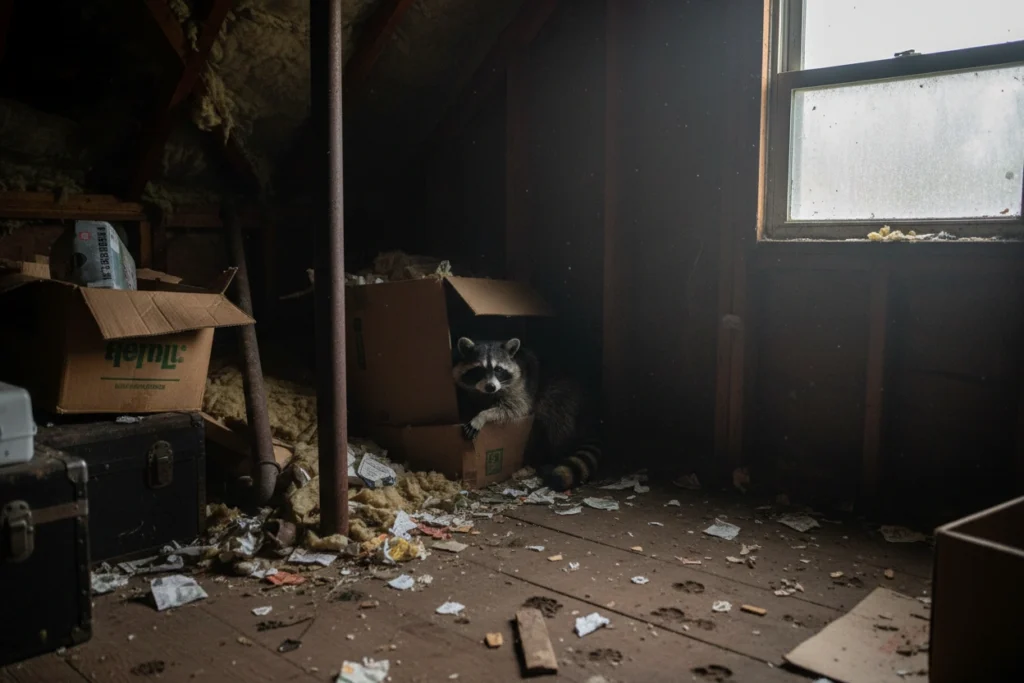
Have you ever wondered what might be lurking in your attic? This question isn’t merely hypothetical; it can be a genuine concern for homeowners. Raccoons, with their cleverness and adaptability, often seek refuge in attics, especially if they find an entry point. This article explores the duration raccoons can hide in your attic without detection, along with their behavior and signs of infestation.
The Mysterious Life of Raccoons in Your Attic
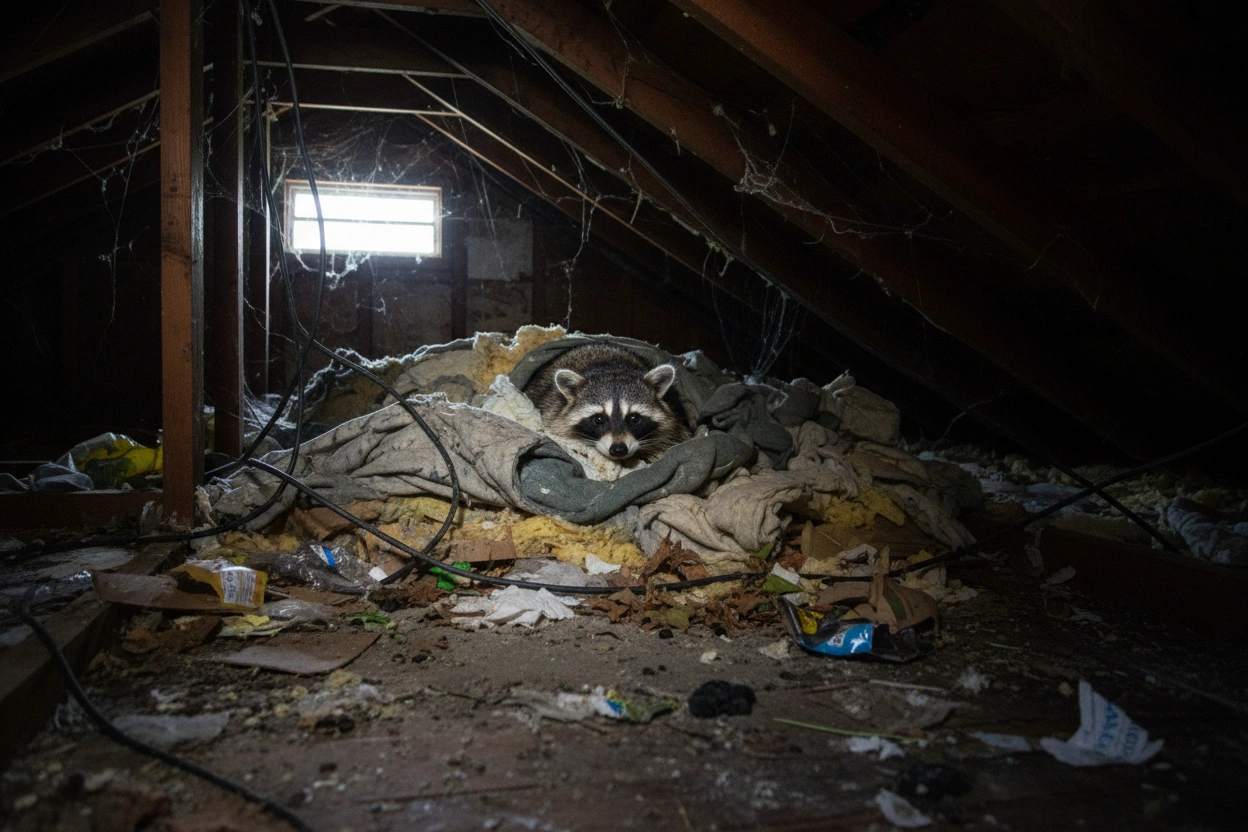
Raccoons are nocturnal creatures, primarily active during the night. Their behavior is defined by their scavenging instincts and intelligence, allowing them to navigate human environments with ease. In an attic, they can remain hidden for extended periods, sometimes weeks or even months, without being detected. Their ability to stay quiet and out of sight makes it challenging for homeowners to realize they have a raccoon problem until it escalates.
Attics often provide raccoons with a warm and safe environment, making them ideal for nesting. They typically enter these spaces in search of food, warmth, or shelter, often exploiting small openings or damaged roofs. Once inside, they may stay undisturbed, especially if the homeowners are unaware of their presence. Understanding raccoon behavior is crucial in addressing potential infestations early and effectively.
Identifying Signs of a Hidden Raccoon
To prevent a raccoon infestation, it’s essential to recognize the signs indicating their presence in your attic. Homeowners should be vigilant for specific indicators that these nocturnal animals might be hiding overhead.
Common signs include droppings, which can often be found in corners or near entry points. Raccoon droppings are typically dark and chunky, resembling those of a dog but often containing undigested food remnants. Additionally, scratches or gnaw marks on beams or insulation can signal their activities.
Unusual noises, particularly at night, can also indicate a raccoon presence. Sounds such as scurrying, scratching, or even vocalizations like chattering can be telltale signs that these animals are active in your attic. Being aware of these signs can help homeowners take timely action to mitigate the issue before it worsens.
Health Risks Associated With Raccoons
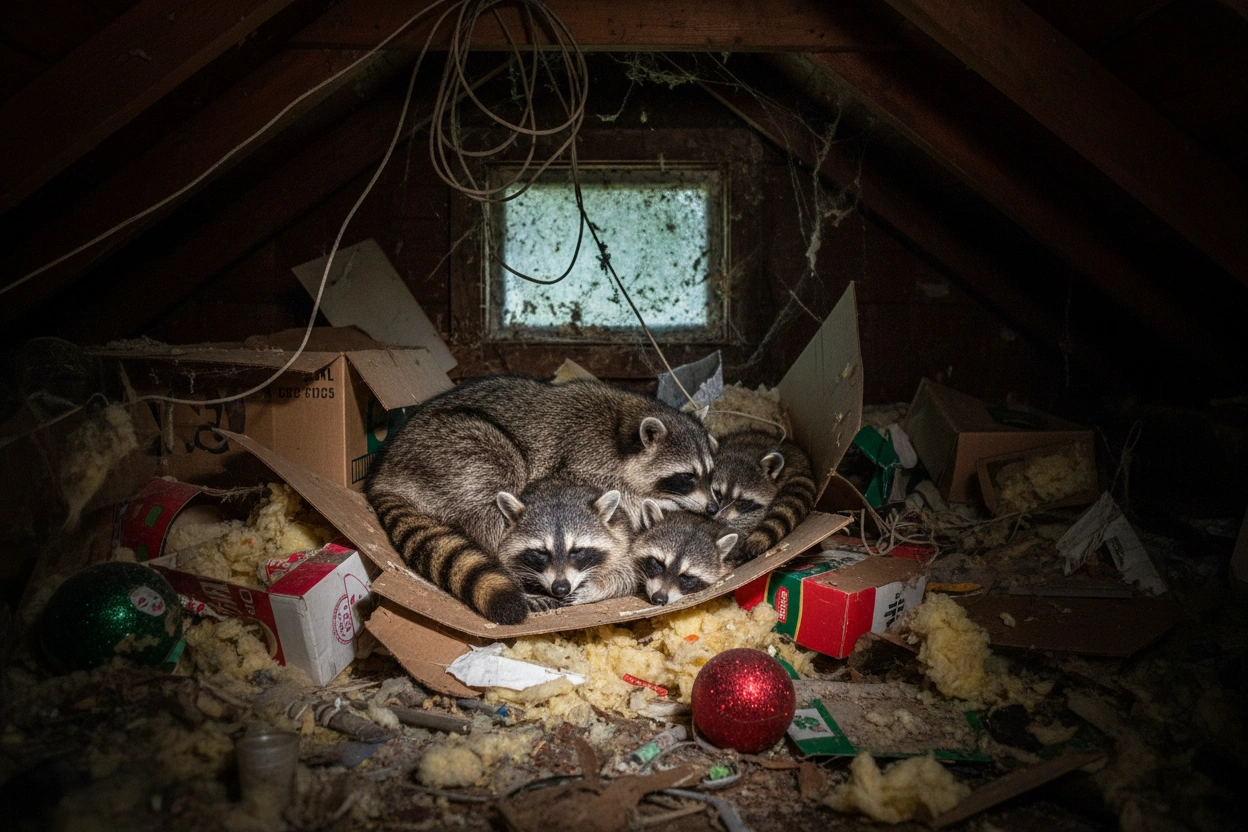
Raccoons are not just a nuisance; they can also pose significant health risks to humans and pets. These animals can carry various diseases, including rabies, leptospirosis, and raccoon roundworm, which can be transmitted through contact with feces, urine, or saliva. Understanding these health risks is essential for safety, especially for families with children or pets.
Rabies, in particular, is a viral disease that can be fatal if not treated promptly. Raccoons are known carriers of this virus, and any bite or scratch from an infected animal can lead to serious health consequences. Additionally, raccoon feces can harbor raccoon roundworm eggs, which are dangerous if ingested, potentially leading to severe neurological issues.
Homeowners should be cautious and proactive when dealing with a raccoon infestation. Seeking professional assistance for wildlife removal can help mitigate these health risks effectively.
Effective Wildlife Removal Tips for Homeowners
Implementing effective attic animal control measures is crucial in deterring raccoons from invading your space. Homeowners should start by securing potential entry points around their homes. This includes checking for gaps in roofs, vents, or siding where raccoons can gain access. Installing raccoon-proof barriers, such as heavy-duty mesh or metal flashing, can also help prevent them from entering.
If a raccoon infestation is suspected, professional wildlife removal services are often the safest and most efficient option. Trained experts can assess the situation, safely remove the animals, and provide guidance on preventing future infestations. This approach ensures that the removal process is conducted humanely and in compliance with local wildlife regulations.
Additionally, homeowners can consider using deterrents such as motion-activated lights or noise devices to discourage raccoons from returning. Regular inspections of the attic and surrounding areas can also help catch signs of infestation early.
Managing and Maintaining Your Attic Space
Proper attic wildlife management is key to preventing infestations and ensuring a safe living environment. Homeowners should regularly inspect their attics for signs of damage or potential entry points. This includes checking insulation, beams, and ductwork for signs of wear or animal activity.
Understanding nocturnal animal habits can inform your approach to attic maintenance. Raccoons are most active at night, so being aware of their behavior can help you identify signs of their presence more effectively. Implementing regular maintenance routines, such as cleaning and sealing gaps, can significantly reduce the likelihood of raccoons taking up residence in your attic.
Additionally, homeowners should be mindful of food sources that may attract raccoons. Securing trash cans, removing pet food from outdoor areas, and closing compost bins can help minimize the allure of your property to these opportunistic feeders.
Raccoons Can Stay Hidden Longer Than You Think
Raccoons are quiet, adaptable, and often go unnoticed while living in attics. They can remain hidden for weeks or even months, especially if activity happens at night. Subtle signs like thumping sounds, disturbed insulation, droppings, or entry damage near the roofline can point to their presence. Left unaddressed, they can tear insulation, damage wiring, and create health risks inside your home.
If you suspect something moving in your attic or want a professional inspection to rule it out, Pest Patrol can assess the space and recommend a safe, effective removal plan. Contact Pest Patrol for a free quote and take the next step toward protecting your home from hidden wildlife activity.