
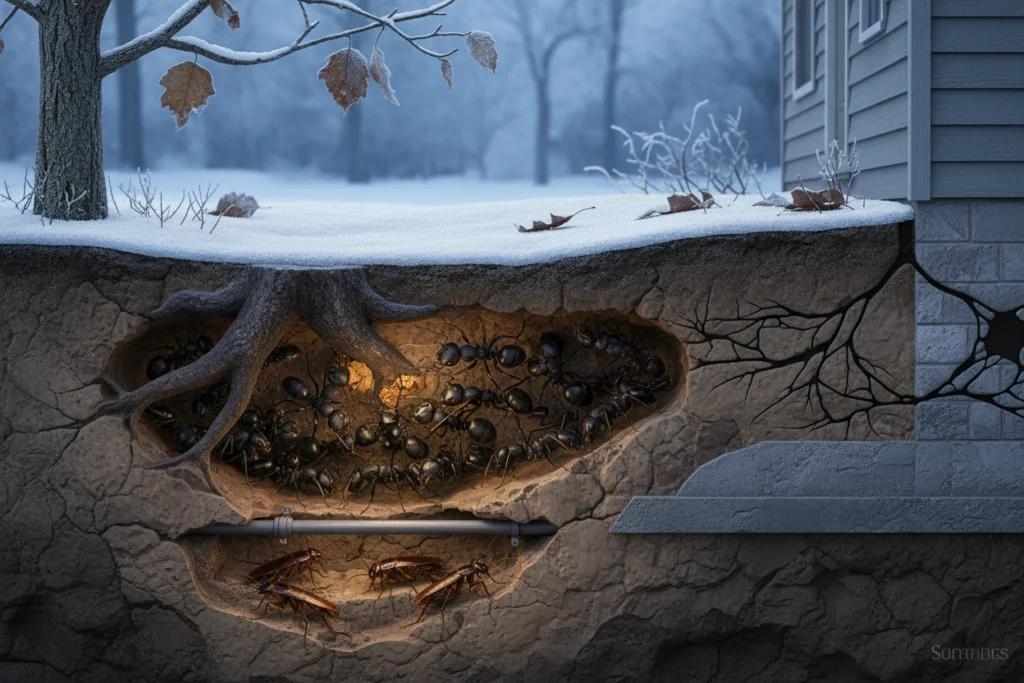
As temperatures drop and winter sets in, many homeowners wonder where common pests like ants and roaches go. These creatures, often associated with warmth and activity, exhibit fascinating behaviors during the colder months. Understanding their winter habits is crucial for effective pest management and prevention strategies.
This article explores the winter behavior of ants and roaches, their preferred hiding spots, and how you can prevent infestations during the colder months. By arming yourself with knowledge, you can keep your home pest-free and comfortable throughout the winter season.
The Seasonal Habits of Ants and Roaches
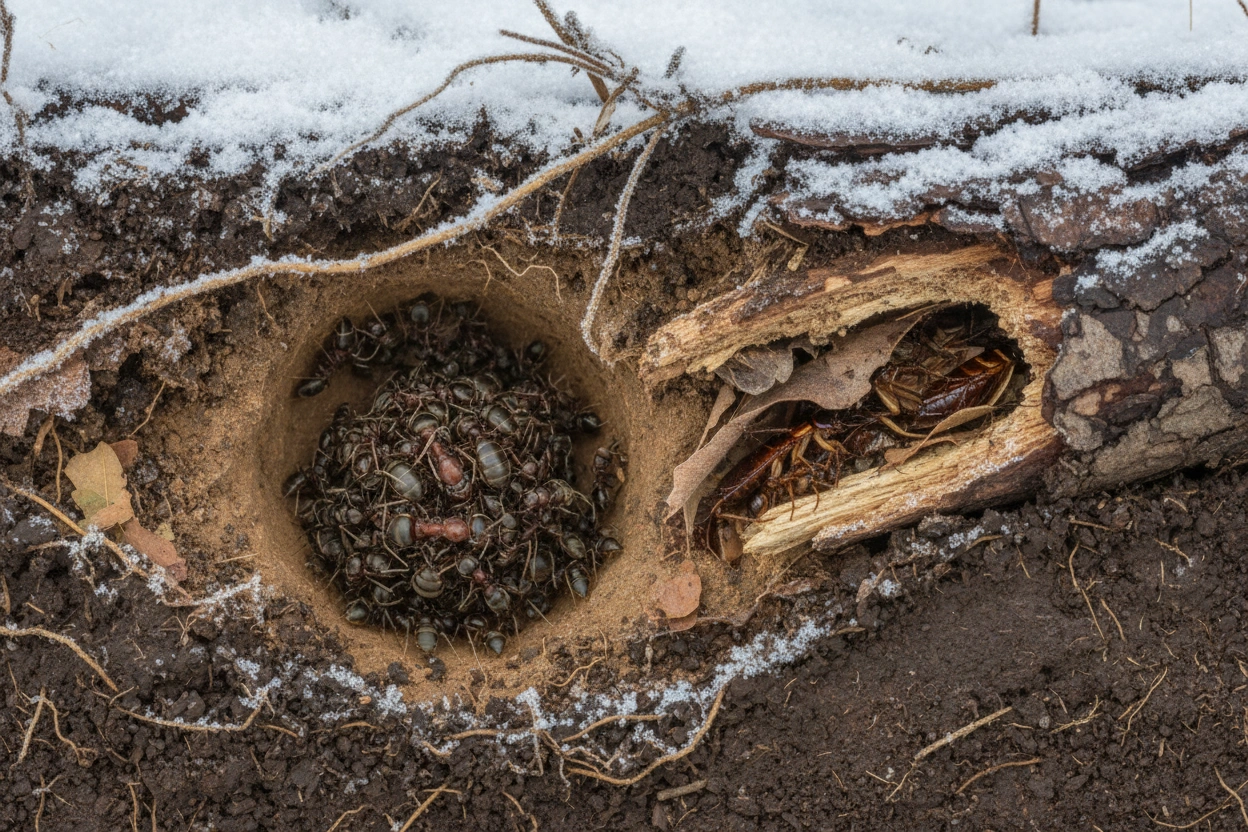
Ants and roaches exhibit distinct behaviors in winter, adapting to the cold in ways that allow them to survive until warmer temperatures return.
Ant Behavior in Winter
During the winter months, most ant species go into a state of dormancy, retreating into their nests where they can maintain a stable temperature. Ants have a remarkable ability to sense changes in temperature and will move deeper into the ground or within the walls of structures to escape the cold. Some species, like the carpenter ant, can even survive in temperatures that drop below freezing by entering a hibernation-like state.
In addition to seeking warmth, ants significantly reduce their activity levels. They rely on stored food supplies within their nests, minimizing the need to forage for sustenance. This behavior is critical for their survival during winter, as food sources become scarce.
Cockroach Behavior in Cold Weather
Conversely, cockroaches exhibit a different strategy when dealing with winter temperatures. While they do not hibernate, they become less active and seek shelter in warmer environments, often infiltrating homes. Common species, such as the German cockroach, are particularly notorious for finding refuge in kitchens and bathrooms, where heat and moisture are prevalent.
Roaches are also adept at finding small cracks and crevices to hide in, making them difficult to detect during the winter months. They can survive in colder temperatures than ants but prefer to stay in environments where the temperature remains consistently warm. This adaptability allows them to thrive in human habitats, making pest control a priority for homeowners.
Common Winter Pests and Their Behavior
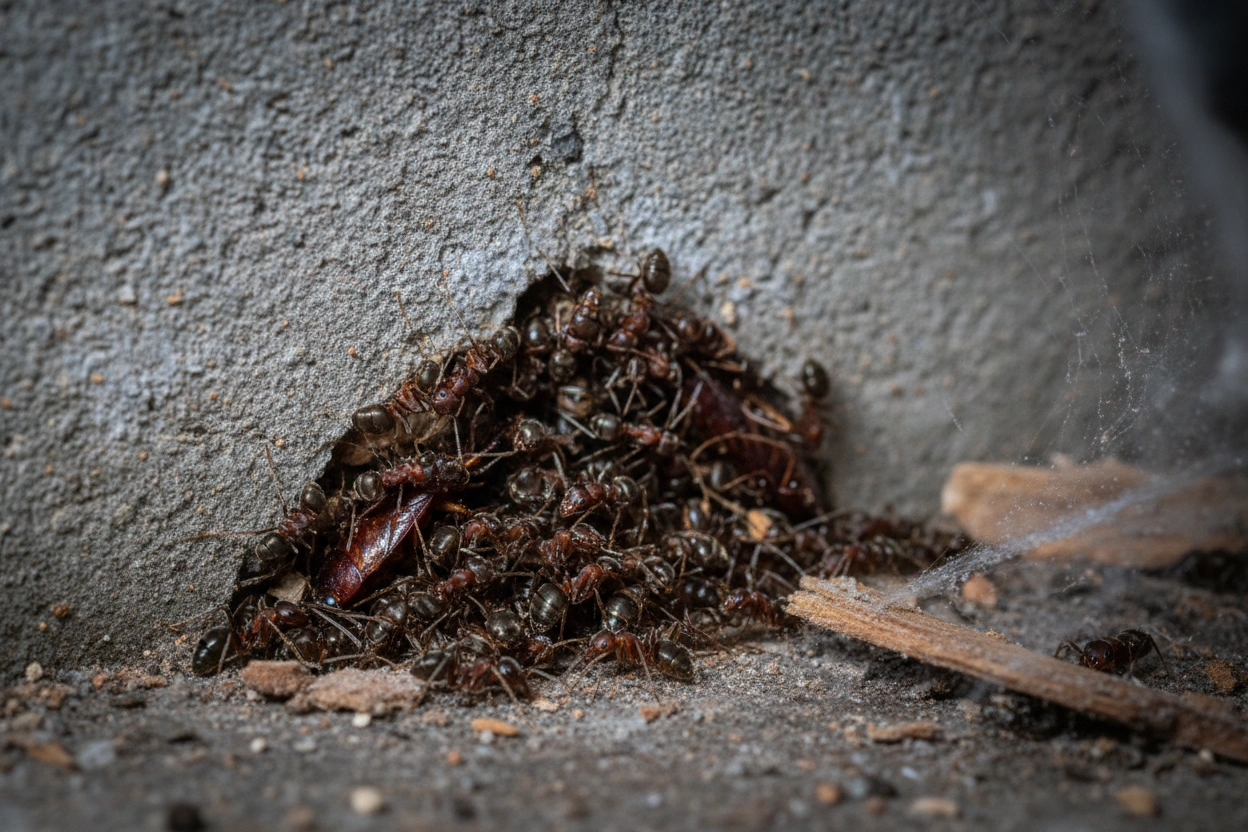
While ants and roaches are prevalent winter pests, they are not alone. Understanding the full spectrum of common winter pests can help homeowners prepare and prevent infestations.
Overview of Other Winter Pests
In addition to ants and roaches, several other pests can invade homes during the winter months. These include:
-
Rodents: Mice and rats seek warmth and food, often entering homes through small openings.
-
Spiders: Many species find shelter indoors to escape the cold.
-
Termites: Some species remain active throughout the winter, especially in warmer climates.
Each of these pests has unique behaviors that enable them to endure the winter. For instance, rodents tend to establish nests within walls or attics, while spiders may hide in dark corners or behind furniture. Understanding these behaviors helps homeowners identify potential risks.
Comparison with Ants and Roaches
When comparing ants and roaches with other winter pests, it becomes clear that each species has adapted its survival strategies. Ants tend to go dormant, while cockroaches remain active but seek warmth indoors. In contrast, rodents actively forage for food and create nests, making them a significant concern for homeowners.
Recognizing these behavioral patterns is essential for effective pest management. By knowing which pests are likely to invade and how they behave, you can take proactive steps to safeguard your home.
Effective Winter Pest Control Strategies
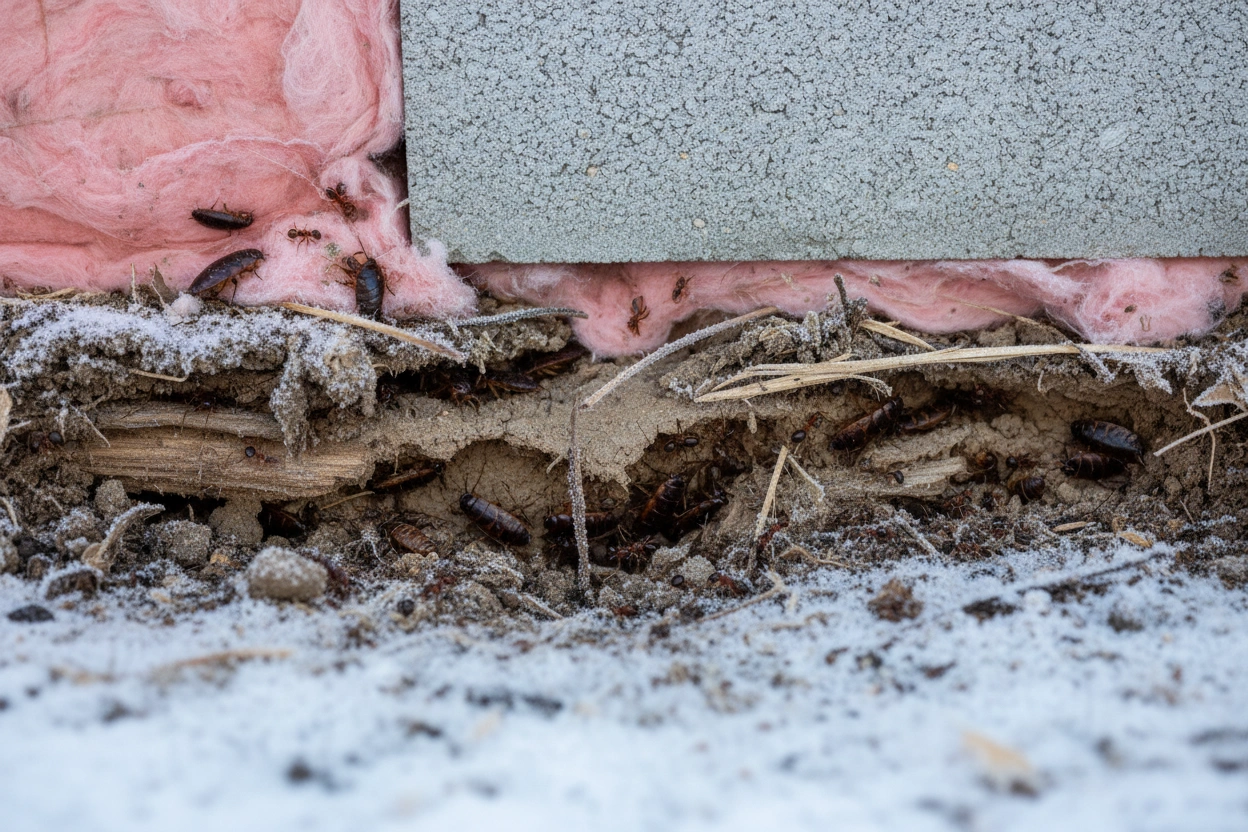
Preventing infestations of ants, roaches, and other winter pests involves a combination of proactive measures and timely interventions.
Preventative Measures to Keep Your Home Pest-Free
-
Seal Entry Points: Inspect your home for gaps and cracks around doors, windows, and the foundation. Use caulk or weather stripping to seal these entry points and prevent pests from entering.
-
Maintain Cleanliness: Regularly clean your home, especially kitchens and dining areas. Remove food debris and store food in airtight containers to eliminate attractants for pests.
-
Reduce Clutter: Pests thrive in cluttered environments. Keep storage areas organized and limit the number of items stored in garages and attics, making it less inviting for pests.
-
Monitor Humidity Levels: High humidity can attract pests like cockroaches. Use dehumidifiers in basements and bathrooms to maintain optimal humidity levels.
When to Seek Professional Pest Management Services
If you notice signs of an infestation or find it challenging to manage pest activity on your own, it may be time to seek professional assistance. Look for the following indicators:
-
Frequent sightings of pests, especially during the winter months.
-
Evidence of nests or droppings in your home.
-
An increase in pest activity despite taking preventative measures.
Professional pest management services can provide targeted treatments and long-term solutions to keep your home pest-free during winter.
Keep Winter Pests From Settling In
During colder months, ants and roaches do not disappear. They relocate. Many species move deeper into wall voids, basements, crawl spaces, and heated areas where food and moisture are still available. Small leaks, crumbs, and hidden entry points become more appealing when outdoor conditions are harsh. Understanding these winter habits helps you make simple adjustments that reduce the risk of an indoor infestation.
If you are noticing unexpected pest activity this season or want to make sure your home is properly protected, Pest Patrol can provide a thorough inspection and recommend a treatment plan designed for winter conditions. Contact Pest Patrol for a free quote and keep your home comfortable and pest-free all season long.