
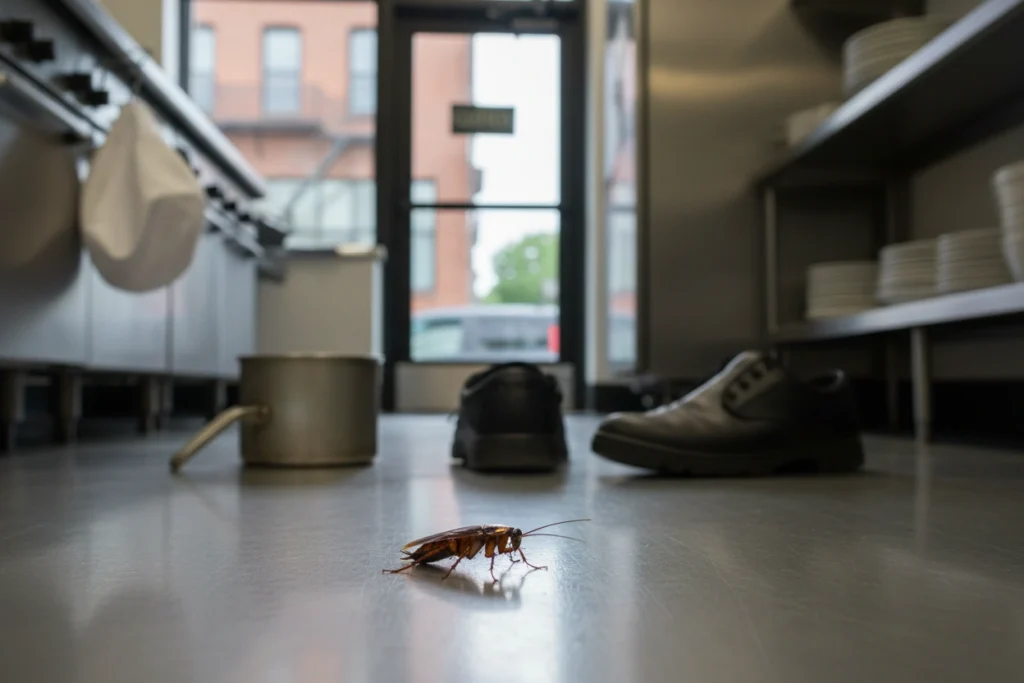
In Portland, a single cockroach sighting during a health inspection triggers an automatic critical violation that can force your restaurant to close immediately. Inspectors can mandate unannounced follow-up visits within 24 to 72 hours, and your violation records become public, damaging your reputation fast. Cockroaches spread roughly 33 types of bacteria, making swift action non-negotiable. Understanding exactly how Portland’s inspection process works and what professional treatment involves can mean the difference between staying open or shutting down.
Key Takeaways
-
A single cockroach sighting in a Portland restaurant is classified as a critical violation, potentially triggering immediate closure orders and follow-up inspections.
-
Inspectors can conduct unannounced visits within 24 to 72 hours of a verified complaint, documenting live cockroaches, dead ones, and egg casings.
-
Public violation records from one sighting can rapidly damage your restaurant’s reputation and customer trust.
-
DIY treatments fail to meet health code standards and can scatter cockroach populations deeper into your structure.
-
Professional pest control provides documented compliance records, systematic colony elimination, and long-term prevention essential for Portland health inspections.
Why One Cockroach Sighting Puts Your Restaurant License at Risk
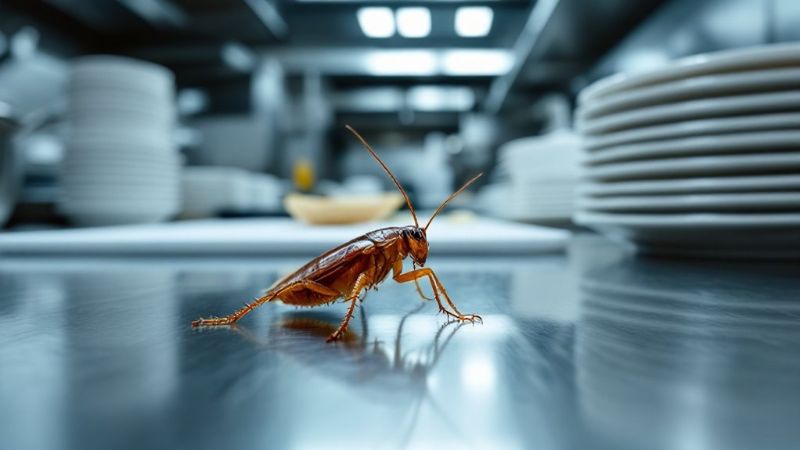
When a health inspector spots a single cockroach in your restaurant, the consequences move fast. Oregon’s food safety regulations classify cockroach activity as a critical violation, meaning inspectors don’t need to find dozens—just one confirms an active infestation risk.
Cockroach behavior makes this standard reasonable. They hide in tight spaces, travel at night, and multiply rapidly, so a visible sighting typically indicates a much larger hidden population.
Inspectors can issue immediate closure orders, mandate follow-up inspections, and post violation notices publicly. That public record directly damages your restaurant reputation, often before you’ve had a chance to respond.
Customers check inspection scores. A failed report circulates quickly, reducing foot traffic and eroding the trust you’ve built. Addressing cockroach activity proactively isn’t optional—it’s a licensing and business survival requirement. Moreover, cockroaches can spread approximately 33 types of bacteria, posing serious health risks to customers and staff alike.
How Portland Health Inspectors Handle Cockroach Complaints
Portland’s Multnomah County Environmental Health division investigates cockroach complaints through a structured, multi-step process that moves quickly once a report is filed.
Inspector protocols require an unannounced site visit, typically within 24 to 72 hours of a verified complaint. During the inspection, inspectors document evidence of live or dead cockroaches, egg casings, fecal smears, and harborage conditions.
Complaint procedures classify findings using a priority violation system. Cockroach activity almost always triggers a Priority Foundation or Priority violation, both of which demand immediate corrective action and mandatory follow-up reinspection. If you fail to resolve the infestation before reinspection, you face escalating enforcement, including fines or suspension of your food handler’s permit. Inspectors also cross-reference prior violation history, meaning repeat findings carry heavier consequences for your operation. Moreover, cockroaches carry harmful bacteria that can compromise food safety, making swift action essential.
Where Cockroaches Hide in Commercial Kitchens
Cockroaches exploit structural gaps, heat sources, and food residue in ways that make commercial kitchens ideal harborage environments. Understanding common cockroach habitats lets you target inspections more effectively.
Focus on these high-risk zones:
-
Under and behind cooking equipment – grease buildup and heat create ideal conditions
-
Motor housings on refrigerators and dishwashers – warmth attracts harborage
-
Wall voids and expansion joints – structural gaps near plumbing penetrations
-
Beneath floor mats and drains – moisture and organic debris accumulate rapidly
-
Dry storage shelving – undisturbed cardboard boxes harbor egg cases
Poor kitchen sanitation accelerates infestation by sustaining cockroach populations between treatments. Additionally, regular plumbing inspections can help reduce roach invasion risks by identifying potential entry points before they become problematic.
You’ll need to address both harborage elimination and sanitation deficiencies simultaneously. Inspectors evaluate these exact locations, so your corrective action plan must account for each one.
Can You Treat a Cockroach Infestation Yourself?
When dealing with a cockroach infestation in your restaurant, you can’t rely on store-bought sprays, baits, or traps—these products lack the potency and precision required to eliminate established colonies in commercial environments.
DIY treatments also fail to meet health code standards, leaving your operation exposed to regulatory violations and potential closure.
A licensed pest control professional applies targeted, food-safe treatments that address harborage points, eliminate egg cases, and document service records for health inspections. Additionally, professionals can implement long-term prevention strategies to help avert future infestations.
DIY Limitations For Restaurants
Many restaurant operators attempt DIY cockroach control using store-bought baits, sprays, or traps—but these methods fall short in commercial food service environments for several critical reasons.
First, DIY pest control products aren’t formulated for high-traffic, moisture-heavy kitchens where cockroaches breed rapidly within wall voids, drains, and equipment.
Second, restaurant regulations require documented pest management records—something consumer-grade products can’t provide. Oregon Health Authority inspectors expect licensed professional oversight, not improvised treatment logs.
Third, over-the-counter sprays often scatter cockroach populations deeper into the structure rather than eliminating the colony at its source. You’re also risking chemical contamination near food prep surfaces without proper application training.
When regulatory compliance, food safety, and your business license are at stake, DIY approaches introduce more risk than they resolve.
Store-Bought Products Fail
Store-bought cockroach products—sprays, traps, and consumer-grade baits—aren’t designed to handle the infestation dynamics found in commercial kitchens.
These store-bought solutions lack the residual efficacy, bait rotation protocols, and application precision that commercial infestations demand.
When you apply a repellent spray, you scatter cockroaches deeper into wall voids, equipment harborage points, and drainage systems—making elimination harder.
Ineffective treatments don’t just fail; they accelerate population dispersal and trigger bait aversion in surviving populations.
Oregon Department of Agriculture regulations also require that pesticide applications in food-handling environments meet specific safety and documentation standards.
Consumer products carry no such compliance framework.
If an inspector identifies improper pesticide use during a routine visit, you face additional violations compounding your existing infestation problem.
Professional Treatment Works
Professional cockroach treatment works because it addresses what consumer products can’t: systematic colony elimination through integrated pest management (IPM) protocols designed specifically for commercial food-handling environments.
Licensed technicians assess pest behavior patterns, harborage points, and entry vectors before selecting treatment methods. That data-driven approach determines whether gel baiting, insect growth regulators, residual applications, or exclusion work is appropriate—or whether a combination is required.
Treatment is staged and documented, which matters when Oregon health inspectors request compliance records. Pest Patrol’s commercial protocols align with FDA Food Safety Modernization Act (FSMA) guidelines, ensuring your operation stays inspection-ready.
You’re not just eliminating visible cockroaches—you’re dismantling the colony infrastructure. That’s the difference between a temporary fix and a defensible, sustainable pest management program your restaurant can rely on.
What a Professional Restaurant Cockroach Treatment Actually Involves
When you hire a licensed pest control company to treat cockroaches in your restaurant, the process follows a structured, multi-step protocol that goes well beyond spraying baseboards.
It begins with thorough pest identification—determining the species, infestation size, and harborage locations. That data directly shapes the treatment methods selected.
A professional treatment typically includes:
-
Gel bait placement in harborage zones near equipment, drains, and wall voids
-
Insect growth regulators (IGRs) to disrupt reproductive cycles
-
Residual insecticide application in non-food-contact areas
-
Crack and crevice treatments targeting entry and nesting points
-
Monitoring stations to track post-treatment activity
Each step is documented to support health inspection compliance. Understanding common pests and their behavior is crucial for effective management.
Follow-up visits confirm elimination and prevent reinfestation before populations reestablish.
How to Keep Cockroaches Out of Your Portland Restaurant for Good
Once a cockroach infestation is resolved, you’ll need a systematic prevention strategy to avoid reinfestation.
Start by sealing cracks, gaps, and utility penetrations in walls, floors, and entry points.
Then establish strict food storage and sanitation protocols that eliminate the organic material cockroaches depend on.
Schedule routine professional inspections to catch early signs of activity before populations establish, keeping your facility compliant with Oregon food safety regulations. Additionally, ensure that all entry points are effectively sealed to reduce the risk of future infestations.
Seal Entry Points First
Even the most rigorous sanitation protocols will fail if cockroaches can freely enter your facility. Conduct a thorough entry point inspection along every exterior wall, focusing on utility penetrations, pipe chases, door sweeps, window frames, and foundation gaps.
Cockroaches can compress their bodies through openings as small as 1.5mm, so no gap is insignificant.
Apply appropriate sealing techniques based on the specific entry type. Use commercial-grade silicone or polyurethane caulk for static gaps around pipes and conduit.
Install door sweeps with neoprene seals on all exterior doors. Use expandable foam rated for pest exclusion in larger voids, then cap it with hardware cloth for durability.
Document every repair location. Oregon health inspectors expect you to demonstrate active, ongoing exclusion efforts during routine facility evaluations.
Eliminate Food Sources
Sealing entry points removes the cockroaches’ pathway into your facility, but structural exclusion alone won’t keep them out if food sources remain accessible inside.
Cockroaches survive on minimal nutrition, so your food storage protocols must eliminate every viable source. Store all dry goods in sealed, hard-sided containers and keep them elevated off the floor. Refrigerate perishables promptly and audit expiration dates regularly.
Don’t let grease accumulate behind equipment—it’s a direct food source cockroaches exploit overnight. Your waste management system is equally critical. Empty interior bins every shift, use lidded receptacles, and position exterior dumpsters away from your building’s perimeter.
Oregon health inspectors scrutinize these practices closely. Cockroaches can’t establish colonies where consistent food elimination denies them the resources they need to reproduce.
Schedule Regular Inspections
Consistent inspections form the foundation of long-term cockroach exclusion in any commercial kitchen environment.
Establish a structured inspection frequency—weekly internal walkthroughs combined with monthly professional assessments—to detect activity before infestations escalate. During each inspection, focus on high-risk zones: under equipment, inside wall voids, around plumbing penetrations, and within dry storage areas.
Accurate pest identification is critical during these walkthroughs. Differentiating between German, American, and Oriental cockroach species determines treatment protocols and infestation sources.
Document all findings, including egg casings, frass, and live or dead specimens.
Partner with a licensed Portland pest control provider like Pest Patrol to conduct thorough, compliance-aligned inspections.
Maintaining detailed inspection logs also satisfies Oregon Health Authority requirements and demonstrates due diligence during regulatory audits.
Frequently Asked Questions
How Much Does Professional Cockroach Treatment Cost for a Portland Restaurant?
Cost factors like restaurant size and infestation severity affect your pricing. Treatment options vary, so you’ll need a customized quote. Contact Pest Patrol for transparent, accurate commercial cockroach treatment pricing tailored to your Portland restaurant’s specific regulatory and operational requirements.
How Long Does a Cockroach Treatment Take to Complete?
Treatment duration varies—you’ll typically see initial service completed in 1–3 hours, but full eradication takes 2–4 weeks. Monitor infestation signs like droppings and egg cases to confirm the treatment protocol’s progressing effectively.
Are Cockroach Control Treatments Safe Around Commercial Food Prep Areas?
Yes, treatments can be safe in food handling zones when you follow proper chemical safety protocols. We’ll apply EPA-approved products in targeted areas, ensuring you meet health code compliance before resuming food prep operations.
How Quickly Can Pest Patrol Respond to a Restaurant Cockroach Emergency?
When you’re facing a cockroach emergency, Pest Patrol responds fast. Their emergency protocols prioritize same-day service, ensuring you’re protected quickly. They’ll also implement ongoing pest prevention strategies to keep your commercial kitchen compliant and inspection-ready.
Which Portland Restaurants Are Most Vulnerable to Cockroach Infestations?
Your restaurant’s vulnerability depends on sanitation practices. High-risk operations include buffets, bakeries, and seafood establishments. Implementing cockroach prevention tips—like sealing entry points and maintaining strict sanitation practices—significantly reduces your facility’s regulatory exposure and infestation risk.
Conclusion
Don’t wait for a health inspector’s notice or a viral post to take cockroach control seriously. One sighting can trigger license suspension, failed inspections, and lasting reputational damage under Multnomah County’s regulatory framework. You’ll need a documented, professional treatment plan that meets Oregon Department of Agriculture standards — not a temporary fix. Establish routine monitoring protocols, seal structural entry points, and partner with a licensed pest management professional to keep your restaurant compliant and your doors open.