
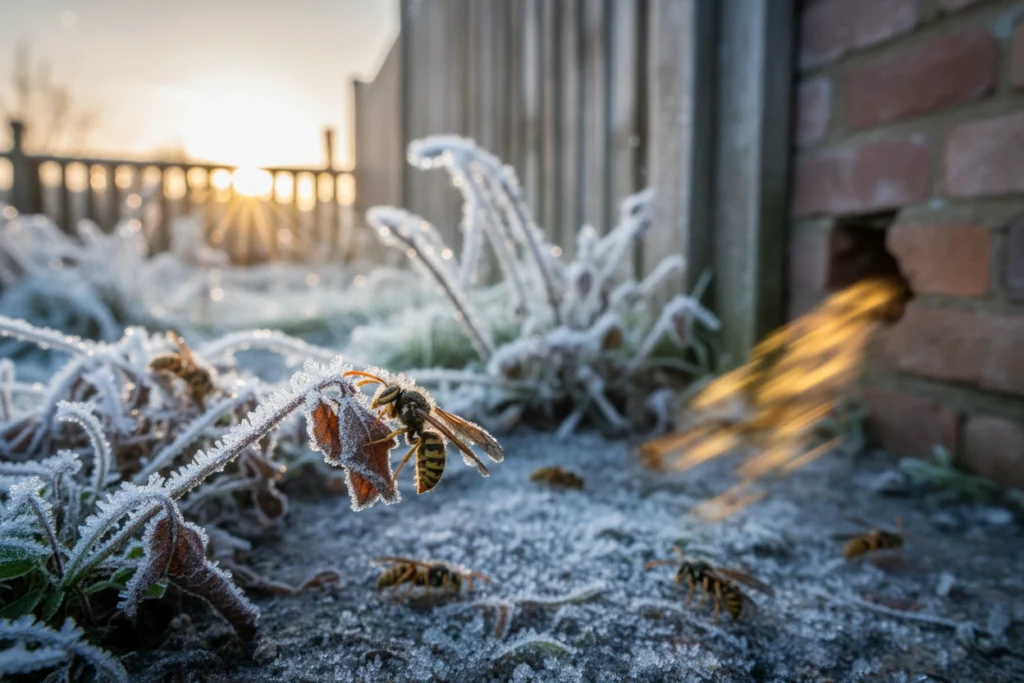
As the leaves fall and temperatures drop, many wonder about the fate of wasps during winter. The common misconception is that these insects simply disappear during the colder months, but the reality is more complex. This article explores whether wasps die off in winter or return in spring, delving into their behavior, hibernation patterns, and survival strategies.
The Life Cycle of Wasps: Key Phases Explained
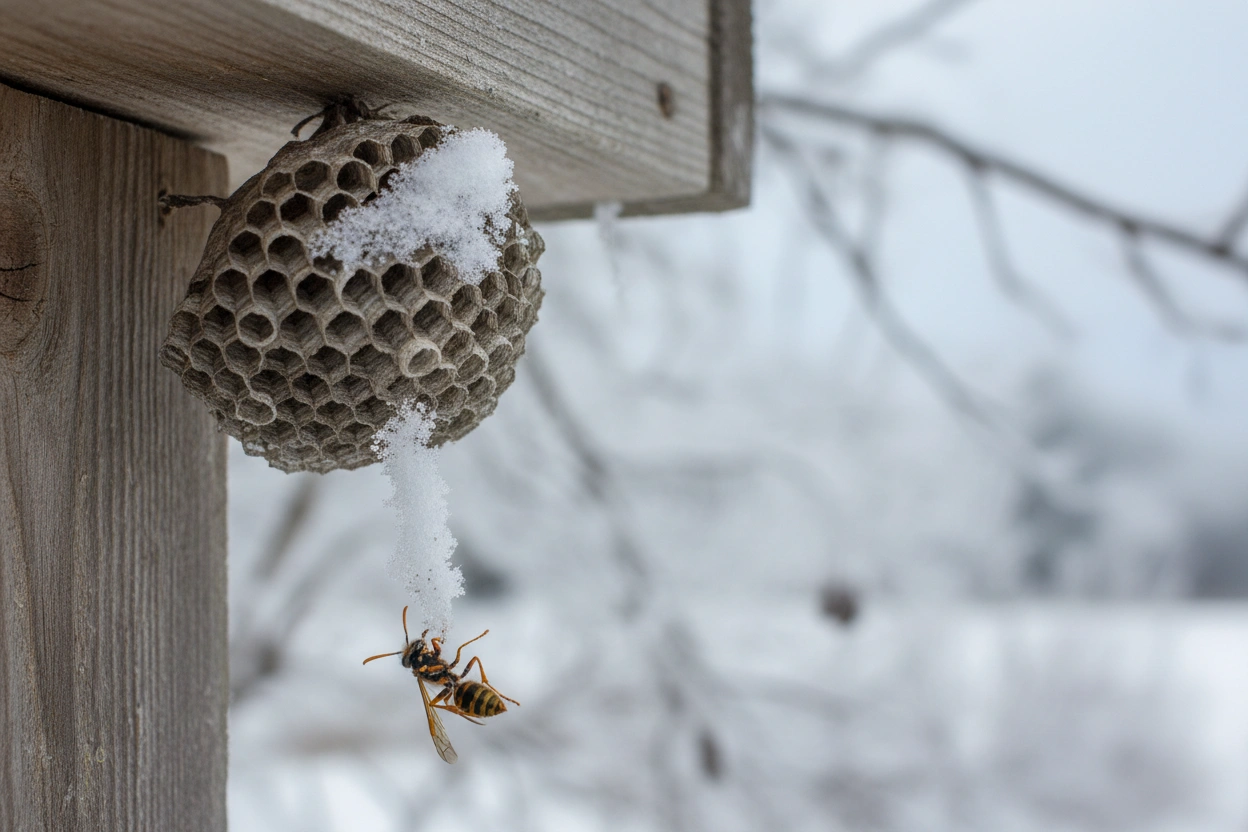
Wasps have a unique life cycle that significantly affects their winter behavior. The life cycle of a wasp comprises four distinct stages: egg, larva, pupa, and adult. Understanding these phases helps predict their activity, particularly in relation to seasonal changes.
In spring, fertilized queens emerge from hibernation to establish new colonies. They lay eggs that hatch into larvae, which are then fed by the queen until they mature into adult wasps. As summer progresses, these adult wasps help expand the colony and forage for food. By late summer or early fall, the colony reaches its peak size, but as temperatures drop, the dynamics shift dramatically. Most wasps in the colony, including workers, will die off with the arrival of winter, leaving only the fertilized queens to survive.
Understanding the wasp life cycle is critical not only for recognizing when they are most active but also for anticipating potential infestations as the seasons change. The cycle’s end in autumn marks the decline of wasp activity, paving the way for a quiet winter.
Do Wasps Hibernate or Face the Cold Directly?
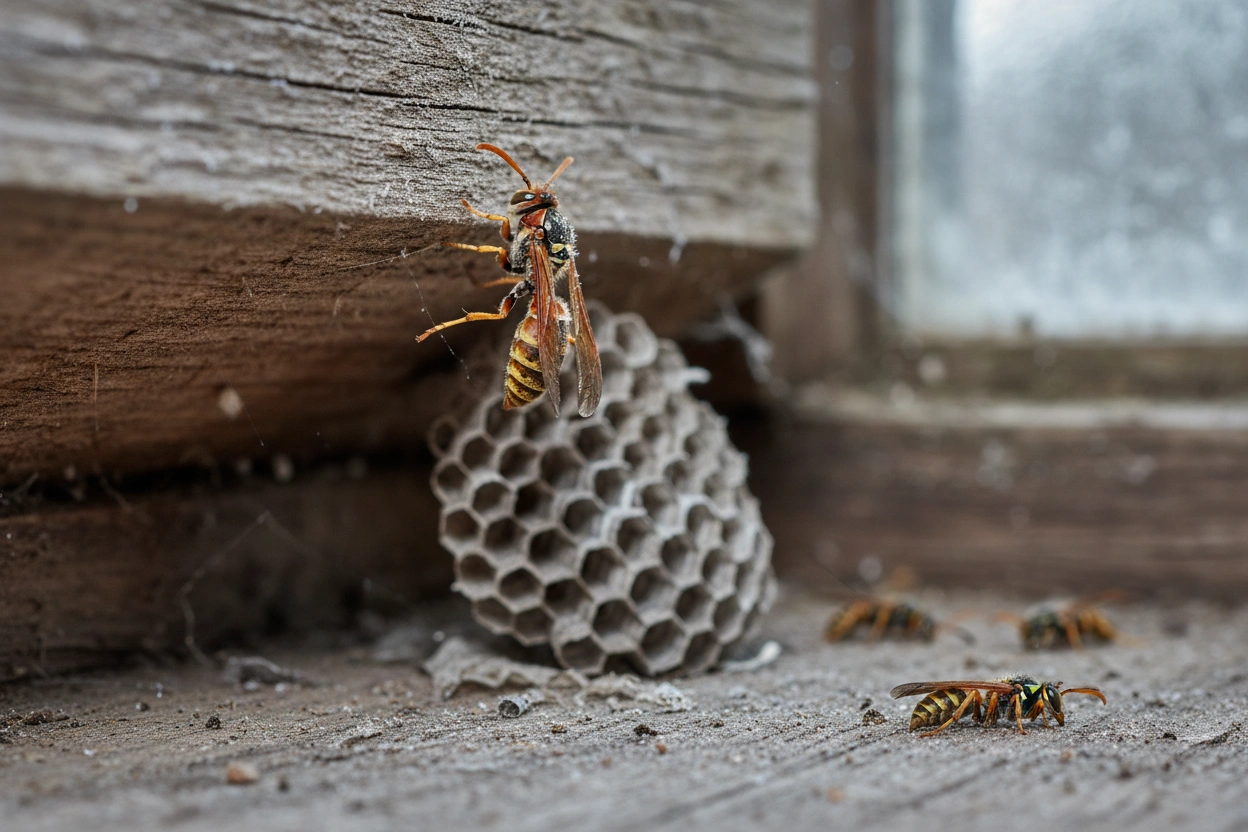
Contrary to popular belief, wasps do not hibernate in the traditional sense. Instead, they employ various survival strategies to cope with the cold. Most wasps die off as the temperatures plummet, but some queens find shelter in protected areas such as under tree bark, in crevices, or even inside human-made structures.
These fertilized queens enter a state of dormancy, which allows them to survive until spring. This dormancy is not hibernation; rather, it is a survival mechanism that enables the queens to withstand the cold months. While the rest of the colony perishes, these queens will emerge as temperatures rise, ready to establish new colonies.
Understanding the survival strategies of wasps can aid in managing expectations for pest activity. If a homeowner encounters wasps in early spring, it is likely due to these queens waking from dormancy rather than the return of an entire colony.
Understanding Wasp Behavior in Cold Weather
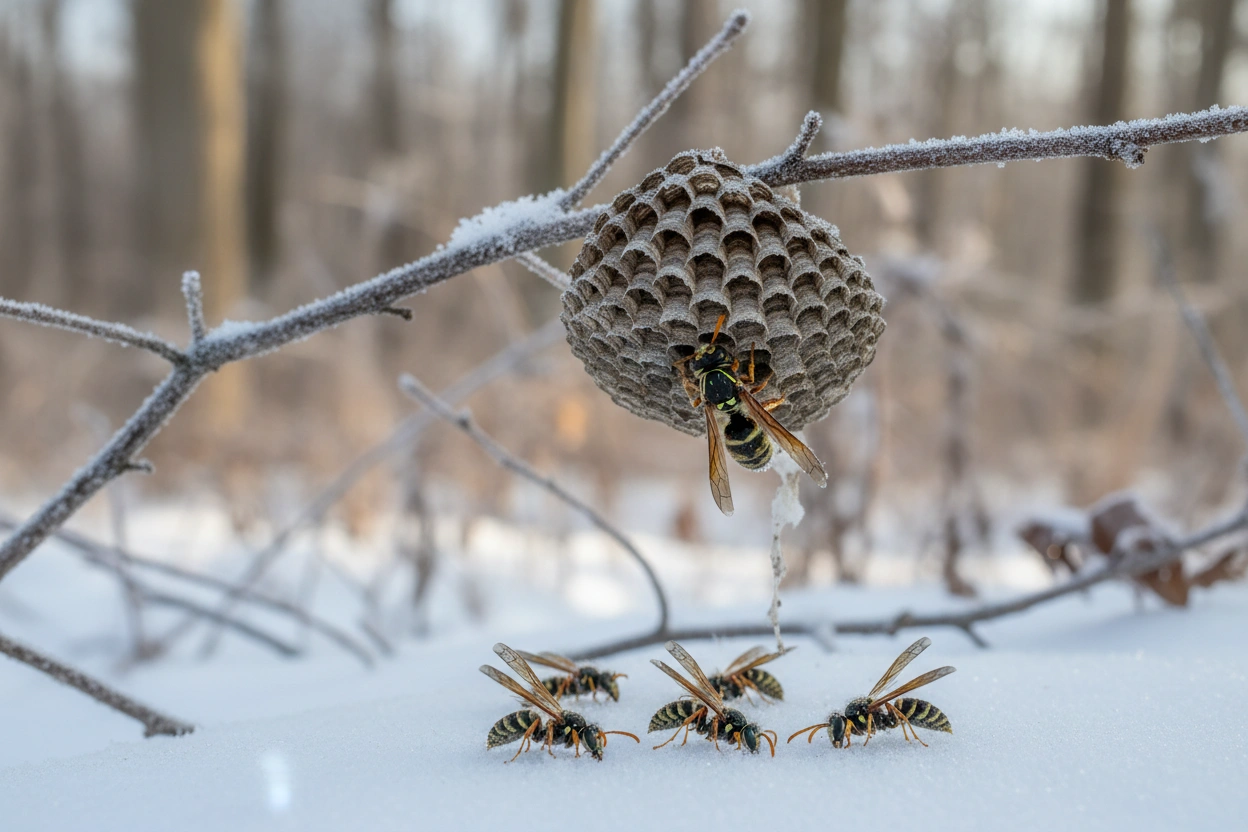
Temperature has a profound impact on wasp activity levels. As the cold weather sets in, wasp activity diminishes significantly. Most wasps become lethargic, reducing their foraging and social behaviors. Consequently, the likelihood of encountering wasps during winter is very low, as they are mostly inactive.
Wasp nests in winter are often abandoned, with only the queens remaining. They seek out sheltered spots to ride out the cold months. This behavior is crucial for their survival, as it minimizes exposure to harsh weather conditions and predators.
For homeowners, understanding wasp behavior in cold weather can provide peace of mind during winter months. It is during this time that wasps are least likely to pose a threat, allowing for seasonal preparations without the worry of unexpected encounters.
Seasonal Wasp Activity: What to Expect
As temperatures rise in spring, wasp activity begins to increase markedly. The emergence of fertilized queens signals the start of a new cycle, and these queens will begin to establish new nests. Understanding seasonal patterns aids in planning for both homeowners and pest control professionals.
In spring, wasps are actively foraging for food sources to nourish their newly established colonies. By summer, colonies can expand rapidly, leading to increased wasp activity around human habitation, especially near food sources and outdoor gatherings.
To prepare for this seasonal shift, it is essential to monitor the environment for the early signs of wasp activity. Being proactive during the spring can help mitigate potential infestations later in the season.
Effective Wasp Prevention Tips for Homeowners
Preventive measures are essential for reducing wasp encounters, particularly in spring and summer when they are most active. Here are some effective strategies for homeowners:
-
Seal entry points: Inspect your home for any cracks or openings where wasps might enter. Use caulk or foam to seal these areas effectively.
-
Remove food sources: Keep outdoor eating areas clean and remove any food scraps that could attract wasps. Secure trash bins with tight-fitting lids.
-
Monitor nests: Regularly inspect your property for early signs of wasp nests. Early detection allows for timely intervention before colonies can grow large.
-
Create barriers: Planting certain herbs, like mint or basil, can deter wasps from nesting nearby. Additionally, using decoy nests can signal to wasps that an area is already occupied.
-
Contact professionals: If a nest is found, it is often best to consult pest control experts to safely remove it.
By following these tips, homeowners can significantly reduce the likelihood of wasp encounters and protect their living spaces.
Do Wasps Disappear in Winter or Return in Spring?
Many homeowners assume wasps simply die off and never return, but the reality is more nuanced. While worker wasps typically do not survive the winter, fertilized queens often overwinter in protected areas and emerge in spring to start new colonies. That means last year’s activity can influence what happens next season. Identifying old nest sites, sealing entry points, and addressing attractants now can significantly reduce future wasp problems around your home.
If you are concerned about wasp nests, seasonal resurgence, or want a proactive plan in place before spring arrives, Pest Patrol can inspect your property and recommend a targeted strategy. Contact Pest Patrol for a free quote and stay ahead of wasp activity before it becomes a larger issue.