
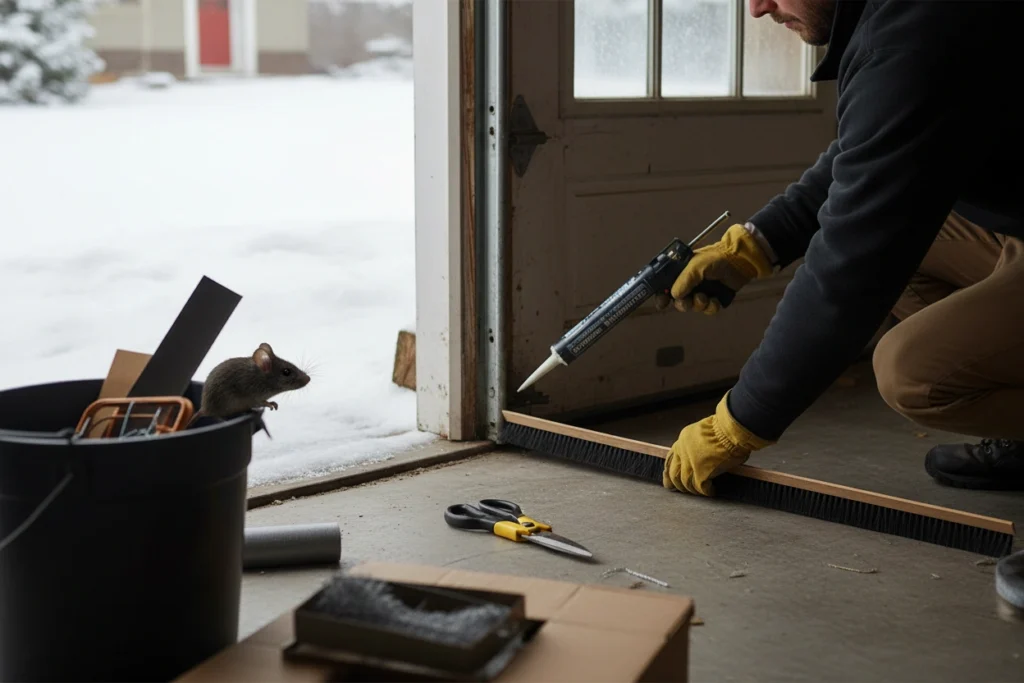
To keep mice out of your garage this winter, you’ll need to seal entry points, eliminate food sources, and monitor for activity. Mice can squeeze through gaps as small as a dime, so use steel wool, weatherproof caulk, and door sweeps to close off common entry points. Store food in sealed metal or hard plastic containers, and clear out clutter that creates nesting spots. The steps below break down exactly how to protect your garage before temperatures drop.
Key Takeaways
-
Seal all entry points, including gaps under garage doors, foundation cracks, and utility penetrations, using caulk, steel wool, or hardware cloth.
-
Replace damaged weatherstripping and install door sweeps on garage doors to eliminate common mouse entryways.
-
Store food items like pet food and birdseed in sealed hard plastic or metal containers to remove attractants.
-
Declutter the garage by removing cardboard boxes, old furniture, and debris that provide hiding and nesting spots for mice.
-
Monitor regularly for droppings, gnaw marks, and musky odors, and set traps to detect early mouse activity.
Why Garages Are a Mouse Magnet in Winter

When temperatures drop, mice actively seek warmth, food, and shelter — and your garage checks all three boxes. Cold weather triggers intense shelter-seeking behavior in mice, pushing them toward structures that offer insulation and easy entry points.
Your garage provides warmth attraction through shared walls with your home, stored heat, and equipment like water heaters or freezers.
Food sources compound the problem. Pet food, birdseed, grass seed, and even cardboard boxes give mice everything they need to survive winter.
Unlike your home’s interior, garages typically have more gaps, cracks, and unsealed entry points — making access simple.
Once mice establish themselves in your garage, they don’t stay there. They follow plumbing, wiring, and wall voids directly into your living space, turning a garage problem into a whole-house infestation. Additionally, poor sanitation in your garage can significantly increase the likelihood of a mouse infestation.
How Mice Get In (It’s Smaller Than You Think)
Mice can squeeze through a gap as small as ¼ inch — roughly the diameter of a pencil — which means most garages offer dozens of viable entry points that homeowners never notice.
Common pathways include gaps beneath garage doors, cracks where the foundation meets the sill plate, unsealed utility penetrations, and deteriorating weatherstripping along side doors.
Vents without mesh screens and open dryer exhausts are also small openings mice exploit regularly. They follow plumbing and electrical conduits through walls, often entering from adjacent crawl spaces or attics before dropping into the garage.
Because mice compress their skeletal structure to fit tight spaces, visible gaps aren’t required — slight separations in building materials are enough. Sealing gaps and holes to prevent rodent entry is essential in keeping your garage mouse-free.
Systematically inspecting these areas is the first step toward effective exclusion.
Seal These Entry Points Before the Cold Hits
Before the first cold snap drives mice indoors, seal every potential entry point you identified during your entry point inspection. Choose your sealing materials based on location and gap size.
For small cracks and gaps up to ¼ inch, apply weatherproof caulk. For larger openings, use steel wool packed tightly first, then cover it with caulk or expanding foam—mice can’t chew through steel wool.
Replace damaged weatherstripping along the bottom and sides of your garage door, and install a door sweep if one’s missing.
Cover vents and utility penetrations with hardware cloth rated at ¼-inch mesh or smaller. Check where pipes and wires enter the garage walls and seal those gaps completely.
Don’t skip overhead areas—gaps near the roofline are just as accessible to mice as ground-level openings. Regular inspections for entry points can help catch infestations early.
What to Store Differently to Stop Attracting Mice
Even after sealing entry points, what you store in your garage can still draw mice in.
Switch any food items—birdseed, pet food, or grass seed—from bags or cardboard boxes to sealed hard plastic or metal containers. Additionally, consider removing any items that may provide hiding spots for rodents, such as old furniture or clutter that can serve as nests for mice. You’ll also want to clear out piles of cardboard, fabric, or insulation scraps, since mice use loose, soft materials to build nests.
Food Storage Matters
One of the easiest ways to attract mice to your garage is improper food storage. Cardboard boxes and thin plastic bags offer almost no resistance to rodents, making them ineffective against winter pests actively searching for food sources.
Transfer birdseed, pet food, grass seed, and any other edible materials into heavy-duty, airtight containers with secure lids. Metal or thick hard plastic containers work best.
Don’t overlook secondary attractants like fertilizers or compost materials — mice will investigate these too.
Check existing food packaging for tears or holes and replace compromised containers immediately. Keep stored items elevated off the floor when possible, and avoid letting any food-related debris accumulate.
Eliminating accessible food sources is one of the most effective deterrents you can implement right now.
Declutter Nesting Materials
Mice don’t just need food to settle in — they need nesting material, and your garage is likely full of it.
Cardboard boxes, old rags, paper bags, insulation scraps, and fabric piles are all prime nesting materials mice actively use to build shelters. Clutter reduction isn’t just about organization — it directly eliminates the conditions mice require to establish a nest.
Here’s what to do:
-
Replace cardboard boxes with sealed plastic bins
-
Bag or donate old clothing and rags
-
Remove stacked newspapers and paper materials
-
Clear wall insulation that’s been exposed or torn
Don’t let items pile up in corners or on low shelving. The less loose material available, the fewer options mice have to build and hide.
The Best Traps and Deterrents for Your Garage
If exclusion efforts aren’t enough on their own, several traps and deterrents can help you eliminate and discourage mice from settling in your garage.
Common trap types include snap traps, electric traps, and live-catch traps. Snap traps are inexpensive and effective when placed along walls where mice travel. Electric traps deliver a quick, clean kill and are easy to empty. Live-catch traps work if you prefer releasing mice elsewhere.
For deterrent methods, consider ultrasonic repellers, which emit high-frequency sound waves mice find irritating. Peppermint oil-soaked cotton balls placed near entry points can also discourage activity. Additionally, maintaining cleanliness in your garage is crucial to prevent attracting mice.
Use multiple approaches together for the best results, and check traps regularly. Consistent monitoring lets you gauge activity levels and adjust your strategy before mice push deeper into your home.
Signs Mice Have Already Moved From Garage to House
How do you know when mice have crossed from your garage into your living space?
Start with mouse droppings identification—dark, pellet-shaped droppings roughly 3–6mm long appearing near baseboards, inside cabinets, or behind appliances confirm active activity.
Check for gnaw marks signs on food packaging, drywall, insulation, and electrical wiring. Shredded paper, fabric, or insulation tucked into corners indicates active nesting. You might also detect a persistent musky odor in enclosed spaces.
Inspect these high-risk zones systematically: kitchen cabinets, pantry shelves, utility rooms, and wall voids near plumbing penetrations. Additionally, rodent droppings can often indicate where mice are most active, so be diligent in checking these areas.
If you’re finding evidence in multiple rooms, the infestation has likely progressed beyond a single entry point. At that stage, professional intervention becomes necessary to locate and eliminate the full extent of activity.
Frequently Asked Questions
How Long Does It Typically Take Mice to Infest an Entire Home?
Mice can infest your entire home within 30–90 days. Once you spot infestation signs like droppings or gnaw marks, mouse behavior accelerates rapidly. You’ll want to act fast before they establish multiple nesting sites throughout your house.
Are Certain Garage Types More Vulnerable to Mouse Infestations Than Others?
Yes, your garage construction directly affects vulnerability. Older wood-framed garages have more entry points, while poor insulation types create warm harborage zones. You’ll strengthen pest prevention by sealing gaps and upgrading weatherstripping systematically.
Can Mice Cause Fires by Chewing Through Garage Electrical Wiring?
Yes, mice can absolutely cause fires. Their chewing damage to electrical wiring strips away insulation, creating dangerous fire hazards. You’ll want to inspect your garage wiring regularly and address any mouse activity before it becomes a serious safety issue.
Do Ultrasonic Mouse Repellers Actually Work in Garage Spaces?
Ultrasonic effectiveness in garages is limited—mice quickly adapt to the sound frequencies. You’ll get better results combining garage maintenance practices like sealing entry points, eliminating food sources, and using snap traps for reliable, proven mouse control.
When Should I Call a Professional Instead of Handling Mice Myself?
Call a professional when you’ve set DIY traps but still notice active mouse behavior after one week, find droppings throughout your home, or suspect a large infestation that’s already spread beyond your garage.
Conclusion
Keeping mice out of your garage this winter comes down to three things: sealing entry points, eliminating attractants, and deploying the right deterrents early. Don’t wait until you’re finding droppings inside your home to take action. Work through each step systematically — inspect gaps, swap cardboard for plastic bins, set traps along walls. The sooner you lock down your garage, the less likely you’ll be dealing with a full interior infestation come spring.