
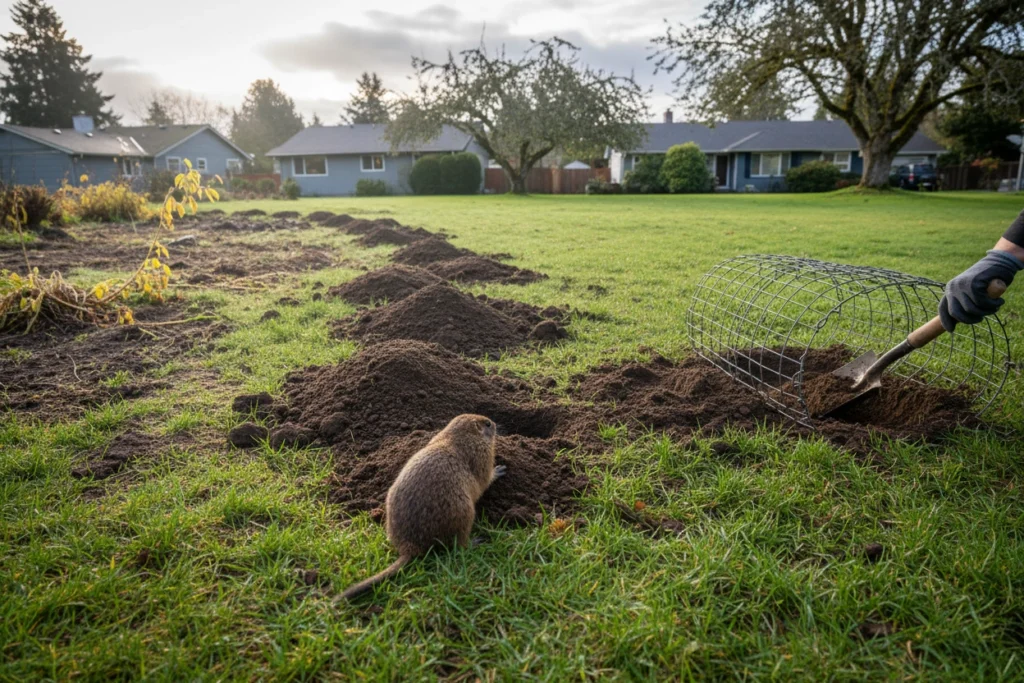
Gophers destroy your lawn by excavating tunnel networks up to 2,000 square feet, severing root systems and killing grass long before you spot a single mound. Portland’s mild climate, wet soil, and nutrient-rich lawns make your yard especially vulnerable to year-round activity. DIY methods almost never work—trapping requires precise placement and behavioral knowledge to succeed. Professional intervention is the only reliable solution, and there’s much more you need to know.
Key Takeaways
-
Gophers excavate tunnel networks up to 2,000 square feet, feeding on roots and killing grass before damage becomes visibly apparent.
-
Portland’s mild climate, soft soil, and nutrient-rich lawns enable gophers to tunnel and feed year-round without seasonal interruption.
-
A single gopher creates organized tunnel systems with nesting chambers, lateral tunnels reaching depths of 6 feet and hundreds of feet long.
-
DIY methods like traps, repellents, and ultrasonic devices consistently fail due to improper placement, human scent, and tunnel depth.
-
Professional trapping with correctly placed paired traps in active tunnels remains the only reliably effective method for eliminating gophers.
What Gophers Actually Do to Your Lawn
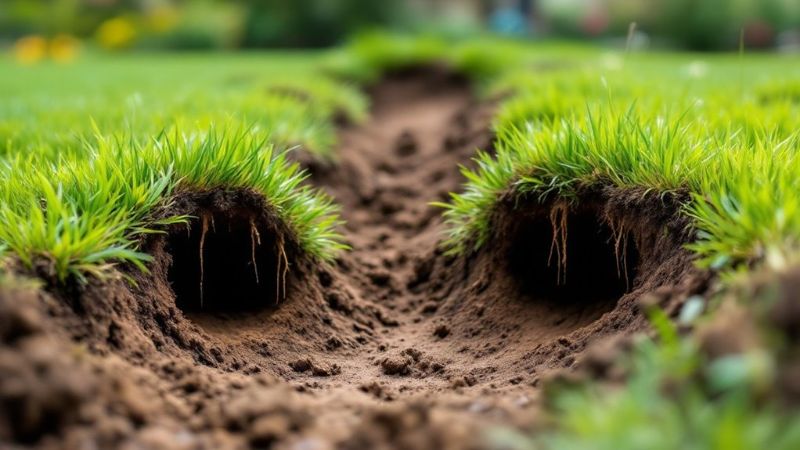
Gophers devastate lawns from below the surface, where most of the damage goes unnoticed until it’s too late. Their gopher behavior centers on excavating complex tunnel networks stretching up to 2,000 square feet, severing root systems as they move.
You’ll notice crescent-shaped mounds of loose soil pushed to the surface — a clear sign of active digging below. They feed directly on roots, bulbs, and underground plant matter, killing grass and ornamental plants from beneath.
As soil structure collapses, you’ll see sunken patches, uneven ground, and widespread turf loss. Without intervention, lawn restoration becomes extensive and expensive. One gopher can destroy a well-maintained lawn in weeks, making early identification and professional removal critical to protecting your property. Additionally, gophers can create sinkholes and hazards for pedestrians and pets, further complicating the landscape.
Why Portland Lawns Are Especially Vulnerable
If you live in the Portland area, your lawn faces a higher-than-average risk of gopher damage.
Portland’s mild, wet climate keeps soil consistently moist and easy to tunnel through, making it nearly effortless for gophers to excavate extensive burrow networks beneath your yard.
Couple that soft soil with the thick, nutrient-rich grass common to well-maintained Portland lawns, and you’ve created an environment that actively draws gophers in. Additionally, immediate removal of gophers is essential to prevent further damage to your lawn.
Portland’s Ideal Gopher Climate
Portland’s mild, wet climate creates near-perfect conditions for gopher activity year-round. Unlike regions with hard freezes, Portland’s soil rarely becomes too cold or too compacted to tunnel through, which means gopher behavior doesn’t slow down seasonally. They stay active, feeding, burrowing, and expanding their tunnel networks throughout fall, winter, and spring.
The region’s consistent rainfall keeps soil moist and loose, making excavation easier and encouraging the lush root systems that gophers feed on.
Your lawn maintenance efforts actually work against you here — the healthier your grass, the more attractive your yard becomes to foraging gophers. Irrigated lawns, garden beds, and ornamental plantings all signal a reliable food source.
In Portland, a well-maintained yard isn’t just a target — it’s an invitation.
Soft Soil Invites Tunneling
The soil itself is where Portland’s gopher problem compounds. Portland’s soil composition—a mix of Willamette Valley silt, clay-loam, and organically enriched topsoil—creates near-perfect conditions for tunneling behavior.
It’s firm enough to hold tunnel structure but soft enough to excavate quickly, meaning gophers can extend burrow systems faster than most homeowners recognize the damage.
Your irrigated, well-maintained lawn makes this worse. Regular watering loosens the upper soil profile, reducing resistance against a gopher’s powerful claws.
Amended garden beds and composted areas are especially vulnerable—gophers target them deliberately because the soft, nutrient-rich soil requires minimal effort to penetrate.
You’re fundamentally maintaining the exact environment gophers prefer. The better your lawn care, the more attractive your yard becomes to an incoming colony.
Lush Lawns Attract Gophers
Lush, well-maintained lawns don’t just look appealing to homeowners—they signal an ideal habitat to gophers. Gopher behavior is driven by resource availability, and your lawn maintenance efforts fundamentally roll out the welcome mat.
Well-irrigated, fertilized lawns offer everything gophers need:
-
Dense root systems provide a reliable, calorie-rich food source
-
Regular watering keeps soil moist and easy to excavate
-
Thick turf offers surface cover that conceals tunnel entrance mounds
-
Established plantings supply bulbs, roots, and organic material
-
Consistent soil temperatures support year-round tunneling activity
Portland’s mild, wet climate amplifies these conditions. The better you maintain your lawn, the more attractive it becomes to gophers actively scouting new territory.
How Fast Gopher Damage Spreads Underground
Gophers work fast—a single gopher can excavate up to 2,000 square feet of tunnel network in just one year.
Understanding gopher behavior helps explain why damage escalates so quickly. They don’t dig randomly; they construct highly organized underground networks with distinct chambers for nesting, food storage, and waste.
These tunnels branch outward continuously, cutting through root systems and destabilizing soil as they expand. By the time you notice the first mound in your Portland yard, the destruction beneath the surface is already extensive.
Lateral tunnels can extend 6 feet deep and stretch hundreds of feet in multiple directions. What looks like one or two mounds above ground often signals a sprawling subterranean system actively destroying your lawn’s foundation from below.
Why DIY Gopher Control Rarely Works
When you try to handle gophers yourself, you’re fighting an uphill battle.
Most snap traps and box traps fail because gophers quickly detect human scent and avoid disturbed tunnel sections entirely.
Store-bought repellents, gas cartridges, and bait stations rarely penetrate deep enough into active tunnel systems to reach the gopher where it actually lives and feeds. Additionally, professional trapping services utilize humane traps and trained technicians to effectively manage infestations.
Traps Often Fail
Many homeowners turn to DIY trapping as a first response to gopher activity, but the approach fails more often than it succeeds. Gopher behavior makes trap effectiveness highly unpredictable. Gophers are cautious, sensitive to disturbance, and constantly shifting tunnel routes.
Common reasons traps underperform:
-
Wrong placement — traps set in secondary tunnels rather than active main runs go untouched
-
Human scent — gophers detect odor on ungloved hands and avoid triggered zones
-
Tunnel collapse — improper installation disrupts airflow cues gophers use to navigate
-
Missed timing — gophers are most active at dawn and dusk, making reset windows narrow
-
Single trap use — one trap rarely addresses a multi-tunnel system effectively
Without understanding gopher behavior, you’re guessing. Guessing doesn’t resolve an infestation.
Store Products Underperform
Traps aren’t the only product that lets homeowners down. Store-bought repellents, fumigants, and poison baits also struggle to deliver consistent results against established gopher populations.
Store product effectiveness is limited by gopher behavior — these animals quickly detect foreign substances in their tunnels and reroute around them. Vibration stakes and ultrasonic devices perform even worse, with little scientific evidence supporting their use as viable pest control alternatives.
Poison baits carry additional risks. Improperly placed bait can harm pets, non-target wildlife, and neighborhood animals that access treated tunnels.
Even when you follow label instructions precisely, bait placement inside an active tunnel system requires accuracy most homeowners can’t achieve without professional training and diagnostic tools.
The result is wasted money, continued lawn damage, and a gopher population that keeps growing.
The Only Method That Actually Stops Gophers
Trapping is the most reliable method for eliminating gophers, but only when it’s executed correctly. Understanding gopher behavior is critical—placing traps incorrectly means zero results.
Effective deterrents like repellents and ultrasonic devices simply don’t produce consistent outcomes. Trapping, done right, does.
Successful gopher trapping requires:
-
Locating active tunnels by probing fresh mounds within 12 inches
-
Setting traps in pairs inside the main tunnel run
-
Covering the hole to block light, which triggers gopher movement
-
Checking traps every 24–48 hours to maintain effectiveness
-
Removing and relocating traps if no activity occurs within two days
Miss any of these steps and you’re wasting time.
Professional technicians understand these nuances and execute them precisely.
When to Call a Portland Gopher Control Pro
Sometimes DIY trapping works—but if you’ve set traps correctly for two or more cycles with no catches, or if new mounds keep appearing faster than you can address them, it’s time to call a professional.
Gopher behavior varies by season, soil type, and tunnel complexity, and misreading those variables wastes time while lawn health continues to decline. Understanding the difference between gophers and other rodents can be crucial in identifying the problem accurately.
A trained technician reads active burrow systems accurately, places traps with precision, and identifies secondary entry points you’d likely miss.
Pest Patrol serves Portland, Beaverton, Hillsboro, Tigard, Lake Oswego, and surrounding communities with targeted gopher control backed by a 100% satisfaction guarantee.
If your lawn is losing ground to an active infestation, don’t let another week pass—contact Pest Patrol and stop the damage before it compounds further.
Frequently Asked Questions
How Much Does Professional Gopher Control Typically Cost in Portland?
Professional gopher control in Portland typically costs $150–$400, depending on infestation severity and gopher behavior patterns. You’ll protect your investment by combining expert treatment with smart landscaping tips to prevent re-entry.
Are Gopher Control Treatments Safe for My Children and Pets?
Yes, professional gopher control treatments are safe for your children and pets. Technicians apply targeted solutions that account for gopher behavior patterns, minimizing exposure risks. You’ll get effective safe treatments without compromising your family’s well-being.
How Long Does It Take to Completely Eliminate a Gopher Infestation?
You’ll typically eliminate a gopher infestation within 1–2 weeks. We’ll monitor infestation signs like fresh mounds and active tunnels, and track gopher behavior patterns to guarantee complete eradication before closing the treatment program.
Will Gophers Come Back After Professional Treatment Is Completed?
Yes, gophers can return due to their territorial gopher behavior. You’ll need ongoing monitoring to protect your lawn recovery. Neighboring gophers often reinvade treated areas, so maintaining preventive measures after professional treatment’s completed is essential.
Does Pest Patrol Offer Any Guarantees on Their Gopher Control Services?
Yes, Pest Patrol backs their pest control services with a 100% satisfaction guarantee. If you’re not fully satisfied after treatment, their service guarantees warrant they’ll return and resolve your gopher problem at no additional cost.
Conclusion
Gophers don’t slow down, and neither does the damage they cause beneath your lawn. Every day you wait, their tunnel networks expand, root systems die, and soil structure deteriorates further. DIY methods won’t cut it — they address symptoms, not the infestation itself. Professional exclusion, trapping, and systematic elimination are the only approaches that deliver lasting results. If you’re in the Portland metro, don’t gamble with your lawn. Get a pro involved before the damage compounds.