
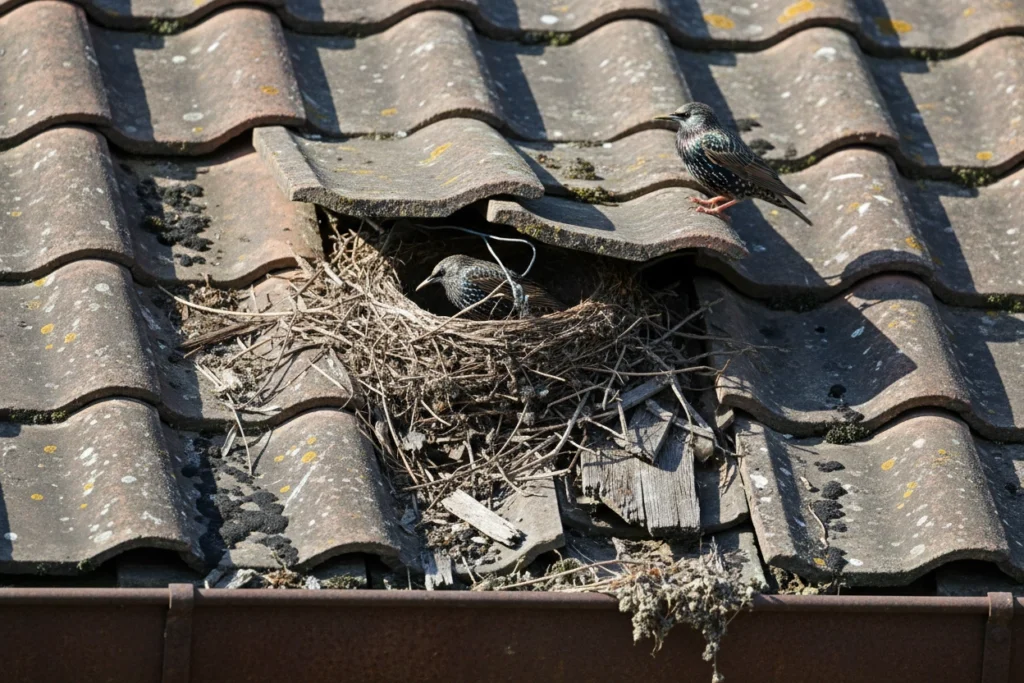
When nesting birds take up residence on your roof, you’re dealing with more than an eyesore. Their nests block gutters and vents, trap moisture against wood decking, and accelerate rot and mold growth. Acidic droppings corrode shingles and metal flashing, while dried droppings release dangerous airborne pathogens. Left unaddressed, minor nesting activity can escalate into expensive structural repairs and serious health risks. Keep going to discover what’s really at stake — and how to stop it.
Key Takeaways
-
Nesting materials block gutters and vents, trapping moisture that accelerates rot, mold growth, and long-term structural damage to your roof.
-
Bird droppings contain harmful pathogens that cause respiratory infections, posing serious health risks to children, the elderly, and immunocompromised individuals.
-
Acidic droppings corrode metal flashing and asphalt shingles, gradually compromising roofing materials and leading to costly repairs.
-
Most native bird nests are federally protected, making removal without a permit illegal until the nesting season ends.
-
Professional intervention ensures safe nest removal, legal compliance, and installation of deterrents to prevent future infestations.
What Birds Actually Do to Your Roof
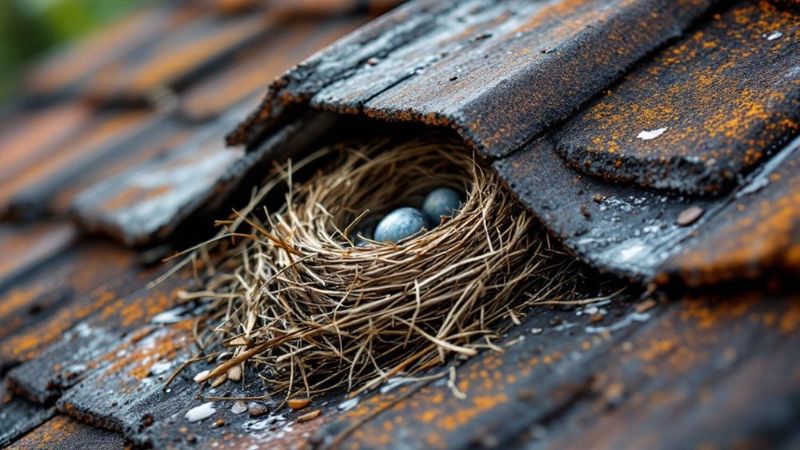
Birds nesting on your roof cause more than cosmetic issues. Their nesting habits create compounding structural problems that worsen with each season.
Bird behavior drives them to pack nesting materials—twigs, leaves, and debris—into gutters, vents, and under shingles. That blockage traps moisture against your roof deck, accelerating rot and mold growth.
Their acidic droppings degrade roofing materials, corroding metal flashing and breaking down asphalt shingles over time.
Nesting activity around vents restricts airflow, increasing energy costs and creating fire hazards when materials accumulate near exhaust points. Birds also dislodge shingles while roosting, leaving your roof vulnerable to water intrusion.
You’re not dealing with a minor inconvenience—you’re facing damage that compounds quietly until repairs become costly.
Early intervention is essential, as professional bird removal services ensure effective solutions to mitigate these issues.
The Hidden Structural Damage Bird Nests Cause
What starts as a small nest tucked under your eaves can quietly compromise your roof’s structural integrity over months or years. As nest stability deteriorates, decomposing materials trap moisture against wood decking, fascia boards, and rafters.
That sustained dampness accelerates rot, weakens structural connections, and creates ideal conditions for mold growth inside your attic.
Bird droppings compound the problem. Their high uric acid content corrodes metal flashing, degrades asphalt shingles, and eats through protective coatings that defend your roof integrity against Oregon’s wet climate.
Nests also clog gutters and downspouts, forcing water to back up under shingles and infiltrate your home’s framing.
What began as a minor nuisance becomes a costly repair project—one that’s entirely preventable with early intervention from a qualified pest control professional. Quick action is essential to remove raccoons from crawlspaces before they cause further damage.
Health Risks From Bird Droppings and Nesting Materials
Bird droppings carry dangerous pathogens like Histoplasma capsulatum and Cryptococcus neoformans, which become airborne when dried droppings are disturbed and can cause serious respiratory infections when you inhale them.
Nesting materials compound the risk by harboring parasites—mites, fleas, and ticks that actively migrate into your living spaces once birds abandon a nest.
You’re not just dealing with a structural nuisance; you’re managing a concentrated biological hazard that requires professional remediation and protective equipment to address safely. Furthermore, these risks highlight the importance of effective bird control methods to ensure your property remains safe and healthy.
Airborne Pathogens From Droppings
While bird droppings may look like a simple mess, they carry serious health risks that shouldn’t be dismissed. Dried droppings crumble into fine particles that become airborne, putting you and your family at risk for dangerous airborne diseases like histoplasmosis, cryptococcosis, and psittacosis.
These fungal and bacterial infections can cause severe respiratory illness, particularly in children, the elderly, and anyone with a compromised immune system.
You shouldn’t attempt droppings cleanup without proper protective equipment and containment protocols. Disturbing dried droppings without precautions releases infectious particles directly into the air you breathe.
Professional remediation guarantees safe removal using industry-standard protective gear and sanitization methods. If birds have been nesting on your roof, the health threat beneath those nests may be far greater than you realize.
Nesting Materials Harbor Parasites
Nesting materials like twigs, feathers, and dried grass create ideal breeding environments for mites, fleas, ticks, and other ectoparasites.
A bird’s nesting behavior naturally concentrates these parasites within a confined area directly on or inside your structure. Once the birds vacate or are removed, these parasites actively seek new hosts—often moving into your living spaces through gaps, vents, and wall cavities.
Parasite transmission to humans and pets can occur rapidly after nest abandonment, making prompt removal critical. Common culprits include bird mites, which are nearly invisible and cause intense skin irritation, and fleas, which can establish full infestations indoors.
You should never handle abandoned nests without proper protective equipment.
Professional removal and targeted treatment of the affected area are the safest, most effective solutions.
Which Birds Are Most Likely to Nest on Portland Homes
Several bird species consistently target Portland homes for nesting, and knowing which ones you’re dealing with helps you respond faster and more effectively.
House sparrows are among the most aggressive colonizers—sparrow species actively seek out vents, gutters, and wall gaps, building dense nests that block airflow and trap moisture.
Pigeon behavior presents a different challenge; they prefer flat rooftops, ledges, and HVAC equipment, returning repeatedly to established roosting sites.
Starlings exploit any opening larger than 1.5 inches, often invading attic spaces before you notice.
Swallows target eaves and overhangs, constructing mud nests that are federally protected once eggs are present.
Each species requires a different removal and exclusion strategy, making accurate identification the critical first step in protecting your home. Additionally, bird droppings can harbor harmful bacteria that pose health risks, underscoring the importance of timely intervention.
Can You Legally Remove Bird Nests Yourself?
Whether you can legally remove a bird nest yourself depends entirely on the species involved and the nest’s active status. Under the Migratory Bird Treaty Act, it’s illegal to remove, destroy, or disturb active nests belonging to most native bird species without a federal permit.
Bird nest regulations extend to eggs, hatchlings, and nesting adults, meaning wildlife conservation law protects these birds throughout the entire breeding cycle.
You can legally remove an empty, inactive nest from a non-protected species after the nesting season ends. However, identifying protected species and confirming nest status isn’t always straightforward.
Misidentifying a nest can expose you to significant legal penalties. Your safest option is contacting a licensed wildlife control professional who understands Oregon-specific regulations and can handle removal legally and efficiently.
How Pest Patrol Removes Nesting Birds Safely
When nesting birds take up residence in or around your property, Pest Patrol follows a structured removal process that stays fully compliant with federal and state wildlife regulations. Their technicians first conduct a thorough inspection to identify the species, assess nest activity, and determine whether eggs or hatchlings are present.
From there, they apply humane removal techniques tailored to the specific situation, ensuring no birds are harmed during the process. Additionally, they understand the potential for health risks associated with nesting birds, which can include unsanitary conditions and pest attraction.
Once removal is complete, Pest Patrol implements targeted prevention strategies to stop re-infestation. These include installing physical deterrents like exclusion netting, bird spikes, and wire mesh to block entry points.
They also seal gaps in rooflines, soffits, and vents where birds commonly nest. The result is an all-encompassing solution that protects your property long after the birds are gone.
Frequently Asked Questions
How Much Does Professional Bird Nest Removal Typically Cost in Portland?
You’ll typically pay $150–$500 for professional bird nest removal in Portland, depending on cost factors like nest location and size. Removal methods vary, affecting pricing, so contact Pest Patrol for an accurate, customized quote.
Will Homeowner’s Insurance Cover Bird-Related Roof Damage Repairs?
Most standard homeowner’s insurance policies don’t cover bird-related damage, as it’s considered a maintenance issue. You’ll want to review your insurance policy carefully and consult your provider before starting any claim process for roof repairs.
How Long Does It Take Birds to Cause Serious Roof Damage?
Bird nesting behaviors can cause serious roof damage in as little as one season. You’ll want to act fast—follow roof maintenance tips like regular inspections and contact Pest Patrol to remove birds before structural deterioration worsens.
What Time of Year Do Birds Most Commonly Nest on Portland Roofs?
Spring nesting peaks between March and June in Portland. You’ll find urban species like starlings, sparrows, and pigeons most active during these months, making it your best window to schedule preventive treatments before birds establish roof colonies.
Can Bird Deterrents Affect My Home’s Curb Appeal or Resale Value?
Modern bird deterrents won’t hurt your home’s aesthetic considerations or resale implications. Today’s solutions—like low-profile spikes and clear gel systems—blend seamlessly with your roofline, and buyers actually appreciate proactive pest protection measures already in place.
Conclusion
Every season you wait, bird damage compounds. You’re dealing with more than a nuisance—you’re facing structural deterioration, health hazards, and recurring infestations that won’t resolve themselves. Pest Patrol’s licensed technicians use proven exclusion methods and bird-proofing systems designed for Portland’s specific species and climate. Don’t wait until clogged gutters or contaminated ventilation systems force expensive repairs. Contact Pest Patrol today and permanently reclaim your roofline.