
Dealing with rodent infestations is always such a pain (hey, by the way – this is NOT ai writing this. It’s a real person who is an expert in rodent management and restoration. I’m a tradesman, not a writer, so please excuse any typos).
If you’re hearing rodents in the walls, or in your ceiling, that is an indication that your perimeter defenses of your home have been compromised in one way or another. One of the most common things I see in the Portland area with rodent infestations is that customers are under the impression that it’s impossible to fully keep out rats or mice via exclusion. This is completely false. If you understand how rodents work, you can seal up entry points and keep rodents out of nearly any type of structure.
So if you’ve been experiencing an ongoing rodent issue for days, weeks, months, or years – here are some of the most common ways that rats and mice enter the crawlspaces of structures in the Portland area (and anywhere else that has crawlspaces underneath homes).
At the end I’m adding one of the more “hidden” entry point that is not talked about very much – but can sometimes be the cause of ongoing rodent issues, especially in larger cities with old sewer systems.
1). Crawlspace Vents
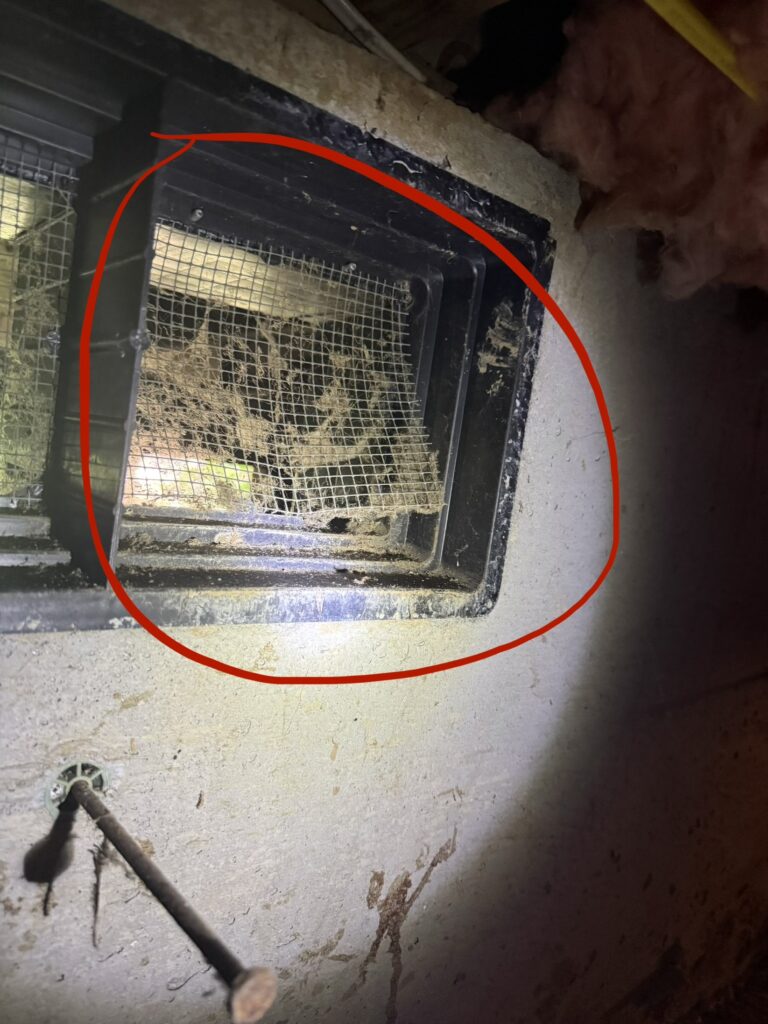
Crawlspace vents are a vital aspect of the health of the home. They allow moisture to evaporate out of the crawlspace – and they allow a good deal of fresh air into most homes via the “stack”. They also allow easy access into the crawlspace for plumbing lines, natural gas lines, wires, cables, and drier/bathroom vents. This is where the issue starts usually. Contractors often put holes in crawlspace vents in order to complete there work – but fail to seal up the holes after they’re done, thereby leaving gaps that mice and rats can enter through.
It’s not always a contractor’s fault though, sometimes wildlife like raccoons will force open a crawlspace vent in order to access the crawlspace. And sometimes the adhesive glue on the corners of vents simply fails over time. Whatever the case, these vents can be a major source of entry for mice, rats, squirrels, or other wildlife.
2). Gaps underneath siding/corners
Even the best new construction homes are not built with rodent entry in mind and many gaps/cracks are left in unseen areas that are “technically” code and make no aesthetic difference, but allow rodents easy access into the crawlspace or attic. A common place for these types of issues is gaps underneath the bottom of the siding where the siding meets the wooden sil plate at the top of the home’s foundation. Another very common area around siding is in the corners of the home (both exterior – pointing outward, and interior – pointing inward). Corner gaps around trim pieces can allow easy access into the crawlspace and often will go unnoticed for years and years. If you’ve confirmed that no crawlspace vents are compromised and are still having activity then gaps underneath the siding might be the culprit.
3). Burrows
Rodent burrows are very difficult to manage because at the end of the day, rats can basically burrow wherever they want. The goal with managing rodent burrows is making it as difficult as possible for the rodents to burrow in those areas. Sometimes this is more possible than others, and sometimes it’s very difficult, like if a burrow is going directly underneath a driveway slab and then into the crawlspace. You often see burrows when rodent populations get out of control nearby large food sources (chicken coops, bird feeders, fruit trees, dog/cat food, etc. Many of the burrows that you see in these situations are not directly leading into your crawlspace, but are simply harborage/hiding/nesting areas for rodents to stay in when they aren’t foraging for food. It is fairly common to find burrowing around sewer/drain lines leading into a structure. Sometimes these are just happenstance due to rats finding an easy path to dig along, and sometimes these are from issues with the drain lines (see #5). The main ways that people fill in burrows is by using metal screen, cement, gravel, or simply breaking them apart and filling in with dirt. If the food sources are not removed then the burrows will almost certainly continue no matter what method you use to fill them in.
4). Door Seals
Door seals can be tricky, but they are a fairly common entry point for rodents. Garage doors will often have issues on either side where the weather stripping begins wearing away, or where the concrete has broken/degrade over time, leading to a gap under the edges of the door. New door seals will not always fix this – sometimes adding a new concrete is needed – but new seals can help, especially if the concrete is still relatively good. Rats and mice love garages because there is often food stored in them, and it’s often dark and quiet. Normal entry doors are also a common issue and it is important to check the weather stripping on the bottom of all doors leading into the home/garage from the exterior to ensure the home is secure.
5). Drain Faults
In number 3 we discussed burrows of various types. Sometimes you will get into a situation where the burrows keep coming back in one particular area. If you do some digging (figuratively) you may discover that this burrowing is directly in line with where your sewer drain line exits your home and leads to the street. This can happen both inside the crawlspace (where the drain enters the foundation) or it can happen outside in the yard area between the home and the street. If you have removed all food sources and the issues continue coming back (burrows), it might be a drain fault. Drain issues come in 2 main ways. The simplest way (although still expensive to fix) is if there is a break in your drain line – say, a crack due to a root or something, and rodents are exiting the drain (yes, rodents are often found inside of sewer drains) and digging upward and out through your front yard. If this is the case you probably want to get a plumber involved so they can do a sewer scope and confirm. Only do this after you’ve made sure it’s not something more simple like the above mentioned entry points.
The second most common drain-related issue would be that rodents are using your drain line as a traveling path (i.e. burrowing/traveling underneath the physical line and into your crawlspace). Usually this is due to a break in the line further out towards the street. This is more difficult to control and solve – but a good rodent proofing company can help you identify what exactly is going on.
If you are having ongoing rodent issues and you’re at your wits end – give us a call at 503-985-6523 for a free rodent inspection and our team would be happy to help you get your problem solved.
We can help with all of the cleanup and sanitation too. Call us today – you’ll be glad you did!